Discover the Magic of Home-Cooked Indian Thali
How Does the Traditional Indian Thali Support a Diverse Gut Microbiome?
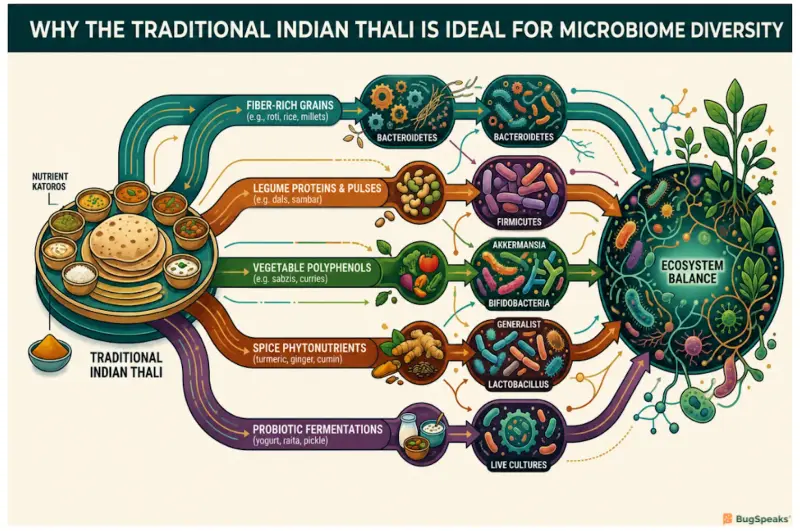
The traditional Indian Thali supports a diverse gut microbiome by serving as a highly organized platform for resource distribution that simultaneously delivers specific nutrients to different intestinal bacteria. In human biology, thousands of distinct microbial species operate as specialized resource users, requiring very different types of food to survive and function properly. When individuals consume simple, single-item meals, some microbial groups thrive while others starve entirely. The thali system ingeniously solves this structural limitation by providing a carefully managed nutritional buffet, ensuring that multiple groups of microbes receive the fuel they need at the exact same time. This synchronized delivery prevents the overgrowth of any single bacterial species and establishes a perfectly balanced biological ecosystem within the digestive tract Kapoor et al. (2022).
Within this structured biological logistics system, the demand for dietary diversity is met through a carefully portioned selection of distinct, whole foods. Each small bowl on the plate represents a targeted delivery mechanism for complex carbohydrates, structural proteins, and helpful live microorganisms. The human digestive tract completely relies on this continuous, multi-layered supply chain to maintain the physical integrity of the intestinal lining and support basic daily operations. Because different microbes possess highly distinct sets of biological tools, they require vastly different raw materials to do their jobs. The thali guarantees that microbes equipped to break down tough plant structures are continuously fed right alongside those that strictly specialize in metabolizing complex sugars for energyTamang et al. (2016).
The structural relationship between this dietary variety and microbial health forms the foundation of human digestion. When the body receives a traditional thali, the digestive system operates as a central sorting facility. Vital dietary fibers and protective plant molecules are routed smoothly downward to the large intestine, where the vast majority of the gut microbiome resides and operates. Here, these diverse materials are processed by the specialized biological workforce, which actively converts the raw inputs into highly beneficial health products. Without this broad, simultaneous distribution of nutritional resources, the microbiome's innate capacity to regulate immune responses, synthesize essential vitamins, and efficiently extract cellular energy would be severely compromised over time, leading to weaker overall health. Kapoor et al. (2022).
Why Are Millets and Rice Essential Energy Substrates for Gut Bacteria?
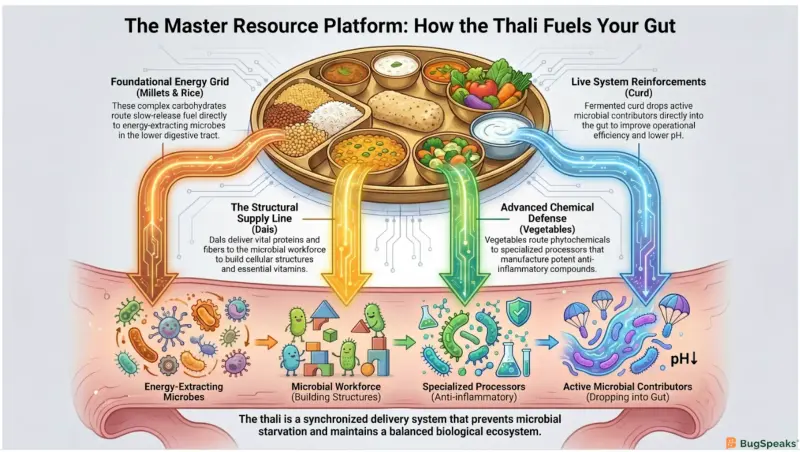
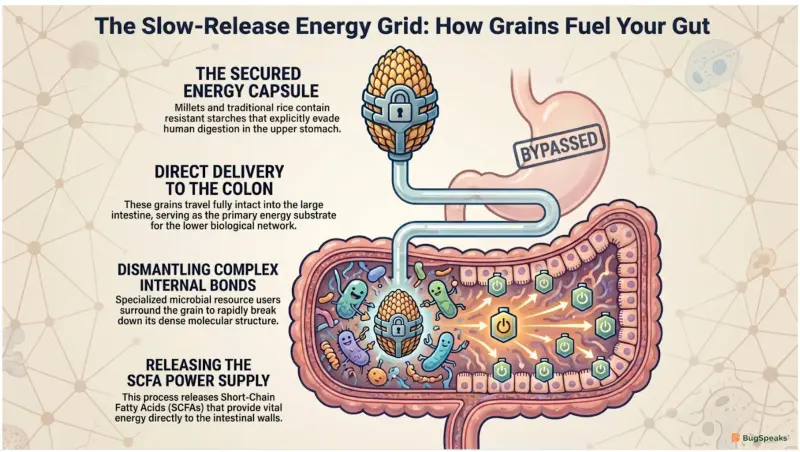
Millets and traditional rice varieties are essential because they act as primary energy substrates that directly fuel the critical metabolic activities of the bacteria residing in the lower digestive tract. Within the thali's comprehensive resource distribution network, these indigenous staple grains function as the foundational, slow-release fuel supply. Unlike heavily refined simple sugars that are rapidly absorbed and depleted high up in the digestive tract, these complex carbohydrates successfully resist immediate breakdown. They travel fully intact down into the colon, where they are systematically unloaded and distributed to specific bacterial populations. These microbes deploy unique tools to dismantle the dense molecular structures of the grains, extracting the necessary energy to sustain the broader microbial network. Kapoor et al. (2022).
The specific physical and molecular architecture of these traditional grains makes them an ideal energy source for this complex biological system. Many indigenous Indian rice landraces and millets contain significant concentrations of resistant starch, a specific carbohydrate type that explicitly evades human digestion to feed the microbiome. As the gut bacteria rapidly consume these complex energy substrates, they engage in an active fermentation process to power their own internal cellular functions. This intensive energy extraction process greatly benefits the human host. While metabolizing these grains, the bacteria manufacture critical Short-Chain Fatty Acids (SCFAs), such as butyrate, which serve as the primary and most vital energy source for the human cells lining the colonTamang et al. (2016).
Beyond functioning as a fundamental biological fuel source, these whole grains also act as highly effective delivery vehicles for delivering crucial systemic minerals. Traditional millets carry dense payloads of essential minerals, but these are frequently locked away by organic binding compounds known as phytates, which drastically reduce overall bioavailability. The gut microbiota, acting as incredibly efficient resource managers, utilize specific targeted enzymes to systematically dismantle these restrictive binding compounds. This precise microbial intervention gradually releases the trapped minerals into the intestinal environment for optimal human absorption. Rotating multiple grain varieties ensures the microbial energy grid operates continuously at maximum capacity, maintaining a stable, reliable flow of energy throughout the entire digestive system all dayKapoor et al. (2022).
How Do Dals and Legumes Supply Critical Nutrients to the Microbiome?
Traditional dals and legumes supply critical nutrients by delivering complex proteins and dense fibers that beneficial bacteria require to construct cellular structures and manufacture health-promoting biological byproducts. Within the structural framework of the thali’s resource distribution platform, dals actively function as the primary protein supply line. Indigenous Indian legumes, including horse gram, rice bean, and field bean, are densely packed with highly complex organic materials. When these specific legumes smoothly enter the digestive system, they systematically deliver vital structural amino acids and specialized fibers directly to the waiting microbial workforce. The bacteria continuously utilize these raw materials to physically replicate and reliably synthesize essential vitamins and signaling molecules that heavily regulate long-term human healthKapoor et al. (2022).
The dual functional nature of these legumes, providing both plant-based proteins and indigestible carbohydrates simultaneously, makes them an incredibly efficient nutritional payload. While native human enzymes successfully digest and absorb a portion of the available legume proteins early in the digestive tract, the remaining resistant proteins travel downstream. Here, specific bacterial groups take absolute control over the process, deploying targeted microbial tools to dismantle these incredibly tough molecules. This highly coordinated breakdown sequence actively prevents the dangerous accumulation of undigested proteins, which could otherwise strongly encourage the rapid growth of harmful, putrefactive bacteria. By consistently keeping the beneficial microbes well-supplied, traditional dals naturally suppress the dangerous expansion of severely detrimental microbial populations in the gutTamang et al. (2016).
Traditional Indian legumes also introduce a uniquely specific challenge into the digestive network in the biological form of oligosaccharides, complex sugars that humans cannot process. However, within the highly organized resource distribution network of the microbiome, these specific oligosaccharides function as extremely valuable commodities. Certain highly adapted bacterial strains strictly specialize in degrading these specific compounds. As they continuously break down the oligosaccharides, they rapidly neutralize their gas-producing anti-nutritional effects and convert the complex sugars into incredibly beneficial metabolites. Traditional preparatory methods, including long soaking and slow cooking, partially degrade tough protective seed coatings beforehand. This significantly reduces the immediate workload on the gut microbes, guaranteeing that they extract maximum structural value with absolute peak efficiencyKapoor et al. (2022).
What Role Do Fermented Foods Like Curd Play in This Resource Network?
Fermented foods like curd directly introduce live, active microbial contributors into the gut environment, actively reinforcing the existing populations of beneficial bacteria with newly specialized personnel. While other distinct components of the thali consistently provide necessary raw fuel and structural materials, traditional fermented foods act as a direct deployment mechanism for fresh microbial workers. These specific foods safely deliver live microbial contributors, most notably Lactic Acid Bacteria, straight into the central core of the resource distribution network. These active bacteria rapidly interact with the native microbiome, aggressively producing protective antimicrobial substances, naturally enhancing nutrient absorption rates, and significantly improving the overall daily operational efficiency of the host's entire digestive ecosystem from the inside outTamang (2022).
The traditional preparation of items like idlis perfectly illustrates this advanced microbial deployment process. During the overnight fermentation process entirely outside the human body, an intricate succession of specialized bacteria rapidly pre-digests the dense batter. By the time the food is finally consumed, these incredibly active bacteria have already dismantled complex starches, neutralized mineral-blocking compounds, and efficiently synthesized essential vitamins, including crucial Vitamin B12. When these newly synthesized biological resources and live bacteria successfully enter the human digestive tract via the thali platform, they instantly provide necessary metabolic relief. This provides incredibly powerful structural reinforcement to the host’s deeply embedded internal microbial workforce, allowing the system to operate smoothly without experiencing serious metabolic fatigue over timeMandhania et al. (2019).
Traditional curd functions in a highly similar manner, aggressively deploying vast quantities of active bacterial species into the intestinal network as functional probiotics. These incoming microbial contributors inherently possess distinct functional properties, including remarkably high acid tolerance, ensuring they survive the incredibly harsh journey through the stomach. Once successfully deployed inside the lower colon, they rapidly produce organic acids that gently lower the local pH levels. This strategic environmental modification immediately creates a highly hostile combat zone for incoming dangerous pathogens. Simultaneously, these microbes deliver a dense payload of bioactive peptides that interact strongly with the human immune system, dramatically reducing localized cellular inflammation and strongly supporting the body's entire physiological infrastructure with absolute precision and careSatish Kumar et al. (2013).
How Do Traditional Vegetables Distribute Phytochemical Resources?
Traditional vegetables distribute vital phytochemical resources and diverse specialized fibers that strictly specific gut microbes absolutely require to maintain intestinal health and regulate cellular inflammation. The vegetable preparations beautifully featured on a traditional thali serve as the primary strategic delivery system for these phytochemical resources. Indigenous Indian vegetables, particularly vibrantly colored leafy greens, carry exceptionally dense biological concentrations of protective polyphenols and unique plant fibers. When these complex materials actively enter the biological distribution network, they seamlessly act as highly specialized software updates for the microbiome ecosystem. These complex molecules are specifically routed downwards to highly adapted bacteria that efficiently utilize them to carefully manufacture incredibly potent anti-inflammatory compounds that protect the human host every day Kapoor et al. (2022).
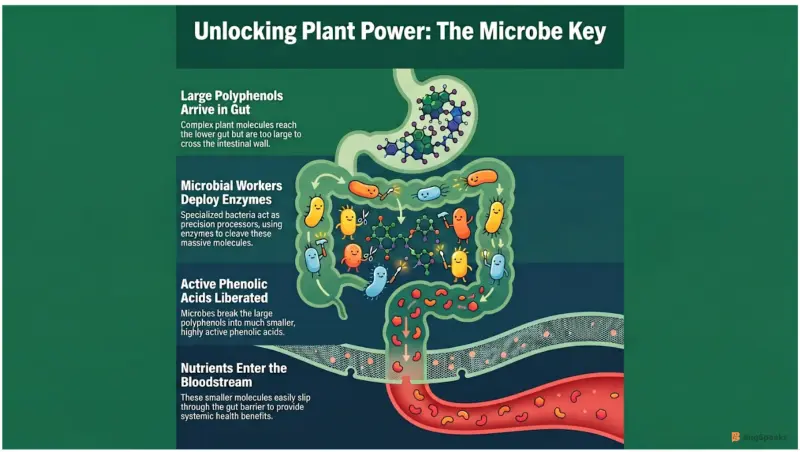
Unlike basic dietary macronutrients, which are simply metabolized rapidly for base cellular energy, these specific phytochemical resources are heavily utilized for advanced chemical defense and deep cellular repair. Many natural plant polyphenols are structurally far too large to be directly absorbed by the human small intestine. They must safely travel further down into the large colon, where specialized bacterial workers deploy highly unique chemical enzymes to cleanly cleave these massive molecules into much smaller, highly active phenolic acids. Once successfully liberated by the deeply embedded microbes, these incredibly protective antioxidants are finally absorbed directly into the human bloodstream, where they aggressively neutralize dangerous free radicals and tightly preserve the structural integrity of the delicate intestinal barrierTamang et al. (2016).
The sheer biological diversity of vegetables deliberately included in a proper traditional thali ensures that a wide, entirely uninterrupted spectrum of these absolutely vital resources remains continuously available. Different plant species inherently contain vastly different phytochemical profiles, meaning they systematically engage completely different microbial processors. By smartly incorporating multiple distinct vegetable varieties into a single organized meal, the thali system ingeniously ensures that absolutely no specialized bacterial group is ever left completely idle. The dense fibrous structures seamlessly slow down the rapid transit time of moving food, giving the working bacteria incredibly ample time to carefully extract trapped micronutrients. This ultimately transforms the traditional thali into an absolute masterclass in advanced internal biological logistics and healthy livingKapoor et al. (2022).
-Varsha V
Visualize the process- https://youtu.be/WhwclOQQNKI
Reference
Kapoor, R., Sabharwal, M., & Ghosh-Jerath, S. (2022). Indigenous Foods of India: A Comprehensive Narrative Review of Nutritive Values, Antinutrient Content and Mineral Bioavailability of Traditional Foods Consumed by Indigenous Communities of India. Frontiers in sustainable food systems, 6, 696228. https://doi.org/10.3389/fsufs.2022.696228
Tamang JP, Shin D-H, Jung S-J and Chae S-W (2016) Functional Properties of Microorganisms in Fermented Foods. Front. Microbiol. 7:578. doi: 10.3389/fmicb.2016.00578
Jyoti Prakash Tamang, “Ethno‐microbiology” of ethnic Indian fermented foods and alcoholic beverages, Journal of Applied Microbiology, Volume 133, Issue 1, 1 July 2022, Pages 145–161, https://doi.org/10.1111/jam.15382
Satish Kumar, R., Kanmani, P., Yuvaraj, N., Paari, K. A., Pattukumar, V., & Arul, V. (2013). Traditional Indian fermented foods: a rich source of lactic acid bacteria. International Journal of Food Sciences and Nutrition, 64(4), 415–428. https://doi.org/10.3109/09637486.2012.746288
Mandhania MH, Paul D, Suryavanshi MV, Sharma L, Chowdhury S, Diwanay SS, Diwanay SS, Shouche YS, Patole MS.2019.Diversity and Succession of Microbiota during Fermentation of the Traditional Indian Food Idli. Appl Environ Microbiol85:e00368-19.https://doi.org/10.1128/AEM.00368-19