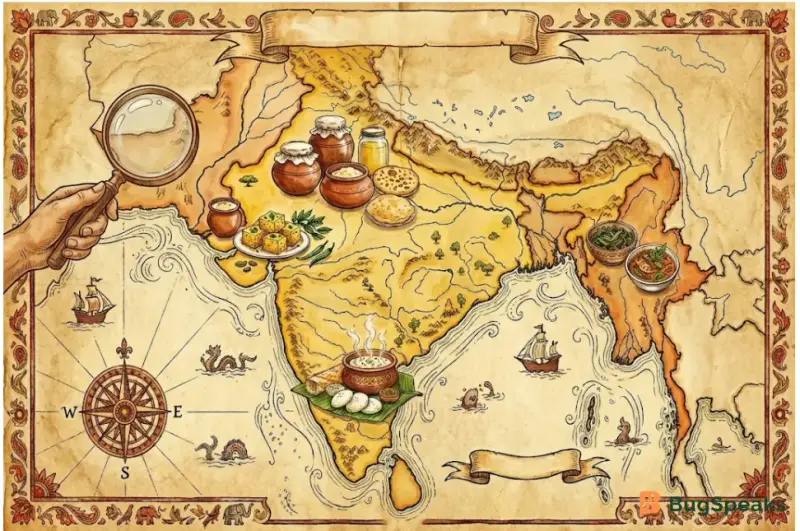
Does the Frontier hide a Forgotten Treasure?
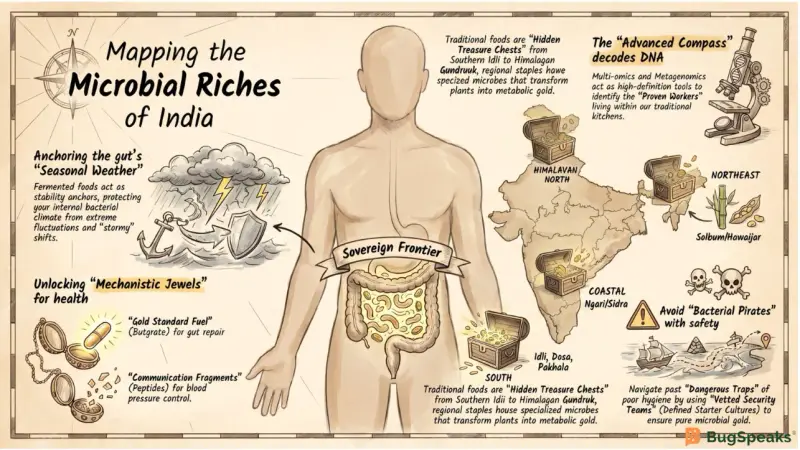
The Sovereign Frontier of the human body hides a vast and largely forgotten treasure of microbial diversity within traditional Indian foods. Charting this intricate landscape requires an exploration into the hidden depths of the intestines. For centuries, travelers traversed geographical continents without realizing the true biological wealth residing within their own traditional kitchens. Ancient provisions like Idli, Dosa, Pakhala, and fermented bamboo shoots are more than just meals; they are "Hidden Treasure Chests." These foods contain complex communities of microorganisms that transform simple grains, legumes, and plants into metabolic gold.
To uncover these riches, science now employs a "High-Definition Toolkit" known as Multi-Omics. This approach replaces simple observation with exact molecular tracking, allowing researchers to decode the genetic signatures of the microbes living in these foods. Through the study of Ethnobiology, it becomes clear that traditional food practices are deeply linked to the local environment. Indian fermented foods represent a scientific gold mine because they contain specific microbial strains that have perfectly adapted to regional climates over thousands of years. Using a "Microscopic Group Photo" technique called Metagenomics, scientists can now see every single microbe in a community at once. Furthermore, Metatranscriptomics acts as a "Workplace Monitor," showing exactly which jobs the bacteria are doing, such as creating vitamins or healing compounds. Precision is required in this frontier because the diversity of the flora inside the intestines dictates overall well-being. By mapping these traditional foods, science establishes a living archive of biological heritage that promises to strengthen the human gut for generations.
Can traditional treasures stabilize the seasonal weather?
Traditional fermented foods have the unique power to stabilize the volatile "seasonal weather" of the body’s bacterial populations. In rural Indian farming communities, the environment inside the intestines undergoes dramatic shifts depending on the time of year. These shifts represent a form of internal climate change, where different families of bacteria rise and fall with the heat and the harvest. A profound exploration byJeyaram et al. (2025) demonstrates how the long-term consumption of fermented foods can protect this internal climate from extreme fluctuations.
Every individual has a specific Enterotype, which is a classification of the gut based on which bacteria are currently in charge. During hot summer months, these bacterial populations can become unstable. However, regular consumption of "Treasure Chest" foods like curd or fermented soybeans establishes Seasonal Stability. Observations show that the intestines often alternate between a Prevotella driven state and a Bifidobacterium driven state. Fermented foods act as "anchors" during this stormy internal weather. When individuals consume these traditional provisions over long periods, their Bacteroidota populations the family responsible for processing energy remains steady.
The constant arrival of Lactic Acid Bacteria helps temper extreme shifts, ensuring that the production of Short-Chain Fatty Acids remains high. These healthy acids, specifically Butyrate, act as the "gold standard" for energy, fueling the cells of the intestines and preventing inflammation. Without these anchors, the internal weather could become chaotic, disrupting immune defenses and metabolic rhythms. The findings byJeyaram et al. (2025) confirm that the daily consumption of fermented milks and soybeans acts as a master regulator for the human intestines.
What mechanistic jewels are hidden in the bibliometric vault?
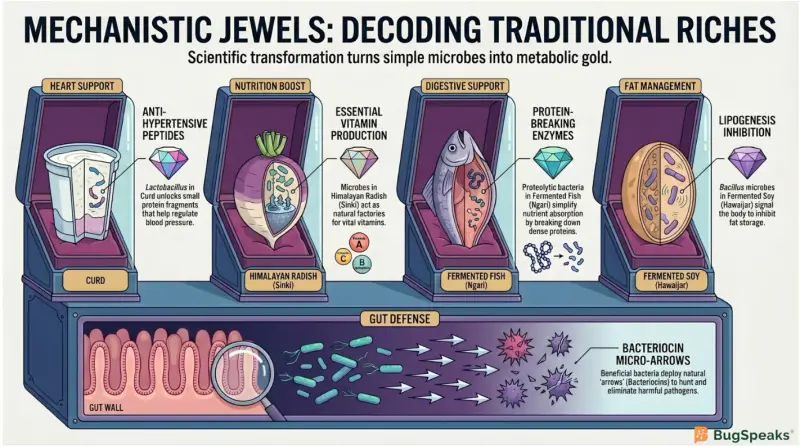
The "Bibliometric Vault" the vast library of scientific records reveals that traditional foods contain hidden "Mechanistic Jewels" that regulate human metabolism. These Mechanistic Insights explain exactly how traditional Indian ingredients function like precision machinery inside the body. The true wealth of these foods lies in the biochemical transformations that happen during fermentation. When these "treasures" are consumed, the microbes release Bioactive Peptides, which are small protein fragments that carry special health messages. These peptides act as powerful allies in the intestines by helping the body manage blood pressure and protect against hypertension.
Research also uncovers striking "Anti-Obesity" mechanisms hidden within fermented provisions. Certain traditional foods can inhibit the synthesis of fat by modulating Adipokines, which are signaling proteins that tell the body how to store energy. By quieting the body's alarm systems, these microbial jewels restore balance. Furthermore, fermentation increases the concentration of Phenolic Compounds, which act as high-powered antioxidants to prevent cell damage. These compounds also help manage blood sugar by ensuring a slow, steady release of glucose into the system. Simultaneously, the production of Exopolysaccharides sugary "shields" made by bacteria helps maintain the physical strength of the intestinal barrier.
The beneficial bacteria in these foods do more than just provide support; they also deploy "Microscopic Arrows" known as Antimicrobial Peptides. These natural defenses, often called Bacteriocins, target and eliminate harmful germs, ensuring that the intestines remain a safe and productive environment.
Are there dangerous traps in the tribal hills?
While traditional foods offer biological wealth, there are "Dangerous Traps" lurking in territories where food is not handled correctly. Poorly managed fermentation can harbor "Bacterial Pirates" that threaten the safety of the intestines. In a study of Northeast Indian tribal foods,Dey et al. (2023) revealed that some ancient preparation methods lack the hygienic standardization required today. Within the same bamboo shoot or dry fish that houses helpful bacteria, explorers may encounter lethal Pathogens.
These bacterial pirates, such as dangerous strains of Staphylococci, can invade the intestines and cause severe food poisoning. Even more concerning is their "Arsenal of Defenses," known as Antimicrobial Resistance. This is the ability of "bad bugs" to defeat the very medicines designed to kill them. The work byDey et al. (2023) found that many of these pathogenic invaders carry markers for resistance to multiple drugs. If these pirates settle in the gut, they can even "Trade Secrets" with the native bacteria through Horizontal Gene Transfer, turning previously harmless microbes into drug-resistant threats.
The presence of Coliforms bacteria that act as "Red Flags" for poor hygiene in nearly half of the tribal foods sampled highlights a critical vulnerability. This is especially true for fermented animal products like Ngari (dry fish) or fermented meats. Without proper sanitary navigation, a healing journey can quickly turn into a dangerous trap. AsDey et al. (2023) outline, modernizing these traditional recipes with better hygiene is the only way to safely enjoy their benefits.
Decoding the Riches of Marine Treasures and Ancient Brews
The scientific map of the Sovereign Frontier extends into categories that are often overlooked, such as fermented marine life and ancient ethnic beverages. Fermented dry fish, known regionally as Ngari, Hentak, or Sidra, acts as a specialized source of protein-breaking enzymes. These microbes help transform dense proteins into easy-to-absorb nutrients that support heart health. Similarly, ancient fermented beverages like Medaka (rice beer) or Asava (sugarcane brew) contain specialized yeasts that have been used for centuries to support the immune system.
Samantaray & Saha (2026) have used the High-Definition Toolkit to analyze these beverages, finding that they are rich in natural ethanol-producing microbes that act as biological anchors. These ancient drinks, along with fermented "leafy greens" like Gundruk and "roots" like Sinki, provide the intestines with a massive variety of workers. Every one of these foods acts as a repository of biological codes. When individuals consume a wide array of these treasures ranging from the common bowl of curd to the rare Himalayan radish they ensure that every niche worker in their microbial army has the resources needed to maintain Homeostasis.
How do we safely unearth the microbial gold?
To safely unearth the microbial gold of the Sovereign Frontier, ancient wisdom must be combined with modern safety protocols. To navigate past the pirates and traps, explorers must use the latest scientific data alongside traditional knowledge. The first step is to ensure that fermentation vessels are rigorously cleaned to prevent the buildup of Biogenic Amines. These are toxic chemicals that can form in high-protein foods like fish or beans if they are fermented at the wrong temperature, leading to symptoms like headaches or rashes.
Ingredients must also be screened for Mycotoxins, which are poisons produced by harmful fungi that can survive the fermentation process. Relying entirely on "spontaneous" fermentation from the air is a gamble that is no longer recommended for high-volume production. Instead, the transition should be made toward using Defined Starter Cultures. These are "Vetted Security Teams" of good bacteria that are added to the food at the beginning to ensure the right fermentation happens every time. By using these rigorously tested microbes, the production of Lactic Acid the natural preservative that kills off germs is guaranteed. AsSamantaray & Saha (2026) outline, laboratory testing must validate the safety of every recipe before it can be shared with a wider audience.
The Spice Guard: Advanced Security Turnstiles
In the traditional Indian kitchen, spices act as the Security Turnstiles of the frontier. Ingredients like turmeric, mustard seeds, and chili are not just for flavor; they contain high-potency Phytochemicals that serve as selective filters. These Phytochemicals allow the beneficial Lactic Acid Bacteria to pass freely into the intestines while neutralizing harmful germs like E. coli or Listeria. By including these spices in the fermentation process, the "Treasure Chest" becomes self-guarding, allowing only the vetted security teams to flourish.
The High-Speed Intercom: Messages in a Bottle
Beyond producing simple vitamins, microbial workers communicate with the rest of the body using Outer Membrane Vesicles (OMVs). These act like "Messages in a Bottle" or high-speed zip files. Even if the bacteria remain stationed in the lower intestines, they release these tiny biological bubbles into the bloodstream. These "bottles" carry complex instructions directly to the liver and brain, regulating everything from hunger signals to mood. In the 2026 landscape, it is recognized that the "gold" of fermented food travels far beyond the gut, acting as a global communication network for the entire body.
The Heirloom Symphony: Ancient Libraries vs. One-Page Pamphlets
The traditional practice of Back-slopping using a small portion of yesterday's fermented batch to start today’s creates what scientists call a Microbial Consortium. Unlike industrial probiotics that offer a "One-Page Pamphlet" of just one or two bacterial strains, Indian heirloom foods like Idli or Dosa contain an "Ancient Library." This is a diverse symphony of 10–20 different strains that have learned to live together over centuries. This cooperative symphony provides a much deeper level of structural support for the intestinal walls than any single-strain supplement could achieve.
The Second Meal Effect: The Overnight Power Reserve
Specialized treasures like Pakhala (fermented rice water) act as the ultimate Overnight Power Reserve. The fermentation process transforms simple rice into Resistance Starch Type 3, a "Slow-Release Battery" that human cells cannot use, but deep-gut microbes adore. This creates the Second Meal Effect a state of Glycemic Carryover where the microbial gold from a lunch meal stabilizes blood sugar for the next 12 hours. By the time the next day begins, the "Power Reserve" is still active, ensuring the frontier remains steady and strong.
The Cartographer’s Comparison: 2026 Metabolic Markers
The frontier of 2026 gut science allows for the verification of the specific "gold" found in traditional provisions through precise metabolic markers.
Scientific Verdict: A true explorer of the Sovereign Frontier doesn’t just guess; they use a map. By using advanced scanning, it is possible to verify that the "Spice Guard" has done its job and that the "Ancient Library" from the kitchen has successfully settled in its new home. To truly unearth the gold, one must feed the soil, guard the gates, and trust the wisdom of the heirloom symphony.
What does the Cartographer's Final Chart reveal?
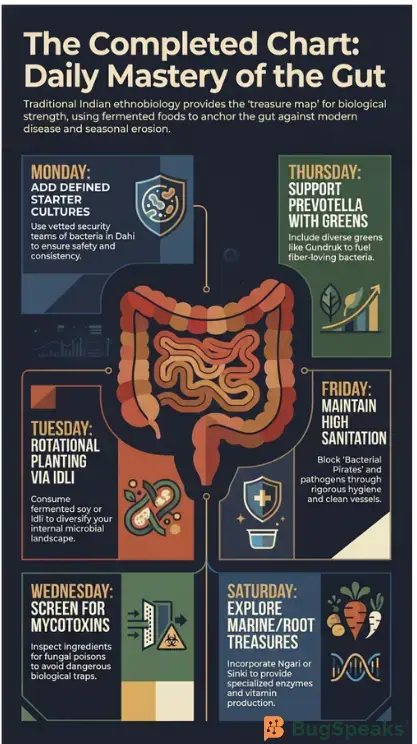
The final chart of the Sovereign Frontier reveals that preserving the incredible diversity of Indian fermented foods is essential for long-term health. The intestines require continuous biological reinforcement to maintain their borders and internal harmony. The "Treasure Chests" of traditional wisdom are not just culinary curiosities; they are living repositories of the biological codes needed to train the immune system and regulate the body’s metabolic engine.
Every spoonful of Idli, Dosa, Pakhala, or fermented bamboo shoots delivers a complex payload of Functional Microbes directly into the intestines. These microbes build a resilient barrier against inflammation and modern diseases. However, the modernization of diets threatens to erase these riches. If these traditional provisions are abandoned, the diversity of the internal ecosystem is depleted, leaving the body vulnerable to dietary plagues. The integration of ancient microbial wisdom with modern precision unlocks unprecedented potential for healing. Every individual is encouraged to incorporate these safe, vetted microbial treasures into their daily lives. By doing so, ancient wisdom is honored while the ultimate health of the intestines is scientifically secured.
-Kumar Sankaran
Visualize the process- https://youtu.be/6v0n0iSGjaM
Reference
Samantaray, P., & Saha, S. (2026). Decoding the Microbial Diversity of Indian Fermented Foods: Integrating Ethnobiology, Multi-Omics and Functional Insights. Foods (Basel, Switzerland), 15(4), 687. https://doi.org/10.3390/foods15040687
Jeyaram, K., Lahti, L., Tims, S., Heilig, H. G. H. J., van Gelder, A. H., de Vos, W. M., Smidt, H., & Zoetendal, E. G. (2025). Fermented foods affect the seasonal stability of gut bacteria in an Indian rural population. Nature communications, 16(1), 771. https://doi.org/10.1038/s41467-025-56014-6
Dey, Tushar Kumar, Lindahl, Johanna F., Sanjukta, Rajkumari, Arun Prince Milton, A., Das, Samir, Kannan, Porteen, Lundkvist, Åke, Sen, Arnab, Ghatak, Sandeep, Characterization of Lactic Acid Bacteria and Pathogens Isolated from Traditionally Fermented Foods, In Relation to Food Safety and Antimicrobial Resistance in Tribal Hill Areas of Northeast India, Journal of Food Quality, 2023, 6687015, 12 pages, 2023. https://doi.org/10.1155/2023/6687015