Prebiotics: The Unsung Hero of Your Gut Health Journey
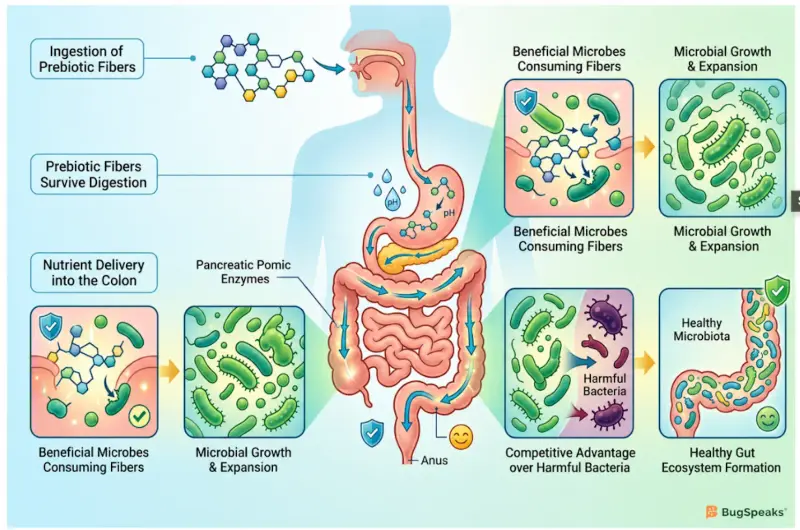
What exactly are prebiotics and how do they function within the gut?
Prebiotics are non-digestible food ingredients, primarily specific types of complex carbohydrates, that safely bypass human digestion to serve as dedicated nutritional substrates for beneficial gut bacteria. To understand this biological mechanism, we must view the human colon as a highly dynamic microbiome that functions as a dense, competitive living ecosystem. Within this expansive biological forest, prebiotics serve as essential ecosystem nutrients. Unlike simple sugars or standard carbohydrates that are rapidly broken down and absorbed early in the small intestine, complex prebiotic fibers possess chemical bonds that resist gastric acidity and enzymatic hydrolysis in the upper gastrointestinal tract. They travel completely intact through the digestive system until they arrive at the colon, where they act as specialized, long-lasting ecological resources that only highly specific, health-promoting bacterial populations possess the necessary enzymes to break down and utilize for energy.
The introduction of these complex fibers initiates a highly selective feeding process that dictates the entire health of the intestinal landscape. Common, well-researched classes of these ecosystem nutrient sources include Fructo-oligosaccharides (FOS), galacto-oligosaccharides (GOS), and inulinHe et al. (2026). When these long-lasting ecological resources reach the large intestine, they selectively stimulate the growth, proliferation, and metabolic activity of beneficial microbial taxa, particularly structural cornerstone species like Bifidobacterium and Lactobacillus. By providing this targeted "packed lunch," the host ensures that these beneficial species have the distinct metabolic advantage required to multiply and flourish in a crowded, resource-limited environmentAl-Habsi et al. (2024).
This selective nourishment forms the foundation of microbial biodiversity within the host. The living ecosystem requires a constant influx of these exact nutrient sources to maintain its structural balance; otherwise, the beneficial species cannot generate the necessary energy to survive. By continuously supplying the gut with high-quality prebiotics, the host actively shapes the ecological hierarchy of the colon, ensuring that the beneficial species remain the dominant force in the environment, capable of regulating local immune responses and maintaining the physical integrity of the tissueChalotra et al. (2026).
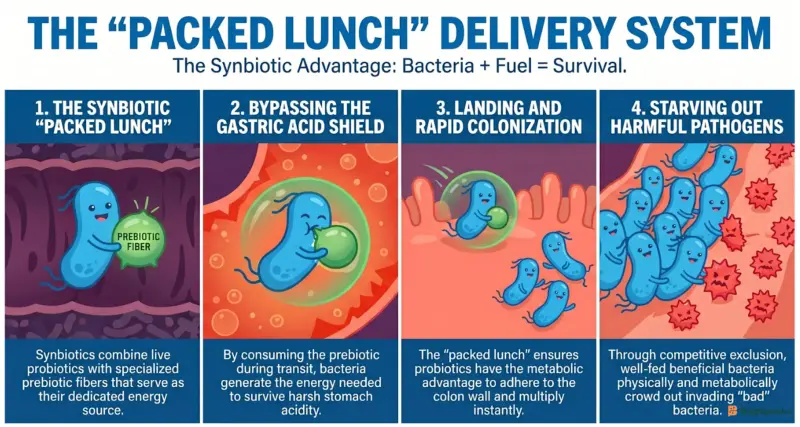
Why do probiotics require prebiotics to survive and function effectively?
Probiotics require prebiotics because these live beneficial microorganisms need a sustained, highly specific energy source to successfully establish themselves and outcompete harmful bacteria in the competitive intestinal environment. When individuals consume isolated probiotics, they are effectively dropping introduced beneficial species into an established, fiercely competitive living ecosystem. If these new, vulnerable microbial arrivals do not have immediate and sustained access to their preferred ecosystem nutrient sources, they struggle to colonize the intestinal wall and are rapidly outcompeted, starved, or eliminated by the trillions of resident microbes already adapted to that specific environment. To solve this critical biological challenge, scientists and clinicians utilize a synbiotics approach, packaging the live beneficial bacteria directly together with a specialized prebiotic fiberAl-Fahdawy et al. (2025).
This integrated delivery system ensures that the introduced beneficial species arrive with their own built-in survival ration. The prebiotic acts as a "packed lunch," providing the exact long-lasting ecological resources the new bacteria require to immediately generate energy, multiply rapidly, and adhere firmly to the mucosal lining of the host. Once established, these well-fed beneficial species initiate a process known as competitive exclusion, actively claiming physical space on the intestinal wall and consuming all available surrounding nutrients, thereby physically and metabolically starving out invading pathogenic bacteria. Controlled studies evaluating this mechanism demonstrate that combining specific live strains, such as Bacillus subtilis or Lactobacillus plantarum, with targeted prebiotic fibers dramatically increases their survival rates, cellular regeneration capabilities, and overall colonization efficacy across the digestive tractNayan et al. (2026).
By securing their own ecosystem nutrient sources, these supported probiotics can effectively shift the microbial landscape in favor of the host, surviving the harsh, acidic transit of the stomach and thriving once they reach the colon. Computational metabolic modeling has confirmed that when these introduced species are provided with appropriate fiber substrates like inulin, their individual growth rates stabilize, allowing them to exert profound positive regulatory effects on the entire microbial communityQuinn-Bohmann et al. (2026). This biological synergy proves that introducing new life into an ecosystem is rarely successful unless the specific nutritional infrastructure required to sustain that life is introduced alongside it.
How does prebiotic fermentation produce ecosystem-supporting outputs?
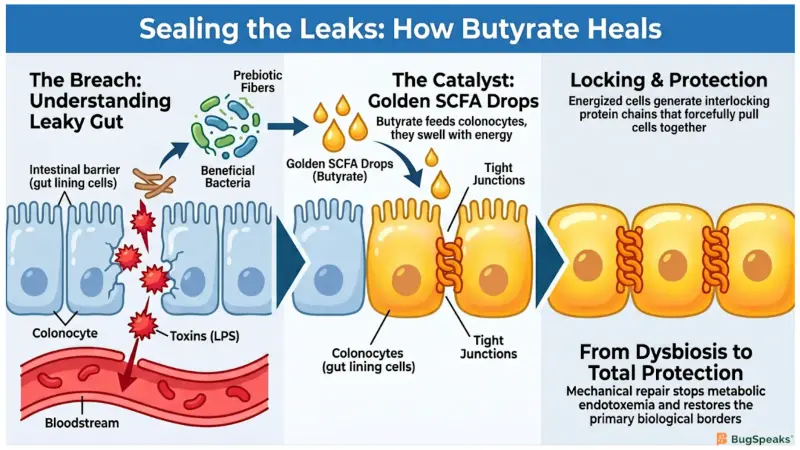
The microbial fermentation of prebiotics produces vital signaling molecules called Short-Chain Fatty Acids (SCFAs), which directly nourish the intestinal lining, regulate immune responses, and maintain the structural integrity of the gut barrier. When the introduced beneficial species and the resident healthy microbes consume their specialized ecosystem nutrient sources, they undergo a complex metabolic breakdown process known as fermentation. Because human digestive enzymes cannot dismantle these complex fibers, it is solely up to the bacteria to perform this task. The primary metabolic byproducts of this biological breakdown are Short-Chain Fatty Acids (SCFAs), specifically acetate, propionate, and butyrate. In our living ecosystem model, these SCFAs serve as the ultimate ecosystem-supporting outputs. They function as the biochemical equivalent of highly fertile soil and protective atmospheric conditions, continuously regenerating the physical landscape and biological architecture of the colonHe et al. (2026).
Among these ecosystem-supporting outputs, butyrate is uniquely critical because it serves as the primary and preferred energy source for colonocytes, the specialized epithelial cells that physically line the walls of the colon. By directly feeding and energizing these host cells, SCFAs stimulate the rapid production of tight junction proteins, which act as the biological mortar sealing the gaps between intestinal cells, thereby preventing the intestinal barrier from leaking. Furthermore, the mass production of these acidic fatty acids naturally lowers the local pH of the colon. This creates a highly hostile, acidic environment that physically suppresses and inhibits the overgrowth of acid-sensitive pathogenic bacteria, further protecting the ecosystemAl-Habsi et al. (2024). This continuous cycle of selective feeding, followed by profound structural reinforcement, is the precise mechanism that allows a fiber-rich diet to promote massive ecosystem resilience over a human lifespan.
Beyond local tissue repair, these ecosystem-supporting outputs also act as advanced chemical messengers that communicate directly with the host's central systems. SCFAs trigger specific cellular receptors to stimulate the release of Glucagon-Like Peptide-2 (GLP-2), a powerful hormone that significantly enhances gut barrier repair, accelerates the healing of the intestinal lining, and actively reduces systemic inflammatory triggersAl-Habsi et al. (2024). By efficiently converting long-lasting ecological resources into these vital outputs, the microbiome proves that it is not merely a passive passenger in the body, but an active, necessary organ responsible for keeping the host's primary biological borders secure and functioning.
What happens to the gut microbiome when prebiotics are absent from the diet?
When prebiotics are consistently absent from the diet, beneficial bacterial populations starve and rapidly decline, leading to a state of severe microbial imbalance and compromised intestinal integrity known as dysbiosis. A living ecosystem deliberately deprived of its foundational ecosystem nutrient sources will inevitably and rapidly deteriorate. Without a consistent supply of long-lasting ecological resources like dietary fiber, the specific beneficial microbes that rely entirely on these complex carbohydrates to generate energy begin to starve and die off in massive numbers. This mass die-off creates a dangerous nutrient imbalance within the colon. In the complete absence of healthy bacterial competition and a lack of protective ecosystem-supporting outputs (like SCFAs), opportunistic, highly inflammatory bacterial species immediately seize the available biological real estate and multiply aggressively across the intestinal wallChalotra et al. (2026). This catastrophic environmental collapse is clinically defined as dysbiosis.
As the beneficial populations crash and the ecosystem becomes barren, the biological infrastructure of the host begins to fail. The production of the protective mucus layer slows down, and the generation of tight junction proteins effectively halts. Consequently, the physical intestinal barrier weakens and becomes highly permeable, a condition commonly referred to as "leaky gut." This microscopic structural failure allows harmful bacterial toxins, specifically Lipopolysaccharides (LPS), to leak out of the colon and directly into the host's central bloodstream. The sudden presence of these toxic components in the blood triggers a severe biological alarm state known as metabolic endotoxemia, a condition of chronic, low-grade systemic inflammation that forces the host's immune system into constant overdriveAl-Habsi et al. (2024).
This persistent state of inflammatory panic is heavily implicated in the modern development of major systemic diseases, including metabolic syndrome, severe insulin resistance, and long-term cardiovascular diseaseAl-Habsi et al. (2024). The lack of a simple "packed lunch" for the beneficial bacteria effectively starves the entire ecological defense system of the body. This cascading failure clearly highlights exactly why isolated, standalone probiotic interventions so frequently fail; if the host's foundational diet lacks the sufficient prebiotic fiber required to sustain the introduced species, the new bacteria simply die in the barren landscape, completely unable to reverse the severe nutrient imbalanceAl-Fahdawy et al. (2025).
How does combining prebiotics and probiotics improve systemic metabolic health?
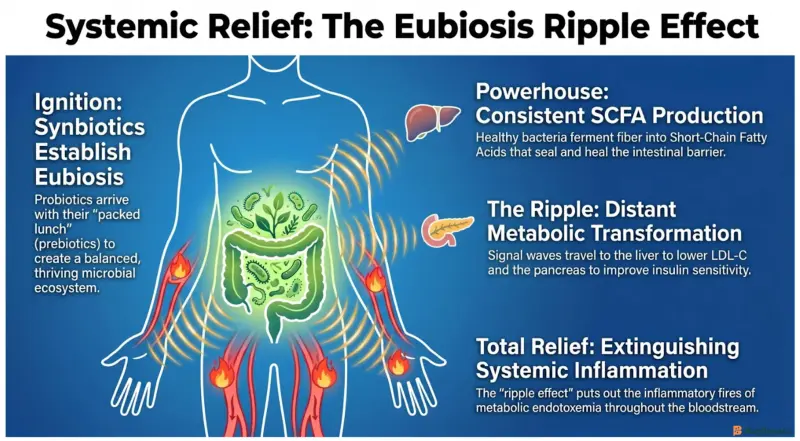
Combining prebiotics and probiotics creates a synergistic therapeutic effect that permanently lowers systemic inflammation, improves insulin sensitivity, and optimizes lipid metabolism by stabilizing the gut environment into a state of optimal health known as eubiosis. By deliberately and scientifically pairing beneficial species with their exact, required ecosystem nutrient sources, we establish a fully functional, highly resilient living ecosystem. This integrated biological approach guarantees that the critical ecosystem-supporting outputs are generated constantly and reliably, promoting immense microbiome diversity and robust, self-sustaining bacterial growth. When the intestinal environment successfully reaches this harmonious, self-regulating state of balance, known as eubiosis, the local biological benefits radiate outward, profoundly and positively impacting the host's broader metabolic networks and central biological systemsChalotra et al. (2026).
Extensive clinical interventions utilizing these combined synbiotics therapies have demonstrated incredibly powerful systemic results that extend far beyond simple digestion. Detailed retrospective clinical analyses clearly show that regular, daily supplementation with the correct prebiotics and probiotics is significantly associated with measurable, lasting reductions in Body Mass Index (BMI), vastly improved fasting glucose levels, and highly favorable shifts in human lipid profiles, including substantial decreases in Low-Density Lipoprotein Cholesterol (LDL-C) and total blood triglyceridesHe et al. (2026). By actively restoring the living ecosystem, the host physically alters how their body stores fat, processes sugars, and manages daily systemic inflammation.
Furthermore, advanced computational metabolic modeling has revealed that delivering specific, high-quality prebiotic fibers, such as inulin, alongside complex, multi-strain probiotic cocktails (particularly those containing keystone species like Akkermansia muciniphila) significantly and predictably increases the microbial production of butyrate and propionate across diverse human populations. This massive increase in ecosystem-supporting outputs correlates directly with enhanced glycemic control and a measurable reduction in clinical markers of insulin resistance over a relatively short intervention periodQuinn-Bohmann et al. (2026). This proves that the intentional synchronization of live bacteria with their specific complex fiber fuel creates a biological shield that effectively protects the host from severe metabolic decay.
Visualize the process- https://youtu.be/czZa8reCMG0
Reference
Chalotra, R., Gupta, T., Kumar, A., Gupta, A., Kumar, S., Singh, T. G., & Singh, R. (2026). Prebiotics, Probiotics, and Postbiotics in Modulating Gut Microbiota: Emerging Therapeutic Approaches for Metabolic Syndrome. Current obesity reports, 15(1), 9. https://doi.org/10.1007/s13679-026-00686-8
Nayan, M. N. I., Faraji, M. S., Hasan, M. Z., Abony, I. H., Saiyara, U., & Islam, M. S. (2026). Enhanced Efficacy of Synbiotics Compared to Antibiotics in Promoting Growth, Intestinal Health, and Immune Response in Stinging Catfish. Aquaculture nutrition, 2026, 2158993. https://doi.org/10.1155/anu/2158993
Al-Habsi, N., Al-Khalili, M., Haque, S. A., Elias, M., Olqi, N. A., & Al Uraimi, T. (2024). Health Benefits of Prebiotics, Probiotics, Synbiotics, and Postbiotics. Nutrients, 16(22), 3955. https://doi.org/10.3390/nu16223955
He X, Chen C, Shen L, Su X, Xie H, Yang M and Jiang W (2026) Retrospective insights into probiotic and prebiotic interventions: associations with gut microbiota profiles and nutritional outcomes. Front. Nutr. 13:1729480. doi: 10.3389/fnut.2026.1729480
Al-Fahdawy, W. F. J., Al-Jiboury, H. A. I., Alkobaese, S. K., & Qasim, M. A. (2025, February). The role of probiotic and prebiotic in gut microbiome and their impact on host health: a review. In IOP Conference Series: Earth and Environmental Science (Vol. 1449, No. 1, p. 012167). IOP Publishing.
Quinn-Bohmann, N., Carr, A. V., & Gibbons, S. M. (2026). Metabolic modeling reveals determinants of prebiotic and probiotic treatment efficacy across multiple human intervention trials. PLoS biology, 24(2), e3003638. https://doi.org/10.1371/journal.pbio.3003638