The Ultimate Guide to Understanding Synbiotics and Their Benefits
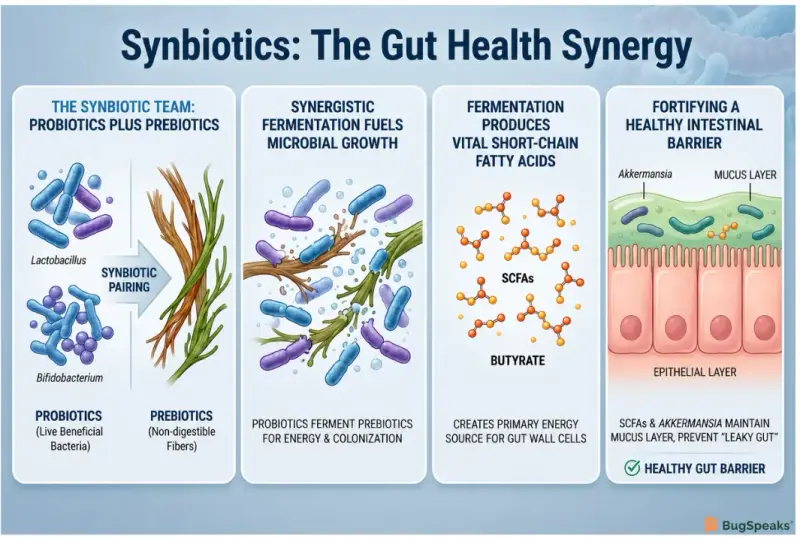
What Exactly Is A Synbiotic?
A synbiotic is a power-team of tiny living helpers and their favorite fiber-snacks that work together to maintain a healthy host. Inside your tummy is a Remote Polar Research Station that runs your entire body, but it is protected by the freezing Gastrointestinal Tract. A synbiotic acts as an Expedition Bundle, ensuring that the good bugs arrive with high-calorie survival packs so they don't get cold or hungry. This mission is guided by ISAPP, the official authority that sets the scientific rules for how these biological expeditions are launched to keep you safeNapier et al. (2025).
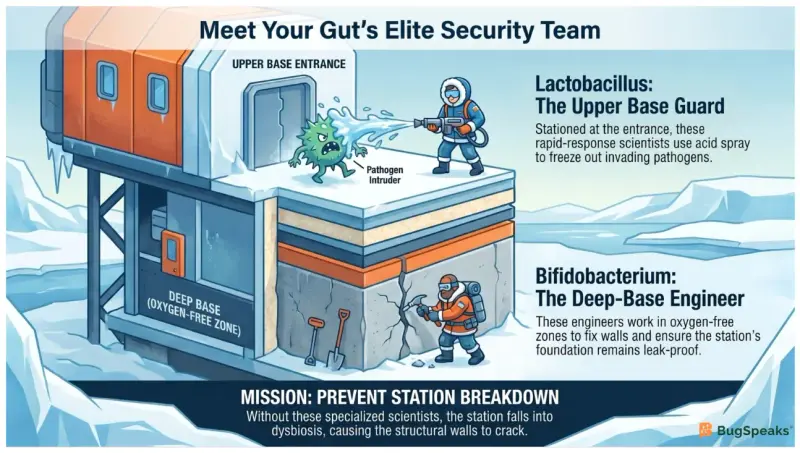
Who Are The Specialized Scientists In Your Gut?
The specialized scientists are the probiotics, which are friendly living bugs that keep your body strong and act as an elite team of personnel. The most famous members of this team are the Lactobacillus groups, who serve as a rapid response force in the upper station to freeze out any pathogen that tries to invade. Down in the deepest, darkest parts of the station, the Bifidobacterium engineers work without oxygen to fix the walls and ensure the foundation of your tummy remains thick and leak-proofYassine et al. (2025).
What Makes Up The High-Calorie Supply Crates?
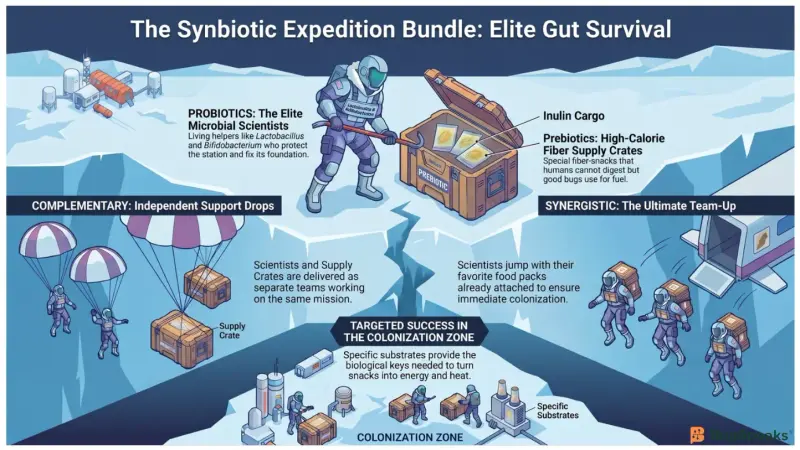
The high-calorie supply crates are prebiotics, which are special types of fiber-snacks that human systems cannot digest but good bugs absolutely love. These crates, often made of inulin, travel all the way to the deep base as heavy cargo that only the specialized scientists can open with their biological keys. Through the process of fermentation, the scientists eat these snacks to produce energy and heat for the station. These crates are often categorized as oligosaccharides, representing different types of survival gear tailored for the specific needs of the microbial crewGandham et al. (2026).
How Do The Scientists And Crates Work Together?
The scientists and crates work together by using a substrate to ensure the new arrivals can survive the trip and begin colonization. In a complementary synbiotic mission, the bugs and the snacks are dropped separately, both helping the base in their own way. However, a synergistic synbiotic is much more powerful because the scientists jump out of the plane with their custom survival packs already strapped to their backs. This ensures the team is strong enough to survive the blizzard of stomach acid and start building a big microbial family immediately.
Table 1: Harbor Cargo Logs: Expedition Methods
Why Does The Polar Research Station Need This Expedition?
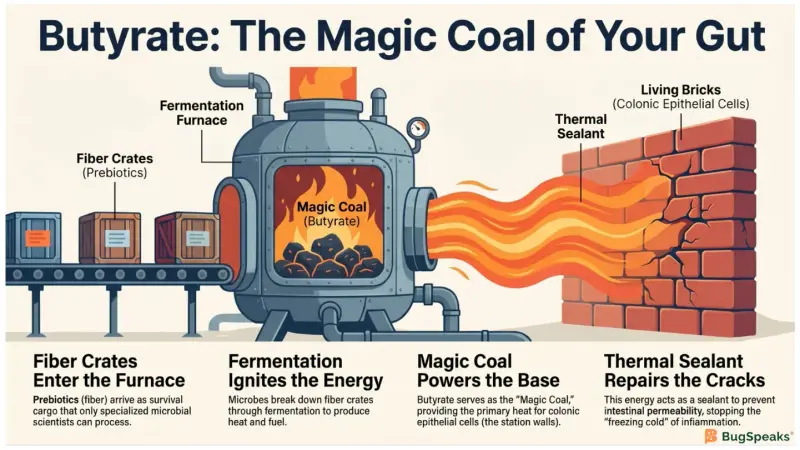
The research station needs this expedition to prevent dysbiosis, a dangerous state where the station falls apart because there aren't enough scientists to keep the lights on. The most important job of the new crew is to restart the thermal generators by making butyrate, the magic coal that keeps the colonic epithelial cells warm and strong. This heat ensures the walls of the station do not develop cracks that lead to intestinal permeability. When the generators are running at full blast, the station stays nice and toasty, protecting you from the freezing cold of inflammationNapier et al. (2025).
Table 2: Polar Research Station: Fuel Log
How Does The Expedition Affect Brain Function?
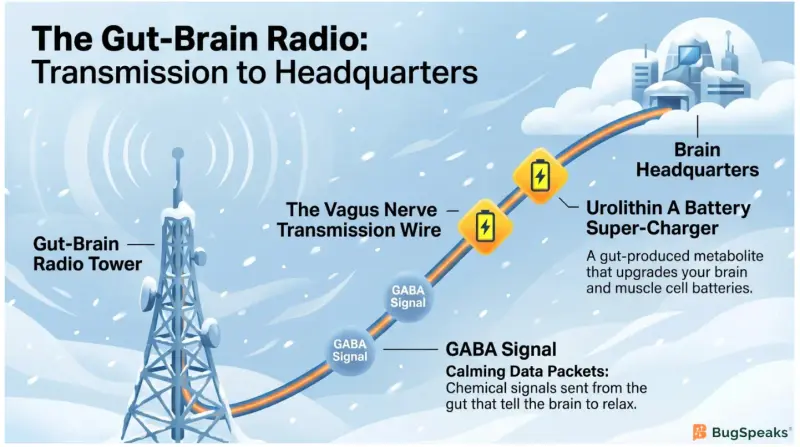
This expedition helps your brain by fixing the gut-brain axis, a high-tech radio tower in your tummy that sends happy signals to your global headquarters. Communication travels along the vagus nerve, a long wire that allows the station to send GABA signals to help your brain headquarters feel calm and relaxed. When the base is warm and well-maintained, the scientists produce urolithin A, a super-charger that gives your brain and muscle batteries a giant upgrade. If the radio tower is broken, it sends panic signals, but a fresh expedition ensures the data packets remain cheerful and steadyKezer et al. (2025).
Can This Expedition Bundle Help With Bone Strength?
The expedition bundle helps your bones stay strong by sending out a sealant that stops PTH from acting like acidic rust on the station's metal pillars. These pillars represent your bone mineral density, and if the rust is allowed to melt them away through a process called bone resorption, the entire station could collapse. Doctors call this structural weakening osteoporosis, but the scientists in your tummy can produce an anti-rust spray that keeps the supports thick and resilient. This full-facility maintenance plan ensures your spine and joints stay solid even during heavy winter stormsWang et al. (2026).
How Does The Expedition Impact Immune Defenses?
The expedition impacts immune defenses by fixing the walls of the station to stop the freezing wind of inflammatory distress. When the walls are broken, the body sounds a red siren called TNF-alpha, which makes the whole station frantic and stressed. The scientists use their survival crates to release interleukin-10, a soothing green light that tells the immune system the base is secure. These cytokines act as the station's communication signals, and a successful synbiotic expedition ensures the green safety lights stay on while the red sirens stay silentYassine et al. (2025).
Table 3: Arctic Base Defense: Immune Signaling Roster
What Happens When The Elite Team Meets Harsh Conditions?
The elite team fights off harsh conditions by plugging gas leaks that can lead to a situation where the base is too heavy and the crew is too weak. These toxic gas leaks are made of LPS, which come from bad bugs and cause the station to suffer from endotoxemia. When this gas leaks into the air vents, it causes muscle catabolism, making the crew too sleepy to work or shovel the snow off the roof. The specialized scientists use their magic sealant to patch the cracks, cleaning the air so the crew can get back to their active duties and keep the base fit and dryGandham et al. (2026).
How Should We Prepare For The Next Polar Expedition?
We prepare for the next expedition by using metagenomics to see exactly who is currently living in the station and identifying any missing scientists. Because every person's station has different needs, the future of health lies in personalized medicine, where each survival bundle is custom-made for your specific Arctic base. Scientists use RCTs to test these bundles and ensure they are powerful enough to handle the fact that every research station is a little bit different. By studying the satellite data of your gut, mission control can build a designer expedition that is guaranteed to keep your research station warm and healthy for a lifetime.
Visualize the process- https://youtu.be/DypiZacAeWs
Reference
https://www.frontiersin.org/journals/systems-biology/articles/10.3389/fsysb.2025.1561047/full Yassine F, Najm A and Bilen M (2025) The role of probiotics, prebiotics, and synbiotics in the treatment of inflammatory bowel diseases: an overview of recent clinical trials. Front. Syst. Biol. 5:1561047. doi: 10.3389/fsysb.2025.1561047
https://www.frontiersin.org/journals/microbiology/articles/10.3389/fmicb.2025.1651965/full?utm_source=facebook&utm_medium=cpc&utm_campaign=imp_jnlprom_04-26_fmicb_en_nat_fos-inst__reg13&utm_content=empty&fbclid=IwZXh0bgNhZW0BMABhZGlkAasw-ytABN1zcnRjBmFwcF9pZAwzNTA2ODU1MzE3MjgAAR7dfmUQIoPFuv6a7KS4Aa-59TGa1ytqAUiQPruvaYGYgMOL5gBq6lRB4LGtAg_aem_YWvBHXKnZR0EFNnl7ihaSQ&utm_id=120243549621660493_v2_s02&utm_term=120243549621660493 Kezer G, Paramithiotis S, Khwaldia K, Harahap IA, Čagalj M, Šimat V, Smaoui S, Elfalleh W, Ozogul F and Esatbeyoglu T (2025) A comprehensive overview of the effects of probiotics, prebiotics and synbiotics on the gut-brain axis. Front. Microbiol. 16:1651965. doi: 10.3389/fmicb.2025.1651965
https://www.frontiersin.org/journals/medicine/articles/10.3389/fmed.2026.1731528/full Wang X, Zhou L, Yu X, Hou Q, Wang C, Cui W, Hu Y, Wang X and Zhu Z (2026) Efficacy and safety of probiotic/synbiotic supplementation for osteoporosis: a meta-analysis of randomized controlled trials. Front. Med. 13:1731528. doi: 10.3389/fmed.2026.1731528
https://www.mdpi.com/2072-6643/17/17/2734 Napier, B. A., Allegretti, J. R., Feuerstadt, P., Kelly, C. R., Van Hise, N. W., Jäger, R., Kassam, Z., & Reid, G. (2025). Multi-Species Synbiotic Supplementation Enhances Gut Microbial Diversity, Increases Urolithin A and Butyrate Production, and Reduces Inflammation in Healthy Adults: A Randomized, Placebo-Controlled Trial. Nutrients, 17(17), 2734. https://doi.org/10.3390/nu17172734
https://pmc.ncbi.nlm.nih.gov/articles/PMC12956924/ Gandham, A., Prokopidis, K., Glavas, C., Scott, D., & Lorentzon, M. (2026). Impact of probiotic, prebiotic, and synbiotic supplementation on the gut microbiome in older adults with sarcopenia, obesity, and sarcopenic obesity. Osteoporosis international : a journal established as result of cooperation between the European Foundation for Osteoporosis and the National Osteoporosis Foundation of the USA, 37(2), 281–304. https://doi.org/10.1007/s00198-025-07801-w