A Step-by-Step Guide to Understanding Your Gut Microbiome Report
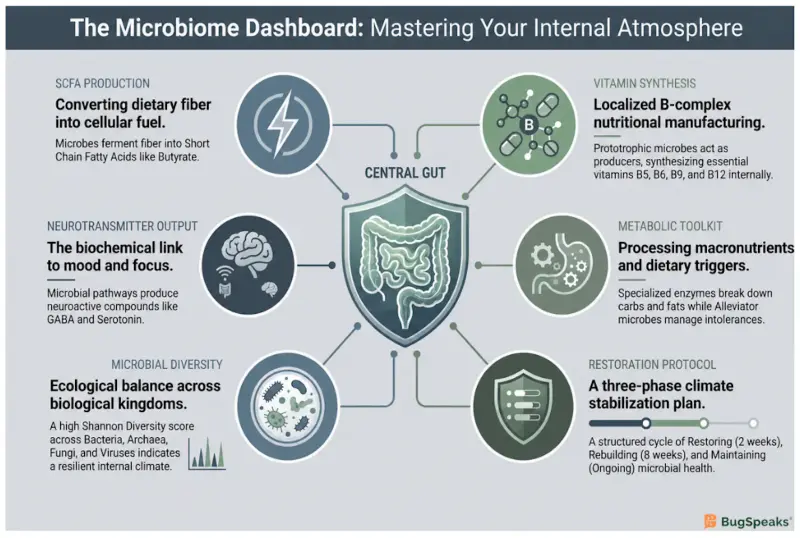
What The Microbes Produce?
Knowing the names of the microorganisms residing inside of you is only the first step in understanding your internal ecosystem. The true power of your gut microbiome lies in its active output. Your digestive tract functions like a massive, dynamic internal atmosphere. Just as the Earth’s climate is regulated by the interactions of oceans and atmospheric gases, your internal wellness is regulated by a microscopic biochemical atmosphere generated by your microbes.
This section of your wellness profile evaluates your microbiome’s functional potential. It measures the shared genetic capacity of your microbes to manufacture beneficial elemental "gases" and compounds that circulate throughout your body.
Short Chain Fatty Acid (SCFA) Production Potential
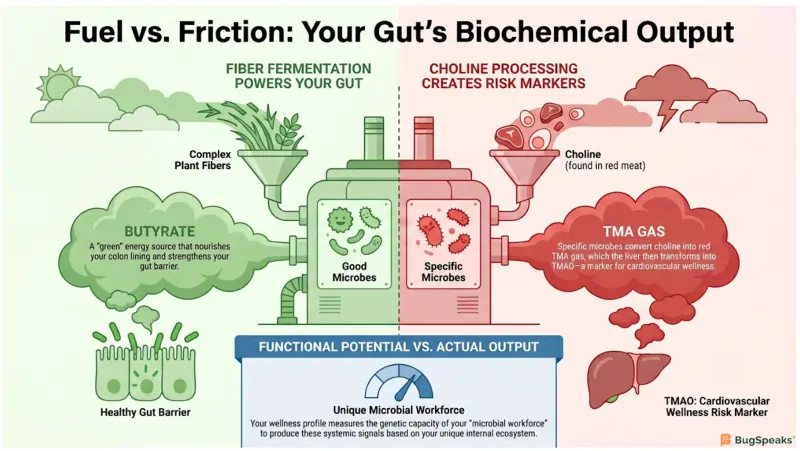
One of the most critical products of your internal atmosphere is a group of organic compounds known as Short Chain Fatty Acids (SCFAs). When you consume complex dietary fibers that your human cells cannot digest, your microbes ferment these fibers and transform them into these highly beneficial acids.
The analysis carefully evaluates your microbiome’s potential to produce the three primary SCFA components: Butyrate, Acetate, and Propionate.
Acetate is the most abundant of these elements and acts as a fundamental building block, helping to regulate glucose metabolism. Propionate travels to the liver to assist with internal signaling. However, Butyrate is arguably the most vital output for your digestive architecture. It acts as the primary renewable energy source for the cells lining your colon. High potential in this category means your microbial workforce is heavily equipped to nourish your protective gut lining, maintain a strong structural barrier, and send positive, stabilizing signals throughout your entire body.
Vitamin Production Potential
Your gut functions as its own on-site nutritional manufacturing plant. While you obtain vitamins from food, your internal environment contributes significantly to your daily vitality by locally synthesizing several essential B vitamins.
Your profile evaluates this by assessing the balance between Prototrophic Species (the "Producers" microbes that manufacture vitamins) and the species that consume those vitamins to survive (the "Quenchers"). By evaluating this complex ecological balance, the sequencing analysis estimates your net potential to produce essential vitamins like B5, B6, B9 (Folate), and B12 directly within your digestive tract.
Neurotransmitter Production Potential
The atmospheric signals produced in your gut do not stay isolated in the digestive tract; they communicate directly with your brain via the gut-brain axis. This section assesses the genetic potential of your microbes to synthesize neuroactive compounds.
The analysis specifically evaluates microbial pathways for producing Gamma-Aminobutyric Acid (GABA), a signaling molecule known for its calming effect on the nervous system. It also evaluates the potential for producing Serotonin and Dopamine. Understanding this biochemical output provides incredible insight into how your specific gut environment might be actively supporting your daily mood, focus, and stress resilience.
What The Microbes Do?
While the previous section mapped the protective compounds your microbes manufacture, this section explores how they handle incoming dietary weather fronts. Our gut microbes are essential operational partners, playing a massive role in how we break down our daily food and manage physical stressors.
Macronutrient Metabolism and Gut Function
The human body is surprisingly limited in its own natural digestive enzymes. The gut microbiome, however, possesses a vast, highly specialized genetic toolkit to metabolize the primary components of your food, known as Macronutrients.
For instance, foundational bacteria possess specific carbohydrate-active enzymes that allow them to dismantle tough plant fibers that you otherwise could not process. This section scores the abundance of these key microbes to determine your overall Carbohydrate Metabolism Potential, as well as your potential to process fats and proteins.
Furthermore, the analysis measures your overall gut function by evaluating how well your microbial community supports Intestinal Motility, the healthy, rhythmic movement of food through your digestive tract, and how efficiently your internal climate unlocks essential minerals from your food so your body can absorb them.
Intolerance Management and Endurance Potential
Your wellness profile also looks at how your microbes manage specific dietary burdens. The Intolerance Management section evaluates your microbiome's genetic potential to help process heavy, difficult-to-digest elements like lactose, fructose, gluten, and histamine.
It is important to understand that this is not an allergy test. Instead, it checks if your internal atmosphere contains Alleviator Microbes, friendly bacteria that produce specialized enzymes to help break down problematic compounds before they cause digestive discomfort.
Beyond digestion, your microbes also influence your physical vitality. The Endurance Potential category evaluates microbial signatures that correlate with aerobic and physical stamina, showing how efficiently your internal climate supports oxygen utilization and exercise recovery.
Health Indicators and Wellness Propensities
The manner in which microbes metabolize food can also produce potentially undesirable byproducts that disrupt your internal climate. This section acts as an ecological sensor, measuring your wellness based on specific microbial signatures.
For example, when you consume foods rich in choline (like red meat), certain microbes can convert it into a gas called TMA. Your liver then processes this gas into Trimethylamine N-oxide (TMAO). High TMAO Production Potential is a marker that warrants a wellness-focused dietary shift, as elevated levels are monitored for cardiovascular wellness. The analysis also includes indicators for fatigue propensity and environmental sensor markers, identifying ecological shifts in your gut bacteria that commonly correlate with exposure to modern environmental pollutants like microplastics.
What Type of Microbes are Present?
To truly understand the operational climate of your gut, we must take a comprehensive census of its inhabitants. This section maps the exact types of microorganisms residing in your internal landscape, moving from broad biological kingdoms down to specific, highly impactful species.
Diversity and Kingdom Distribution
A stable, resilient internal climate requires multiple layers of life working in perfect harmony to achieve Eubiosis, which is the state of optimal ecological balance. The overall richness and variety of your internal ecosystem is evaluated through your Shannon Diversity score.
The Kingdom Distribution analysis shows how your environment is structured across major biological domains. Bacteria represent the primary structural bedrock of the microbiome, responsible for breaking down food and producing the vast majority of your atmospheric metabolites. Living alongside them are Archaea, which are ancient microbes that act as the local climate-control crew. Many Archaea are methanogens, meaning they consume the excess gases produced by the bacteria, ensuring your internal environment does not become over-pressurized.
The ecosystem also contains Fungi, which influence local immune balance, and Viruses (primarily bacteriophages), which act as a natural population-control mechanism to keep rapidly dividing bacterial groups from overtaking the terrain.
Foundation Microbiota
Within the vast kingdom of bacteria, certain species act as the essential, load-bearing pillars of your gut ecosystem. These are known as the Foundation Microbiota.
These specific microbes have a disproportionately large impact on your daily wellness. For example, Akkermansia muciniphila acts as an active environmental guardian, continuously stimulating the production of your intestinal mucus to physically strengthen your gut barrier. Meanwhile, Faecalibacterium prausnitzii acts as your internal climate-stabilizer, synthesizing massive amounts of protective butyrate. If these foundational workers are depleted, the overall structure of the microbiome weakens dramatically.
Probiotic Characterization, Pathogens, and the Resistome
The wellness analysis formally screens your sample for well-known friendly microbes, quantifying the abundance of naturally occurring Probiotics from the Lactobacillus and Bifidobacterium groups.
A proper ecological survey must also continuously monitor the environment for overgrowths. The Pathogen Characterization section identifies opportunistic bacteria or Pathobionts. These are microorganisms that are normally harmless in small numbers but can cause significant ecological disruptions if they multiply too quickly due to an imbalanced environment.
Finally, the report extensively maps your Resistome. This is the collective set of antibiotic resistance genes naturally carried by your everyday microbial population. It is entirely normal for bacteria to carry these defense mechanisms. Mapping this network simply provides your practitioner with a proactive biological roadmap to ensure future wellness choices align perfectly with your unique ecosystem.

Dietary Recommendations
The ultimate goal of monitoring your microbiome’s internal climate is turning your unique sequence data into personalized action. Because your analysis looks at the entire biological community simultaneously, the nutritional recommendations provided by BugSpeaks do not rely on isolated, single-ingredient fixes. Instead, they provide a highly tailored, three-phase remediation plan designed to gradually balance and permanently stabilize your unique microbial climate.

Phase 1: Restoring Your Gut Microbiome (2 Weeks)
The first phase acts as an ecological reset. This strict, short-term, two-week period focuses on clearing the "smog" from your internal environment. The primary goal during this phase is to rapidly minimize the abundance of overgrown, opportunistic Pathogenic Microbes. This is achieved by temporarily restricting selected refined grains, artificial sweeteners, and highly processed foods that feed these unfavorable microbes. By starving these overgrowths, you prepare a clean, stable foundation for beneficial microbes to thrive.
Phase 2: Rebuilding Your Microbiome (8 Weeks)
Once the internal environment is prepped and cleared, Phase 2 begins the intensive rebuilding process, lasting up to eight weeks. This phase is the most critical for lasting wellness, as it involves the active re-inoculation of your gut flora.
During Phase 2, the dietary strategy heavily emphasizes the introduction of Probiotics. These are live, beneficial "worker" microbes that you introduce via natural dietary sources and targeted commercial supplements to actively rebuild your foundational workforce. To ensure these newly introduced microbes survive, colonize, and multiply, Phase 2 also heavily incorporates specific prebiotics, specialized, indigestible dietary fibers that act as high-quality fertilizer to exclusively feed these beneficial workers.
Phase 3: Maintaining the Healthy Gut (Ongoing)
Phase 3 is your long-term, sustainable wellness strategy. It involves a streamlined diet designed to maintain the healthy, balanced microbial climate you successfully established during Phase 2. This phase focuses on a diverse, plant-rich meal method and encourages the continued, moderate inclusion of Fermented Foods to sustain your microbial diversity permanently.
All three phases provide a clear, color-coded frequency guide indicating exactly how often specific foods should be consumed (daily, alternate days, every three days, or avoided). By following this structured, data-driven nutritional blueprint, you can actively support your foundational microbes, optimize your biological outputs, and master your internal climate.
Visualize the process- https://youtu.be/ouwO1GDt7xs