Your Waste: The Essential Health Portfolio Statement
Is the daily output a legitimate health audit for a beginner?
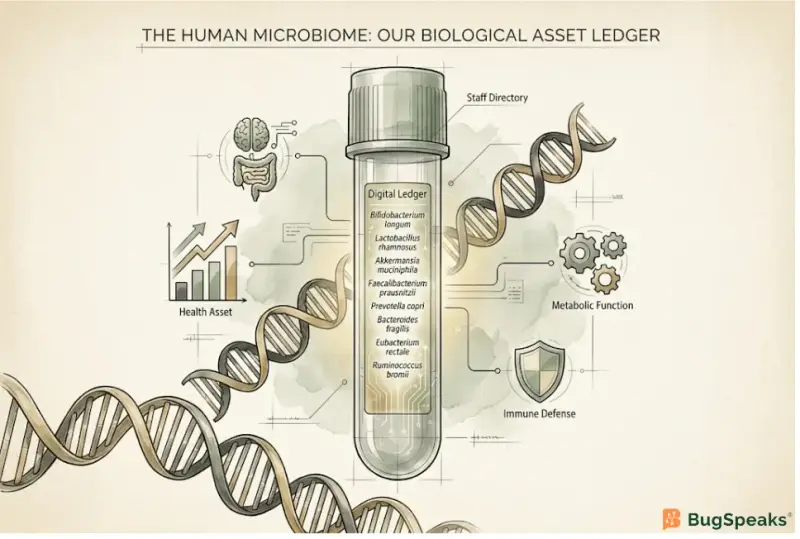
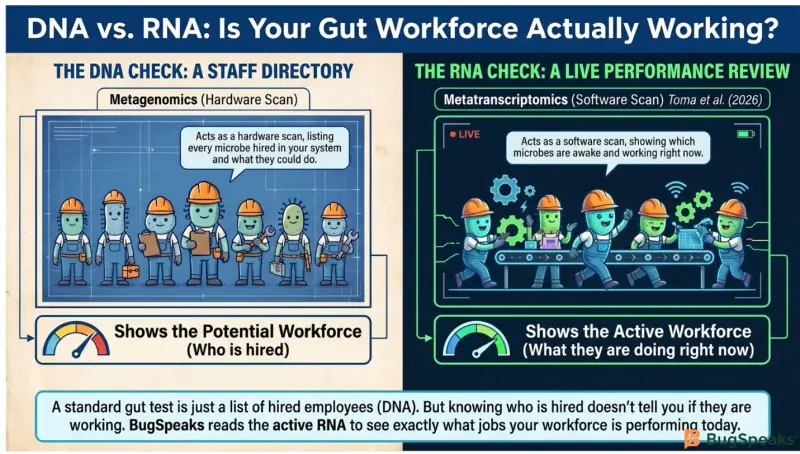
Yes, the daily output from the body functions as a comprehensive audit report that records exactly how well the internal workforce in the intestines is managing your health "Portfolio" Cheah et al. (2026). In simple terms, what is left over after digestion is an information-dense record of every metabolic transaction made by your gut’s specialized workforce. Analyzing this record through Metagenomic Analysis allows for a complete "Staff Directory" to be created, listing every microbe currently employed in your system. This provides a baseline measurement of Microbial Alpha-diversity, which is the most important metric for determining if your internal health "firm" is stable or at risk of failing.
A high-diversity report shows a resilient team capable of handling environmental stress and dietary shifts, while a low-diversity report signals a "Management Crisis" where the system lacks the variety needed to cover all metabolic bases. Recent research has confirmed that these user-collected records provide a reliable, long-term ledger that allows for deep-dive health tracking over a Prospective Cohort Study timeline Cheah et al. (2026). By reading the DNA of the microbes in your intestines, we can determine the functional potential of your system and identify whether your biological assets are being managed correctly. Think of this like checking the payroll of a company; if you only have one type of employee, the business cannot survive a complex market.
Why does it feel so "disgusting" to handle this valuable data?
The sensory discomfort felt when handling a sample is a natural "Friction Barrier" designed as an evolutionary defense to prevent the system from interacting with potential pathogens Cheah et al. (2026). This visceral reaction, known as Sensory Aversion, is a primitive survival instinct that keeps the operator away from Bioreactor Output that might contain infectious agents. However, from a diagnostic perspective, this same instinct can become a form of Logistical Friction that blocks the collection of the only document that proves how well your internal infrastructure is performing.
While the act of taking a sample is often described by beginners as "absolutely disgusting," the medical intelligence hidden within that material is the most valuable asset a health firm possesses. To move past this barrier, it is helpful to view the specialized auditors at the laboratory as "Data Decoders." To them, the sample is not a waste product; it is a goldmine of information. Once the sample is secured in the specialized collection kit, the "disgust factor" is neutralized, and the focus shifts back to the high-definition data needed to protect the system's long-term dividends. By overcoming this barrier, you move from a passive observer to an active auditor of your own body.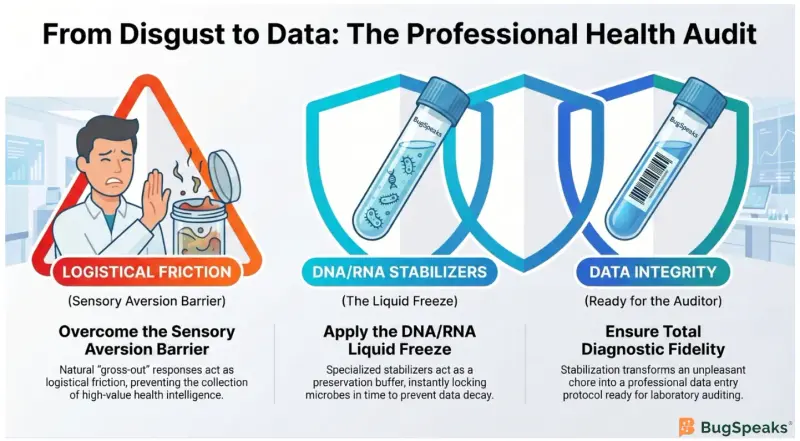
How does BugSpeaks act as the Lead Auditor for a beginner?
BugSpeaks acts as the primary "Analytical Brain" that reads your daily ledger and explains exactly how the microbial workforce is performing using a high-resolution Taxonomic Profile Cheah et al. (2026). While basic tests might only skim the surface, BugSpeaks performs a deep-dive audit of the DNA to see exactly which microbial teams are "hired" on your grid. This creates a detailed map of your intestinal workforce, providing a level of Metabolic Telemetry that was once impossible for non-scientists to access.
By analyzing the DNA, the audit can detect "Accounting Errors" such as rising inflammation or the presence of Rogue Agents long before they cause a full systemic bankruptcy. This audit identifies the functional capacity of your intestines, determining if you have the right microbes to produce essential vitamins and protective fuels. Instead of a confusing list of scientific names, the final report acts as a live ticker of your health, allowing you to manage your biological portfolio with the precision of a professional fund manager. This data gives you the power to see inside the "Engine Room" of your health without needing a medical degree.
How does the collection kit protect the "Secrets" in the waste?
The BugSpeaks collection kit uses a specialized Preservation Buffer to protect the data and prevent the report from decaying before it can be audited in the lab Invitek (2026a). Genetic data is extremely fragile; as soon as the sample leaves the intestines, exposure to heat, oxygen, and Light Exposure can cause the information to rot or "corrupt." To stop this, the kit utilizes DNA Stabilizers that act as a chemical shield, instantly locking the microbes in time so they do not change during shipping.
This buffer ensures the sample remains Room Temperature Stable, meaning you do not need ice or freezing to keep the data pure. This process guarantees Diagnostic Fidelity, which means the lab sees the exact "Staff Directory" that was present inside your gut at the moment the sample was collected. Without these stabilizers, the microbes would continue to grow or die off in the mail, creating a "False Ledger" that does not reflect your true health status. By shielding the sample from the environment, the kit ensures that the Microbial Beta-diversity, the comparison between your sample and global benchmarks is calculated with absolute precision Invitek (2026b). Protecting the sample from Light Exposure is especially important, as UV rays can break the molecular bonds of DNA.
Can this audit detect "Financial Fraud" like cancer or leaks?
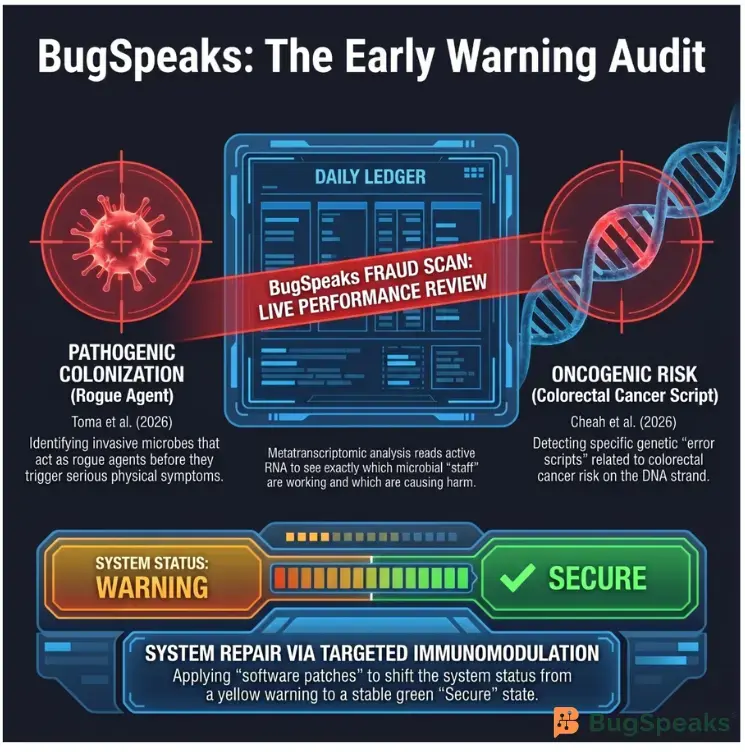
Yes, the BugSpeaks audit acts as a fraud-detection system by looking for "Red Flags" like high Fecal Calprotectin levels or signs of serious hardware decay in the intestines Cheah et al. (2026). In a healthy firm, the report is stable and shows a balanced workforce. However, if a "Security Breach" occurs such as the growth of a tumor or the onset of Malabsorption Syndrome the ledger will show clear evidence of the disruption. Detecting these issues early allows the host to apply "Software Patches" like precision probiotics before the problem becomes a systemic crisis.
The audit also monitors the levels of Short-Chain Fatty Acids (SCFAs), which act as the "Repair Fuel" for your intestinal walls. If the report reveals a shortage of these molecules, it is a warning that the system is failing to maintain its infrastructure, which can lead to Epithelial Permeability, or a "leaky" gut. By identifying these gaps in your health data, the audit allows you to reinvest in your health by providing the specific Prebiotics needed to fuel your repair teams and strengthen your "Intestinal Firewall." This is the equivalent of catching a small leak in a pipe before it floods the entire building.
How does 'Trend Analysis' move you beyond a single snapshot?
One audit is a snapshot, but a year of regular audits provides a Trend Analysis that allows you to see the long-term growth of your health assets. To achieve professional-grade health management, you must move from a single "Balance Sheet" to "Quarterly Growth Reports." By utilizing Longitudinal Tracking to compare your Microbial Beta-diversity over time, you can see if your "Health Assets" are appreciating or if an invisible "Asset Drain" is occurring due to chronic stress or aging.
This long-term tracking ensures the system is audited against its own seasonal benchmarks rather than a static, year-round average. Just as a stock portfolio fluctuates with the market, your Microbiome fluctuates with the seasons. Longitudinal Tracking allows the auditors to see past these temporary shifts and identify the true, underlying strength of your intestines. This is the difference between a beginner who panics at a single data point and a professional who manages their health with long-term strategic vision Cheah et al. (2026). Tracking the Microbial Beta-diversity over time reveals the story of your lifestyle showing exactly how your diet, sleep, and stress are impacting your internal workforce.
Why is protecting the data with a chemical buffer so critical?
Genetic data is extremely fragile, and as soon as a report leaves the body, environmental factors can cause rapid "Data Corruption" if not properly managed Invitek (2026a). In the past, scientists relied on ice, but modern auditing uses specialized DNA Stabilizers that act as a chemical Preservation Buffer. This instantly locks the microbes in time, preventing them from replicating or dying off while the sample travels to the laboratory.
This ensures total Diagnostic Fidelity, meaning the lab sees exactly what was happening inside the gut at the moment the sample was taken. By eliminating the need for old-fashioned "Liquid Freeze" methods, the system becomes more efficient and less prone to error. Protecting your data from Light Exposure and heat ensures that your "Staff Directory" is accurate, preventing the "Corrupted Data" errors that can lead to a false picture of your system's health.
How does the audit detect security breaches like cancer?
The audit acts as a sophisticated fraud-detection system by looking for "Red Flags" like high Fecal Calprotectin levels that signal an active fire in the intestines Cheah et al. (2026). In a healthy firm, these levels are low, indicating that the workforce is operating in a state of Eubiosis. High levels signal a "Security Breach" internal inflammation or structural decay like Epithelial Permeability.
Detecting these issues early allows the host to apply "Software Patches," such as precision Probiotics, before the problem becomes a systemic crisis. Without this "Security Drill," hardware decay like tumors or chronic leaks can go unnoticed for years, slowly draining your health assets until the system crashes. Regular auditing is the only way to catch these invisible "Financial Frauds" and secure your biological future.
Why is 'Asset Reallocation' the final step of a professional audit?
The final step of the audit is Asset Reallocation, where you use the BugSpeaks "Procurement List" to reinvest in the specific microbial teams your system is currently missing. If your report reveals a "Shortage" in specific anti-inflammatory workers, you don't just eat "generally healthy" food; you reinvest in the specific Prebiotics that those specialized teams require to thrive. This is the critical transition from being a passive consumer to becoming an Active Portfolio Manager of your own biology.
By providing the system with high-grade fuel, you enable the microbial workforce to maximize their production of nutrients and maintain 100% uptime. This targeted reinvestment stops the "Internal Fires" of inflammation and ensures that your intestines remain a profitable, high-energy environment for years to come. Securing your health with a professional audit is not just about avoiding disease; it is about optimizing your system to ensure the highest possible return on your biological investment.
Visualize the process- https://youtu.be/6St8Qyt-D6U
Reference
Cheah, S., Burke, J., Bruinsma, F. J., Evans, M., Tsimiklis, H., Hodge, A. M., Lynch, B. M., Giles, G. G., Sinha, R., Southey, M. C., & Milne, R. L. (2026). Fecal Sample Collection for Gut Microbiome Research in a Prospective Cohort: A Pilot Study within the Australian Breakthrough Cancer Study. Cancer research communications, 6(1), 70–76. https://doi.org/10.1158/2767-9764.CRC-25-0445
Toma, R., Hu, L., Shen, N., Patridge, E., Wohlman, R., Banavar, G., & Vuyisich, M. (2026). The Human Gut Microbiome Activity Is Resilient and Stable for up to Six Months: A Large Stool Metatranscriptomic Study. Microorganisms, 14(4), 835. https://doi.org/10.3390/microorganisms14040835
https://www.invitek.com/en/Microbiome/PDP-Stool-Collection-Tubes-with-DNA-Stabilizer