The Microbyte Series - Lactobacillus acidophilus- It's in the name!
History and naming
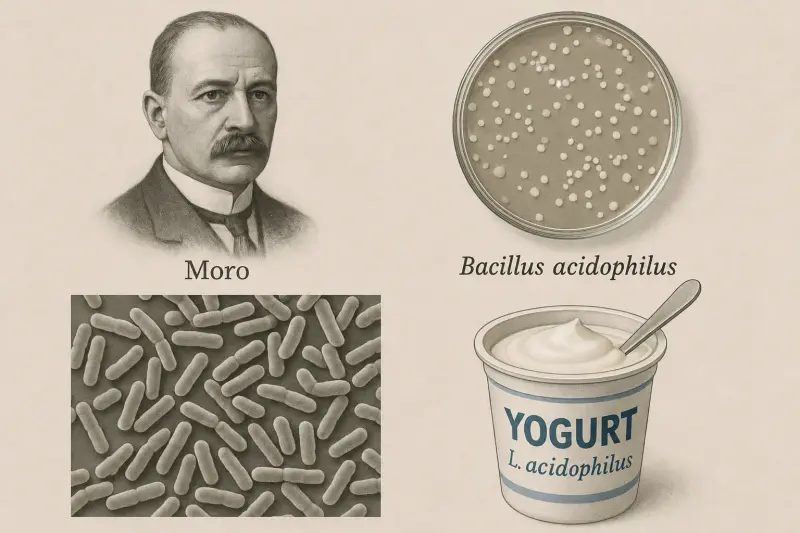
L. acidophilus was first isolated in 1900 from infant feces by Moro and originally named Bacillus acidophilus. The species has undergone multiple taxonomic revisions due to limitations in early methods that relied on morphology and biochemistry. Many human isolates were incorrectly labeled as L. acidophilus from 1920 to the 1970s. Phenotypic similarity among lactic acid bacteria led to frequent misidentifications and misclassifications, including strains now reclassified (e.g., L. johnsonii). Several strains with the same genetic identity have been labeled differently across culture collections and commercial uses. Despite taxonomic confusion, L. acidophilus became a widely used probiotic, particularly in dairy products like yogurt.
Health benefits
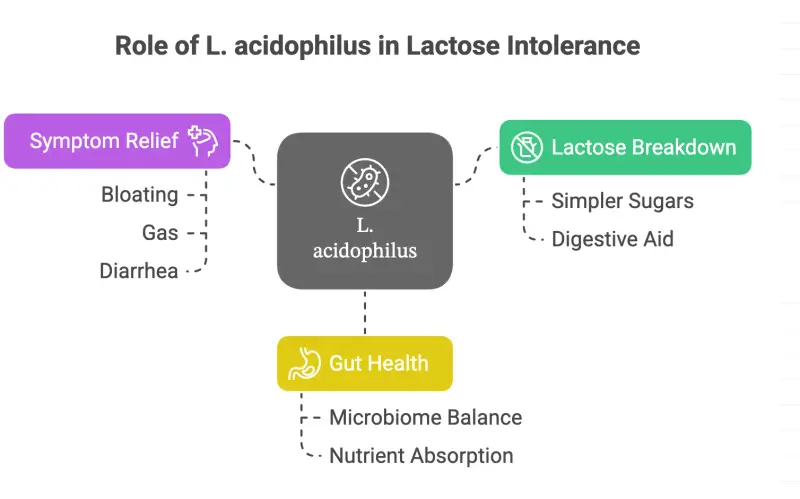
Lactobacillus acidophilus exhibits several key characteristics that play an important role in maintaining overall health. Lactobacillus acidophilus guards the gut by producing acids, making the gut environment unfavourable for the growth of harmful bacteria and supporting the beneficial ones. It also plays a crucial role in strengthening the gut barrier integrity by increasing the expression of tight junction proteins and the production of protective substances like mucin. Lactobacillus acidophilus produces lactase (β-galactosidase), which helps break down lactose into simpler sugars, easing symptoms like bloating and cramps in lactose-intolerant people. It also supports heart health by reducing cholesterol absorption in the gut and helping remove cholesterol from arteries, lowering the risk of plaque build-up. For immunity, it boosts protective antibodies (like IgG and IgA), increases helpful immune cells (CD4⁺), and reduces inflammation by lowering inflammatory markers like IL-6 and TNF-α. In oral health, it competes with harmful bacteria, reducing plaque and the risk of cavities. In pregnant women with gestational diabetes, taking L. acidophilus through probiotic yogurt lowered blood sugar and HbA1c levels, likely by producing beneficial acids that improve insulin sensitivity and reduce inflammation. It also helps in managing skin issues like eczema in children with allergies by lowering inflammation and reducing allergy-related markers when taken daily.
Applications of Lactobacillus acidophilus
Lactobacillus acidophilus is broadly utilised in the fermentation of dairy, meat, and plant-based products, where it enhances their nutritional value, sensory attributes, and shelf life. Fermentation by Lactobacillus acidophilus boosts nutritional and antioxidant properties in fruit and vegetable juices. Lactobacillus acidophilus produces organic acids, which results in increasing acidity and prevents spoilage by hindering the growth of bad microbes, thus extending the shelf life of the product. Acidophilus milk, a fermented drink enriched with Lactobacillus acidophilus, aids in better digestion and controls cholesterol levels.
Microbe profile
Shape: Rod-shaped
Gram nature: Gram-positive
Spore formation: No
Oxygen requirement: Microaerobic- requires oxygen for survival but cannot tolerate normal atmospheric oxygen concentrations.
Optimal temperature: 35–38°C
Optimal pH: 5.5–6.0
Food source: Glucose, fructose, lactose, and sucrose
Taxonomic Classification
Domain: Bacteria
Phylum: Bacillota
Class:Bacilli
Order:Lactobacillales
Family:Lactobacillaceae
Genus:Lactobacillus
Species:Lactobacillus acidophilus
Reference
Bull, M., Plummer, S., Marchesi, J., & Mahenthiralingam, E. (2013). The life history of Lactobacillus acidophilus as a probiotic: a tale of revisionary taxonomy, misidentification and commercial success. FEMS microbiology letters, 349(2), 77–87. https://doi.org/10.1111/1574-6968.12293
Gao, H., Li, X., Chen, X., Hai, D., Wei, C., Zhang, L., & Li, P. (2022). The Functional Roles of Lactobacillus acidophilus in Different Physiological and Pathological Processes. Journal of microbiology and biotechnology, 32(10), 1226–1233. https://doi.org/10.4014/jmb.2205.05041
Liu, Y., Nawazish, H., Farid, M. S., Abdul Qadoos, K., Habiba, U. E., Muzamil, M., Tanveer, M., Sienkiewicz, M., Lichota, A., & Łopusiewicz, Ł. (2024). Health-Promoting Effects of Lactobacillus acidophilus and Its Technological Applications in Fermented Food Products and Beverages. Fermentation, 10(8), 380. https://doi.org/10.3390/fermentation10080380
Liu, Y., Nawazish, H., Farid, M. S., Abdul Qadoos, K., Habiba, U. E., Muzamil, M., Tanveer, M., Sienkiewicz, M., Lichota, A., & Łopusiewicz, Ł. (2024). Health-Promoting Effects of Lactobacillus acidophilus and Its Technological Applications in Fermented Food Products and Beverages. Fermentation, 10(8), 380. https://doi.org/10.3390/fermentation10080380
Huang, Y., Wang, J., Quan, G., Wang, X., Yang, L., & Zhong, L. (2014). Lactobacillus acidophilus ATCC 4356 prevents atherosclerosis via inhibition of intestinal cholesterol absorption in apolipoprotein E-knockout mice. Applied and environmental microbiology, 80(24), 7496–7504. https://doi.org/10.1128/AEM.02926-1
Gao, H., Li, X., Chen, X., Hai, D., Wei, C., Zhang, L., & Li, P. (2022). The Functional Roles of Lactobacillus acidophilus in Different Physiological and Pathological Processes. Journal of microbiology and biotechnology, 32(10), 1226–1233. https://doi.org/10.4014/jmb.2205.05041
Tahmourespour, A., & Kermanshahi, R. K. (2011). The effect of a probiotic strain (Lactobacillus acidophilus) on the plaque formation of oral Streptococci. Bosnian journal of basic medical sciences, 11(1), 37–40. https://doi.org/10.17305/bjbms.2011.2621
Sahhaf Ebrahimi, F., Homayouni Rad, A., Mosen, M., Abbasalizadeh, F., Tabrizi, A., & Khalili, L. (2019). Effect of L. acidophilus and B.lactis on blood glucose in women with gestational diabetes mellitus: a randomized placebo-controlled trial. Diabetology & metabolic syndrome, 11, 75. https://doi.org/10.1186/s13098-019-0471-5
Nakata, J., Hirota, T., Umemura, H., Nakagawa, T., Kando, N., Futamura, M., Nakamura, Y., & Ito, K. (2019). Additive effect of Lactobacillus acidophilus L-92 on children with atopic dermatitis concomitant with food allergy. Asia Pacific allergy, 9(2), e18. https://doi.org/10.5415/apallergy.2019.9.e18