The MicroByte Series Bifidobacterium bifidum: The Infant Gut Guardian to Probiotic Powerhouse
History
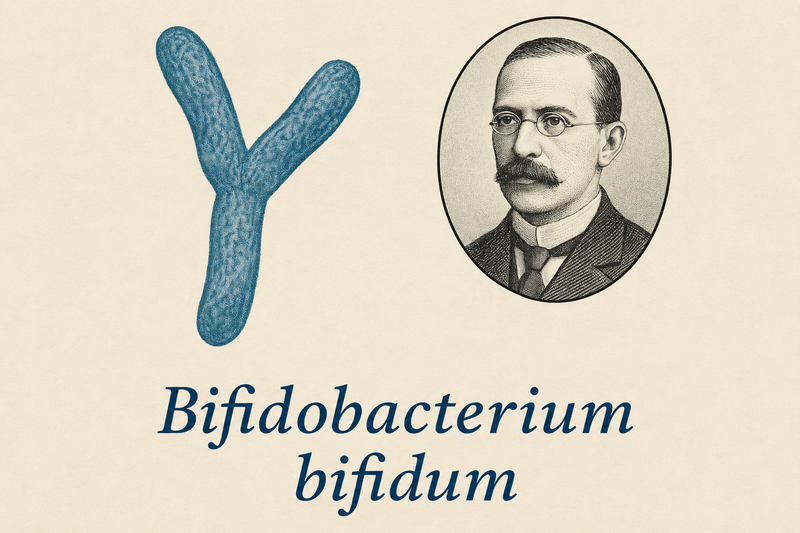
The story of Bifidobacterium is closely tied to the origins of microbiology and probiotic science, beginning in 1899 when French pediatrician Henri Tissier at the Pasteur Institute identified a dominant Y- or V-shaped bacterium in the feces of breast-fed infants, which he named Bacillus bifidus communis. Notably, he observed that this bacterium was scarce in infants with diarrhea and proposed a groundbreaking idea that restoring gut health could be achieved by administering these beneficial microbes to displace harmful ones, laying the foundation of probiotic therapy. Over the years, the classification of this bacterium proved challenging, as it was variously grouped under names like Bacteroides bifidus and Lactobacillus bifidus before Danish microbiologist Orla-Jensen formally proposed the genus Bifidobacterium in 1924. It wasn’t until 1973, however, that the genus was officially recognized as distinct, initially comprising 11 species. Since then, the number of identified Bifidobacterium species has grown to more than 50, reflecting decades of research and discovery.
Habitat
Bifidobacterium bifidum is a key resident of nutrient-rich, anaerobic environments in animal hosts, especially the human gut, where it colonizes the colon and lower small intestine, and can also be found in breast milk and the vaginal microbiome. It is among the first microbes to settle in a newborn’s gut, transmitted from the mother during birth and breastfeeding, and in healthy, breast-fed infants, Bifidobacteria (including B. bifidum, B.breve, and B.longum subsp. infantis) can make up 80–90% of the intestinal microbiota. These early colonizers help digest human milk oligosaccharides and shape the infant’s immune system, while in adults B.bifidum remains present but is often joined or surpassed by species like B. adolescentis and B. longum. Known for its strong adhesion to intestinal mucus and epithelial cells, B. bifidum helps form a protective barrier in the gut and is adapted to anaerobic growth, forming distinctive glossy “dewdrop” colonies in culture. Although once thought to be largely human-associated, DNA studies show Bifidobacteria, including B.bifidum, also inhabit other mammals, birds, and even insects, and can occasionally be recovered from sewage and fermented foods, though their primary niche remains the gut. Ecologically, B.bifidum thrives on complex carbohydrates and mucins that humans cannot digest, fermenting them into beneficial short-chain fatty acids that nourish colon cells, lower gut pH to suppress pathogens, and produce essential nutrients like folate and amino acids. In return, the host provides an ideal anaerobic environment and prebiotic substrates. Its presence is closely linked to gut health, supporting immune function and protecting against harmful microbes, while reduced levels of B.bifidum are often associated with dysbiosis and gastrointestinal disorders.
Health Benefits
Bifidobacterium bifidum is one of the very first microbes to colonize a baby’s gut, passed on from the mother during birth and breastfeeding. In breastfed infants, it can make up to 95% of the gut microbiota thanks to its unique ability to digest human milk oligosaccharides (HMOs), nutrients indigestible to the baby but perfect for Bifidobacteria. This early partnership doesn’t just aid digestion; it shapes the immune system, strengthens the gut, and lays the foundation for lifelong health. The benefits come from powerful mechanisms. B. bifidum produces short-chain fatty acids (SCFAs) like acetate and lactate, which fuel gut cells, lower intestinal pH to block harmful bacteria, and support butyrate production essential for gut barrier integrity and anti-inflammatory effects. It also trains the immune system, boosting protective antibodies, promoting regulatory T cells for balance, and calming inflammation by regulating cytokines. Certain strains even reinforce intestinal tight junctions by directly signaling gut cells, helping prevent “leaky gut.” It has shown proven benefits in managing digestive disorders such as irritable bowel syndrome (IBS), where strains like B. bifidum MIMBb75 reduced abdominal pain, bloating, and irregularity, even when heat-inactivated. It is also studied for preventing infections (e.g., reducing Helicobacter pylori activity and protecting infants from necrotizing enterocolitis and diarrhea) while supporting immune balance by reinforcing the gut barrier and dampening inflammation.
Industrial Application
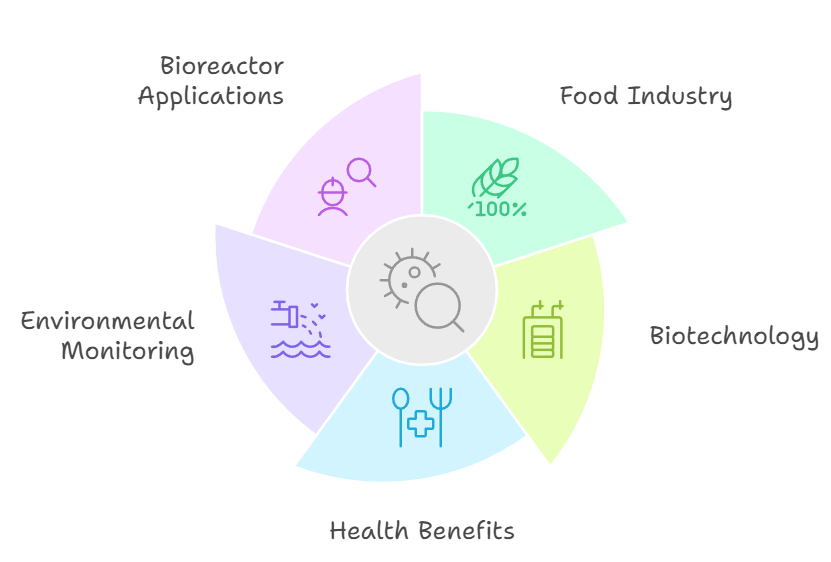
Bifidobacterium bifidum has become widely used across food, health, and biotechnology industries, evolving from an infant gut symbiont to a commercial “good bug.” In the food sector, it is added to yogurts, fermented milks, cheeses, and even infant formulas. Regular intake of B. bifidum–fortified foods has been linked to better digestion, stronger immunity, and reduced gastrointestinal infections. In biotechnology, B. bifidum’s unique metabolism (the bifid shunt) is harnessed in fermentation to produce acids, natural preservatives, and vitamins like folate, enriching foods nutritionally. It also produces exopolysaccharides (EPS) with antioxidant, immune-modulating, and prebiotic potential, as well as bacteriocins that inhibit pathogens, making it valuable for functional food innovation. Beyond food and medicine, its presence in water serves as a marker of fecal contamination, and its enzymes, particularly fructose-6-phosphate phosphoketolase, are studied for bioreactor applications. Altogether, B.bifidum stands as both a microbiome keystone and an industrial workhorse enhancing health, nutrition, and biotechnology while ongoing research continues to expand its applications as a modern probiotic powerhouse.
Taxonomic Classification
Domain: Bacteria
Kingdom: Bacillati
Phylum: Actinomycetota
Class: Actinomycetes
Order: Bifidobacteriales
Family: Bifidobacteriaceae
Genus: Bifidobacterium
Species: Bifidobacterium bifidum
Microbial Profile
Shape: Rod-shaped
Gram nature: Gram-positive
Spore formation: No spore formation
Motility: Non-motile
Oxygen requirement: Anaerobic
Optimal pH: 6.5-7.0
-Varsha V
Reference
Turroni, F., Duranti, S., Milani, C., Lugli, G. A., van Sinderen, D., & Ventura, M. (2019). Bifidobacterium bifidum: A Key Member of the Early Human Gut Microbiota. Microorganisms, 7(11), 544. https://doi.org/10.3390/microorganisms7110544
Lee, J. H., & O'Sullivan, D. J. (2010). Genomic insights into bifidobacteria. Microbiology and molecular biology reviews: MMBR, 74(3), 378–416. https://doi.org/10.1128/MMBR.00004-10
Khoruts, A., Hoffmann, D. E., & Britton, R. A. (2020). Probiotics: Promise, Evidence, and Hope. Gastroenterology, 159(2), 409–413. https://doi.org/10.1053/j.gastro.2020.05.058
Duranti, S., Longhi, G., Ventura, M., van Sinderen, D., & Turroni, F. (2021). Exploring the Ecology of Bifidobacteria and Their Genetic Adaptation to the Mammalian Gut. Microorganisms, 9(1), 8. https://doi.org/10.3390/microorganisms9010008
Arboleya, S., Watkins, C., Stanton, C., & Ross, R. P. (2016). Gut Bifidobacteria Populations in Human Health and Aging. Frontiers in microbiology, 7, 1204. https://doi.org/10.3389/fmicb.2016.01204
Hidalgo-Cantabrana C.Delgado S.Ruiz L.Ruas-Madiedo P.Sánchez B.Margolles A. 2017. Bifidobacteria and Their Health-Promoting Effects. Microbiol Spectr 5:10.1128/microbiolspec.bad-0010-2016. https://doi.org/10.1128/microbiolspec.bad-0010-2016