Tried and Tested: Natural Remedies to Relieve Bloating
The uncomfortable, tight feeling sometimes in our abdomen after a meal, stressful days, or sometimes even for no particular reason. We have all been there. Bloating is a common digestive issue that a lot of people face. It’s usually harmless, but the visible swelling and the uncomfortable feeling can impact your daily routine.
The good news is that you need not always go for over-the-counter medication. Rather, try Natural remedies, which are gentler and try to soothe your digestive discomfort.
At BugSpeaks®, we understand that true digestive wellness goes beyond quick fixes. Our understanding of the gut microbiome, supported by insights from our gut microbiome test, shows that bloating often signals an underlying imbalance in gut bacteria. By combining natural remedies with microbiome insights, you can work towards better digestive health.
Understanding Bloating
Common Causes
Bloating is your gut’s way of telling something isn't right. So, understanding what triggers your bloating will be your first step towards better digestive health.
Dietary triggers and food intolerances: Certain types of hard to digest carbs and fibres called FODMAPS foods that your gut finds it hard to absorb, like beans, lentils, onions, garlic, and some fruits. When they reach your large intestine, the microbes ferment them and produce excess gas.
Imbalance in gut microbiome: Research shows that when the gut microbiome balance is off ie. more gas producing microbes over beneficial ones, that’s when bloating follows. This can happen for various reasons: antibiotics, diet, stress, or even a lack of fiber in our diet.
Poor digestion and slow transit: When the food consumed moves slowly in the digestive tract, microbes have more time to ferment and produce gas. A lot of factors, like less stomach acid/ digestive enzymes, eating too quickly, can all contribute to the build up of gas.
Typical Symptoms
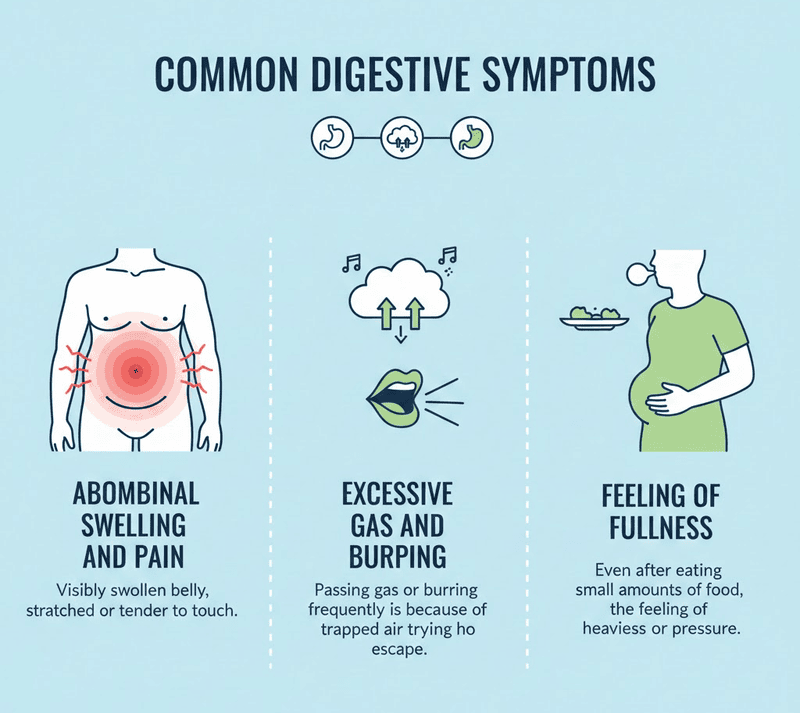
Bloating symptoms might be different for each of us. Some of the common signs of bloating are:
- Abdominal swelling and pain: A visibly swollen belly, stretched or tender to the touch.
Excessive gas and burping: Passing gas or burping frequently is because of the trapped air trying to escape.
- Feeling of fullness: Even after eating small amounts of food there is a feeling of heaviness or pressure.
Proven Natural Remedies
These remedies are backed by both traditional knowledge and modern research.
Foods and Dietary Additions:
Ginger (Adrak): They help in stimulating digestive enzymes and help the foods move through the gut easily. Gingerols and shogaols, which are the active compounds in ginger, help with less gas formation. You can add fresh ginger to meals or just chew a small piece before eating.
Papaya: The papain in papaya is a powerful enzyme that breaks down proteins and helps with bloating.
Pineapple: The enzyme Bromelain in pineapple aids has anti-inflammatory properties and also helps with digestion.
Banana: It is rich in potassium, which helps to reduce water retention. The resistant starch present in slightly green bananas, which are not fully ripe, feeds beneficial gut microbes.
Curd (Dahi): Natural probiotics in the curd help restore your gut microbiome. You can choose plain unsweetened options.
Fermented Foods: Addition of fermented foods like Idli, dosa, kombucha, kimchi, and sauerkraut will help to support digestion and also reduce the gas producing microbes.
Herbal Teas and Decoctions
Chamomile Tea: Chamomile helps in relaxing tight digestive muscles, reduces inflammation, and is useful especially if stress is aiding in your bloating. You can take it after meals or as part of your bedtime routine. [10]
Fennel Tea (Saunf): This is a traditional Indian remedy. The anethole in saunf relaxes digestive muscles and lets gas out. Crush 1-2 teaspoons of seeds and boil them in water, or even simply chew the seeds after a meal.
Cumin Tea (Jeera Water): Boil 1 teaspoon of cumin seeds in water and drink it. This will be a quick fix for bloating and releasing gas.
Coriander Seed Tea (Dhania): Boil 1 tablespoon of coriander seeds in water, and consuming it helps with bloating.
Lifestyle Tips for Lasting Relief
Combining healthy habits with natural remedies is the best option. Some of the lifestyle changes that could be incorporated into your daily routine will make a difference:
Eat mindfully and slowly: Chew your food properly, ie. 20-30 chews per bite. This helps to break down the food better and reduce the air you swallow.
Move your body: A short walk after meals helps with digestion.
Manage stress: Do Yoga, practise deep breathing, and meditation to avoid stress related bloating.
Keep a food diary: Keep tracking what you eat daily to help you figure out what triggers your bloating.
Stay hydrated throughout the day.
Avoid carbonated drinks
Tip: You can try the low-FODMAP diet for 2-4 weeks if you experience chronic bloating. Elimination diets can help you identify the food triggers before you gradually reintroduce foods.
When to Seek Professional Help
Occasionally, feeling bloated is fine, but you should not ignore certain red flags and take professional help when required.
Persistent or severe symptoms: When bloating lasts for over 2 weeks time despite the dietary changes, or pain which interferes with your daily routine.
Unexplained weight loss
Blood in stool or black, tarry stools
Fever or vomiting
Conclusion
You don't have to suffer from bloating quite often. Nature provides us with great solutions for bloating which are tested with time. From a warm cup of Fennel tea to chamomile tea, there are a lot of solutions which work. The key here is consistency in introducing these remedies into your daily routine rather than doing this only when it gets worse.
Each of our bodies responds differently. What works for others may not work for you. So, pay close attention to how your body responds and be patient.
Even after trying natural remedies, if bloating still seems to be a problem for you, it may be time to dive deeper. A gut microbiome test will let you know the microbial imbalances and provide personalized diet based on your gut microbiome. At BugSpeaks, we believe in providing you with the knowledge to take control of your gut because when your gut thrives, you thrive.
-Sushma K
References
Portincasa, P., Bonfrate, L., de Bari, O., Lembo, A., & Ballou, S. (2017). Irritable bowel syndrome and diet. Gastroenterology Report, 5(1), 11-19.
Seo, A. Y., Yoo, J. H., & Shin, J. E. (2013). The role of gut microbiota in the pathogenesis of irritable bowel syndrome. Clinical Endoscopy, 46(5), 511-517.
Seo, A. Y., Kim, N., & Oh, D. H. (2013). Abdominal bloating: pathophysiology and treatment. Journal of neurogastroenterology and motility, 19(4), 433.
Haniadka, R., Saldanha, E., Sunita, V., Palatty, P. L., Fayad, R., & Baliga, M. S. (2013). A review of the gastroprotective effects of ginger (Zingiber officinale Roscoe). Food & function, 4(6), 845-855.
Muss, C., Mosgoeller, W., & Endler, T. (2013). Papaya preparation (Caricol®) in digestive disorders. Neuro Endocrinology Letters, 34(1), 38-46.
Kansakar, U., Trimarco, V., Manzi, M. V., Cervi, E., Mone, P., & Santulli, G. (2024). Exploring the therapeutic potential of bromelain: applications, benefits, and mechanisms. Nutrients, 16(13), 2060.
Mitsou, E. K., Kougia, E., Nomikos, T. Z., Yannakoulia, M., Mountzouris, K. C., & Kyriacou, A. (2011). Effect of banana consumption on faecal microbiota: a randomised, controlled trial. Anaerobe, 17(6), 384-387.
Le Roy, C. I., Kurilshikov, A., Leeming, E. R., Visconti, A., Bowyer, R. C., Menni, C., ... & Spector, T. D. (2022). Yoghurt consumption is associated with changes in the composition of the human gut microbiome and metabolome. BMC microbiology, 22(1), 39.
Leeuwendaal, N. K., Stanton, C., O'Toole, P. W., & Beresford, T. P. (2022). Fermented Foods, Health and the Gut Microbiome. Nutrients, 14(7), 1527.
Srivastava, J. K., Shankar, E., & Gupta, S. (2010). Chamomile: A herbal medicine of the past with a bright future. Molecular Medicine Reports, 3(6), 895-901.