The MicroByte Series: Bacillus bulgaricus- The First Probiotic
History
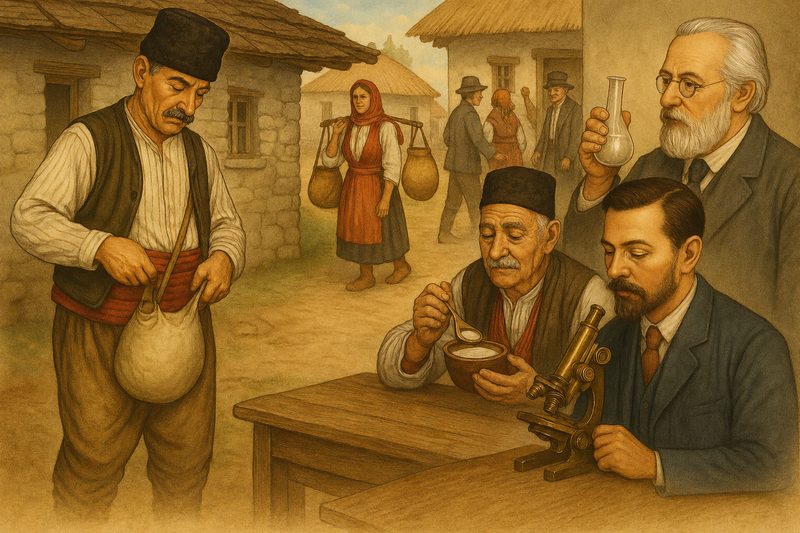
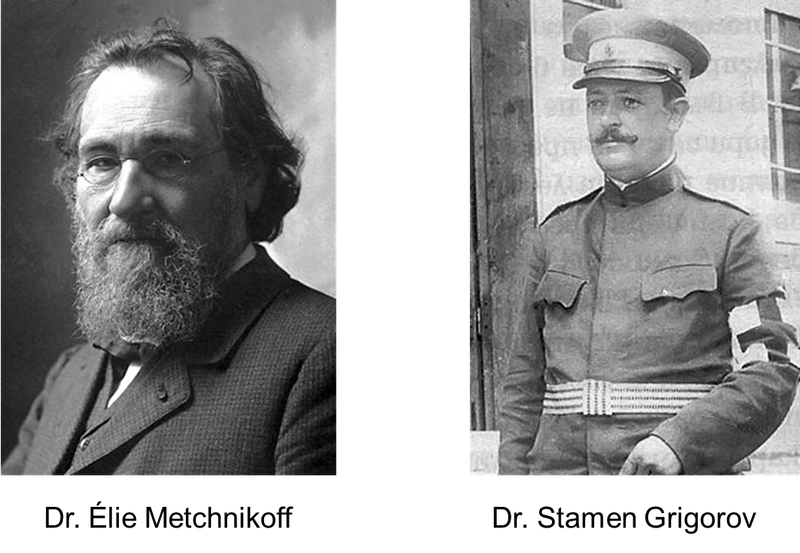
The Bulgarian traditional practice of making yoghurt involved storing milk in a lamb's skin bag, wrapped around the waist. In 1905, this mystery captured the attention of Dr Stamen Grigorov, a Bulgarian microbiologist. He wondered what was responsible for the milk becoming yoghurt. Grigorov’s extensive research identified that the specific rod-shaped bacteria were responsible for yoghurt production. Since this bacterium was first found in Bulgaria, it was named Bacillus bulgari.
At the same time, Dr. Élie Metchnikoff also noticed a fascinating anomaly in this South European country. Within a population of 3,000,000, over 3,000 centenarians were actively performing daily activities that people aged 65 in other parts of the world typically could not manage. Metchnikoff directly associated this lifestyle with Bulgaria's most traditional food, the Bulgarian Yoghurt.
He also strongly believed that the toxin-producing harmful bacteria in the large intestine were responsible for ill health and accelerated the aging process. At that time, Metchnikoff was aware that the milk fermented with bacteria like Bacillus bulgari would inhibit the usual bacteria responsible for the spoilage of milk, because of their ability to ferment milk sugar, lactose, to lactic acid. Based on these observations and evidence, he asserted that daily consumption of fermented milk products would “seed” the beneficial lactic acid bacteria, favouring the suppression of harmful toxin-producing bacteria, therefore prolonging the life of Bulgarians. Whether or not lactic acid bacteria were the sole reason for the longevity of Bulgarians, the discovery of Bacillus bulgari by Dr Stamen Grigorov, along with Dr. Élie Metchnikoff’s observation, was an important milestone in the history of modern probiotics research and human health.
Metchnikoff’s theory on the intake of fermented milk products, did “seed” an idea in the minds of the researchers. Even a century after his observation, numerous studies continue to be published in support of the beneficial effect of fermented milk products with lactic acid bacteria. Bacillus bulgari, now called Lactobacillus delbrucki sub sp bulgari, is widely used for its several advantageous properties.
Health Benefits
Lactobacillus delbrucki sub sp bulgari probiotic supplementation has demonstrated numerous health benefits. A study revealed that oral supplementation ofLactobacillus delbrucki sub sp bulgariin an elderly population enhanced immunity by increasing the production of anti-microbial proteins and immune cells, thus conferring better resistance to infections and improving immune response to vaccines. In another study, daily consumption of the probiotic Lactobacillus delbrucki sub sp bulgari, has shown its potential to reduce blood triglyceride levels, thereby aiding in the prevention of metabolic syndrome. Additionally, it exhibited anti-inflammatory properties and has been associated with reducing the severity of acne.
Industrial Applications
Lactobacillus delbrueckii sub sp bulgari has gained significant popularity for its ability to break down milk sugar-lactose into lactic acid, a quality appreciated by the food industry. The lactic acid produced through the fermentation process increases the acidity of the milk, which leads to the coagulation of milk proteins like casein, which converts liquid milk to a semi-solid, gel-like form, the renowned yoghurt. Apart from yoghurt production, it contributes to the desired flavour and tartness of a variety of cheeses and is also used in the production of traditional fermented drinks like kumiss. In addition, the lactic acid is used in the acidification of jams, jellies, and soft drinks, thereby acting as a natural preservative and extending the shelf life of consumables.
Fun facts
Ever wondered where yoghurt bacteria came from?
Traditionally, one of the ways Bulgarian yoghurt was prepared was by placing the branch of a native plant into sheep’s milk, which was boiled and cooled. This has raised a question about the origin of yoghurt bacteria- does it come from plants? A study was conducted in 2007 (almost exactly a century after Dr Grigorov’s initial experiments!) by fermenting milk with plant branches and comparing it with commercially available Bulgarian yoghurt. Surprisingly, there was no difference between the texture and flavour of the two yoghurts.
The bacteria isolated from the plants were the same as those used for yoghurt preparation, Lactobacillus delbruckii subsp. bulgaricus and Streptococcus thermophilus.This suggests that the yoghurt bacteria may indeed have originally come from plants!
Microbes Profile
Shape: Rod
Gram nature: Gram-positive
Spore formation: No
Biofilm formation: Yes
Oxygen requirement: Aerotolerant-can tolerate oxygen and can grow in the absence of oxygen
Optimal temperature: 43-46°C
Optimal pH: 5.8 to 6
Food source: Lactose and Glucose
Taxonomic Classification
Domain: Bacteria
Phylum: Bacillota
Class: Bacilli
Order: Lactobacillales
Family: Lactobacillaceae
Genus: Lactobacillus
Species: Lactobacillus delbrueckii
Subspecies: Lactobacillus delbrueckii subsp. Bulgaricus
-Khushi C
Reference
Chu, P. Y., Yu, Y. C., Pan, Y. C., Dai, Y. H., Yang, J. C., Huang, K. C., & Wu, Y. C. (2024). The Efficacy of Lactobacillus delbrueckii ssp. bulgaricus Supplementation in Managing Body Weight and Blood Lipids of People with Overweight: A Randomized Pilot Trial. Metabolites, 14(2), 129. https://doi.org/10.3390/metabo14020129.
Moro-García, M. A., Alonso-Arias, R., Baltadjieva, M., Fernández Benítez, C., Fernández Barrial, M. A., Díaz Ruisánchez, E., Alonso Santos, R., Alvarez Sánchez, M., Saavedra Miján, J., & López-Larrea, C. (2013). Oral supplementation with Lactobacillus delbrueckii subsp. bulgaricus 8481 enhances systemic immunity in elderly subjects. Age (Dordrecht, Netherlands), 35(4), 1311–1326. https://doi.org/10.1007/s11357-012-9434-6
Kim, J., Ko, Y., Park, Y. K., Kim, N. I., Ha, W. K., & Cho, Y. (2010). Dietary effect of lactoferrin-enriched fermented milk on skin surface lipid and clinical improvement of acne vulgaris. Nutrition (Burbank, Los Angeles County, Calif.), 26(9), 902–909. https://doi.org/10.1016/j.nut.2010.05.011
Jung, G. W., Tse, J. E., Guiha, I., & Rao, J. (2013). Prospective, randomized, open-label trial comparing the safety, efficacy, and tolerability of an acne treatment regimen with and without a probiotic supplement and minocycline in subjects with mild to moderate acne. Journal of cutaneous medicine and surgery, 17(2), 114–122. https://doi.org/10.2310/7750.2012.12026
Michaylova, M., Minkova, S., Kimura, K., Sasaki, T., & Isawa, K. (2007). Isolation and characterization of Lactobacillus delbrueckii ssp. bulgaricus and Streptococcus thermophilus from plants in Bulgaria. FEMS microbiology letters, 269(1), 160–169. https://doi.org/10.1111/j.1574-6968.2007.00631.x
Frazier, W.C. and Westhoff, D.C. (2017) Food Microbiology. 5th Edition, Tata McGraw Hill, Inc., New York.