Kimchi is far more than just a popular fermented side dish; it is a living embodiment of Korean heritage, identity, and culinary ingenuity. For over two millennia, this "superfood" has evolved from a simple method of preserving vegetables for harsh winters into a globally recognized health food praised for its complex flavors and dense microbial life. This blog explores the deep history of kimchi, the fascinating microscopic world of bacteria that creates its signature tang, the scientifically proven health benefits of regular consumption, and a step-by-step guide to making your own authentic batch at home.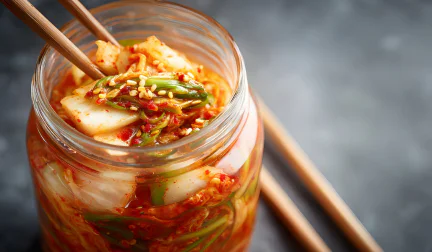
A Journey Through Time: The Evolution of Kimchi
The history of kimchi is a testament to human survival. Tracing its origins back to the Three Kingdoms period (57 BCE–668 CE), early forms of kimchi were known as jisul. These ancient precursors were significantly different from the fiery red versions we enjoy today; they were essentially vegetables submerged in simple salt brines and stored in large earthenware jars buried deep in the earth to prevent them from freezing during winter. One archaeological find at Beopjusa Temple dating back to 553 AD suggests that stone jars were used to store winter kimchi for thousands of Buddhist monks.
The evolution of the dish was influenced by shifts in religion and global trade. During the Goryeo Dynasty (918–1392 CE), the state-sponsored adoption of Buddhism led to an emphasis on plant-based nutrition, which catalyzed the expansion of vegetable preservation techniques. Monastic kitchens refined the use of fermented pastes (jang) and seafood (jeotgal) to add depth to these ferments. It was not until the 16th century, following the introduction of chili peppers (gochugaru) from the Americas via Japan, that kimchi took on its characteristic red color and spicy heat. This transformed kimchi into a sophisticated culinary art form, eventually leading to the UNESCO recognition of Kimjang in 2013 as an Intangible Cultural Heritage of Humanity.
The Spirit of Kimjang
Kimjang is the annual communal tradition of preparing massive quantities of kimchi for the winter months. It is a social ritual where families and neighbors gather to share labor, strengthening community bonds and passing down traditional knowledge through generations. This practice emphasizes a uniquely Korean ethos: that food is a shared responsibility and a testament to resilience.
The Microbial Landscape: How Fermentation Works
Kimchi is a product of spontaneous fermentation, meaning it does not usually require a "starter culture". Instead, it relies on the wild Lactic Acid Bacteria (LAB) naturally present on raw ingredients like napa cabbage, garlic, ginger, and radish. During the process, these bacteria multiply exponentially, reaching concentrations of 9 to 10 log colony-forming units (CFU) per gram.
The fermentation occurs in three primary stages, each dominated by different microbial "superstars":
Early Stage (Heterofermentative Dominance): Initially, species like Leuconostoc mesenteroides and Leuconostoc citreum thrive. They convert sugars into lactic acid, acetic acid, and carbon dioxide (CO2). This CO2 production is what gives young kimchi its characteristic refreshing effervescence or "fizz".
Middle Stage (Peak Ripeness): As the pH drops to between 4.2 and 4.5, Weissella species (like W. cibaria and W. koreensis) begin to dominate. This is considered the peak of flavor quality, offering a perfect balance of acidity and carbonation.
Late Stage (Acidification): More acid-tolerant species like Lactiplantibacillus plantarum and Levilactobacillus brevis take over. These are primarily homofermentative, producing mainly lactic acid. While vital for preservation, they can eventually lead to excessive sourness and the softening of the vegetable tissues as they break down pectin.
The sub-ingredients play a critical role in this ecosystem; for instance, red pepper powder acts as a selective antimicrobial agent, suppressing harmful bacteria while promoting the growth of beneficial LAB.
Probiotic Power: The Health Benefits of Kimchi
Kimchi is widely regarded as one of the healthiest foods in the world. Its benefits stem from its unique combination of nutrient-dense vegetables, bioactive metabolites, and live probiotic cultures.
1. Gut Health and Digestion
The primary benefit of kimchi is its high probiotic and fiber content. Probiotics help maintain a healthy intestinal balance by inhibiting pathogens like E. coli and Salmonella. Clinical studies have shown that kimchi can improve symptoms of Irritable Bowel Syndrome (IBS), including reduced bloating and abdominal pain. Furthermore, the fiber serves as a prebiotic, fueling the growth of the very LAB that make kimchi so beneficial.
2. Cardiometabolic and Glycemic Control
Significant research highlights kimchi’s role in managing metabolic syndrome:
Diabetes Management: Clinical trials on prediabetic individuals found that fermented kimchi decreased insulin resistance and increased insulin sensitivity. Meta-analyses of human studies show a significant reduction in fasting blood glucose levels following regular consumption.
Blood Pressure: Fermented kimchi has been shown to lower both systolic and diastolic blood pressure. This effect may be due to the presence of GABA ($\gamma$-Aminobutyric Acid), a metabolite produced during fermentation known for its blood-pressure-regulating properties.
Lipid Profiles: Regular intake is linked to reduced total cholesterol, LDL cholesterol, and triglycerides, particularly in individuals with high baseline levels.
3. Weight Management
Kimchi is a low-calorie food (approx. 15–25 kcal per 100g) that is exceptionally nutrient-dense. In studies on overweight and obese participants, consuming fermented kimchi led to significant reductions in body weight, body mass index (BMI), and waist circumference.
4. Immune System and Anti-Aging
The functional compounds in kimchi, including vitamin C, polyphenols, and flavonoids, stimulate immune function and reduce oxidative stress. Some specific LAB strains isolated from kimchi, such as Lactiplantibacillus plantarum CJLP133, have even been clinically proven to improve symptoms of atopic dermatitis and other inflammatory skin conditions.
The Nutritional Matrix of Kimchi
Kimchi is more than just bacteria; it is a complex chemical matrix of essential nutrients.
How to Make Traditional Baechu Kimchi at Home
Making your own kimchi allows you to control the ingredients and tailor the flavor to your preference. While there are over 200 varieties, Baechu (Napa Cabbage) Kimchi is the most iconic.
Ingredients
2 medium heads Napa cabbage (about 6-8 lbs total).
1 ½ cups coarse Korean sea salt (cheonilyeom).
1 gallon + ½ cup cold water, divided.
1 cup Korean red pepper powder (gochugaru).
1 lb Korean radish (mu) or Daikon radish, cut into matchsticks.
10 green onions, sliced.
10 cloves garlic, minced.
½ inch piece ginger, grated.
2 Tbsp sweet rice flour (for the porridge base).
1-5 Tbsp fish sauce (traditional) or soy sauce (vegan).
Step-by-Step Instructions
Phase 1: Preparation and Brining
Selection: Choose heads that feel heavy for their size with compact, light-green leaves.
Splitting: Cut the thick white base in half lengthwise, then pull the cabbage apart with your hands to avoid cutting too many leaves. Repeat to make quarters.
The Brine Bath: Dissolve ½ cup of salt in 1 gallon of water. Dip each cabbage quarter into the water to ensure all leaves are wet.
Salting: Sprinkle the remaining salt between the leaves, focusing on the thick white stems. Let the cabbage rest for 3 to 6 hours (or up to 8 hours for firmer winter cabbage) at room temperature. Rotate the cabbage every 2 hours.
Rinsing: Once the stems are bendable (like a "U" shape), rinse the cabbage 3 to 4 times in cold water to remove excess salt. Drain in a colander for at least 30 minutes.
Phase 2: The Seasoning Paste (Yangnyeom)
The Porridge: Simmer the rice flour with ½ cup of water until it thickens into a paste; let it cool completely.
The Flavor Mix: Combine the cooled paste with the red pepper powder (gochugaru), minced garlic, ginger, and fish sauce.
The Vegetables: Add the radish matchsticks and scallions to the paste and mix well.
Phase 3: Stuffing and Packing
Stuffing: Spread the paste over every leaf of the cabbage quarters.
Packing: Fold the cabbage quarters into bundles and pack them tightly into a non-transparent fermentation crock or glass jar. Press down firmly to eliminate air pockets.
Space: Leave at least 2 inches of headspace at the top, as the fermentation will release gases and juices that could overflow.
Storage and Vessels: Traditional vs. Modern
The vessel you choose significantly impacts the quality of your fermentation.
The Traditional Onggi
Traditionally, Koreans used onggi, earthenware crocks made from clay and sand. Onggi are microporous, meaning they have tiny holes that allow the vessel to "breathe". This allows carbon dioxide to escape while preventing external contaminants from entering. Studies show that kimchi fermented in onggi has LAB counts up to 100 times higher than those in steel or plastic containers.
Modern Solutions
In modern homes, breathable plastic containers mimic some characteristics of onggi by using ventilated lids to let gases escape naturally. If using a standard airtight jar, you must "burp" the jar daily to release pressure buildup.
For long-term storage, kimchi refrigerators are ideal. Unlike standard fridges, they maintain a consistent temperature just above freezing (approx. -1°C to 1°C), mimicking the conditions of being buried in winter soil. This slows down the fermentation process, keeping the kimchi at its "peak" flavor for months.
Troubleshooting and Safety
One of the most common fears for beginners is botulism. However, the risk of botulism in correctly salted and fermented kimchi is extremely low. The high salt concentration and the rapid production of lactic acid create an environment that is too acidic (pH below 4.6) for C. botulinum to survive.
Identifying Spoilage
Golmaji (Healthy): This is a white, non-toxic film or cluster of yeast that can form on the surface as the kimchi ages. Simply scoop it off and rinse the kimchi.
Mold (Dangerous): If the growth is fuzzy or has colors like green, black, or pink, it is mold. In this case, the entire batch must be discarded.
Mushiness: This often indicates that the salt concentration was too low or the fermentation temperature was too high.
Conclusion
Kimchi is a profound example of how tradition and science intersect to create a dietary staple that is both delicious and therapeutic. Whether you eat it for the probiotic gut benefits, its ability to lower blood pressure, or simply for its bold, spicy flavor, kimchi deserves its status as a global superfood. By understanding the microbial magic happening inside the jar and following traditional methods, you can bring a piece of this ancient Korean wisdom into your own kitchen.
-Kumar Sankaran
Also Read: Kefir - Bridging traditional dietary and current nutritional practices