A Comprehensive Guide to Digestive Enzymes: What You Need to Know
What are digestive enzymes and how do they work in our bodies?
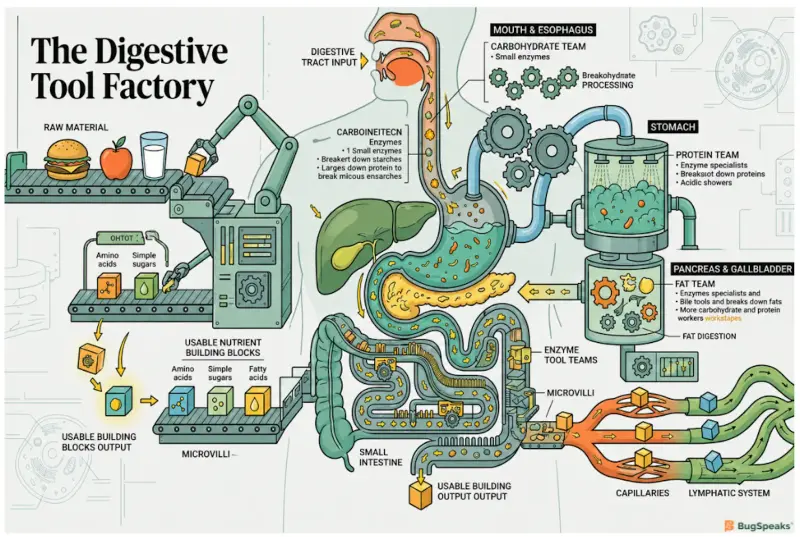
Digestive enzymes are highly specialized biological tools that help our bodies break down complex foods into simple, absorbable nutrientsJames (2024). These tiny protein tools act as biological catalysts, which means they speed up chemical reactions in our digestive tract without being consumed themselvesJames (2024). Normally, chemical processes need a lot of kinetic energy to begin, but these enzymes work by significantly lowering the required activation energy, allowing reactions to occur quickly and smoothlyJames (2024). By making digestion incredibly efficient, they ensure that the molecular bonds in our meals are unlocked, paving the way for proper nutrient absorption and full energy production throughout the day.
The human digestive tract serves as the active work environment where these biological tools operate under highly specific conditionsJames (2024). Just like professional builders need the right weather, each enzyme category requires a very specific environment, defined by temperature and pH, to perform its jobJames (2024). For example, the protein-digesting tool pepsin works only in the acidic environment of the stomachJames (2024). However, when food enters the small intestine, the pancreas releases trypsin, which operates best in a neutral to slightly alkaline pHJames (2024),Ianiro et al. (2016). This strict zoning ensures that different chemical tasks are safely completed in their proper locations.
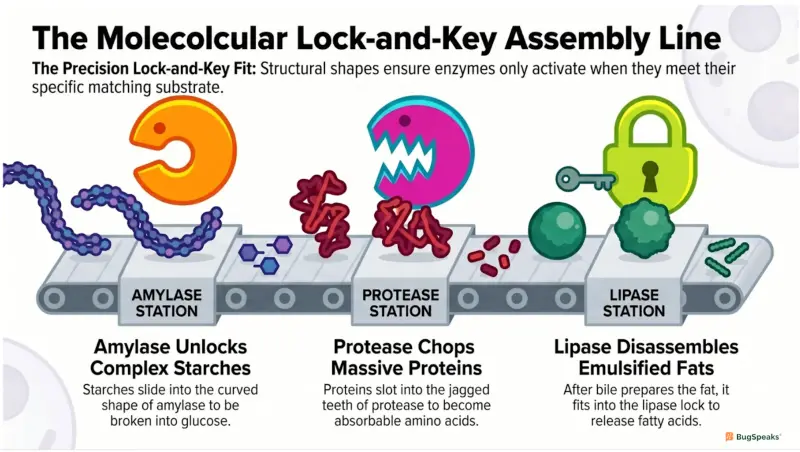
If the surrounding conditions change too much, these biological tools can become permanently damaged and stop working entirelyJames (2024). This structural damage, known as denaturation, happens when extreme pH levels or high temperatures warp the shape of the enzymeJames (2024). Because enzymes rely on a precise molecular lock-and-key fit with their target food materials, any structural change ruins their utility. For instance, when gastric acid flows improperly, or the small intestine becomes too acidic, pancreatic enzymes like lipase are instantly inactivatedIaniro et al. (2016). Maintaining stable, localized environments is therefore vital for keeping our biological workforce active, healthy, and capable of processing daily nutritional materials.
How does our body choose different tools for different types of food?
Our digestive workforce uses highly specialized categories of biological tools because different types of food materials require unique chemical methods to break downJames (2024). Just as a carpenter cannot use a hammer to cut wood, our digestive system cannot use a fat-digesting tool to dismantle complex starches. This specificity is why our body produces specialized families of enzymes, such as amylase for carbohydrates, protease for proteins, and lipase for fatsJames (2024). Each group of tools is meticulously designed to recognize and cleave specific chemical bonds, ensuring that no food item passes through without being properly sorted and dismantled.
The disassembly line begins in the mouth, where salivary amylase acts as the primary tool to start carbohydrate digestionJames (2024). This process continues in the small intestine with pancreatic amylase breaking complex starches into simple sugars like glucoseJames (2024). Meanwhile, protein digestion utilizes robust proteases, such as stomach pepsin and pancreatic trypsin, to chop massive protein chains into absorbable amino acidsJames (2024). These individual amino acids serve as the fundamental building blocks our bodies need to construct and repair muscle tissue, demonstrating how these specialized tools turn complex meals into vital structural assets. Every single protein we eat is thoroughly processed by this diligent team.
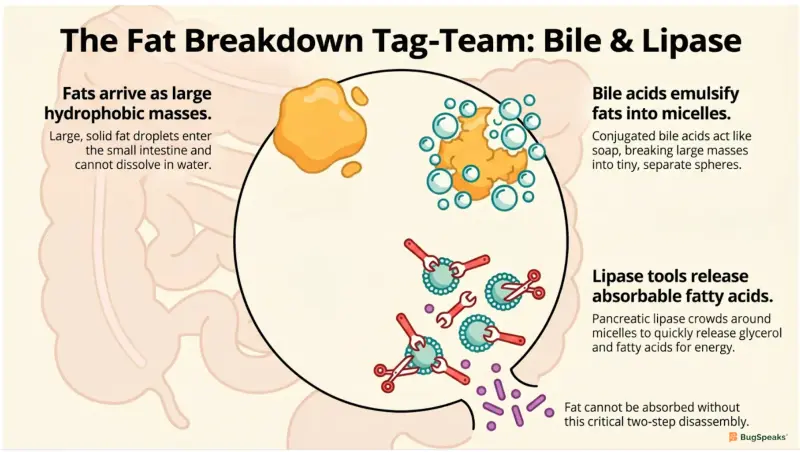
For complex fat molecules, the digestive workforce deploys the pancreatic lipase tool to cleave fats into fatty acids and glycerolJames (2024). Because fats do not dissolve in water, lipase cannot access them easily without help from helper molecules called conjugated bile acidsIaniro et al. (2016). Produced by the liver and stored in the gallbladder, these amphipathic molecules emulsify large fat droplets into tiny spheresIaniro et al. (2016). This crucial preparation dramatically increases the available surface area, allowing lipase tools to rapidly attach and complete the lipid disassembly process. Through this synchronized coordination, our workforce ensures that even hydrophobic food materials are successfully converted into completed output.
What happens when our biological workforce is missing key tools?
When our digestive workforce suffers from missing-tool situations, unprocessed food materials pass through the gut undigested, leading to malabsorption and physical discomfortJames (2024). Without the necessary molecular tools, complex food materials cannot be broken down into simple, absorbable building blocksJames (2024). This failure leads to a complete bottleneck on the assembly line, resulting in malnutrition, chronic fatigue, and unexpected weight lossJames (2024). The body essentially starves in the midst of plenty because it lacks the functional machinery to capture energy from food. This missing-tool crisis shows that our physical health is entirely dependent on the continuous presence of active molecular catalysts.
A very common example of a missing-tool situation is lactose intolerance, which stems from a deficiency of the lactase toolJames (2024),Ianiro et al. (2016). Lactase is a brush-border enzyme produced by the small intestine, designed specifically to split milk sugar into glucose and galactoseIaniro et al. (2016). When lactase activity is reduced, a genetic condition known as primary hypolactasia, undigested milk sugar travels untouched into the colonIaniro et al. (2016). There, resident gut bacteria ferment it, creating excess gases and drawing water, which causes bloating, pain, and severe diarrhea. This scenario perfectly illustrates how a single missing tool disrupts our entire comfort.
A severe missing-tool crisis occurs in exocrine pancreatic insufficiency (EPI), where the pancreas fails to produce major digestive enzymesJames (2024). This condition occurs in chronic pancreatitis, cystic fibrosis, and pancreatic cancer, leading to severe steatorrheaIaniro et al. (2016),Şeulean and Dumitraşcu (2025). Furthermore, inborn errors of metabolism, which are genetic metabolic disorders, can permanently disable other vital enzymes throughout the bodyChaturvedi et al. (2016). For example, genetic mutations in glucose-6-phosphatase lead to Von Gierke's disease, preventing glucose release and causing hypoglycemiaChaturvedi et al. (2016). These conditions emphasize that when genetics deletes vital tools, the body's operational chemistry breaks down.
Who actually benefits from adding supplemental tools to their body?
Adding supplemental digestive enzymes to the body is highly beneficial for individuals suffering from clinical deficiencies or specific food sensitivitiesJames (2024),Ianiro et al. (2016). When a person's biological workforce is naturally depleted, introducing exogenous enzymes serves as targeted digestive support to restore the assembly lineJames (2024),Ianiro et al. (2016). These supplemental tools act like temporary contract workers, stepping in to perform the exact dismantling tasks that the body cannot manage on its own. By successfully breaking down complex food materials, they prevent uncomfortable symptoms and allow the intestines to easily absorb vital nutrients, dramatically improving the individual's daily quality of life.
For patients diagnosed with EPI, the standard clinical therapy is pancreatic enzyme replacement therapy, also known as PERTIaniro et al. (2016). These formulations contain active, porcine-derived lipase, protease, and amylase, which are often enteric-coated to survive the stomach's harsh gastric acidIaniro et al. (2016). Additionally, people with lactose intolerance can take oral lactase tablets derived from Aspergillus niger or Kluyveromyces lactis yeasts before eating dairyIaniro et al. (2016). These yeast-derived enzymes temporarily take over the role of the missing brush-border tools, converting milk sugar into simple galactose and glucose, preventing painful digestive distress and helping sensitive individuals enjoy dairy foods comfortably once again.
Exciting new research shows that supplemental tools can also help those with non-celiac gluten sensitivity, abbreviated as NCGSIdo et al. (2018). Gluten contains an indigestible protein fragment known as the 33-mer peptide, which triggers painful symptoms in NCGS patientsIdo et al. (2018). To solve this, scientists designed a microbial enzyme mixture containing peptidase, semi alkaline protease, deuterolysin, and cysteine proteaseIdo et al. (2018). Derived from Aspergillus, Penicillium, and papaya, this mixture successfully digests the 33-mer peptide into tiny fragmentsIdo et al. (2018). This targeted support significantly improves bloating, headaches, and incomplete evacuation, demonstrating the immense power of precision biological tools.
What are the risks of overusing these extra biological tools?
Overusing supplemental digestive enzymes can lead to negative feedback loops that suppress our body's natural tool production and harm our microbiomeIaniro et al. (2016),Şeulean and Dumitraşcu (2025). When a healthy digestive system is flooded with external, unnecessary enzymes, the body senses this excess and may reduce its own active secretions (Ianiro et al., 2016). This biological feedback mechanism can make our natural digestive organs sluggish, creating an unhealthy dependency on external tablets. Furthermore, relying too heavily on supplements can mask deeper, underlying gastrointestinal issues that require proper medical attention. Therefore, adding external tools should always be a targeted decision, rather than a careless daily habit for healthy individuals.
For instance, introducing excessive exogenous pancreatic enzymes can trigger a strong negative feedback loop in the exocrine pancreasIaniro et al. (2016). The physical presence of these extra active proteases in the duodenum signals the brain that protein digestion is already complete, reducing natural pancreatic duct pressure and fluid secretionIaniro et al. (2016). While this feedback loop is sometimes used clinically to relieve abdominal pain in chronic pancreatitis, it can suppress normal, healthy pancreatic function when misusedIaniro et al. (2016). Flooding our delicate digestive assembly line with unneeded tools ultimately disrupts the natural balance of our specialized workforce, leading to long-term inefficiencies.
Furthermore, overusing external tools can severely disrupt the microbiota-pancreas axis, the vital communication network between our pancreas and gut microbes (Şeulean and Dumitraşcu, 2025). Our healthy pancreas secretes active antimicrobial substances that control the gut microbiome, while microbes release short-chain fatty acids to stimulate the pancreasŞeulean and Dumitraşcu (2025). Upsetting this two-way communication can trigger gut dysbiosis, which is an unhealthy imbalance of intestinal bacteriaŞeulean and Dumitraşcu (2025). This dysbiosis can lead to small intestinal bacterial overgrowth (SIBO), where bacteria multiply in the wrong placeŞeulean and Dumitraşcu (2025). This overgrowth worsens bloating and flatulence, proving that holistic eubiosis beats over-supplementation.
-Varsha V
Visualize the process- https://youtu.be/KVfsg8uNNA4
Reference
Ianiro, G., Pecere, S., Giorgio, V., Gasbarrini, A., & Cammarota, G. (2016). Digestive Enzyme Supplementation in Gastrointestinal Diseases. Current drug metabolism, 17(2), 187–193.https://doi.org/10.2174/138920021702160114150137
Ido, H., Matsubara, H., Kuroda, M., Takahashi, A., Kojima, Y., Koikeda, S., & Sasaki, M. (2018). Combination of Gluten-Digesting Enzymes Improved Symptoms of Non-Celiac Gluten Sensitivity: A Randomized Single-blind, Placebo-controlled Crossover Study. Clinical and translational gastroenterology, 9(9), 181.https://doi.org/10.1038/s41424-018-0052-1
Şeulean, E. C., & Dumitraşcu, D. L. (2025). The association between exocrine pancreatic insufficiency and changes in gut microbiota: a narrative review. Medicine and pharmacy reports, 98(1), 5–12.https://doi.org/10.15386/mpr-2638
Chaturvedi, S., Singh, A. K., Keshari, A. K., Maity, S., Sarkar, S., & Saha, S. (2016). Human Metabolic Enzymes Deficiency: A Genetic Mutation Based Approach. Scientifica, 2016, 9828672.https://doi.org/10.1155/2016/9828672