Centenarians' Microbiomes: Unlocking the Secrets to a Longer Life
How does the gut microbiome change as humans grow older?
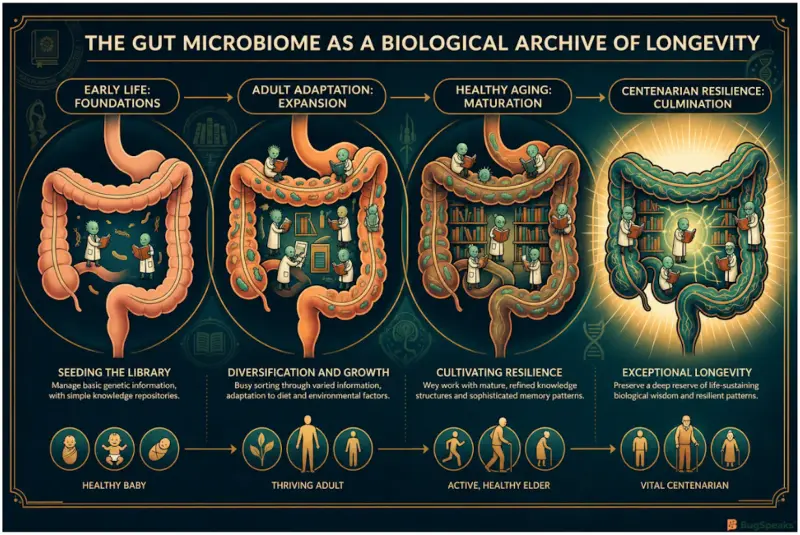
As humans age, the gut microbiome typically loses bacterial diversity, but centenarians maintain a very diverse and healthy bacterial community. Inside your stomach, the microbiome works just like a living biological archive. It carefully records every meal you eat and every environment you visit throughout your lifeAi (2025). During normal aging, this biological archive slowly falls apart. Good bacteria disappear, and harmful bacteria take over. This unhealthy state is called gut dysbiosis. When this happens, it causes inflammaging, a steady swelling in the body that harms healthy tissues. Without enough good bacteria to keep these important records safe, the archived resilience patterns break down, leaving older adults feeling weak and tiredTseng (2025).
People who live to be one hundred years old, called centenarians, have a biological archive that perfectly preserves its records. Instead of losing their helpful bacteria, these healthy older people actually increase their microbial diversity to stay strongAi (2025). Scientists study the Deoxyribonucleic Acid (DNA) of these bacteria to read the instructions inside the cells. This genetic reading shows that centenarians have special bacteria that act like security guards for the archive. These helpful microbes stop harmful invaders from causing damage. They also build a very thick, protective shield along the walls of the intestines. This strong wall keeps dangerous toxins locked away safely, stopping them from leaking out and causing sickness in the bodyTseng (2025).
Keeping this biological archive in excellent shape helps centenarians stay smart and energetic for their whole lives. The gut is constantly talking to the rest of the body through biological networks known as the gut-brain axis and the gut-muscle axisTseng (2025). When a normal archive breaks down, it sends out broken messages that make the brain foggy and the muscles weak. However, a centenarian's highly organized archive sends out clear, healthy instructions every single day. Because their archived resilience patterns stay perfectly intact, their brains remain sharp, and their bodies stay strong. This living record system constantly learns from new challenges, proving that staying healthy requires constant adaptation over a centuryTseng (2025).
Why are the microbiomes of centenarians so wonderfully unique?
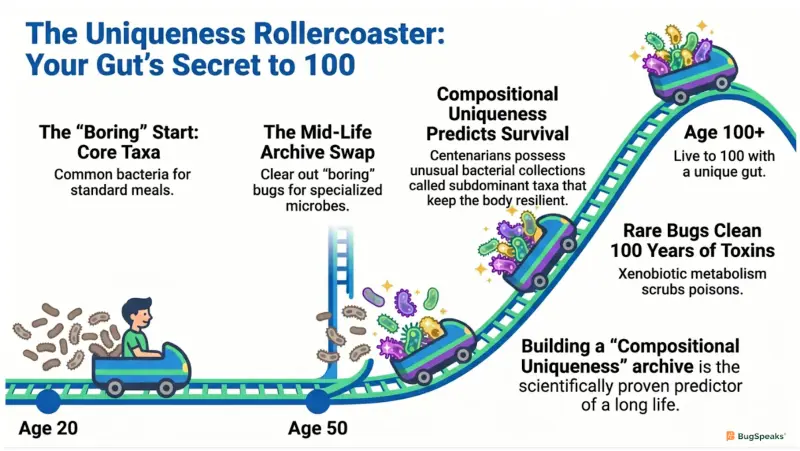
Centenarians have unique microbiomes because their bodies replace common bacteria with rare, specialized microbes that easily handle the challenges of extreme old age. When humans are younger adults, their biological archive is mostly filled with normal bacteria called core taxaWilmanski (2021). These common bacteria act like standard reference books that easily digest our normal daily meals. However, as people grow into their eighties and nineties, their bodies change. The archive responds by clearing out these standard books. Instead, it starts collecting very rare and highly specialized bacteria known as subdominant taxa. This incredible shift makes the centenarian's biological archive look completely different from a younger person's, allowing it to adapt perfectly to older ageWilmanski (2021).
Having a highly unusual collection of bacteria is a scientifically proven sign of a long, healthy life. Researchers call this specialized collection compositional uniqueness, and it directly predicts how long a person might surviveWilmanski (2021). The biological archive purposely gets rid of normal bacteria to make extra space for these rare, powerful microbes. Older people who successfully build this unique archive tend to live much longer than those who do not. If an older person's archive stubbornly holds onto the normal bacteria from their youth, their health quickly fails. Unhealthy aging happens because the archive refuses to update its collection, causing the entire ecosystem to slowly collapse instead of safely adaptingWilmanski (2021).
The rare bacteria inside the centenarian archive are completely necessary for cleaning up a century of accumulated bodily waste. Over one hundred years, a human body gathers many environmental chemicals and internal toxins. The newly collected rare microbes perform xenobiotic metabolism, which is a fancy way of saying they are experts at breaking down and safely removing foreign poisonsAi (2025). These rare bacteria constantly scrub the body clean, sweeping away dangerous cellular trash. By building these unique archived resilience patterns, centenarians prove that healthy aging is an active, ongoing process. Their biological archive constantly upgrades its tools, ensuring the body stays perfectly clean and protected against harmful diseases for a very long timeAi (2025).
What helpful chemicals do centenarian gut microbes make to protect the body?
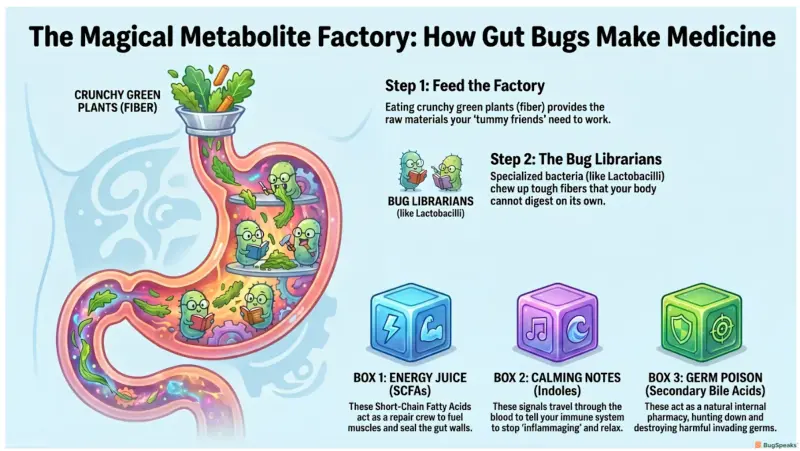
Centenarian gut microbes produce special protective chemicals, like short-chain fatty acids and calming signals, which stop swelling and keep muscles working beautifully. These important chemicals are called metabolites, and they are the historical ecosystem outputs created whenever bacteria digest our food. Some of the most helpful outputs are Short-Chain Fatty Acids (SCFAs), which provide pure energyTseng (2025). Inside the biological archive, SCFAs act like a daily repair crew. They use their energy to patch up the walls of the intestines, making sure no bad germs can escape into the blood. While a normal aging archive stops making these chemicals, the centenarian archive works overtime to create SCFAs to keep muscles strongTseng (2025).
The centenarian archive also creates special calming messages for the immune system known as indole derivatives. These specific historical ecosystem outputs are made when rare bacteria break down the proteins we eat in our daily dietWilmanski (2021). After they are created, these calming messages travel through the blood and find a special landing pad called the aryl hydrocarbon receptor on our defensive cellsTseng (2025). When the message connects, it politely tells the immune system to relax and stop fighting itself. This action quickly turns off the dangerous, hot fires of chronic inflammation. By constantly sending out these calming indole messages, the biological archive successfully records a lifetime of perfect immune balanceWilmanski (2021).
The unique bacteria in centenarians also act like a natural pharmacy by producing highly protective secondary bile acids. Normally, the human liver makes simple bile acids to digest fats. However, the special bacterial archivists carefully change these normal acids into incredibly powerful medicinesTseng (2025). These new historical ecosystem outputs act as a brilliant internal security system. They hunt down and destroy bad, invading germs without hurting any of the good human cells. By mixing SCFAs, calming indoles, and these natural antibiotics together, the biological archive creates a steady flow of healthy medicine. This proves that living a remarkably long life depends almost entirely on this tiny, invisible chemical factory running smoothlyWilmanski (2021).
How do the friendly Lactobacilli bacteria in centenarians behave differently?
The lactobacilli inside centenarians have special tools to digest tough plant foods and create unique healthy fats that young people's bacteria simply cannot make. Lactobacilli are a famous family of friendly, acid-making bugs that are often called probioticsSmidt (2026). In our biological archive, they work as dedicated librarians who sort out the recurring environmental input, which mostly means our food. Centenarians have a very large variety of these helpful librarians. Instead of doing simple tasks, these centenarian bugs use complex processes to create an amazing mixture of historical ecosystem outputs. They make special acids that feed their neighboring bacteria, ensuring the entire microbial archive stays incredibly diverse, lively, and wonderfully healthySmidt (2026).
The biggest difference between young and old archives is seen during carbohydrate fermentation, which is how bacteria break down sugars for energy. Young people's bacteria are only good at eating simple, sugary treats like candy and processed sweetsSmidt (2026). In strong contrast, centenarian bacteria have learned how to chew through very tough plant roots and hard grains. By successfully digesting these rugged, fibrous plants, the centenarian archive extracts a massive amount of hidden energy. This shows how a lifetime of eating healthy, traditional plant foods permanently trains the bacterial librarians. They become incredibly strong and efficient, recording the amazing ecological influence of good nutrition to significantly boost the person's daily energy levelsSmidt (2026).
Aside from digesting tough plants, centenarian lactobacilli also manufacture very special protective fats for the human body. Scientists discovered that these old, wise bacteria release high amounts of acylcarnitines directly into the gut environmentSmidt (2026). These acylcarnitines are tiny delivery trucks that carry fat straight into the body's microscopic power plants, allowing human cells to burn fat for quick energy. By constantly supplying the body with these helpful delivery trucks, the bacterial librarians keep the human cells running at top speed. This teamwork between the biological archive and human cells actively defends the body against feeling tired, proving that centenarian bacteria provide special upgrades that younger bacteria simply do not offerSmidt (2026).
How can your daily habits build a healthy microbiome for a long life?
Eating lots of plants, staying active, and avoiding unnecessary medicines provides the perfect ingredients needed to build a biological archive that lasts a century. Food is the most important recurring environmental input for our bacterial libraryTseng (2025). Tough plant fibers are called prebiotics, and they act as the essential building blocks that bacteria need to grow and make healthy chemicals. If you eat a plant-heavy diet for many years, you permanently invite wonderful, fiber-loving microbes into your archive. Providing this excellent food stops the age-related breakdown of gut barrier integrity, ensuring your intestinal walls stay locked incredibly tight against bad germs for your entire, very long, and healthy lifeTseng (2025).
Moving your body daily creates another amazing biological mapping between human habits and bacterial health. Whenever your muscles squeeze during fun exercise, they release special protein messengers called myokines straight into your bloodstreamTseng (2025). These glowing messengers travel directly down to the biological archive. Once they arrive, they instruct the bacterial librarians to grow in numbers and create even more calming, anti-swelling chemicals. This beautiful, lifelong conversation between exercising muscles and gut bacteria forces the archive to stay incredibly strong. It constantly builds archived resilience patterns that actively block physical weakness, ensuring that you stay energetic and joyful even when you are very old. Daily movement literally programs your bugs to protect youTseng (2025).
Amazingly, scientists have found that special longevity medicines, like the safe drug metformin or age-fighting senolytics, can actually copy the exact effects of a healthy lifestyleGarzon-Escamilla (2026). These medicines flip a master energy switch inside your cells called Adenosine Monophosphate-Activated Protein Kinase (AMPK). They also help your macrophage cells, which act like hungry little Pac-Men, to eat up dangerous cellular trash. More importantly, these medicines talk directly to your biological archive, kicking out bad bugs and inviting the highly protective ones to stay. Whether you use perfect daily habits or helpful medicines, you must constantly give your archive high-quality inputs to enjoy a deeply healthy, active, and wonderfully long lifeGarzon-Escamilla (2026).
Visualize the process- https://youtu.be/2GpQRwVX12U
Reference
Wilmanski, T., Diener, C., Rappaport, N., Patwardhan, S., Wiedrick, J., Lapidus, J., Earls, J. C., Zimmer, A., Glusman, G., Robinson, M., Yurkovich, J. T., Kado, D. M., Cauley, J. A., Zmuda, J., Lane, N. E., Magis, A. T., Lovejoy, J. C., Hood, L., Gibbons, S. M., Orwoll, E. S., … Price, N. D. (2021). Gut microbiome pattern reflects healthy ageing and predicts survival in humans. Nature metabolism, 3(2), 274–286. https://doi.org/10.1038/s42255-021-00348-0
Smidt, I., Roop, T., Mandar, R., Stsepetova, J., Koljalg, S., Kilk, K., Soidla, I., Ainsaar, M., Kolk, H., & Sepp, E. (2026). Culture-based studies of intestinal lactobacilli in young people and centenarians. Frontiers in microbiology, 17, 1746411. https://doi.org/10.3389/fmicb.2026.1746411
Ai, X., Huang, C., Liu, Q., Duan, R., Ma, X., Li, L., Shu, Z., Miao, Y., Shen, H., Lv, Y., Jiang, Z., Luo, H., & Long, Z. (2025). Gut microbiome dynamics and functional shifts in healthy aging: insights from a metagenomic study. Frontiers in microbiology, 16, 1629811. https://doi.org/10.3389/fmicb.2025.1629811
Tseng, C. H., & Wu, C. Y. (2025). From dysbiosis to longevity: a narrative review into the gut microbiome's impact on aging. Journal of biomedical science, 32(1), 93. https://doi.org/10.1186/s12929-025-01179-x
Garzon-Escamilla, N., Medina-Cardena, M., Roy, P., Trent, J., Jamous, J., Somesan, Y., & Denslow, S. J. (2026). Mechanistic Links Between the Gut Microbiome and Longevity Therapeutics. Biomedicines, 14(2), 316. https://doi.org/10.3390/biomedicines14020316