The Ultimate Guide to Street Food & Gut Health
What Is the High-Traffic International Maritime Harbor of Your Gut?
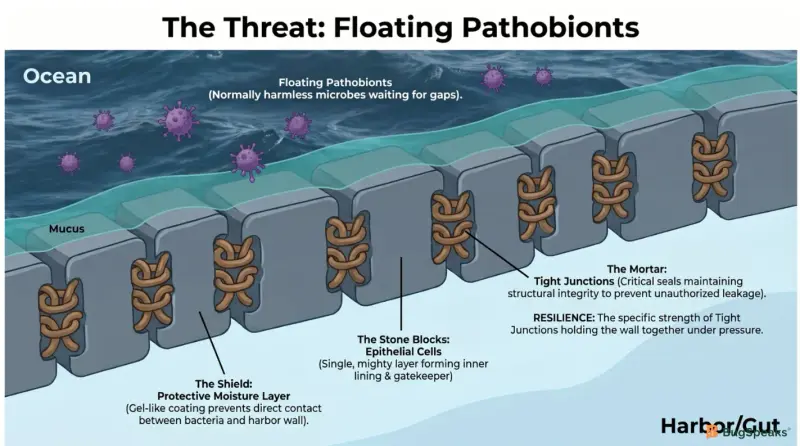
The high-traffic international maritime harbor of your gut is the human gastrointestinal tract, a massive and complex biological system that acts as the primary entry point for nutrients and the main checkpoint for environmental threats. This biological port is managed by the Intestinal Epithelial Barrier, a single, mighty layer of cells that functions as both the Harbor Master and the Customs Office to protect your internal "city" from intruders. In a healthy person, the harbor displays high Resilience, which is the ability of the gut to handle heavy traffic like a sudden influx of spicy street food or a greasy burger without suffering a total structural collapseSafarchi et al. (2025). When this resilience fails, the harbor enters a state of Stable Dysbiosis, a long-term breakdown where the good workers are replaced by a Pathobiont, leading to chronic inflammation.
Maintaining this harbor requires constant vigilance because the "Harbor Master" must be incredibly selective about what crosses into your bloodstream. The harbor uses a system of tight junctions, which act like heavy-duty locks on the harbor gates to keep dangerous cargo out while letting the good cargo through. If these locks rust or break because of stress or a poor diet, the harbor becomes "leaky," allowing unregistered and dangerous materials to slip into your system. A "Xenobiotic Storm," such as an aggressive course of antibiotics, can act like biological warfare that wipes out the most loyal workers in the harbor. This leads to a loss of diversity, creating a vacuum where harmful stowaways can take control and dismantle the harbor’s infrastructure for their own gain.
To keep the port running at peak efficiency, you need a diverse and well-fed workforce of bacteria that can adapt to whatever the tide brings in. This workforce is responsible for unloading, sorting, and processing every bit of food you eat. When the harbor is well-resourced, it can maintain a large inventory of natural weapons to defend itself. If the harbor’s diversity plummets, the immune system "Police" go into a state of high alert, which eventually wears down the entire system. Understanding your harbor’s infrastructure is the first step in ensuring that even when a "storm" hits, your internal trade routes remain open and your body stays healthy and strong.
How Do Exotic Spices and Unregistered Cargo Impact the Harbor?
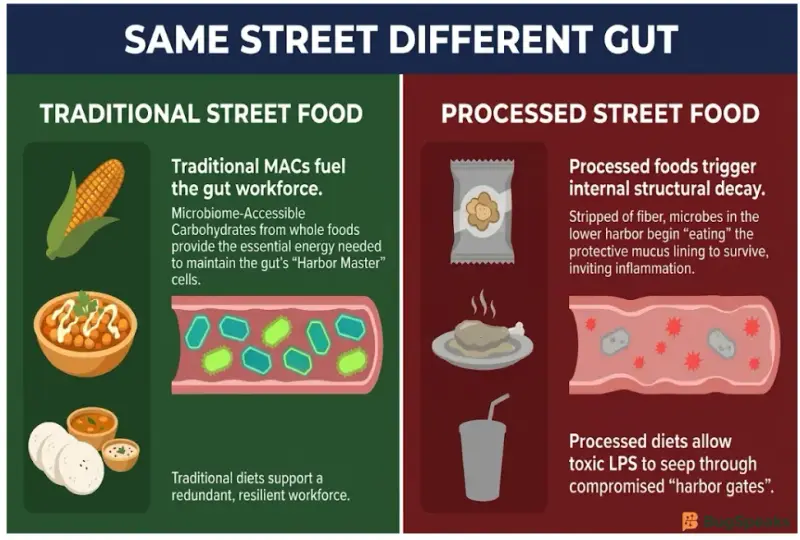
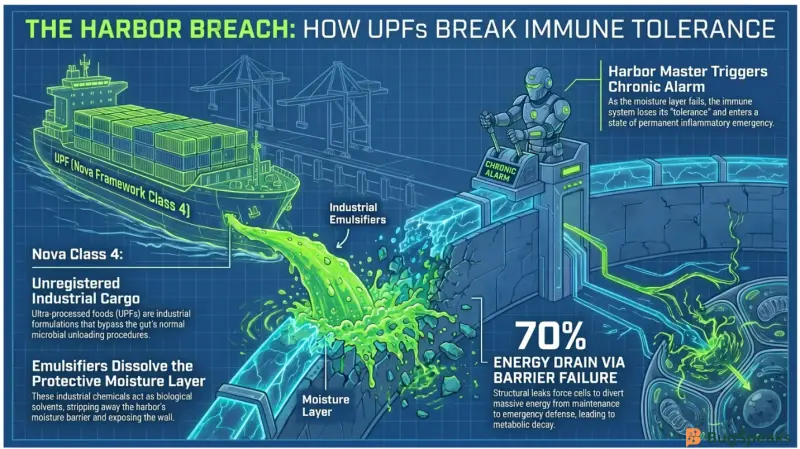
Exotic spices, known scientifically as Microbiome-Accessible Carbohydrates (MACs), power the harbor’s economy by providing the primary fuel source for the most important microbial workers. When these plant fibers and whole grains dock at the port, they are processed by elite workers who ferment them into Short-Chain Fatty Acids (SCFAs), the essential currency of the intestinal harbor. Butyrate is the most valuable form of this currency, providing up to 70% of the energy needed by the cells that line the harbor walls. Without this energy, the Harbor Master becomes too tired to maintain the gates, leading to a breakdown in security and allowing "Unregistered Cargo" like Ultra-Processed Foods (UPFs) to damage the infrastructureLane et al. (2024).
Ultra-Processed Foods (UPFs) act as a major threat because they are stripped of their natural fiber "packaging," meaning they provide no work for the beneficial microbes at the docks. Instead, these foods are packed with industrial additives like emulsifiers that can physically dissolve the protective moisture layer of the harbor. When the harbor is flooded with this unregistered cargo, the immune system's Customs Office triggers chronic inflammation that wears down the walls. Because these artificial goods are absorbed too quickly in the upper shipping lanes, the microbes waiting in the lower harbor are left starving. This starvation leads the microbes to start "eating" the harbor’s own walls, specifically the protective mucus lining just to survive, which invites pathogens to dock where they aren't wanted.
A healthy harbor also relies on functional redundancy, which means that multiple different species of bacteria can perform the same helpful task. If one group of workers is overwhelmed by bad cargo, another group can step in to keep the currency flowing. By eating a diverse range of plant-based street foods like corn with lime or bean-filled wraps you are providing the variety of spices needed to support a redundant workforce. This ensures the harbor remains acidic, which makes the environment very uncomfortable for dangerous stowaway pathogens like E. coli or Salmonella. Keeping the "weather" in the harbor acidic is the best way to ensure only the authorized workers can set up shop and prosper.
Table 1: Harbor Cargo Logs: Nutrient Impact Comparison
What Happens When Fried Food and Blockades Disrupt the Docks?
Fried food causes a thermal crisis in the harbor by introducing oxidation byproducts that trigger localized fires of inflammation and disrupt the microbial demographics. When oils are heated to extreme temperatures, they undergo chemical changes that favor hardier, more aggressive microbes, leading to a high Fried Food Microbiota Index (FMI)Duan et al. (2025). As this index rises, the hazard ratio for major heart events increases because Lipopolysaccharides (LPS) toxic bits of bad bacteria seep through the compromised harbor gates. These toxins cause the harbor’s elite security forces, known as Macrophages, to stop their normal patrols and spend all their energy cleaning up the greasy mess, which can turn them into bloated Foam Cells.
These Foam Cells are slow-moving versions of security cells that have eaten so much "grease" that they actually block the harbor's pathways rather than clearing them. This cellular gridlock is a disaster for the harbor's long-term health. To prevent this, certain plant compounds like Naringin, found in citrus fruits, can be sent in as command signals. Naringin tells the security forces to stop taking in more grease and to start exporting the fat they have already swallowed back out of the docks. This retraining of the security team cools down the inflammatory "fire" and allows the workers to return to their disciplined patrols. Without these signals, the harbor remains in a state of low-grade chronic inflammation, which keeps the security forces constantly occupied and unable to find real threats.
The oxidized lipids from fried food don't just stay in the harbor; they enter the "ocean" of the bloodstream and cause blockages in other "ports" (organs) throughout the body. In our harbor analogy, fried food is like a shipment of oily rags that are prone to catching fire at any moment. These rags create a "hot" environment that stresses every worker and damages the protective paint on the walls. By supporting your internal security patrols through better nutrition, you ensure that even when you indulge in greasy food, your harbor has the "cleanup crew" necessary to prevent a permanent blockade. Protecting the docks from thermal damage is essential for maintaining the structural brilliance of your internal city.
Table 2: Workforce vs. Stowaway Roles in the Harbor
How Do Global Trade Routes and Communication Cables Connect the Harbor?
Global trade routes dictate the biogeography and diversity of the microbial crews available to maintain the harbor based on your geographical location and your age. People living in urban "harbors" often have more diverse microbial crews because they have access to a wider variety of "exotic spices" from all around the world. Rural harbors, however, often rely on traditional, local trade and have specialized crews that are world-class experts at producing currency from local goods. As a harbor "ages" specifically as a person passes the 80-year mark the infrastructure begins to show signs of wear and tear, leading to a state called Inflammaging, where the harbor becomes more prone to fires and the Customs Office becomes less effectiveHamdi et al. (2025).
The harbor stays in constant contact with the mainland headquarters (your brain) using the Vagus Nerve, which acts like a high-speed deep-sea communication cable. This biological fiber-optic line allows the Harbor Master and the brain to send real-time signals back and forth using signal molecules like Serotonin and GABA. Since over 90% of the body’s Serotonin is made right there in the harbor, any trouble at the docks like a state of stable dysbiosis can cause "signal interference" that the brain feels as confusion or anxiety. By feeding your microbes the right spices, you ensure the data packets being sent are clear and positive, allowing the brain to stay happy and focused while coordinating the entire organism.
Understanding your harbor’s biogeography means recognizing that there is no single "perfect" harbor layout. A healthy harbor in a mountain village looks different from one in a bustling metropolis, but both need to maintain Metabolic Flexibility. This flexibility is the ability of the system to switch between different fuel sources depending on what is available. When the harbor is flexible, it can handle the occasional pharmaceutical storm or a shift in diet without going bankrupt. By respecting your ancient trade routes and maintaining your "Deep-Sea Cable," you ensure that the communication between your gut and your brain remains sharp and reliable for your entire life
Who Are the Master Builders That Future-Proof the Harbor?
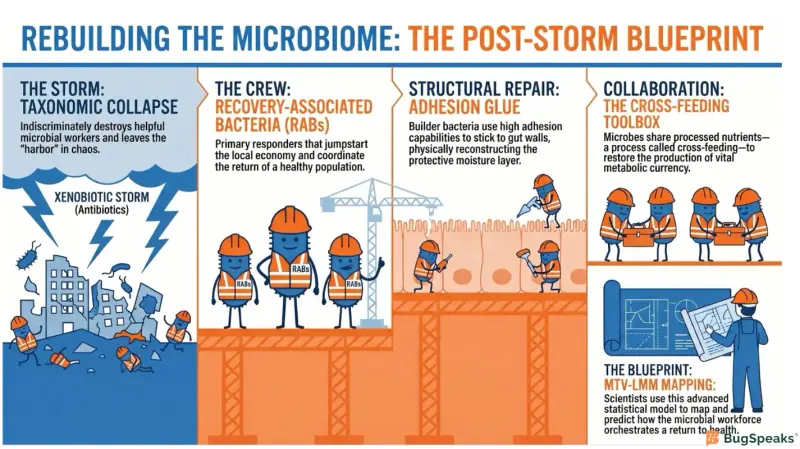
Master builders, known scientifically as Recovery-Associated Bacteria (RABs), are the primary responders tasked with repairing the harbor’s walls after a major environmental disaster or a "xenobiotic storm." These bacteria, primarily from the Bacteroides family, possess high Adhesion Capabilities, which allows them to stick to the harbor walls and coordinate the reconstruction of the protective moisture layer. These master builders don't work alone; they orchestrate cross-feeding networks where one worker breaks down a complex spice and leaves behind "scraps" that serve as the perfect fuel for a secondary worker. This teamwork jumpstarts the stalled SCFA currency engines and allows the harbor to return to prosperity much faster.
In the future, we will regulate trade for maximum resilience by using Synbiotics, which are precision-engineered combinations of master builders and their favorite food. This is like sending a construction crew along with all the lumber and steel they need to get the job done right away. This strategy relies on the principle of Competitive Exclusion, where a well-fed, healthy microbial crew naturally outcompetes any unauthorized stowaways for space and resources. By using multi-omics technology to monitor the harbor’s trade networks in real-time, we can identify exactly which workers are missing and provide them through targeted supplements. This ensures that even when the street food is particularly greasy, your harbor has the "repair kit" necessary to maintain its structural integrity.
The harbor also maintains its cleanliness by using a recycling plant that ensures no resources go to waste. Natural cleaning agents, or bile acids, are reused up to 20 times every single day through a logistics loop. If this recycling facility fails, the soap can turn into toxic runoff that damages the harbor's protective tiles. By treating our gut like a high-traffic international maritime harbor, we can build the resilience needed to navigate the complexities of modern life with health and vitality. The goal is to create a harbor that is not just "surviving," but "thriving" a port that can handle the vibrant diversity of the world while maintaining the internal vault of your health.
Table 3: Advanced Infrastructure: Logistics and Energy
Visualize the process- https://youtu.be/xgOCsgJd7ls
Reference
Ultra-processed food exposure and adverse health outcomes: umbrella review of epidemiological meta-analyses BMJ 2024; 384 doi: https://doi.org/10.1136/bmj-2023-077310 (Published 28 February 2024) Cite this as: BMJ 2024;384:e077310
Hamdi, A., Truong, L. V., Hien, V. T., Nguyen, P. A., Hoang, T. B. D., Lloyd, C., Eri, R., Stanley, D., Quyen, D. V., & Van, T. T. H. (2025). Dietary Effects, Age, and Urban–Rural Dynamics in Shaping Gut Microbiota of Elderly Vietnamese: A Cross-Sectional Study. Microorganisms, 13(12), 2803. https://doi.org/10.3390/microorganisms13122803
Liu, Y., Tang, X., Yuan, H., & Gao, R. (2024). Naringin Inhibits Macrophage Foam Cell Formation by Regulating Lipid Homeostasis and Metabolic Phenotype. Nutrients, 16(9), 1321. https://doi.org/10.3390/nu16091321
Safarchi A, Al-Qadami G, Tran CD and Conlon M (2025) Understanding dysbiosis and resilience in the human gut microbiome: biomarkers, interventions, and challenges. Front. Microbiol. 16:1559521. doi: 10.3389/fmicb.2025.1559521
Duan, Y., Li, Y., Xu, C., Wang, W., Wang, X., Zheng, W., Hsing, J. C., Wu, J., Myers, A., Hsing, A. W., He, W., & Zhu, S. (2025). Fried food consumption-related gut microbiota is associated with obesity, fat distribution, and cardiometabolic diseases: results from 2 large longitudinal cohorts with sibling comparison analyses. The American journal of clinical nutrition, 122(3), 733–743. https://doi.org/10.1016/j.ajcnut.2025.06.025