Why Do People Respond Differently to the Same Probiotic?
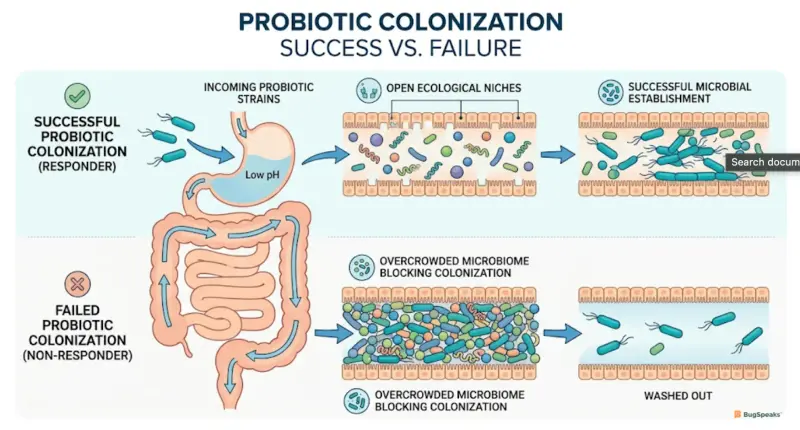
People react very differently to the same probiotic because successful bacterial survival depends entirely on how well the new microbes match the unique, pre-existing biological community in their digestive system. In our educational environment, your microbiome ecosystems operate as sprawling regional rail networks, where introduced probiotic strains act as new train fleets attempting to establish a regular, daily service on the tracks. When a probiotic successfully establishes itself within the gut, it achieves colonization, which functions as seamless route integration within the established transit system. However, if the new bacteria cannot survive the harsh, competitive environment inside the stomach and intestines, they simply pass through the body without leaving any lasting biological impact. This complete failure results in a route mismatch, which is a core characteristic of non-responder biology.
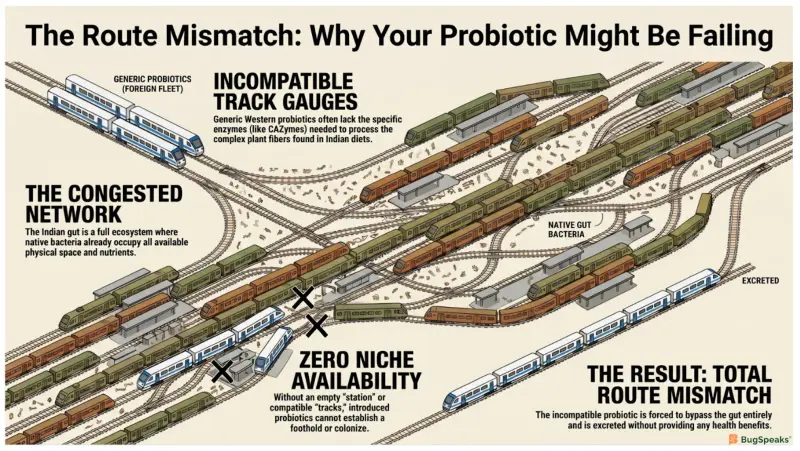
The success of a probiotic intervention depends heavily on two ecological rules: niche difference and relative fitness difference. A niche difference refers to the availability of specific biological roles, empty physical space, or uneaten food resources within the gastrointestinal tract that are not currently occupied by the native bacteria. If the gut already has native microbes aggressively eating all the available nutrients and taking up all the physical space in the mucus layer, the new probiotic cannot establish a foothold. In the regional rail networks, this is equivalent to sending a brand-new train fleet onto tracks that are already highly congested with perfectly functioning, specialized local trains. The new fleet cannot find an open station platform to park, and it is quickly forced to bypass the city completely.
When there is intense competition for the exact same resources, relative fitness difference determines the final outcome of the microbial struggle. If the externally administered probiotic is much stronger, possesses a higher metabolic fitness, and is better adapted to the gut environment than the native microbes, it can successfully outcompete them and achieve long-term survival. This competitive superiority creates network compatibility, which defines responder biology. Patients who exhibit responder biology have gut environments where the specific probiotic strains are perfectly suited to the local acid levels, available dietary fibers, and existing microbial populations. By understanding these basic ecological mechanisms, science can stop treating probiotic therapy as a mysterious guessing game and instead predict exactly which strain fleets will successfully achieve route integration.
Predicting this route integration requires understanding that every person has a completely different baseline transit system. For some individuals, recent illnesses or antibiotic use might have wiped out large sections of their native bacteria, creating massive empty niches. In our analogy, this represents abandoned railway stations with plenty of empty tracks, making it incredibly easy for new train fleets to move in and set up permanent operations. For others with fully populated, highly diverse microbiomes, only the absolute strongest and most perfectly matched probiotics can survive the intense competition. Ultimately, matching the right bacteria to the right environment is the absolute foundation of making probiotics work.
Why Does Where You Live Change Your Gut?
Where you live dramatically changes your gut because decades of specific eating habits force your digestive bacteria to adapt and evolve specialized tools to break down your exact local diet. The unique characteristics of the Indian gut represent a profound Indian microbiome adaptation, which operates as a highly specific regional railway optimization designed to process very distinct types of cargo. Research indicates that the Indian gut microbiome is highly distinctive, characterized by a massive abundance of a bacteria called Prevotella copri (making up around 39% of the gut) and a significant presence of Faecalibacterium prausnitzii (around 13%). This specific bacterial dominance is directly linked to traditional Indian diets that are extremely rich in plant-based, complex carbohydrates and resistant starches.
Because the Indian diet relies so heavily on these complex plant materials, the native gut bacteria have evolved specific genetic tools to break them down efficiently. Specifically, the Indian gut microbiome is enriched with genes that create Carbohydrate-Active Enzymes (CAZymes), which specialize in degrading tough plant fibers like xylan and xyloglucan. In our regional rail networks, these CAZymes act as massive, specialized unloading cranes designed exclusively to process heavy, complex cargo. If a person with this specific regional railway optimization takes a generic Western probiotic, which is typically designed for a diet high in ultra-processed foods, high animal fats, and low in fiber, the introduced train fleets will completely lack the necessary unloading equipment to handle the local cargo.
When Indian populations migrate to industrialized, Western countries and undergo dietary acculturation, their gut microbiomes experience a dramatic and often harmful shift. The adoption of a Westernized diet characterized by highly processed foods and low fiber intake causes a profound generational loss of Prevotella copri and a massive reduction in the CAZymes required to digest plant fibers. This sudden transition creates an unstable biological environment that increases the risk of inflammatory conditions like Inflammatory Bowel Disease (IBD). Understanding these profound geographic and dietary differences highlights exactly why generic, imported probiotics often fail to achieve route integration in the Indian gut. They simply do not possess the biological programming required to achieve network compatibility with the unique regional railway infrastructure.
The loss of these highly specialized bacteria when adopting a Western diet demonstrates how fragile our internal ecosystems can be. Without the heavy plant fiber to feed the Prevotella copri trains, the specialized unloading cranes rust and disappear, leaving the gut unable to properly process healthy foods in the future. This is why attempting to fix an Indian digestive system with a probiotic designed for a European or American gut is a biological mismatch. The foreign microbes arrive at the station, but they do not understand how to operate the local machinery, resulting in a rapid failure to colonize the environment.
How Are Regionally Informed Probiotics Designed?
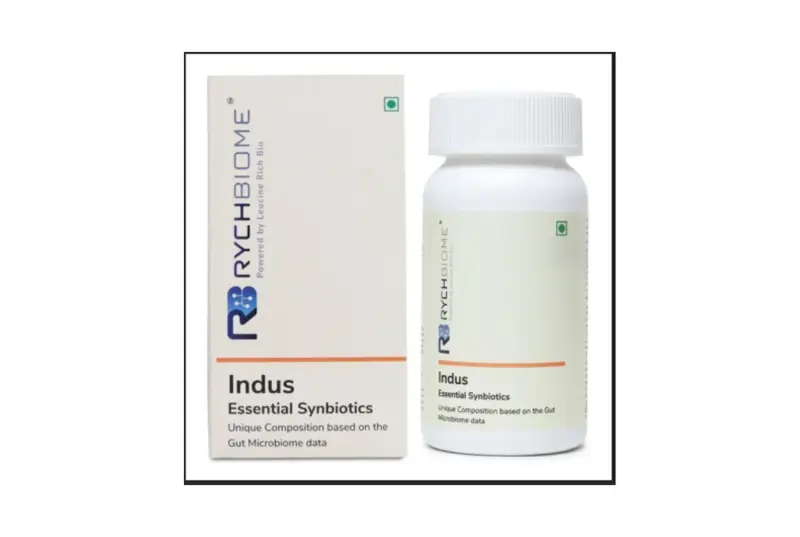
Regionally informed probiotics are designed by scientifically identifying the exact bacterial strains that a local population is missing, and delivering those specific microbes to repair the exact biological gaps in their digestive system. This precise, data-driven approach is the foundational science behind Rychbiome Indus, a precision-formulated synbiotic designed specifically to achieve guaranteed network compatibility within the Indian gut. he name "Indus" was specifically chosen in reference to the historic Indus Valley, reflecting that this product is formulated exclusively for the Indian population and their unique biological infrastructure. By designing new train fleets based on absolute intelligence regarding the local regional rail networks, the formulation guarantees highly efficient and lasting route integration.
Instead of relying on random, generic microbial blends, Rychbiome Indus utilizes precision science to fix broken transit lines. Based on Gut Microbiome Data from BugSpeaks, scientists found that 7 specific probiotic strains were frequently missing in the Indian gut population; hence, this supplement was designed based on these exact 7 strains. This targeted approach acknowledges that simply throwing random bacteria at a complex ecosystem usually results in a rapid route mismatch. The inclusion of perfectly matched missing strains acts as highly deliberate route-specific scheduling, deploying specialized maintenance trains only to the precise stations where the infrastructure has actually collapsed.
Furthermore, the formulation delivers an exceptionally high potency of 50 Billion Colony Forming Units (CFUs) per capsule. This massive, overwhelming number is biologically necessary. The journey from the mouth to the lower intestines is incredibly dangerous, requiring the bacteria to survive the harsh, acidic destruction of the stomach. By sending out 50 billion CFUs, the system ensures that a huge, unstoppable army of live, dormant microorganisms survives the dangerous transit to safely reach their final destination and successfully populate the lower intestines.
To further guarantee absolute survival and successful colonization, Rychbiome Indus is formulated as a synbiotic, meaning it contains both live probiotics and a specialized prebiotic called Fructo-Oligosaccharides (FOS). Prebiotics function as highly selective dietary fertilizers that cannot be digested by the human body, but serve as the primary, premium fuel for the introduced probiotic strains. In the regional rail networks, providing FOS is equivalent to sending dedicated, heavily armored fuel tankers attached directly to the back of the new train fleets. This ensures the trains have the exact energy resources required to complete their route integration, completely bypassing the need to search for food at the local stations.
What Specific Jobs Do Targeted Probiotics Perform?
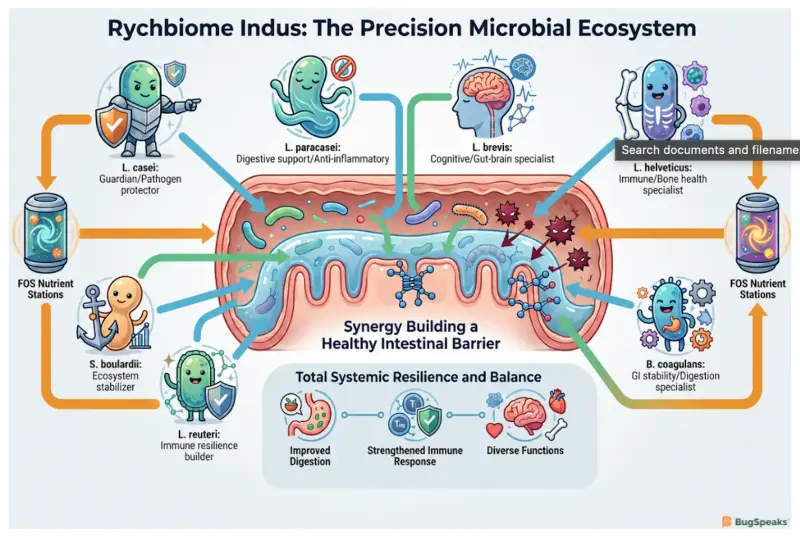
Targeted probiotics perform specific biological jobs by filling exact metabolic gaps and carrying out specialized chemical tasks that the local microbial community currently lacks. This deliberate scientific process represents personalization, functioning as exact route-specific scheduling to maximize the speed and efficiency of the biological transit system. Every single bacterial strain within Rychbiome Indus was carefully selected for its distinct, clinically validated mechanism of action. To protect the body against invading pathogens and drastically stimulate the innate immune system, three of the 7 specific strains in Rychbiome Indus are deployed: Lactobacillus casei MBLCM42, Limosilactobacillus reuteri MBLREM24, and Bacillus coagulans MBBCM9In our regional rail networks, these strains act as a heavily armed security fleet, constantly patrolling the tracks, repairing the station gates, and preventing any dangerous foreign invaders from hijacking the transit lines.
Simultaneously, the digestive system requires dedicated maintenance crews to handle heavy cargo and put out local fires, a job performed by two of the 7 specific probiotic strains in Rychbiome Indus: Lactobacillus paracasei MBLCPM54, which specializes in reducing severe intestinal inflammation and aiding in complex digestion, and Lactobacillus helveticus MBLHM63, which operates as a powerful anti-inflammatory agent while uniquely contributing to host skeletal bone health. In the regional rail network, these strains are the emergency repair trains that arrive at stations experiencing fiery crashes (inflammation) to quickly put out the flames, while simultaneously ensuring that structural building materials (minerals for bone health) are smoothly transported to the rest of the body without delay.
To complete the full system repair, the body requires specialized strains that support the nervous system and the overall physical architecture of the gut, utilizing the final two of the 7 specific strains in Rychbiome Indus. Lactobacillus brevis MBLBRM45 is deployed specifically to improve cognitive functions through the gut-brain axis, ensuring the transit dispatch center communicates perfectly with the brain. Meanwhile, Saccharomyces boulardii MBSBM6, a highly specialized, well-researched probiotic yeast, is extremely effective at improving overall gastrointestinal architecture, preventing dangerous diarrhea, and clearing massive amounts of debris from the main tunnels. By clearing out this pathogenic debris, the yeast ensures the other bacterial trains can travel without obstruction.
The wide diversity of these 7 selected probiotic strains ensures that multiple biological pathways are repaired at the exact same time. By utilizing a multi-strain team approach, the formulation ensures that the various train fleets can communicate and support one another. This creates a robust, highly interconnected transit system that prevents any single biological vulnerability from causing a total network failure. This meticulous, data-driven approach proves that effective probiotic therapy requires far more than just swallowing high bacterial counts; it requires the precise matching of microbial capabilities to the specific structural deficits of the host.
How Do Customized Probiotics Improve Long-Term Health?
Customized probiotics improve long-term health outcomes by establishing stable biological colonies that consistently produce healing chemicals, physically rebuild the walls of the intestines, and strictly calm down angry immune responses. When Rychbiome Indus successfully establishes total network compatibility, it transforms a broken, dysfunctional digestive tract into a flawlessly optimized regional rail network. The newly integrated train fleets begin manufacturing massive quantities of Short-Chain Fatty Acids (SCFAs), such as butyrate, acetate, and propionate. These SCFAs act as premium, glowing cargo boxes, delivering direct, pure energy to the hungry cells lining the colon. This cargo drastically reduces local tissue inflammation and sends calming signals to the immune system to remain regulated and peaceful.
The long-term therapeutic success of this route-specific scheduling also extends to the physical, structural restoration of the gut's defense architecture. The probiotic strains in Rychbiome Indus stimulate the rapid production of specialized tight junction proteins and a thick, protective mucus layer. This physically reinforces the intestinal barrier that separates the dirty gut contents from the clean bloodstream. By building these massive, impenetrable steel walls around the transit system, the probiotics prevent harmful toxins, bad bacteria, and undigested food particles from leaking into the body and triggering chronic, full-body inflammation.
Furthermore, by safely interacting with the host's immune cells, these good microbes stimulate the creation of regulatory T cells (T-regs). These specialized immune agents act as highly trained peacekeepers that stop the body from accidentally attacking its own healthy tissues. In a broken transit system, the security guards (immune cells) often panic and start attacking the stations themselves (autoimmunity and inflammation). However, when the custom train fleets deliver their SCFA cargo, they actively train the T-regs to stand down, creating a state of total peace and structural harmony throughout the entire body.
To achieve the absolute highest possible level of network compatibility, generic supplementation is far less effective than targeted intervention. By utilizing Rychbiome Indus exactly as it was intended as a precision, regionally informed instrument, individuals can finally take the guesswork out of their health. By deploying the exact 7 missing train fleets required by the Indian gut, complete with their own FOS fuel tankers, patients can successfully achieve route integration and rebuild their internal regional rail networks for total, lasting biological restoration.
-Varsha V
Visualize the process- https://youtu.be/vTiK4A3PmtY
Reference
Dubey, A. K., Uppadhyaya, N., Nilawe, P., Chauhan, N., Kumar, S., Gupta, U. A., & Bhaduri, A. (2018). LogMPIE, pan-India profiling of the human gut microbiome using 16S rRNA sequencing. Scientific data, 5, 180232. https://doi.org/10.1038/sdata.2018.232
https://www.bugspeaks.com/product/rychbiome-indus-capsules/
D’Aloisio, L.D., Ballal, M., Ghosh, S. et al. The adoption of a westernized gut microbiome in Indian Immigrants and Indo-Canadians is associated with dietary acculturation. npj Biofilms Microbiomes11, 151 (2025). https://doi.org/10.1038/s41522-025-00778-8
Gibbons, S. M., Gurry, T., Lampe, J. W., Chakrabarti, A., Dam, V., Everard, A., Goas, A., Gross, G., Kleerebezem, M., Lane, J., Maukonen, J., Penna, A. L. B., Pot, B., Valdes, A. M., Walton, G., Weiss, A., Zanzer, Y. C., Venlet, N. V., & Miani, M. (2022). Perspective: Leveraging the Gut Microbiota to Predict Personalized Responses to Dietary, Prebiotic, and Probiotic Interventions. Advances in nutrition (Bethesda, Md.), 13(5), 1450–1461. https://doi.org/10.1093/advances/nmac075
Manan, M. A. (2025). Comprehensive review The role of probiotics in personalized therapeutics: Advances in gut microbe-driven interventions. The Microbe, 100497.
https://ibdc.dbt.gov.in/indasecure/humanmicrobiome?utm_source=chatgpt.com