Unlocking the Power of RychBiome Probiokids for the Child's Wellbeing
Why is childhood the most important time for building a healthy gut microbiome?
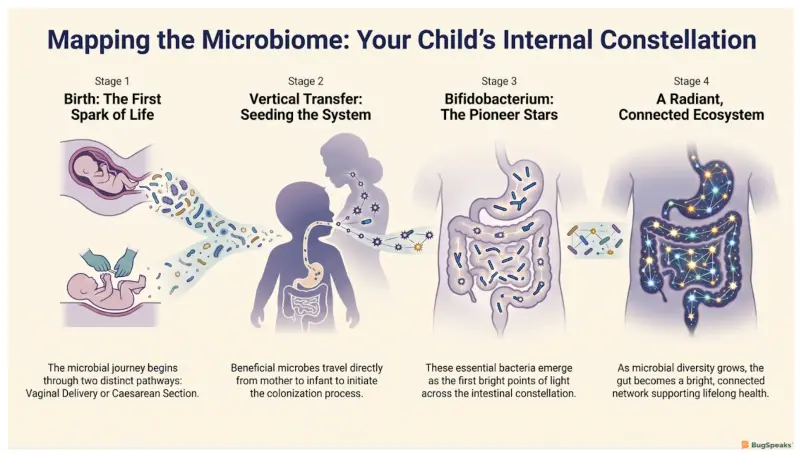
Childhood is the most important time for building a healthy gut microbiome because a child's early-life intestinal environment is highly flexible and sets the template for lifelong physical health. During the first few years of life, your body is busy welcoming microscopic organisms that settle in your digestive tract. This early setup is very much like mapping out a beautiful, glowing constellation of stars in the night sky. The very first microbial stars that find their place in this system will determine the structural pattern of the entire network. If these early pioneer microbes do not align correctly, your body's overall health can face long-term challenges.
The gradual establishment of your gut microbiota is deeply shaped by early-life events like birth delivery methods, infant feeding, and antibiotic exposures. When a baby is born vaginally, they are naturally coated in their mother's beneficial microbes, starting a healthy process of microbial colonization. However, when cesarean section deliveries or early antibiotics disrupt this delicate timeline, it creates dysbiosis. This biological disruption can lead to an unbalanced state called dysbiosis, which replaces the peaceful and healthy state of eubiosis. Safeguarding this early-life system ensures that harmful invaders cannot take over the child's vulnerable intestinal barrier.
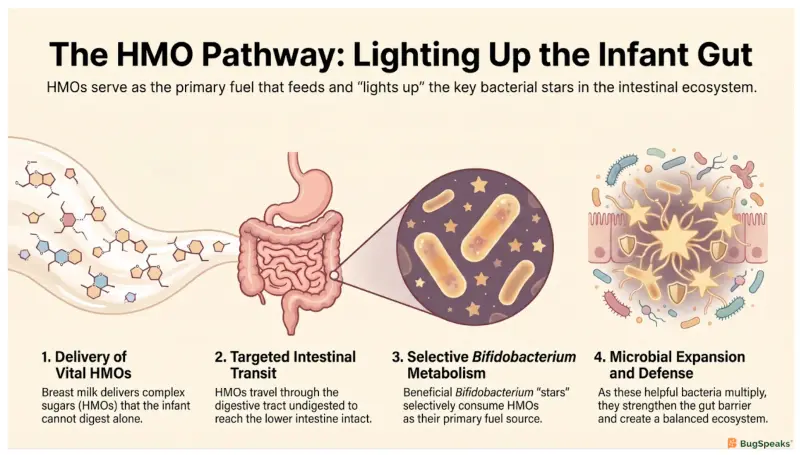
Proper gut microbiome development is also closely linked to early-life nutrition, simple digestion, and healthy physical growth trajectories. In the first months of life, breastfed babies get unique sugars called human milk oligosaccharides, or HMOs, which the infant cannot digest alone. Instead, these complex sugars act as special prebiotics, serving as the primary fuel that feeds the key bacterial stars in the gut. As these helpful bacteria consume this unique food, they multiply rapidly to protect the child's digestive tract. A well-nourished gut ecosystem ensures that children can easily absorb nutrients from their meals to support healthy growth.
How does the gut microbiome support a child's growth and development?
The gut microbiome supports a child's growth and development by managing digestion, unlocking vital nutrient absorption, and building a strong immune defense. This inner ecosystem works as an active biological processing center, where helpful microbes break down complex foods that a child's body cannot digest alone, where helpful microbes break down complex foods that a child's body cannot digest alone. As these helpful microbes work, they create essential energy and manufacture vital vitamins to feed the growing body. This smooth digestive process ensures your child has the energetic fuel required for steady, healthy growth and physical development. With these tiny helpers working, children can thrive, maintain proper weight, and enjoy excellent energy during active play.
Immune system training and the defense of your child's body also rely heavily on the continuous guidance of a balanced gut microbiota. Over seventy percent of a child's immune cells are located in the digestive tract, where they learn to tell the difference between friendly foods and harmful pathogens. When the gut is balanced, these microbes stimulate protective shields on the intestinal walls. This prevents painful childhood allergies and chronic inflammatory issues, keeping the body's protective system healthy and strong.
Additionally, your child's brain, emotional behavior, and cognitive maturation are supported by the gut microbiome through the bidirectional pathways of the gut-brain axis. The microbes in the gut synthesize important chemical messengers that travel along the vagus nerve, which is a direct communication highway connecting the gut to the brain. Helpful bacterial metabolites, especially short-chain fatty acids, or SCFAs, also enter the bloodstream to strengthen the protective blood-brain barrier. This active communication supports the child's learning abilities, emotional well-being, and daily focus. Keeping these pathways clear helps children stay focused, feel happier, and enjoy overall well-being every day.
Why is RychBiome Probiokids different from traditional children's probiotics?
RychBiome Probiokids is different from traditional supplements because it uses a scientifically curated, microbiome-focused formulation that delivers a high-potency blend of nine distinct, child-specific strains. While conventional children's probiotics often rely on a single generic bacterial strain administered at very low concentrations, this advanced formula provides a diverse multi-strain network of ten billion colony-forming units, or CFUs, per daily dose. This difference is like comparing a single lone star to a rich, glowing constellation of stars. Where traditional products add only a solitary point of light, Probiokids introduces a highly compatible star system designed to work in perfect biological harmony.
This advanced daily supplement is designed specifically for children to support their unique physiological milestones and help their developing gut microbiota transition smoothly through growing years. Unlike adults, children have highly dynamic gut environments that undergo major structural changes as they expand their diets, attend school, and occasionally face the gut-disrupting effects of pediatric antibiotic treatments. When antibiotics threaten to wipe out the gut's friendly microbes, it can trigger widespread imbalances and digestive discomfort like acute childhood diarrhea. The resilient strains in Probiokids are carefully stabilized to survive stomach acid, safely reaching the lower intestine where they rapidly grow and restore healthy balance.
A gentle safety profile, clean natural ingredients, and kid-friendly compliance represent the other core differences that set RychBiome Probiokids apart from typical pediatric supplements on the market today. This formulation is one hundred percent natural, completely GMO-free, and strictly complies with global manufacturing safety guidelines. It comes in a pleasant, natural vanilla-flavoured powder that can be taken directly, making it highly convenient for children. Daily use avoids causing any gastrointestinal distress or side effects, making it a trusted tool for everyday childhood wellness.
What ingredients are present in RychBiome Probiokids and how does each support children's health?
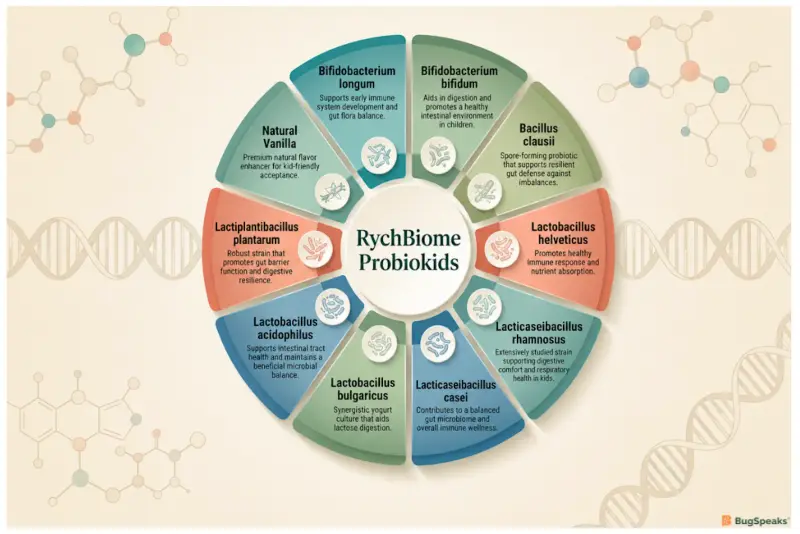
RychBiome Probiokids features a comprehensive, scientifically curated composition of nine beneficial probiotic strains, supported by a natural vanilla flavour. Within this system of helpful microbes, Bifidobacterium longum is included because it is naturally present during early childhood gut development to maintain a stable, happy gut. Next, Bifidobacterium bifidum supports balanced intestinal flora during rapid growth years. Bacillus clausii is a unique, spore-forming bacterium included to support regular digestion and improve overall microbial diversity. Together, these primary colonizers act like bright stars, working in perfect biological harmony to keep your child's digestive system balanced.
Lactobacillus helveticus supports dietary variety as children transition to broader family food choices, while Lacticaseibacillus rhamnosus provides daily gut wellness. Lacticaseibacillus casei and Lactobacillus bulgaricus support regular digestion, improve microbial diversity, and protect the delicate gut lining. Lactobacillus acidophilus maintains overall gut balance during active childhood years, thriving in the acidic small intestine. Lactiplantibacillus plantarum is a critical inclusion because it naturally binds and traps environmental heavy metals like lead in the digestive tract, allowing them to be safely excreted.
To support daily gut wellness, every single capsule of this children's formula is crafted following strict safety guidelines, is completely GMO-free, and requires no refrigeration to remain stable and potent. The product features a natural vanilla flavouring that makes the daily supplement taste delicious. This gentle yet powerful daily probiotic formula provides ten billion active cultures that reach the lower intestine safely. This thoughtful, premium composition makes it simple to include in your child's daily routine, helping to establish a healthy biological foundation during critical growth.
Why is building a healthy gut microbiome during childhood important for lifelong health?
Building a healthy gut microbiome during childhood is important for lifelong health because the baseline of bacteria established in early life permanently shapes your body's immune system, metabolic pathways, and brain development. When a child's intestinal constellation is properly populated with beneficial microbes during their first years of life, it forms a robust biological barrier that ensures lifelong digestive efficiency. This sturdy foundation prevents the chronic development of functional bowel disorders, irritable bowel syndrome, and food sensitivities in adulthood. By actively maintaining a balanced state, these early colonizers ensure that the gut barrier remains secure, protecting the host's long-term health.
Furthermore, the immunological training and metabolic regulation established by a diverse early-life microbiome are critical for preventing chronic illnesses and supporting steady physical growth. The molecular education of immune cells within your digestive tract during sensitive childhood periods permanently calibrates systemic immunity, helping to prevent lifelong allergies, atopic eczema, and childhood asthma. Simultaneously, a balanced microbiota regulates growth hormone signaling and bone remodeling, ensuring that children achieve their natural growth milestones without delay. When we nurture this delicate ecosystem early in life, we are not just supporting daily digestion; we are programming the child's long-term wellness and lifelong disease prevention.
In summary, investing in your child's intestinal health during these critical, highly malleable years is one of the most significant steps you can take to ensure their lifelong vitality and strength. Supporting their developing gut constellation with a premium, scientifically formulated supplement can help establish a balanced, resilient microbiome that protects them for years to come. With RychBiome Probiokids, you can easily provide your child with a gentle, kid-friendly daily formula containing ten billion active, beneficial cultures that promote a happier gut, robust immunity, and steady energy. Lay the foundations of lifelong wellness today by nurturing your child's gut ecosystem to let their health shine.
Visualize the process- https://youtu.be/aB4Z5e3qVgM
Reference
Ihekweazu FD, Versalovic J. Development of the Pediatric Gut Microbiome: Impact on Health and Disease. Am J Med Sci. 2018 Nov;356(5):413-423. doi: 10.1016/j.amjms.2018.08.005. Epub 2018 Aug 21. PMID: 30384950; PMCID: PMC6268214.
Yang I, Corwin EJ, Brennan PA, Jordan S, Murphy JR, Dunlop A. The Infant Microbiome: Implications for Infant Health and Neurocognitive Development. Nurs Res. 2016 Jan-Feb;65(1):76-88. doi: 10.1097/NNR.0000000000000133. PMID: 26657483; PMCID: PMC4681407.
Arrieta, M. C. (2025). Microbiome maturation trajectory and key milestones in early life. Annals of Nutrition and Metabolism, 81(Suppl. 1), 20-27.
Ronan V, Yeasin R, Claud EC. Childhood Development and the Microbiome-The Intestinal Microbiota in Maintenance of Health and Development of Disease During Childhood Development. Gastroenterology. 2021 Jan;160(2):495-506. doi: 10.1053/j.gastro.2020.08.065. Epub 2020 Dec 8. PMID: 33307032; PMCID: PMC8714606.
Lapidot Y, Maya M, Reshef L, Cohen D, Ornoy A, Gophna U, Muhsen K. Relationships of the gut microbiome with cognitive development among healthy school-age children. Front Pediatr. 2023 May 19;11:1198792. doi: 10.3389/fped.2023.1198792. PMID: 37274812; PMCID: PMC10235814.
Khazi AI, Ahmad A. Gut-Immune Interplay: Decoding the Microbiome's Impact on Immunity and Diseases. J Pharm Bioallied Sci. 2025 Jul-Sep;17(3):108-116. doi: 10.4103/jpbs.jpbs_1377_25. Epub 2025 Oct 29. PMID: 41293657; PMCID: PMC12643151.
Depoorter L, Vandenplas Y. Probiotics in Pediatrics. A Review and Practical Guide. Nutrients. 2021 Jun 24;13(7):2176. doi: 10.3390/nu13072176. PMID: 34202742; PMCID: PMC8308463.
Cruchet S, Furnes R, Maruy A, Hebel E, Palacios J, Medina F, Ramirez N, Orsi M, Rondon L, Sdepanian V, Xóchihua L, Ybarra M, Zablah RA. The use of probiotics in pediatric gastroenterology: a review of the literature and recommendations by Latin-American experts. Paediatr Drugs. 2015 Jun;17(3):199-216. doi: 10.1007/s40272-015-0124-6. PMID: 25799959; PMCID: PMC4454830.
Marano G, Sfratta G, Marzo EM, Cozzo G, Abate F, Traversi G, Mazza O, Capristo E, Gaetani E, Mazza M. The Pediatric Microbiota-Gut-Brain Axis: Implications for Neuropsychiatric Development and Intervention. Children (Basel). 2025 Nov 17;12(11):1561. doi: 10.3390/children12111561. PMID: 41300676; PMCID: PMC12651788.
Gaufin T, Tobin NH, Aldrovandi GM. The importance of the microbiome in pediatrics and pediatric infectious diseases. Curr Opin Pediatr. 2018 Feb;30(1):117-124. doi: 10.1097/MOP.0000000000000576. PMID: 29206649; PMCID: PMC6588283.
Dargenio VN, Cristofori F, Brindicci VF, Schettini F, Dargenio C, Castellaneta SP, Iannone A, Francavilla R. Impact of Bifidobacterium longumSubspecies infantis on Pediatric Gut Health and Nutrition: Current Evidence and Future Directions. Nutrients. 2024 Oct 16;16(20):3510. doi: 10.3390/nu16203510. PMID: 39458503; PMCID: PMC11510697.
Ku S, Park MS, Ji GE, You HJ. Review on Bifidobacterium bifidum BGN4: Functionality and Nutraceutical Applications as a Probiotic Microorganism. Int J Mol Sci. 2016 Sep 14;17(9):1544. doi: 10.3390/ijms17091544. PMID: 27649150; PMCID: PMC5037818.
Ianiro G, Rizzatti G, Plomer M, Lopetuso L, Scaldaferri F, Franceschi F, Cammarota G, Gasbarrini A. Bacillus clausii for the Treatment of Acute Diarrhea in Children: A Systematic Review and Meta-Analysis of Randomized Controlled Trials. Nutrients. 2018 Aug 12;10(8):1074. doi: 10.3390/nu10081074. PMID: 30103531; PMCID: PMC6116021.
Baljošević I, Šubarević V, Stanković K, Bajec Opančina A, Novković M, Petrovic M. The Efficacy of Paraprobiotic Lozenges (Lactobacillus helveticusMIMLh5) for the Prevention of Acute and Chronic Nose and Throat Infections in Children. Medicina (Kaunas). 2024 Jul 30;60(8):1235. doi: 10.3390/medicina60081235. PMID: 39202516; PMCID: PMC11356307.
Li YT, Xu H, Ye JZ, Wu WR, Shi D, Fang DQ, Liu Y, Li LJ. Efficacy of Lactobacillus rhamnosus GG in treatment of acute pediatric diarrhea: A systematic review with meta-analysis. World J Gastroenterol. 2019 Sep 7;25(33):4999-5016. doi: 10.3748/wjg.v25.i33.4999. PMID: 31543689; PMCID: PMC6737314.
Lai HH, Chiu CH, Kong MS, Chang CJ, Chen CC. Probiotic Lactobacillus casei: Effective for Managing Childhood Diarrhea by Altering Gut Microbiota and Attenuating Fecal Inflammatory Markers. Nutrients. 2019 May 23;11(5):1150. doi: 10.3390/nu11051150. PMID: 31126062; PMCID: PMC6566348.
Hunter CJ, Williams M, Petrosyan M, Guner Y, Mittal R, Mock D, Upperman JS, Ford HR, Prasadarao NV. Lactobacillus bulgaricus prevents intestinal epithelial cell injury caused by Enterobacter sakazakii-induced nitric oxide both in vitro and in the newborn rat model of necrotizing enterocolitis. Infect Immun. 2009 Mar;77(3):1031-43. doi: 10.1128/IAI.01192-08. Epub 2008 Dec 15. Retraction in: Infect Immun. 2018 May 22;86(6):e00212-18. doi: 10.1128/IAI.00212-18. PMID: 19075027; PMCID: PMC2643639.
Cheng H, Ma Y, Liu X, Tian C, Zhong X, Zhao L. A Systematic Review and Meta-Analysis: Lactobacillus acidophilus for Treating Acute Gastroenteritis in Children. Nutrients. 2022 Feb 6;14(3):682. doi: 10.3390/nu14030682. PMID: 35277042; PMCID: PMC8839062.
Ji W, Saulnier DM, Zhang L, Liu J, Gao J, Wang X, Holz C, Liang A, Tan HT. Effects of Lactiplantibacillus plantarumDSM 33464 in children with elevated blood lead levels: a randomized, double-blind, placebo-controlled study. Front Nutr. 2025 Sep 1;12:1641839. doi: 10.3389/fnut.2025.1641839. PMID: 40959702; PMCID: PMC12434113.