What Determines Metabolic Health?
Our bodies need energy every single day to help us walk, run, play, and breathe. Metabolism is the scientific term for how our cells turn the food we eat into this vital energy. Many people think that managing our body weight is a simple math problem of eating less and moving more. However, our biological systems are much more complex than a simple calculator because our bodies continuously adjust our energy use. Food provides the essential raw materials that our bodies use to build muscles, protect organs, and keep our main systems running in a healthy, active, and balanced way to help us live well.
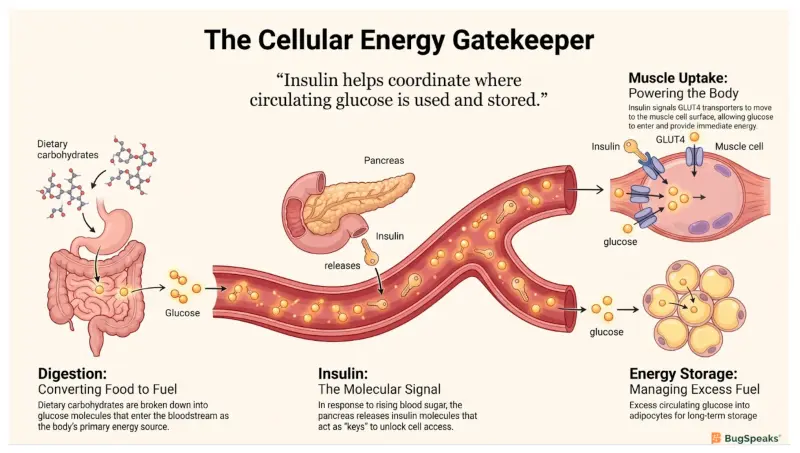
When we eat carbohydrates, our digestive system breaks them down into a simple sugar called glucose. This sugar enters our blood and acts as the primary fuel that our cells need to function properly. To handle this fuel, our pancreas releases a hormone called insulin, which helps guide the sugar into our cells. If we have too much sugar in our blood, insulin helps store the extra energy inside adipose tissue. Adipose tissue is an active tissue that communicates with our brain about stored energy to help regulate our appetite and keep our body weight stable.
This active communication shows why weight management is biologically complex and not just about eating less food. If we suddenly eat much less, our body saves energy by slowing our metabolic rate. This natural survival reaction makes us feel very tired and makes losing weight much harder than we expect. To understand this system, scientists have identified another important factor: the gut microbiome. This is a massive group of trillions of tiny microbes living inside our intestines, working together as a friendly helper team to help us digest food and support our daily metabolism every single day.
How Does the Gut Microbiome Connect to Your Metabolism?
The trillions of tiny microbes living in our gut have many different jobs that help keep us healthy. These gut microbes are excellent at breaking down the tough plant fibers that our human bodies cannot digest on their own. When they digest these fibers, they produce active chemical compounds called short-chain fatty acids (SCFAs) as byproductsHeiss (2017). These small acids act like quick text messages that travel from our gut to other distant organs in our body. This simple communication network allows gut microbes to talk directly to our cells, helping to regulate how our body uses its daily fuel and stores fat.
These chemical messages can change how hungry we feel by triggering the release of important gut hormones. Specifically, these acids stimulate our intestinal cells to release hormones called peptide YY (PYY) and glucagon-like peptide-1 (GLP-1)Heiss (2017). These two compounds travel directly to our brain and act as clear signals that we are full and satisfied. By signaling the brain to reduce our appetite, these hormones naturally help us stop eating when our body has enough energyHeiss (2017). This shows how gut bacteria play a major role in regulating our appetite, our blood sugar levels, and our energy use to help us stay healthy and strong.
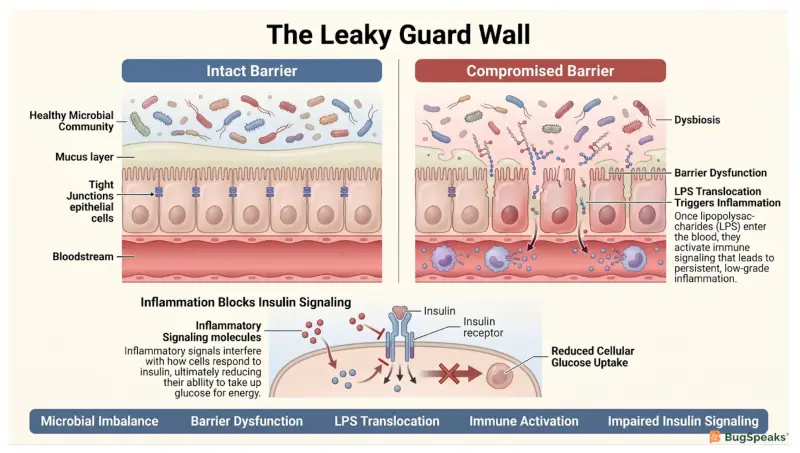
However, if our gut bacteria get out of balance, a state called dysbiosis can occurHeiss (2017). During dysbiosis, our protective gut barrier can weaken, allowing harmful bacterial parts called lipopolysaccharides (LPS) to leak into our bloodHeiss (2017). This leakage can trigger low-grade inflammation, which interferes with normal insulin signals and makes weight management much more difficultEjtahed (2020). Scientists warn that while gut bacteria are linked to our health, most human studies show association rather than direct causationHeiss (2017). This means that having unbalanced gut microbes is connected to weight issues, but is not the sole cause of these health problems in our bodies over time.
Why Is RychBiome Active Metabolism Boost Different From Other Supplements?
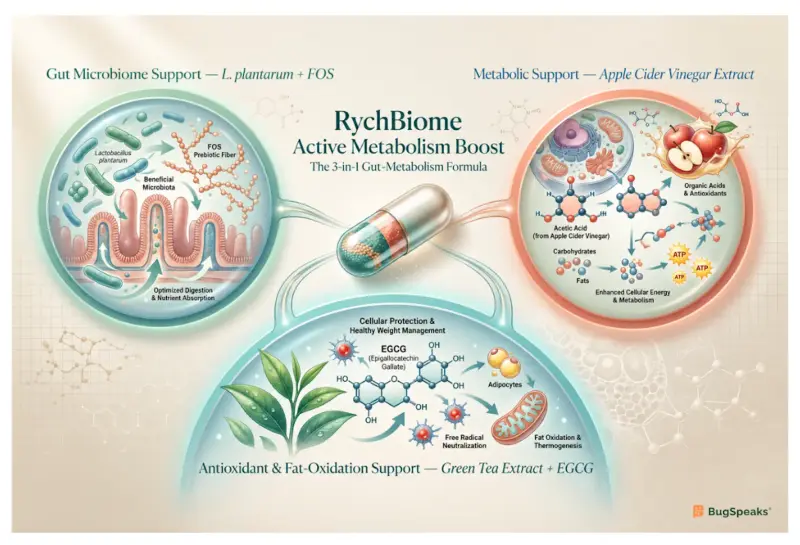
Many traditional weight management supplements on the market today focus on very narrow methods. They often rely heavily on high doses of stimulants, harsh chemical ingredients, or basic calorie-burning claims that do not address how our inner digestive system actually works. This ignores the vital connection between our belly and our energy. RychBiome Active Metabolism Boost is completely different because it focuses on a gentle and scientific approach. It is a unique 3-in-1 formulation designed to help support your digestion and overall metabolic wellness by naturally working with your body.
What makes this truly stand out is its advanced synbiotic combination of ingredients. While standard fat-burner pills only target a single pathway, this supplement supports your gut microbiome at the same time. It pairs a live probiotic strain, Lactiplantibacillus plantarum, with prebiotic fructo-oligosaccharides to provide a complete and balanced digestive care system. This ensures that friendly microbes receive high-grade fiber to grow, multiply, and thrive. This active survival support helps our microbes produce beneficial short-chain fatty acids, which send positive satiety signals to our brain to help us feel naturally satisfied and full after eating healthy meals.
In addition to gut support, this daily capsule contains plant-based extracts that provide crucial metabolic support and antioxidant protection. These complementary active components, which include green tea extract and apple cider vinegar extract, work together in a helpful way to support energy use and protect cells. Unlike single-ingredient stimulants, these gentle extracts help our body break down fuel and burn fat without any stressful spikes or feelings of fatigue. This multi-tiered method supports our system from different biological angles at once, offering a modern, balanced, and complete option for adults looking to support their active daily health goals and feel great every day.
What Are the Ingredients and Their Scientific Roles?
Scientists have researched specific ingredients to see how they can support our digestive and metabolic wellness. First, apple cider vinegar extract contains a helpful organic compound called acetic acid. Acetic acid has been studied for its ability to activate AMP-activated protein kinase (AMPK) in our cellsCastagna (2025). This extract may also help slow gastric emptying, meaning food leaves our stomach more slowly, which helps prevent sudden blood sugar spikes after we eatCastagna (2025). Clinical studies show that regular intake of this organic acid is associated with modest support for healthy body weight, body mass index, and waist measurements in overweight adults to support wellnessCastagna (2025).
Second, green tea extract provides powerful antioxidant support and helps our metabolic pathways run more efficiently. This plant extract is rich in active catechins, especially a compound called epigallocatechin-3-gallate (EGCG)Asbaghi (2023). This compound has been studied for supporting healthy fat oxidation, which is how our body burns fat for fuelAsbaghi (2023). Comprehensive clinical trials suggest that green tea extract is scientifically and consistently associated with modest reductions in overall body mass, BMI, and body fat percentageAsbaghi (2023). It may also support helpful hormones that keep cells sensitive to insulin, while protecting our cells from daily oxidative damage, environmental toxins, and cellular stress to support health.
Third, the probiotic strain Lactiplantibacillus plantarum and the prebiotic fructo-oligosaccharides (FOS) provide direct microbial support. Supplementing with this probiotic bacterium has been studied for supporting gut barrier integrity and is associated with modest weight support in overweight adultsCheng (2026). To help these friendly bacteria grow and stay active, the prebiotic FOS acts as a selective food sourceDou (2022). This selective feeding supports significantly increased helpful bacteria counts, supports a highly diverse gut microbiota, and helps to maintain a healthy and balanced daily digestive environment for healthy adultsTandon (2019).
How Do You Achieve Lasting Metabolic Wellness?
Achieving lasting metabolic health is a rewarding journey that is always built on a solid foundation of healthy habits. Sustainable wellness is never about finding a quick shortcut, but rather about creating a positive partnership with your body. By understanding how our gut and cells work together, we can make smarter choices that keep our energy balanced and our digestion running smoothly. Plant-based extracts and active probiotics serve as excellent daily partners that support our natural metabolic pathways, helping us maintain stable energy, active cellular function, and a balanced body weight over many wonderful years of our active lives.
To support this balance, focusing on positive lifestyle factors like eating a nutritious diet and staying active remains key. A balanced, high-fiber diet provides the perfect nourishment to keep our friendly gut microbes, while regular exercise keeps our cells sensitive to insulin. These everyday choices work alongside daily synbiotic supplements to protect our overall wellness. This collaborative approach is particularly helpful for addressing the unique dietary patterns and diverse nutritional habits observed within the Indian population, allowing individuals to support their gut-metabolism connection, maintain stable, healthy energy levels, and feel their absolute best as they live active and fulfilling lives.
For adults seeking to support their digestion, energy wellness, and weight management, incorporating a targeted daily supplement is an excellent proactive step. RychBiome Active Metabolism Boost offers a convenient, high-quality synbiotic formula that combines green tea extract, apple cider vinegar extract, and Lactiplantibacillus plantarum, supported by prebiotic FOS fiber. This gentle blend is designed to support your gut and metabolism from multiple angles alongside a balanced diet and regular physical activity. To take a positive, science-first step toward supporting your body and reaching your long-term health goals, RychBiome Active Metabolism Boost today to experience the wonderful benefits of comprehensive and reliable everyday support.
Visualize the process- https://youtu.be/yYKgcfSB8gI
Reference
Heiss, C. N., & Olofsson, L. E. (2018). Gut Microbiota-Dependent Modulation of Energy Metabolism. Journal of innate immunity, 10(3), 163–171. https://doi.org/10.1159/000481519
Ejtahed, H. S., Angoorani, P., Soroush, A. R., Hasani-Ranjbar, S., Siadat, S. D., & Larijani, B. (2020). Gut microbiota-derived metabolites in obesity: a systematic review. Bioscience of microbiota, food and health, 39(3), 65–76. https://doi.org/10.12938/bmfh.2019-026
Lin, Y., Shi, D., Su, B., Wei, J., Găman, M. A., Sedanur Macit, M., Borges do Nascimento, I. J., & Guimaraes, N. S. (2020). The effect of green tea supplementation on obesity: A systematic review and dose-response meta-analysis of randomized controlled trials. Phytotherapy research : PTR, 34(10), 2459–2470. https://doi.org/10.1002/ptr.6697
Asbaghi, O., Rezaei Kelishadi, M., Larky, D. A., Bagheri, R., Amirani, N., Goudarzi, K., Kargar, F., Ghanavati, M., & Zamani, M. (2024). The effects of green tea extract supplementation on body composition, obesity-related hormones and oxidative stress markers: a grade-assessed systematic review and dose-response meta-analysis of randomised controlled trials. The British journal of nutrition, 131(7), 1125–1157. https://doi.org/10.1017/S000711452300260X
Castagna, A., Ferro, Y., Noto, F. R., Bruno, R., Aragao Guimaraes, A., Pujia, C., Mazza, E., Maurotti, S., Montalcini, T., & Pujia, A. (2025). Effect of Apple Cider Vinegar Intake on Body Composition in Humans with Type 2 Diabetes and/or Overweight: A Systematic Review and Meta-Analysis of Randomized Controlled Trials. Nutrients, 17(18), 3000. https://doi.org/10.3390/nu17183000
Li, C. P., Chen, C. C., Hsiao, Y., Kao, C. H., Chen, C. C., Yang, H. J., & Tsai, R. Y. (2024). The Role of Lactobacillus plantarum in Reducing Obesity and Inflammation: A Meta-Analysis. International journal of molecular sciences, 25(14), 7608. https://doi.org/10.3390/ijms25147608
Cheng, Z., Du, L., Zheng, W., Zheng, S., Zheng, X., Liu, Z., Wong, Z., & Ge, X. (2026). Efficacy of Lactobacillus plantarum on Body Composition, Lipid Profile, Liver Enzymes, and Inflammatory Markers in Overweight or Obese Adults: A GRADE Systematic Review and Meta-analysis of Randomized Trials. Probiotics and antimicrobial proteins, 10.1007/s12602-026-11137-0. Advance online publication. https://doi.org/10.1007/s12602-026-11137-0
Pagliai, G., Coman, M. M., Baldi, S., Dinu, M., Nannini, G., Russo, E., Curini, L., Colombini, B., Lotti, S., Pallecchi, M., Di Gloria, L., Bartolucci, G., Ramazzotti, M., Verdenelli, M. C., Sofi, F., & Amedei, A. (2023). Effects of the probiotic Lactiplantibacillus plantarum IMC 510® on body composition, biochemical parameters, gut microbiota composition and function, and clinical symptoms of overweight/obese subjects. Frontiers in nutrition, 10, 1142527. https://doi.org/10.3389/fnut.2023.1142527
Dou, Y., Yu, X., Luo, Y., Chen, B., Ma, D., & Zhu, J. (2022). Effect of Fructooligosaccharides Supplementation on the Gut Microbiota in Human: A Systematic Review and Meta-Analysis. Nutrients, 14(16), 3298. https://doi.org/10.3390/nu14163298
Tandon, D., Haque, M. M., Gote, M., Jain, M., Bhaduri, A., Dubey, A. K., & Mande, S. S. (2019). A prospective randomized, double-blind, placebo-controlled, dose-response relationship study to investigate efficacy of fructo-oligosaccharides (FOS) on human gut microflora. Scientific reports, 9(1), 5473. https://doi.org/10.1038/s41598-019-41837-3