Is the 'Universal Probiotic' a biological myth?
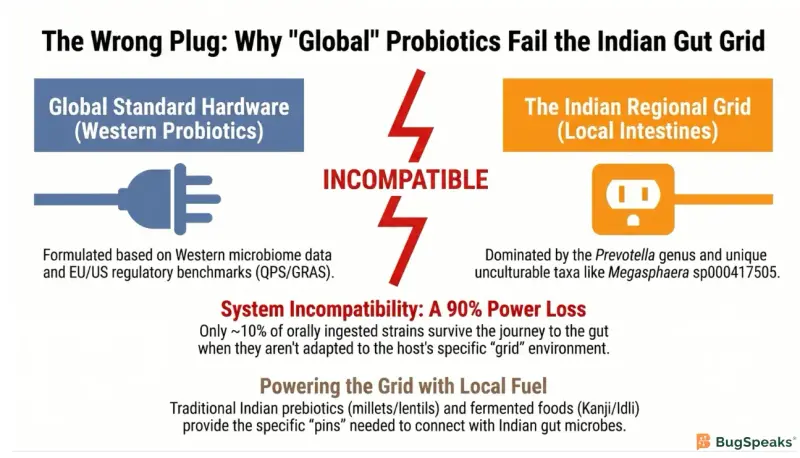
The concept of a "Universal Probiotic" is a biological myth because generic, mass-produced supplements often ignore the specific microbial patterns and physical differences found in people from different regions of the world. In the world of systems engineering, trying to use a generic probiotic in a highly specific regional gut is just like a "Plug vs. Socket" mismatch. If you try to force a 110V North American electrical plug into a 220V Indian wall socket, the result is a total failure to connect, a short-circuit, or no power transfer at all. Our biological systems work on these same rules of localized compatibility.
Most commercial probiotics sold today rely on general clinical tests, which creates a "Western-Centric" bias that leads to failure when used in different global populations. How well a probiotic works depends deeply on a person’s genes, their existing local Microbiome, their regional diet, and other health conditions. Because the types of beneficial bacteria available across the world are not the same, they heavily reflect local lifestyles and gut compositions.
Furthermore, the safety and success of these supplements are often held back by how much individuals differ from one another. Responses to these treatments vary wildly because of Microbiome diversity linked to ethnicity, age, diet, and even lifestyle. Using generic strains to treat geographically distinct groups proves the "universal" idea is flawed; a generic biological plug will simply experience a "connection timeout" in an incompatible regional gut, leading the body to flush it out as waste without any health benefit.
Table 1: Regional Infrastructure Compatibility
What defines the 'Indian Biological Grid'?
The Indian Biological Grid is defined by a specific microbial signature that is naturally optimized to process plant-based, high-fiber, and traditional fermented foods. If your gut is a localized power grid, the regional diet is the primary fuel source. A grid built to run on traditional fiber and fermentation has a completely different setup and baseline "voltage" than a grid built for highly processed, imported fuel.
Deep genetic profiling of the healthy Indian gut shows that two main groups of bacteria, Bacillota (47%) and Bacteroidota (41%), dominate the system to keep it in a healthy state of Eubiosis. Within this group, a genus called Prevotella stands out as a massive biological node, acting as a major sign of a healthy gut in the Indian population. Prevotella is essential because it breaks down complex fibers and produces Short-Chain Fatty Acids (SCFAs) that protect the gut lining and help the body manage sugar.
This unique grid is powered by traditional Indian diets full of complex carbohydrates and Prebiotics. Foods like whole millets (bajra, jowar, ragi), legumes (moong, chana), and raw onions provide vital fibers like Galactooligosaccharides (GOS) and Inulin. Giving the Indian Biological Grid imported generic strains is like trying to run a solar-powered grid on raw coal; the system simply doesn't have the right tools to process the mismatched input.
How does the 'Spice-Guard' decode local dietary signals?
The "Spice-Guard" allows regional probiotics to act as "Phytochemical Decoders" that use traditional Indian spices to boost their own performance. The Indian Biological Grid is unique because its internal environment is constantly washed in bioactive compounds from spices. While generic, imported strains might stop working or be neutralized when they hit high concentrations of spices like turmeric (Curcumin) or black pepper (Piperine), regional strains have special "drivers" that let them use these compounds as signals to grow. This means your microbial workforce isn't just surviving the local diet, it is being actively improved by it, turning traditional spices into metabolic power.
Why does 'Regional Hardware' outperform imported parts?
Regional hardware has a much higher "installation" success rate because these strains have evolved to survive and talk to the specific chemical environment of the local gut. Just like installing software on a computer requires the right "drivers," regional probiotics carry the codes needed to bypass your immune system's security and dock safely onto the gut wall. Imported parts usually lack these codes, which prevents them from ever reaching a high enough number to be useful.
To make sure these biological "plugins" actually work, they must be given in high doses (at least 5 billion CFU per day) for at least 14 days, using the right combinations of different strains. When you install the right regional hardware, these strains restore your gut's variety and strengthen the "security seals" of your gut wall, technically known as Zonula Occludens-1 (ZO-1). They also increase the production of Secretory IgA, a natural defense protein that pushes out harmful germs.
Can the 'Ancestral Handshake' provide immunological security clearance?
The "Ancestral Handshake" provides the high-level security clearance needed for probiotics to avoid being attacked by your body’s own immune system. Regional hardware carries molecular signatures that have co-evolved over generations to match the Indian genetic profile. This "Immunological Diplomacy" allows local strains to pass through your body’s internal security checks and settle into the gut. In contrast, generic, "foreign" strains often lack these secret codes and are flagged as threats, resulting in them being deported from the body as debris before they can help your health.
How does the grid manage metabolic 'voltage surges'?
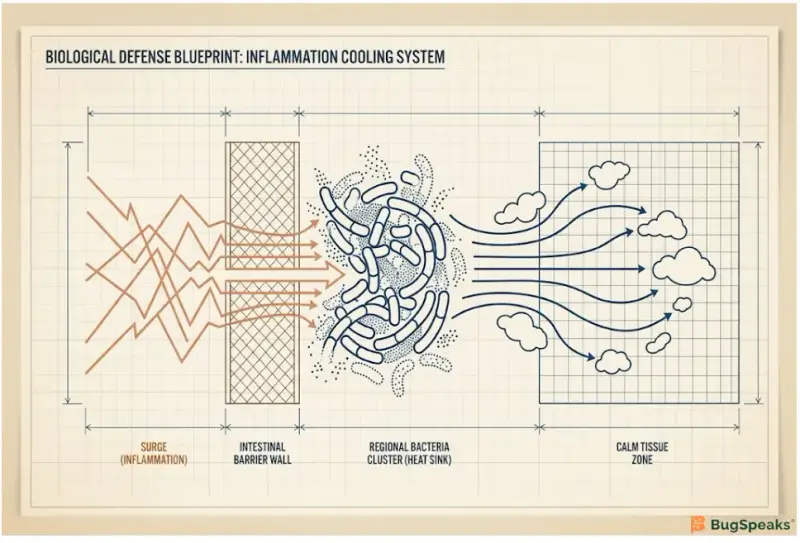
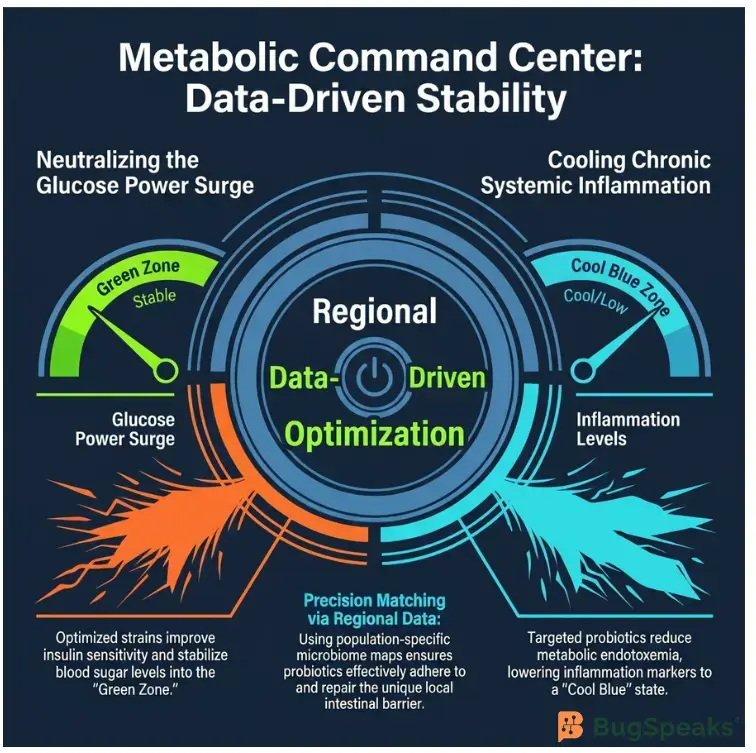
Regionally optimized probiotics act as "surge protectors" that stabilize how your body handles sugar and fat, preventing bursts of inflammation from damaging your system. If your biological grid breaks down, a bacterial toxin called Lipopolysaccharide (LPS) can leak through your gut wall. This leak causes a body-wide inflammatory surge known as Metabolic Endotoxemia, which is a direct cause of obesity and insulin resistance.
The Indian grid manages these surges using specialized, local strains like Megasphaera. These strains act as "heat-sinks" that soak up the stress by producing Butyrate, which helps the body release a hormone called GLP-1 to improve insulin sensitivity. Installing these regional surge protectors is the only scientifically sound way to prevent the long-term hardware damage caused by metabolic stress.
Table 2: Metabolic Performance Dashboard
Does microbial 'software' require local updates?
Yes, the gut's "Operating System" is very active and needs constant "Firmware Updates" from the local environment and diet. These local updates come from traditional fermented foods like Curd (Dahi), Buttermilk (Chaas), and Idli. These foods act as direct pathways for helpful Lactic Acid Bacteria that "patch" and repair your gut lining.
Additionally, many "unculturable" bacteria in the Indian gut, those that are hard to grow in a lab are experts at making B-complex vitamins (like B12 and B7) and Vitamin K. These local microbes often do a better job than the generic strains found in imported supplements. A biological operating system that doesn't get these regional updates will eventually crash, as it relies on this local "coding" to maintain its security..
What role do 'Fuel Cells' play in powering the regional plug?
"Fuel Cells" which are actually Prebiotic fibers are just as important as the probiotic "plug" itself because they provide the energy needed to keep the system running. A regional biological plug requires local, high-fiber fuel sources to stay "powered on" and reach a strong enough number to help you. Without a steady supply of local Prebiotics like those found in millets, lentils, or Pakhala (fermented rice water) even the most compatible probiotic will eventually run out of power. Keeping these fuel sources in your diet is the only way to guarantee steady communication (Telemetry) between your gut and your brain.
How can you prevent a total 'system blackout'?
You can prevent a total "System Blackout" , a severe health crisis known as Dysbiosis by using precise regional data to keep the microbial networks that stabilize the Indian Gut-Brain connection healthy. A blackout happens when the gut’s communication lines fail. Helpful chemicals like Serotonin (5-HT), which is mostly produced by regional gut bacteria, help regulate gut movement and keep the communication lines between the gut and brain open.
Keeping these regionally mapped networks strong prevents widespread failure of the entire system. Relying on generic, imported strains is simply not enough to check and stabilize the complex Indian biological network. Utilizing data-backed, regional formulations is the key to ensuring your internal grid stays online and your health remains secure.
Visualize the process- https://youtu.be/AomMLQwFil4
Reference
https://www.frontiersin.org/journals/microbiomes/articles/10.3389/frmbi.2026.1779767/full
https://pmc.ncbi.nlm.nih.gov/articles/PMC10904615/
https://www.mdpi.com/2072-6643/18/4/696
https://pmc.ncbi.nlm.nih.gov/articles/PMC12870991/ PMCID: PMC12870991