# The PathoBytes Series: Trichomonas vaginalis: The Parasite Behind Non-Viral STI
Author: BugSpeaks
Author URL: https://www.bugspeaks.com/blog/author/bugspeaks
Published: 2026-08-05
Category: MicroByte Series
Category URL: https://www.bugspeaks.com/blog/category/microbyte-series
Meta Title: Trichomonas vaginalis: Symptoms & Treatment | BugSpeaks
Meta Description: Learn about Trichomonas vaginalis, the parasite causing trichomoniasis. Explore STI symptoms, transmission, diagnosis, treatment and prevention strategies.
Tags: Trichomonas vaginalis, Pathogen
Tag URLs: Trichomonas vaginalis (https://www.bugspeaks.com/blog/tag/trichomonas-vaginalis), Pathogen (https://www.bugspeaks.com/blog/tag/pathogen)
URL: https://www.bugspeaks.com/blog/pathobyte-series-trichomonas-vaginalis
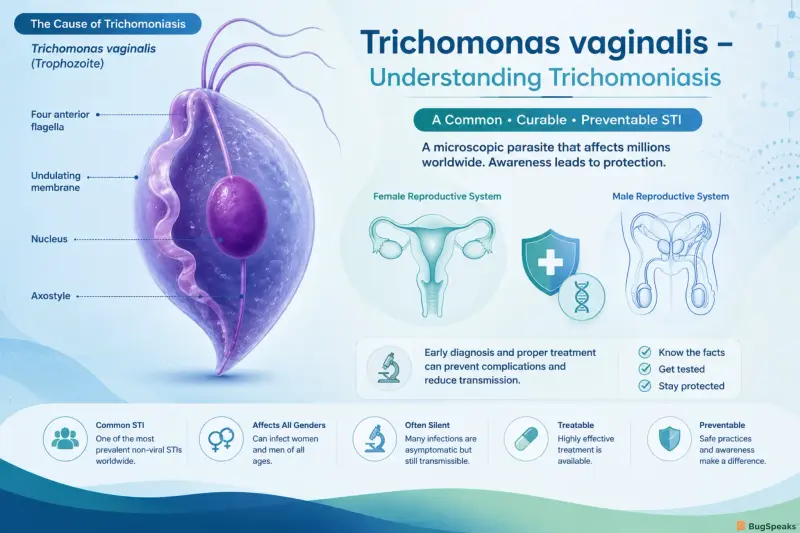
This blog explores Trichomonas vaginalis, a microscopic protozoan parasite responsible for trichomoniasis, the world's most common non-viral sexually transmitted infection (STI). Although millions of new infections occur every year, the disease often goes undiagnosed because many infected individuals have few or no symptoms. Beyond causing vaginal discharge, irritation, and urethritis, T. vaginalis is associated with adverse pregnancy outcomes, infertility, and an increased risk of acquiring and transmitting HIV. This article examines the parasite's biology, transmission, pathogenesis, clinical manifestations, diagnosis, treatment, prevention strategies, and the ongoing public health challenges in controlling this widespread yet frequently overlooked infection.
## **What is Trichomonas vaginalis?**
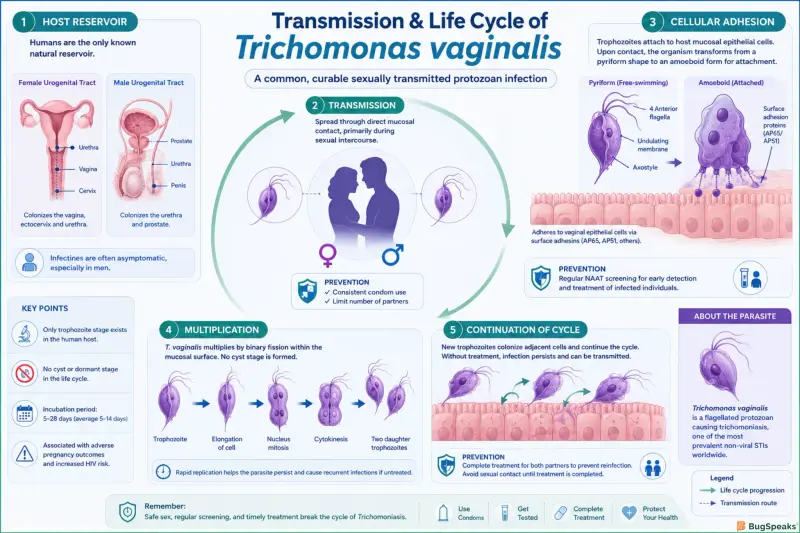
_Trichomonas vaginalis_ is an obligate [human parasite](https://www.bugspeaks.com/blog/pathobyte-series-streptococcus-pyogenes) that exists exclusively as a mobile trophozoite; unlike many other protozoans, it lacks a resistant cyst stage in its life cycle. The parasite exhibits a characteristic teardrop or pear-shaped morphology and utilizes four anterior flagella along with an undulating membrane to move with a distinct "jerky" or tumbling motility.
As an extracellular parasite, _Trichomonas vaginalis_ adheres directly to the epithelial lining of the urogenital tract. In women, the primary site of infection is the squamous epithelium of the vagina and ectocervix. In men, the organism colonizes the mucosal surfaces of the urethra, anterior prostate, and seminal vesicles. The resulting condition, trichomoniasis, is characterized by mucosal inflammation, cellular destruction, and altered vaginal microecology.
Flagella- Long, whip-like appendages that propel microorganisms through fluids. T. vaginalis possesses four anterior flagella.
Undulating membrane- A wave-like membrane attached along one side of the parasite that aids in movement.
## Public Health Significance and Global Prevalence
The public health impact of _Trichomonas vaginalis_ extends far beyond localized genital discomfort:
**Epidemiological Weight:** It accounts for nearly half of all curable non-viral STI cases worldwide.
**HIV Co-factor:** The intense inflammatory response and mucosal breakdown caused by _T. vaginalis_ significantly increase the likelihood of acquiring or transmitting HIV.
**Reproductive Morbidity:** In pregnant women, untreated infection is associated with premature rupture of membranes (PROM), preterm labor, and low birth weight infants.
**Asymptomatic Carriage:** Up to 70% of infected individuals are asymptomatic, creating a large, undetected reservoir that drives ongoing community transmission.
Inflammatory response- The body's immune reaction to infection or injury, characterized by redness, swelling, heat, pain, and immune cell activation.
Mucosal breakdown- Damage or disruption of the protective mucosal lining, making tissues more susceptible to infection.
## **History and Naming**
### **Discovery and Scientific Milestones**
In 1836, French physician and microscopist Alfred François Donné observed motile, flagellated microorganisms in purulent vaginal secretions from women suffering from vaginitis. He initially designated the organism _Infusorie vaginal_.
Recognizing the distinct morphology of the parasite, French zoologist Félix Dujardin subsequently assigned it to a new genus, coining the name _Trichomonas vaginalis_ in 1837.
### **Origin of the Name**
The scientific name reflects the morphological and anatomical characteristics of the organism:
**"Tricho-"**: Derived from the Greek word _thrix_ (genitive _trichos_), meaning hair, referring to the whip-like flagella.
**"-monas"**: Derived from the Greek _monas_, meaning a single unit or simple unicellular organism.
**"vaginalis"**: Refers to the primary site of discovery and colonization in human hosts—the vagina.
Vaginitis- Inflammation of the vagina, often causing discharge, itching, irritation, or discomfort.
Purulent vaginal secretions- Vaginal discharge containing pus, typically indicating inflammation or infection.
## **Microbe Profile**
The following profile details the physical, metabolic, and physiological characteristics of _Trichomonas vaginalis_:
**Characteristic**
**Details**
Shape
Pear-shaped (pyriform) or ovoid; capable of transforming into an amoeboid shape upon contact with host cells.
Gram Nature
Not Applicable (Eukaryotic protozoan parasite; lacks a peptidoglycan bacterial cell wall).
Spore Formation
Does not form spores or cysts; exists only in the motile trophozoite stage.
Biofilm Formation
Capable of forming microcolonies and participating in polymicrobial biofilm-like structures on urogenital epithelium.
Oxygen Requirement
Microaerophilic / Anaerobic (lacks mitochondria; utilizes specialized organelles called hydrogenosomes for anaerobic metabolism).
Optimal Temperature
35 °C - 37°C
Optimal pH
5-6
Nutrient Usage / Culture Media
Phagocytoses bacteria, red blood cells, and epithelial cells; cultured in Diamond's medium, InPouch TV, or Modified Trichomonas Medium.
## **Taxonomic Classification**
The taxonomic hierarchy of _Trichomonas vaginalis_ according to modern eukaryotic phylogenetic classifications is presented below:
Rank
Classification
Domain
Eukaryota
Kingdom
Protista (Excavata group)
Phylum
Metamonada
Class
Parabasalia
Order
Trichomonadida
Family
Trichomonadidae
Genus
_Trichomonas_
Species
_Trichomonas vaginalis_
## **Pathogenesis**
### **Virulence Factors and Adhesion Mechanisms**
Upon entering the urogenital tract, _Trichomonas vaginalis_ undergoes a rapid transformation from a free-swimming pyriform trophozoite into a flattened, amoeboid form. This morphological change increases the parasite's surface area, allowing it to contact host epithelial cells directly.
Key molecular factors driving adhesion and colonization include:
**Adhesion Proteins (APs):** Surface proteins including AP65, AP51, AP33, and AP23 mediate specific receptor-binding interactions with fibronectin and laminin on human vaginal epithelial cells (VECs).
**Lipoglycan (TvLG):** The major cell-surface glycoconjugate of _T. vaginalis_, TvLG binds to host galectin-1 and galectin-3 receptors, initiating inflammatory signaling and anchoring the parasite to host tissue.
**Cysteine Peptidases (CPs):** The parasite secretes over 20 distinct cysteine proteases (such as TvCP39) that degrade host extracellular matrix proteins, immunoglobulins (IgA and IgG), and complement components.
### **Cytotoxic Effects and Host Inflammatory Response**
Once attached, _T. vaginalis_ exerts direct cytotoxic actions on host cells through nutrient depletion, mechanical disruption, and the release of pore-forming proteins (perforin-like factors). The parasite actively phagocytoses host erythrocytes, vaginal epithelial cells, and commensal lactobacilli.
The host immune system responds by recruiting neutrophils, macrophages, and lymphocytes to the mucosal surface. Neutrophil infiltration generates reactive oxygen species (ROS) and pro-inflammatory cytokines. This intense local inflammatory cascade causes epithelial sloughing, micro-ulcerations, and small petechial hemorrhages.
### **Immune Evasion and Parasite Survival**
_Trichomonas vaginalis_ employs several mechanisms to persist within the host despite an active immune response:
**Antibody Cleavage:** Surface-bound and secreted cysteine peptidases degrade host secretory IgA and IgG antibodies before they can opsonize the parasite.
**Phenotypic Variation:** The parasite dynamically alters its surface antigen expression in response to environmental stressors and host immune pressure.
**Phenotypic Masking:** _T. vaginalis_ absorbs host plasma proteins (such as human serum albumin and immunoglobulins) onto its outer membrane, concealing its foreign antigens from host immune surveillance.
Trophozoite- The active, motile, feeding stage of Trichomonas vaginalis responsible for infection and replication.
Pyriform- Pear-shaped; the typical morphology of the free-swimming T. vaginalis trophozoite.
## **Transmission**
### **Modes of Transmission**
**Sexual Transmission:** The predominant mode of transmission is unprotected sexual intercourse (vaginal-penile, vaginal-vaginal, or oral-genital contact). Transmission rates are high; a single sexual exposure with an infected partner carries a substantial risk of acquiring the parasite.
**Vertical Transmission:** Transmission from an infected mother to a newborn during passage through an infected birth canal occurs in up to 5% of deliveries, potentially leading to neonatal respiratory tract or vaginal infections.
**Non-Sexual Transmission:** [Non-sexual transmission](https://www.bugspeaks.com/blog/pathobyte-series-plesiomonas-shigelloides) via shared damp items (such as unwashed bath towels, wet sponges, or contaminated gynecological instruments) is extremely rare because the parasite lacks a protective cyst stage and degrades rapidly outside the human body.
Fomite- An inanimate object (e.g., towel, sponge, or medical instrument) that can potentially carry infectious microorganisms.
Viability- The ability of a microorganism to remain alive and capable of causing infection
## **Signs and Symptoms**
The incubation period for _Trichomonas vaginalis_ typically ranges from 5 to 28 days following exposure, although many individuals harbor the organism for months or years without developing clinical symptoms.
### **Clinical Presentation in Women**
Approximately 50% to 70% of infected women experience symptoms, which may range from mild irritation to severe, acute vulvovaginitis:
**Vaginal Discharge:** Classic discharge is diffuse, thin, homogeneous, frothy, yellow-green in color, and possesses a strong, unpleasant odor.
**Pruritus and Irritation:** Severe itching, burning, and soreness of the vulva and vagina.
**Dysuria:** Pain or burning sensation during urination caused by urethral involvement.
**Dyspareunia:** Painful sexual intercourse stemming from vaginal inflammation.
**Strawberry Cervix (Colpitis Macularis):** Marked punctate hemorrhagic spots on the ectocervix, visible during speculum examination in approximately 2% to 5% of symptomatic women.
### **Clinical Presentation in Men**
Up to 70% to 80% of infected men are asymptomatic carriers. When symptoms occur, they are often transient and mild:
**Urethritis:** Mild urethral discharge (purulent or clear) and urethral irritation.
**Dysuria and Burning:** Stinging or burning sensation during or immediately after ejaculation or urination.
**Complications:** Rare secondary complications include epididymitis, prostatitis, and reduced sperm motility leading to temporary subfertility.
### **Pregnancy Complications and HIV Link**
**Pregnancy Outcomes:** _T. vaginalis_ infection during pregnancy is associated with adverse maternal and fetal outcomes, including premature rupture of membranes (PROM), preterm birth (before 37 weeks), and low birth weight.
**HIV Susceptibility:** Micro-ulcerations and localized neutrophil infiltration recruit CD4+ T-lymphocytes and macrophages to the genital mucosa. This tissue damage increases susceptibility to HIV acquisition by 1.5- to 2-fold and elevates viral shedding in HIV-positive individuals.
Vulvovaginitis- Inflammation of both the vulva and vagina, often causing discharge, itching, irritation, and pain.
Pruritus- Intense itching of the skin or mucous membranes.
## **Diagnosis**
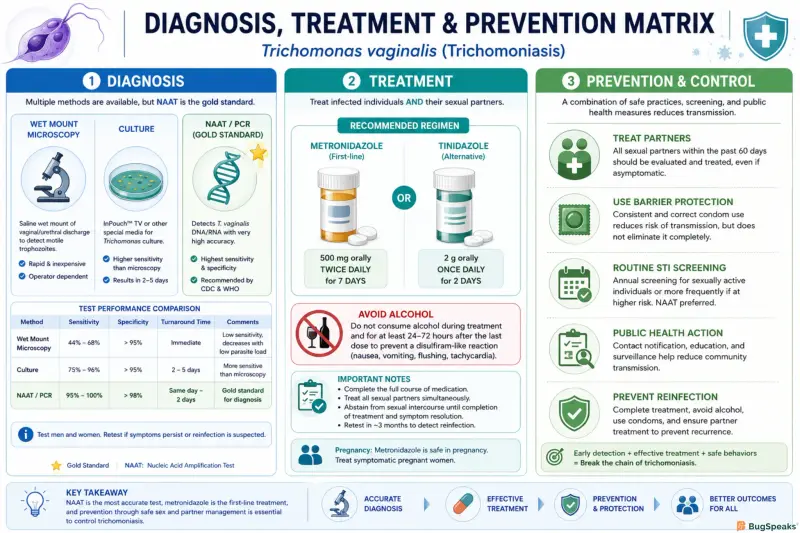
Clinical signs alone are insufficient to diagnose trichomoniasis because symptoms overlap significantly with bacterial vaginosis, vulvovaginal candidiasis, and chlamydial infection. Objective laboratory testing is essential.
### **Diagnostic Modalities**
**Wet Mount Microscopy:**
- Direct microscopic evaluation of fresh vaginal or urethral secretions suspended in 0.9% saline.
- Mechanism: Visualization of motile, pear-shaped trophozoites displaying characteristic jerky movement.
- Limitations: Low sensitivity (40%–60%); requires immediate evaluation (within 10–20 minutes of collection) before parasites lose motility.
**Culture:**
- Historically considered the gold standard before molecular testing.
- **Mechanism:** Inoculation into Specialized media (e.g., Diamond's medium, InPouch TV system) incubated at 37°C for 2–7 days.
- **Nucleic Acid Amplification Tests (NAATs):**
- Currently recommended as the gold standard diagnostic methodology by the CDC and WHO.
- **Mechanism:** Amplification of parasite-specific RNA or DNA target sequences from vaginal swabs, endocervical swabs, or urine.
- **Performance:** Exceptional sensitivity (95%–100%) and specificity
- **Rapid Antigen Tests & Point-of-Care (POC) Tests:**
- Immunochromatographic membrane assays (e.g., OSOM Trichomonas Rapid Test) that detect parasite surface antigens within 10–45 minutes.
- **Sensitivity:** 80%–90%; useful in resource-limited clinical settings.
### **Comparison of Diagnostic Methods**
**Method**
**Sensitivity**
**Specificity**
**Turnaround Time**
**Advantages**
**Limitations**
Wet Mount Microscopy
40% – 60%
95% – 100%
10–15 mins
Low cost, point-of-care, rapid results.
Requires immediate reading, skilled technician; low sensitivity.
Culture (Diamond's/InPouch)
85% – 95%
99% – 100%
2–7 days
Detects live parasites; allows drug susceptibility testing.
Slow turnaround time, requires incubator facilities.
NAAT / PCR
95% – 100%
99% – 100%
1–4 hours
Gold Standard; highly sensitive; uses self-collected swabs or urine.
Higher cost, requires specialized laboratory infrastructure.
Rapid Antigen Assay
80% – 90%
95% – 100%
10–45 mins
Quick, simple, no live parasites required.
Less sensitive than NAATs; higher cost than wet mount.
Inoculation- The introduction of a clinical specimen into a culture medium to allow microbial growth.
Incubation- Maintaining a culture under controlled conditions, such as temperature, to promote microbial growth.
## **Treatment**
Systemic therapy is mandatory to eradicate _Trichomonas vaginalis_. Topical intravaginal creams or gels (such as metronidazole gel) are ineffective because they fail to reach therapeutic drug concentrations in infected urethral, skene gland, or prostatic tissue reservoirs.
### **First-Line Pharmacological Regimens**
The 5-nitroimidazole class of drugs, specifically **Metronidazole** and **Tinidazole**, forms the backbone of trichomoniasis therapy.
**Non-Pregnant Females (CDC Updated Guidelines):**
- _Recommended Regimen:_ **Metronidazole 500 mg orally twice daily for 7 days.** (Superior cure rates compared to single-dose therapy).
**Males:**
- _Recommended Regimen:_ **Metronidazole 2 g orally in a single dose**, OR **Metronidazole 500 mg twice daily for 7 days.**
**Alternative Regimen:**
- **Tinidazole 2 g orally in a single dose.** (Often better tolerated with fewer gastrointestinal side effects).
### **Partner Treatment and Management**
Simultaneous treatment of all sexual partners is essential to prevent reinfection ("ping-pong" transmission). Patients must be instructed to abstain from sexual activity until both they and their partners have completed their antimicrobial course and are symptom-free (typically 7 days post-treatment).
### **Drug Resistance and Follow-up Testing**
**Nitroimidazole Resistance:** Low-level metronidazole resistance occurs in approximately 4% to 10% of clinical isolates. Refractory cases are managed using higher doses of oral tinidazole (e.g., 2 g daily for 7 days) combined with high-dose metronidazole or specialized compound formulations.
**Re-testing Recommendation:** Due to high rates of post-treatment reinfection, re-testing via NAAT is recommended for all sexually active women within 3 months following initial therapy.
Urethral reservoir- The urethra serves as a site where T. vaginalis can persist despite inadequate treatment.
Skene glands- Small glands located near the female urethra that may harbor T. vaginalis and contribute to persistent infection.
## **Prevention**
Preventing trichomoniasis relies on combining barrier precautions, regular STI screening, prompt case identification, and partner notification.
**Consistent Condom Use:** Correct and consistent use of male latex or polyurethane condoms during every vaginal intercourse session significantly reduces the risk of _T. vaginalis_ transmission.
**Routine STI Screening:** Annual screening is recommended for high-risk populations, including HIV-positive individuals, women entering correctional facilities, and patients attending STI clinics.
**Simultaneous Partner Management:** Expedited Partner Therapy (EPT) or direct partner referral ensures that partners receive concurrent treatment, preventing reinfection cycles.
**Avoiding Unnecessary Douching:** Discouraging vaginal douching preserves normal _Lactobacillus_ microflora and maintains a protective acidic vaginal environment.
## Vaccines
### **Current Status and Vaccine Challenges**
There is currently no licensed human vaccine available for _Trichomonas vaginalis_. Developing an effective vaccine faces several biological hurdles:
**Antigenic Variability:** _T. vaginalis_ strains display high phenotypic variation in surface proteins, allowing the parasite to escape antibody-mediated clearance.
**Mucosal Immune Barriers:** Eliciting long-lasting secretory IgA and cell-mediated immune responses within the lower genital tract mucosal tissue is difficult.
**Short-Lived Natural Immunity:** Natural infection does not confer long-term protective immunity; individuals can become reinfected immediately after successful antimicrobial cure.
Clinical isolate- A strain of a microorganism obtained from a patient for laboratory testing and analysis.
Refractory infection- An infection that persists or fails to respond to standard treatment.
### Reference
World Health Organization. (2021). _Global progress report on HIV, viral hepatitis and sexually transmitted infections_. Geneva: World Health Organization.
Centers for Disease Control and Prevention. (2021). _Sexually Transmitted Infections Treatment Guidelines: Trichomoniasis_. MMWR Recommendations and Reports, 70(4), 1-187.
Poole, D. N., & McClelland, R. S. (2013). Global epidemiology of _Trichomonas vaginalis_. _Sexually Transmitted Infections_, 89(6), 418-422.
Kissinger, P. (2015). Epidemiology and treatment of _Trichomonas vaginalis_. _Current Infectious Disease Reports_, 17(6), 484.
Meites, E., Gaydos, C. A., Hobbs, M. M., et al. (2015). A review of evidence-based care for _Trichomonas vaginalis_ infections. _Clinical Infectious Diseases_, 61(S8), S837-S843.
Hirt, R. P., & Sherrard, J. (2015). _Trichomonas vaginalis_ origins, genomics and pathogenesis. _Sexually Transmitted Infections_, 91(4), 229-235.
Secor, W. E. (2012). _Trichomonas vaginalis_: the rogue protozoan. _Journal of Parasitology Research_, 2012, 730759.
Schwebke, J. R., & Burgess, D. N. (2004). Trichomoniasis. _Clinical Microbiology Reviews_, 17(4), 794-803.
## FAQs
Q: What is Trichomonas vaginalis?
A: Trichomonas vaginalis is a single-celled, flagellated protozoan parasite that infects the human urogenital tract, causing the sexually transmitted infection known as trichomoniasis.
Q: How is trichomoniasis transmitted?
A: It is transmitted primarily through direct mucosal contact during unprotected vaginal, penile, or oral sexual activity with an infected individual. Non-sexual transmission is extremely rare.
Q: Can men have trichomoniasis without symptoms?
A: Yes. Up to 70% to 80% of infected men carry the parasite without experiencing any clinical symptoms, yet they remain capable of transmitting the parasite to their sexual partners.
Q: Is trichomoniasis curable?
A: Yes. Trichomoniasis is fully curable with appropriate systemic oral nitroimidazole antibiotics, specifically metronidazole or tinidazole, taken as prescribed.
Q: How is trichomoniasis diagnosed?
A: While wet mount microscopy is widely used, Nucleic Acid Amplification Testing (NAAT) is the gold standard method due to its superior accuracy and ability to detect low parasite loads in urine or mucosal swabs.
Q: Can trichomoniasis affect pregnancy?
A: Yes. Untreated trichomoniasis during pregnancy is linked to adverse outcomes including premature rupture of membranes (PROM), preterm delivery, and low birth weight.
Q: Can trichomoniasis increase the risk of HIV?
A: Yes. The mucosal inflammation and tissue damage caused by T. vaginalis recruit target CD4+ immune cells to the genital tract, increasing susceptibility to HIV infection and boosting viral shedding in HIV-positive individuals.
---
This blog is powered by Superblog. Visit https://superblog.ai to know more.
---