The Pathobyte Series: Proteus mirabilis- The Shape Shifting Super Swarmer
This blog post explores Proteus mirabilis, an extraordinary shape-shifting bacterium named after an ancient Greek sea god. Operating as an environmental recycler in soil and streams, this adaptable microbe also lives as a peaceful commensal in human and animal guts, offering metabolic benefits and even green bioplastics. However, it can transform from a tiny swimmer into a massive, multi-tailed swarmer cell that builds tough, mineral-rich biofilms inside medical tubes. Beyond causing infections, its incredible genetic traits allow it to clean up toxic heavy metal pollution and assist in historic medical tests, making it a true wonder of microbiology.
How Did a Hidden, Swarming Organic Recycler Capture the Eyes of Early Microscopists?
Long before scientists had advanced microscopes, people in ancient Europe were terrified by invisible forces that caused mysterious sicknesses. In 1885, a clever German scientist named Gustav Hauser finally isolated a strange new microorganism from spoiled meat. When he looked through his lens, he observed a tiny creature that refused to stay in just one simple shape. Instead, this tiny living thing constantly transformed itself right before his eyes. This incredible discovery helped people realize that some microscopic creatures were shape-shifters, capable of moving around in ways that normal human eyes could never see without special scientific tools.
Hauser was so amazed by this tiny shape-shifter that he decided to name it after an ancient Greek sea god from Homer's famous book, the Odyssey. This mythical god was named Proteus, the son of Poseidon, who could transform into wild beasts, rushing water, or tall trees to escape anyone trying to capture him. Because this new pathogen could also transform its body completely, Hauser named the genus Proteus. He then added the species name mirabilis, which is a Latin word that means wonderful, surprising, or splendid, because its circular growing patterns looked absolutely magnificent under his lens.
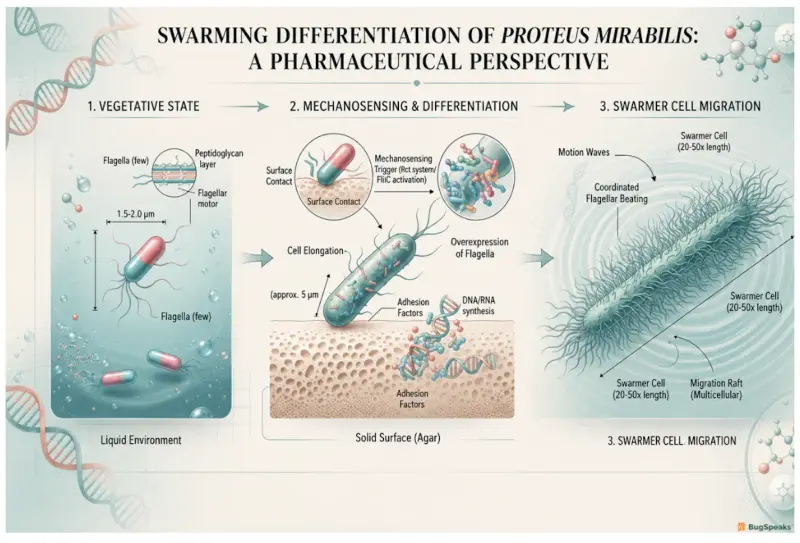
When this bacterium grows on solid surfaces in a laboratory, it creates a very distinct, macroscopically visible look that helps scientists identify it instantly. Instead of growing in small, boring clumps like other germs, it moves outward in huge, coordinated waves, leaving behind a magnificent concentric pattern. These expanding circles look just like ripples in a pond after you drop a heavy stone into the water. However, this fascinating creature also produces a very strong, highly pungent, fish-like odor during its active growth. This unique scent allows trained laboratory workers to know exactly which microbe they are dealing with before running tests.
Why Does This Versatile Living Shape-Shifter Call the Soil, Rivers, and Gut Its Home?
Even though our title mentions a fragile parasite, this resourceful germ is actually a highly versatile survivor that can live inside or outside a host. In the natural environment, it acts as a helpful saprophyte, breaking down dead organic matter in agricultural soil, compost piles, and slow-moving streams. It plays a big role in keeping our planet's ecosystems clean and healthy. However, it also loves to travel, frequently hitching a ride inside municipal wastewater systems and urban infrastructure. This shows that the microbe does not truly need a human body to exist, making it a very independent environmental survivor.
Inside living creatures, this microbe acts as a regular commensal, which means it lives peacefully inside the digestive tracts of humans and animals without causing harm. In a healthy human, it makes up a very tiny fraction of our gut community, usually representing less than 0.05% of the total fecal microbiota. It can be found in different amounts within various mucosal zones, like the stomach, duodenum, and colon. It also enjoys living inside zoonotic reservoirs, which include friendly domestic pets like dogs and cats, as well as farm animals like cattle, pigs, and chickens, moving smoothly between different species.
When this shape-shifter is safely inside the gut, it actually provides some excellent health benefits by helping with nutrient metabolism and maintaining a healthy microbiome balance. Because it is highly proteolytic, meaning it breaks down proteins, it helps digest the tough dietary proteins and nitrogenous compounds that escape our upper stomach. It acts as a helpful biomarker for gut health, because having too little of this bacterium might mean your digestion is out of balance. Furthermore, some special environmental strains can even produce green bioplastics, turning simple industrial waste into fully biodegradable materials that help protect our environment.
How Does This Living Corkscrew Drill Through Our Internal Defenses?
When this amazing germ decides to move, it undergoes a mind-blowing transformation called a dimorphic transition, changing its entire body structure completely. While floating happily in liquid environments, it exists as a short, vegetative swimmer cell equipped with just four to ten tiny, hair-like tails called peritrichous flagella. However, the moment it touches a solid surface or encounters a thick, sticky environment, its tail rotation becomes mechanically restricted. This physical touching triggers an internal sensory cascade, causing the cell to stop dividing normally and instead stretch out into a massive, elongated filament that is twenty to fifty times its original size.
This giant, elongated cell becomes a hyperflagellated swarmer, growing thousands of tiny swimming tails that allow groups of bacteria to travel together in coordinated rafts. To attach itself securely to our internal tissues, the germ deploys specialized sticky hairs called fimbriae, which act like microscopic grappling hooks. Its genetic blueprint contains seventeen different fimbrial operons, which is the highest number ever found in any sequenced bacterial genome. The most dangerous type is the mannose-resistant Proteus-like fimbria, which latches tightly onto bladder walls and initiates the construction of a tough, protective shield known as a bacterial biofilm.
Once attached, the microbe releases a powerful enzyme called urease, which breaks down the urea in our urine into ammonia and carbon dioxide. This chemical reaction acts like a tiny drill, quickly turning our normally acidic urine highly alkaline by raising the pH level above 8.0. Under these extreme alkaline conditions, minerals like calcium and magnesium precipitate out of the liquid, creating hard crystals. These crystals get trapped inside the sticky exopolysaccharide matrix, forming a dense, crystalline blockage that completely plugs medical tubes, leading to serious kidney infections and allowing the pathogen to bypass our immune defenses.
[Initial Catheter Attachment] ──► [Urea Hydrolysis via Urease] ──► [Alkalinization of Urine] ──► [Crystalline Biofilm Occlusion]
How Did Fighting Heavy Metal Pollution Launch an Era of Environmental Cleanups and Cross-Reactive Tests?
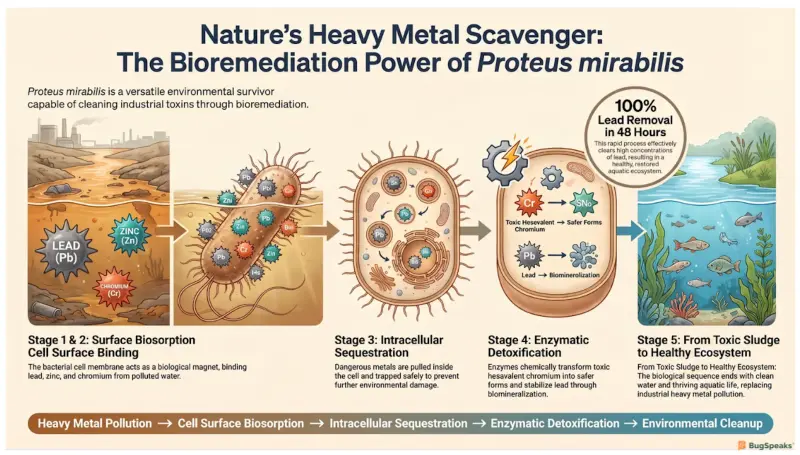
While medical history books talk about magic bullets and intentional fevers used to fight other historical pathogens, scientists have discovered that this shape-shifter is an absolute champion at fighting pollution. Environmental strains found in contaminated industrial rivers carry specific metal-resistance genes that give them an incredible tolerance to highly toxic heavy metals. Instead of dying, this tough bacterium can easily handle massive amounts of dangerous elements like lead, zinc, manganese, and copper. It uses clever physiological mechanisms to clean up polluted water and soil, showing that some microbes can be used as helpful environmental tools rather than just dangerous germs.
The bacterium uses a remarkable process called biomineralization to turn dangerous, soluble lead into a stable form, removing 100% of lead pollution from water within just forty-eight hours. For other dangerous metals like zinc, it uses an internal trapping system called sequestration to capture the poison safely inside its own cells. It can even perform an enzymatic reduction, which chemically transforms highly toxic hexavalent chromium into a much safer, less toxic form. These incredible abilities make the microbe an exceptional candidate for bioremediation, helping scientists clean up heavily polluted industrial sites using natural, eco-friendly living systems.
In clinical diagnostics, this microbe also played a historic role in helping doctors identify other dangerous diseases through a famous blood test called the Weil-Felix reaction. Scientists discovered that a specific strain of this bacterium shares identical surface markers, known as cross-reactive epitopes, with a completely different group of germs called Rickettsia. By mixing a patient's serum with these specific cells, doctors could easily detect anti-rickettsial antibodies to diagnose scrub typhus. This clever medical trick provided a reliable, historical method for tracking down hidden infections before modern genetic testing tools were invented.
How Are Modern Genetic Blueprints Helping Us Stop Super-Swarms and Outsmart Antibiotic Armor?
Today, tracking this shape-shifter's genetic blueprint is more critical than ever because many clinical strains have developed dangerous multidrug resistance. The bacterium is naturally immune to several common antibiotics like tetracyclines and polymyxins, making standard treatments completely useless against it. Even worse, it has acquired mobile genetic elements that carry advanced beta-lactamases, which are powerful enzymes capable of destroying our strongest modern medicines. By mapping its DNA, scientists can track how these resistance genes spread across human, animal, and environmental reservoirs, helping doctors choose the correct treatments and design better shields against these stubborn infections.
Microbiologists also study a fascinating genetic behavior called the Dienes line phenomenon, which occurs when two different strains of this microbe meet on a laboratory plate. Instead of blending, their swarming fronts stop completely, leaving a highly visible, empty furrow between them. This dramatic territorial boundary is created by an incredible molecular weapon called the Type VI Secretion System. This system acts like a microscopic spear, injecting toxic proteins directly into the neighboring cells. Cells from the same strain survive because they possess genetically encoded immunity proteins, while foreign strains are instantly killed.
To stop this hyperactive shape-shifter from swarming all over laboratory dishes and hiding other dangerous pathogens, clever scientists use specialized culture media. For instance, they use CLED agar, which is completely deficient in electrolytes, creating a physical barrier that stops the bacteria from growing their long swimming tails. They can also use MacConkey agar, which contains special bile salts that stress the bacterial membrane and force it to grow as neat, isolated colonies instead of massive swarms. Understanding these genetic and physical traits helps modern scientists control this powerful microbe, keeping our hospitals safer and our diagnostics accurate.
Taxonomic Classification Table
Microbe Profile
Shape: Dimorphic: Short vegetative rods transitioning to elongated filaments; lacks a capsule.
Gram Stain Nature: Gram-negative (Outer membrane contains lipid A, core oligosaccharide, and O-antigen).
Spore-forming: Non-spore-forming (Does not produce endospores).
Biofilm formation: Strongly positive; produces crystalline biofilms enriched with biomineralized struvite and apatite crystals.
Oxygen requirements: Facultative anaerobe (Capable of utilizing oxygen or alternative electron acceptors).
Optimal Temp: 34 ℃
Optimal pH: pH 6.5- 7.5 (Growth observed down to pH 4; actively elevates local pH to greater than 8.0 via urease).
Nutrient Usage: Carbohydrates (Glucose, molasses, trehalose); proteins/peptides; urea.
Fun Facts
The Shape-Shifting Sea God: This bacterium is named after Proteus, the ancient Greek sea god who constantly changed his physical form to escape capture, perfectly mirroring how this germ transforms from a tiny swimmer into a giant, multi-tailed swarmer.
Microscopic Spear Wars: When different strains of this microbe meet on a petri dish, they engage in a tiny war using a molecular spear system to inject poison into each other, leaving a visible boundary line called the Dienes line.
The Pungent Fish Aroma: Laboratories can often identify this microbe simply by smell! As it breaks down amino acids during growth, it releases volatile organic compounds that create a highly distinct, strong, fish-like odor.
Reference
Liu, X. L., Wu, S. Y., & Yu, Z. (2025). Zoonotic Risks of Proteus mirabilis: Detection, Pathogenicity, and Antibiotic Resistance in Animals and Animal-Derived Foods. Microorganisms, 13(9), 2060. https://doi.org/10.3390/microorganisms13092060
Kwiecinska-Piróg, J., Bogiel, T., Skowron, K., Wieckowska, E., & Gospodarek, E. (2015). Proteus mirabilis biofilm - qualitative and quantitative colorimetric methods-based evaluation. Brazilian journal of microbiology : [publication of the Brazilian Society for Microbiology], 45(4), 1423–1431. https://doi.org/10.1590/s1517-83822014000400037
Sellaturay, S. V., Nair, R., Dickinson, I. K., & Sriprasad, S. (2012). Proteus: Mythology to modern times. Indian journal of urology : IJU : journal of the Urological Society of India, 28(4), 388–391. https://doi.org/10.4103/0970-1591.105748
Czerwonka, G., Guzy, A., Kałuża, K., Grosicka, M., Dańczuk, M., Lechowicz, Ł., Gmiter, D., Kowalczyk, P., & Kaca, W. (2016). The role of Proteus mirabilis cell wall features in biofilm formation. Archives of microbiology, 198(9), 877–884. https://doi.org/10.1007/s00203-016-1249-x
Armbruster, C. E., & Mobley, H. L. (2012). Merging mythology and morphology: the multifaceted lifestyle of Proteus mirabilis. Nature reviews. Microbiology, 10(11), 743–754. https://doi.org/10.1038/nrmicro2890
Drzewiecka D. (2016). Significance and Roles of Proteus spp. Bacteria in Natural Environments. Microbial ecology, 72(4), 741–758. https://doi.org/10.1007/s00248-015-0720-6
Hamilton, A. L., Kamm, M. A., Ng, S. C., & Morrison, M. (2018). Proteus spp. as Putative Gastrointestinal Pathogens. Clinical microbiology reviews, 31(3), e00085-17. https://doi.org/10.1128/CMR.00085-17
Schaffer, J. N., & Pearson, M. M. (2015). Proteus mirabilis and Urinary Tract Infections. Microbiology spectrum, 3(5), 10.1128/microbiolspec.UTI-0017-2013. https://doi.org/10.1128/microbiolspec.UTI-0017-2013
Hasona, I. F., Awad, A., Younis, G., & Mohamed, W. F. (2026). A One Health Perspective on Proteus mirabilis: The Interaction of Virulence and Antimicrobial Resistance Across Human and Animal Reservoirs. Microorganisms, 14(2), 444. https://doi.org/10.3390/microorganisms14020444