The Pathobyte Series: Fusobacterium nucleatum - A Prolific Pathobiont
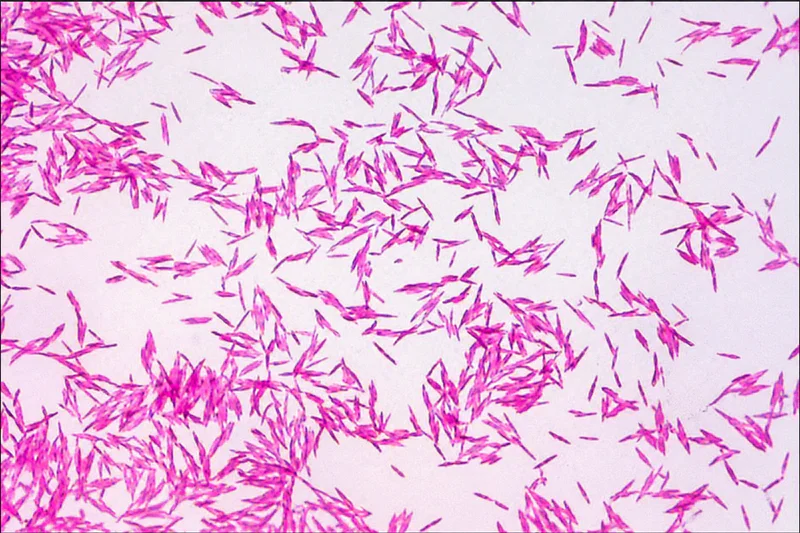
First described in 1922, Fusobacterium nucleatum is a versatile Gram-negative bacterium capable of shifting from a healthy oral commensal to an aggressive pathobiont. Driven by specialized adhesion proteins and coaggregation mechanisms, it effectively triggers tissue inflammation, translocating through saliva ingestion, the bloodstream, or migrating tumor cells. Diseases range from common periodontal infections like periodontitis to severe systemic conditions, including inflammatory bowel disease and colorectal malignancies. Accurate identification leverages historical microscopic observation of internal granules and modern genomic analysis to differentiate species variations. While treatment typically requires targeted nitroimidazole antibiotics or probiotics, robust prevention relies heavily on daily oral hygiene and anti-inflammatory diets.
Naming, History & Habitat
Fusobacterium nucleatum, classically, is most well known for its presence and roles in the oral microbiome. However, newer work has shown its involvement in a variety of conditions and diseases, making it a human-associated microbe of great interest. The exact origins of its name are unclear, but it is known that the earliest published description of the species with the name Fusobacterium nucleatum came from a German researcher Knorr, in 1922. The genus name, Fusobacterium comes from ‘fusus’, meaning a spindle, and the species name “nucleatum” is thought to come from the internal granules observed when viewed under a microscope, which give it a nucleated appearance. As mentioned, it is found as part of the oral flora, but is also known to be found in the gastrointestinal and female genitourinary tract.
In the 1990s, advances in DNA sequencing technology and proteomics led to the discovery of possible subspecies of F. nucleatum, subsp polymorphum (Fnp), vincentii (Fnv), and nucleatum (Fnn). Two more subspecies were then added, F. nucleatum subsp animalis (Fna) and fusiforme (Fnf). However, there was great debate within the scientific community regarding the basis for division into subspecies. Various groups argued that they could not be reliably distinguished from each other. But as it ended up, more supported the notion of subspecies level characterisation, and evidence mounted for the same, gaining international acceptance. Later, Fnf was established as being the same as Fnv. However, the story of the remaining subspecies was not over yet. Through a 2017 publication, Kook and group proposed that these should instead be promoted to the species level. Based on genomic analysis, they determined that the Fn subspecies were genetically more different than the generally accepted thresholds to demarcate species. Other groups then began to echo this suggestion with their results, and the subspecies were then categorised as separate species: Fusobacterium nucleatum, Fusobacterium polymorphum, Fusobacterium vincentii, and Fusobacterium animalis. Due to these recent variations and persisting confusion in naming conventions for Fusobacterium nucleatum, many sources still consider the traditional subspecies system and use the term “Fusobacterium nucleatum” to refer to their collective properties. We will also adhere to this and highlight the specific features of the subspecies-now-species where relevant.
Role in Health and Beneficial Mechanisms
F. nucleatum’s roles in normal physiology are most known from the oral microbiome, where it is part of the healthy microbiome. One of its landmark properties is coaggregation, where it can attach to other oral bacteria, and together with them adhere to the microbial plaque biofilm already present on the tooth surface, contributing to its development. In a state of balance, it uses adhesion proteins to perform this function, and also secretes molecules like lipopolysaccharide (LPS), which contribute to the maintenance of immune homeostasis in the neighbouring oral tissues. It also induces cells of the oral epithelia to produce antimicrobial peptides, indirectly contributing to defense against pathogenic organisms. In the gut and the vaginal canal, it is sometimes found at minimal levels, but overgrowth is known to be associated with inflammation or even disease states.
Role in Disease and Pathogenesis
Fusobacterium nucleatum is prominently associated with oral disease, specifically, periodontal disease, including gingivitis and periodontitis, due to its presence and ability to be a part of plaque biofilms. Its presence in higher levels is associated with the periodontal disease state, and experimental work has shown that it has the ability to induce proinflammatory responses and bone loss, and work synergistically with other harmful oral microbes. The subspecies of F. nucleatum (now species) are also being discovered to have distinct profiles and associations with oral disease. Fna and Fnn are now being shown to be associated more with disease, and Fnv and Fnp are instead more associated with healthy biofilms. These differences may be due to altered functional capabilities between these microbes– Fna possesses some virulence mechanisms, whereas Fnp has robust amino acid synthetic capabilities. Increased abundance of F. nucleatum has also been found in halitosis and oral leukoplakia, underlining its role as an oral pathobiont.
Fusobacterium nucleatum is now garnering attention for its involvement in disease pathogenesis in different parts of the body. Its presence is associated with atherosclerotic lesions and plaques, having mechanisms to contribute to the development of cardiovascular disease. Its involvement also extends to autoimmune disorders like rheumatoid arthritis, where its heightened presence in the oral microbiome, along with severe periodontitis, may contribute to disease worsening. Further establishing this link, periodontal care has even been shown to improve RA states. Studies also point to F. nucleatum’s involvement in inflammatory bowel diseases like ulcerative colitis and Crohn’s disease, and this may be through a variety of routes, including the augmentation of inflammation, inducing cellular stress, and changing the gut microbiota.
While we explored F. nucleatum’s role in inflammatory disease, another sinister link exists- its involvement in cancers. The most well-studied association is between F. nucleatum and colorectal cancer (CRC). Research from several parts of the world has shown that in cancerous tissue, in contrast to nearby unaffected tissue and in controls, F. nucleatum is elevated. Mechanistic research has also revealed its carcinogenic potential and has shown that it can contribute to multiple pathways of initiation and also cancer progression. Besides CRC, it has also been found in association with esophageal, pancreatic, and gastric cancers, head and neck cancers, and some gynecological cancers, but further studies are required regarding its distribution patterns and pathogenic roles in these.
Fusobacterium nucleatum is also involved in systemic diseases, concerning different organ systems in the body. These include adverse pregnancy outcomes like pre-term birth and preeclampsia, Alzheimer’s Disease, liver disease, respiratory disease, and GI disorders like IBS. A common underlying theme in several of these conditions is the extra-oral presence of this microorganism at the affected systems or tissues. Research now suggests that this primarily oral pathobiont has multiple routes of translocation through the body– oral-gut through ingestion of saliva, bloodstream entry through openings in the oral cavity, through direct contact with mucosa, and cotranslocation with migrating tumour cells.
The dynamics through which Fusobacterium nucleatum influences human health and disease are just beginning to be uncovered. Studies across a diverse set of cohorts, as well as laboratory mechanistic studies, are further required to establish its routes of movement, roles, pathogenic potential, and impact on health for all the conditions it is known to be involved in.

Treatment and Prevention
As we have seen, the increased presence of F. nucleatum poses risks to an individual’s health and may even contribute to disease. Strategies to control the levels of this microbe may be beneficial both for infection resolution and reducing disease contribution. Some of these include antibiotics like nitronidazoles, molecules that directly or indirectly target its virulence mechanisms, such as using AMPs that disrupt bacterial membranes, and microbiome modulation, such as using probiotics that discourage F. nucleatum’s growth in several ways.
While some targeted methods are being developed, a day-to-day preventative strategy is the maintenance of oral hygienic practices, to restrict its presence in the oral cavity, and thus its chances of external translocation, and some evidence shows that following anti-inflammatory diets could help lower systemic inflammation and strengthen the gut barrier, and reduce F. nucleatum’s presence and ability to contribute to malignancies.
Microbe Profile
Gram status: -ve
Shape: Bacillus (long rod with spindle-like ends)
Spore formation: No
Motile: No
Oxygen requirements: Obligate anaerobe
Optimum pH and temperature: Around 7.4 at 37 °C
Taxonomy
Kingdom: Fusobacteriati
Phylum: Fusobacteriota
Class: Fusobacteriia
Order: Fusobacteriales
Family: Fusobacteriaceae
Genus: Fusobacterium
Species: Fusobacterium nucleatum
-Antara Arvind
Reference
Bolstad, A. I., Jensen, H. B., & Bakken, V. (1996). Taxonomy, biology, and periodontal aspects of Fusobacterium nucleatum. Clinical Microbiology Reviews, 9(1), 55–71. https://doi.org/10.1128/cmr.9.1.55
Brennan, C. A., & Garrett, W. S. (2018). Fusobacterium nucleatum — symbiont, opportunist and oncobacterium. Nature Reviews Microbiology, 17(3), 156–166. https://doi.org/10.1038/s41579-018-0129-6
Chen, Y., Huang, Z., Tang, Z., Huang, Y., Huang, M., Liu, H., Ziebolz, D., Schmalz, G., Jia, B., & Zhao, J. (2022). More Than Just a Periodontal Pathogen –the Research Progress on Fusobacterium nucleatum. Frontiers in Cellular and Infection Microbiology, 12, 815318. https://doi.org/10.3389/fcimb.2022.815318
Chew, J., Zilm, P. S., Fuss, J. M., & Gully, N. J. (2012). A proteomic investigation of Fusobacterium nucleatum alkaline-induced biofilms. BMC Microbiology, 12(1), 189. https://doi.org/10.1186/1471-2180-12-189
Krieger, M., Guo, M., & Merritt, J. (2024). Reexamining the role of Fusobacterium nucleatum subspecies in clinical and experimental studies. Gut Microbes, 16(1), 2415490. https://doi.org/10.1080/19490976.2024.2415490
Yang, X., Zhang, S., Ning, T., & Wu, J. (2025). Fusobacterium nucleatum in Health and Disease. MedComm, 6(11), e70465. https://doi.org/10.1002/mco2.70465