How do omega-3 fatty acids directly influence the balance of gut bacteria?
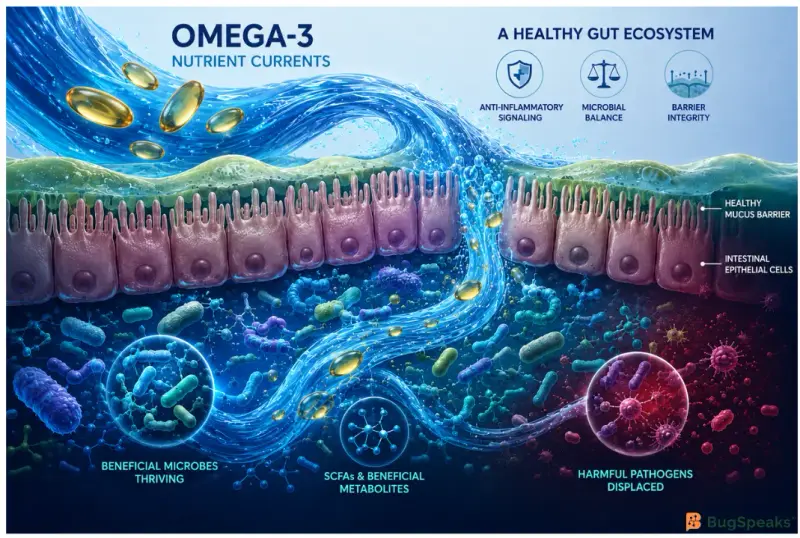
Omega-3 fatty acids positively reshape the gut microbiome by encouraging the growth of beneficial bacteria while suppressing inflammatory species, without completely disrupting the overall ecosystem balance. Inside the marine nutrient circulation system of the digestive tract, Polyunsaturated Fatty Acids (PUFAs) particularly the omega-3s known as Eicosapentaenoic Acid (EPA) and Docosahexaenoic Acid (DHA) function like highly specialized nutrient-rich ocean currents moving through the intestinal environment. Rather than replacing the existing marine ecological populations, these currents gradually alter the ecological conditions that determine which bacterial communities thrive(Hull & Sun, 2026).
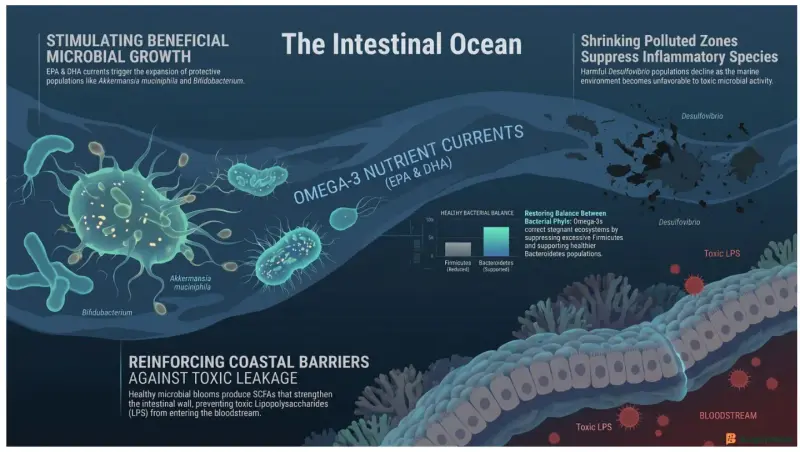
Research consistently shows that omega-3s do not dramatically change the total number of microbial species present in the gut. Instead, they influence which bacterial populations become dominant. The steady flow of omega-3 nutrient currents strongly supports beneficial marine ecological populations such as Akkermansia muciniphila, Bifidobacterium, and Lactobacillus. These organisms naturally flourish in anti-inflammatory, lipid-balanced environments. At the same time, harmful bacterial groups associated with chronic inflammation, particularly Desulfovibrio, decline as the ecosystem becomes less favorable to toxic microbial activity(Costantini et al., 2017).
Omega-3 currents also help regulate the balance between two major bacterial phyla: Firmicutes and Bacteroidetes. In many metabolic disorders, the intestinal ocean becomes overcrowded with Firmicutes populations, creating a stagnant ecosystem that extracts excess energy from food and contributes to obesity-related dysfunction. EPA and DHA currents help correct this imbalance by suppressing excessive Firmicutes expansion and supporting healthier Bacteroidetes populations(Kumar et al., 2022).
Importantly, omega-3s are not simply passive nutrients. Within the gut’s marine ecosystem, they behave like ecological regulators that continuously maintain water quality, support beneficial microbial communities, and reduce the formation of polluted water zones. By improving the biological conditions inside the intestinal environment, omega-3 currents help sustain long-term metabolic and immune stability throughout the body(Hull & Sun, 2026).
Why do omega-3s increase the production of beneficial short-chain fatty acids?
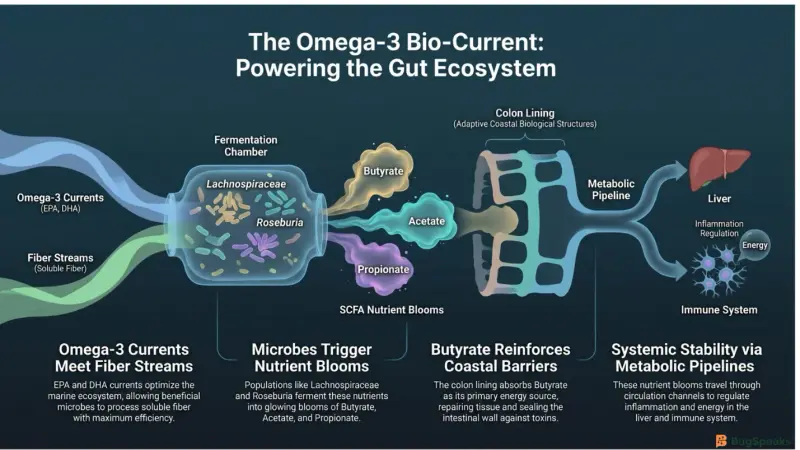
Omega-3s stimulate the growth of bacterial populations that specialize in producing Short-Chain Fatty Acids (SCFAs), which are among the gut’s most protective metabolic compounds. As nutrient-rich omega-3 currents move through the digestive ecosystem, they encourage the expansion of important microbial groups such as Lachnospiraceae, Roseburia, and Coprococcus. These marine ecological populations ferment dietary fibers into SCFAs including butyrate, propionate, and acetate(Aldoori et al., 2026).
The production of these nutrient blooms becomes even stronger when omega-3s are combined with soluble fibers such as inulin. Studies using colonic fermentation models show that this combination creates a powerful biological synergy. Omega-3 currents appear to optimize the ecological environment, allowing bacteria to process complex fibers more efficiently. As a result, butyrate production rises significantly compared to fiber intake alone(Aldoori et al., 2026).
Among these SCFAs, butyrate plays a particularly important role in maintaining the adaptive coastal structures lining the colon. Colon cells rely heavily on butyrate as their primary energy source. Constant exposure to this metabolic fuel helps reinforce the intestinal wall, repair damaged tissue, and maintain the strength of the ecosystem’s protective boundaries. In this way, SCFA nutrient blooms prevent the gradual erosion of the intestinal lining and reduce the buildup of inflammatory polluted water zones(Costantini et al., 2017).
The effects of SCFAs are not limited to the gut itself. Once absorbed into the bloodstream, acetate and propionate travel through the body’s circulation channels and influence distant organs, including the liver and immune system. These compounds help regulate systemic inflammation, energy metabolism, and immune signaling. Through this mechanism, omega-3 nutrient currents extend their stabilizing influence far beyond the digestive tract and into the broader physiological network(Hull & Sun, 2026).
Table 1: The Ecological Impact of Omega-3 Currents on Marine Microbial Populations
How do omega-3s protect the intestinal wall from damage and systemic inflammation?
Omega-3 fatty acids strengthen the intestinal barrier by reducing toxin-producing bacteria and reinforcing the structural connections between intestinal cells. The intestinal wall functions as a highly selective adaptive coastal structure that separates the dense marine ecological populations inside the gut from the sterile circulation channels of the bloodstream. When this barrier weakens, bacterial toxins can leak into systemic circulation, triggering widespread inflammatory polluted water zones throughout the body(Costantini et al., 2017).
One of the most important toxins involved in this process is Lipopolysaccharide (LPS), a bacterial endotoxin associated with chronic low-grade inflammation. Elevated LPS exposure contributes to insulin resistance, cardiovascular disease, and Type-2 Diabetes Mellitus (T2DM). Omega-3 nutrient currents help prevent this leakage by reducing populations of LPS-producing bacteria while simultaneously increasing beneficial Bifidobacteria populations that support barrier integrity(Kumar et al., 2022).
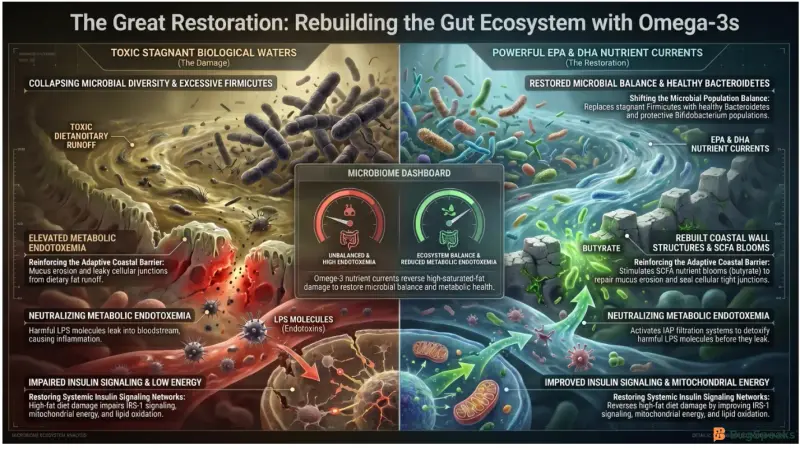
Omega-3s also enhance the production of Intestinal alkaline phosphatase (IAP), an enzyme that acts like a local filtration system inside the intestinal waters. IAP detoxifies harmful Lipopolysaccharide (LPS) molecules before they can breach the intestinal barrier. At the same time, omega-3s help regulate Zonulin, a protein that controls how tightly intestinal cells are connected. When zonulin levels become too high, the tight junctions between intestinal cells loosen, creating gaps that allow toxins, inflammatory molecules, and bacterial fragments to leak into the bloodstream. By helping reduce excessive zonulin activity, omega-3s support stronger intestinal wall integrity and help keep harmful substances contained within the gut..(Costantini et al., 2017).
By preserving these adaptive coastal structures, omega-3 currents prevent inflammatory signaling from spreading systemically. Instead of constantly responding to microbial emergencies, the circulation channels can remain focused on nutrient transport, immune balance, and tissue maintenance. The result is a more stable metabolic environment with lower inflammatory stress across the entire body(Kumar et al., 2022).
Can omega-3s reverse the negative effects of a high-fat diet on the gut?
Omega-3 fatty acids can counteract many of the microbial and metabolic disruptions caused by high-saturated-fat diets. Diets dominated by saturated fats introduce heavy toxic runoff into the biological ocean, creating severe ecological instability inside the gut. This disruption often produces dysbiosis characterized by an elevated Firmicutes-to-Bacteroidetes ratio, reduced microbial diversity, and widespread inflammatory polluted water zones associated with Diet-Induced Obesity (DIO)(Costantini et al., 2017).
When omega-3 nutrient currents are reintroduced into this damaged ecosystem, they begin reversing these microbial imbalances. EPA and DHA suppress excessive Firmicutes expansion while helping depleted Bacteroidetes populations recover. This restoration improves the overall flow of the intestinal ecosystem and reduces the stagnant inflammatory conditions associated with obesity and metabolic dysfunction(Hull & Sun, 2026).
The benefits extend beyond microbial composition. High-fat diets frequently impair Insulin Receptor Substrate-1 (IRS-1), an important signaling mechanism involved in cellular energy regulation. Omega-3s help restore this metabolic signaling by improving mitochondrial function, enhancing lipid oxidation, and reducing oxidative stress. As the nutrient-rich ocean currents circulate through tissues, they help clear metabolic congestion and improve insulin sensitivity throughout the system(Kumar et al., 2022).
Research involving faecal transplantation further demonstrates the power of omega-3-shaped microbial ecosystems. When microbial populations from omega-3-enriched environments are transferred into untreated hosts, the recipients gain significant protection against diet-induced inflammation and mucus layer erosion. This finding suggests that the microbial ecosystem created by omega-3 currents can independently help stabilize the gut environment and defend against dietary damage(Hull & Sun, 2026).
Table 2: How Dietary Fats Influence the Coastal Barrier System
How do omega-3s and gut bacteria work together to influence brain health and behavior?
Omega-3s and gut bacteria communicate with the brain through the Microbiota-Gut-Brain Axis, influencing mood, stress regulation, and neurological health. The marine nutrient circulation system of the gut maintains continuous two-way communication with the central nervous system through hormonal, immune, and metabolic signaling pathways. When dysbiosis dominates the intestinal ecosystem, inflammatory polluted water zones generate distress signals that travel through the circulation channels and contribute to anxiety, depression, and cognitive dysfunction(Costantini et al., 2017).
Omega-3 nutrient currents help stabilize this communication network by supporting beneficial microbial populations and reducing inflammatory signaling. EPA and DHA dampen excessive activity in the Hypothalamic-Pituitary-Adrenal (HPA) axis, the body’s primary stress-response system. At the same time, SCFA nutrient blooms generated by healthy bacteria travel through the bloodstream and help calm neuroinflammatory pathways, reducing the release of stress hormones such as corticosterone(Costantini et al., 2017).
Omega-3s also influence neurotransmitter production within the intestinal ecosystem itself. Under chronic stress, certain microbial populations can interfere with normal tryptophan metabolism and increase the production of compounds linked to anxiety and mood instability. The stabilizing flow of omega-3 currents suppresses these problematic bacterial populations and promotes healthier neurotransmitter balance, supporting the production of serotonin and other mood-regulating chemicals(Costantini et al., 2017).
By maintaining healthy adaptive coastal structures and balanced marine ecological populations, omega-3s help ensure that positive biological signals reach the brain instead of chronic inflammatory alarms. Over time, this stable communication network supports neurogenesis, protects synaptic plasticity, and contributes to long-term emotional and cognitive resilience throughout the human system(Costantini et al., 2017).
Reference
Hull, M. A., & Sun, H. (2026). Omega-3 polyunsaturated fatty acids and gut microbiota. Current opinion in clinical nutrition and metabolic care, 29(2), 123–130. https://doi.org/10.1097/MCO.0000000000001176
Aldoori, J., Mitra, S., Davie, A., Toogood, G. J., Edwards, C., & Hull, M. A. (2026). The effect of omega-3 polyunsaturated fatty acids on short-chain fatty acid production and the gut microbiome in an in vitro colonic fermentation model. Gut microbiome (Cambridge, England), 7, e1. https://doi.org/10.1017/gmb.2025.10016
Kumar, M., Pal, N., Sharma, P., Kumawat, M., Sarma, D. K., Nabi, B., Verma, V., Tiwari, R. R., Shubham, S., Arjmandi, B., & Nagpal, R. (2022). Omega-3 Fatty Acids and Their Interaction with the Gut Microbiome in the Prevention and Amelioration of Type-2 Diabetes. Nutrients, 14(9), 1723. https://doi.org/10.3390/nu14091723
Costantini, L., Molinari, R., Farinon, B., & Merendino, N. (2017). Impact of Omega-3 Fatty Acids on the Gut Microbiota. International journal of molecular sciences, 18(12), 2645. https://doi.org/10.3390/ijms18122645