The MicroByte Series-Streptococcus salivarius: The Oral Cavity Pioneer
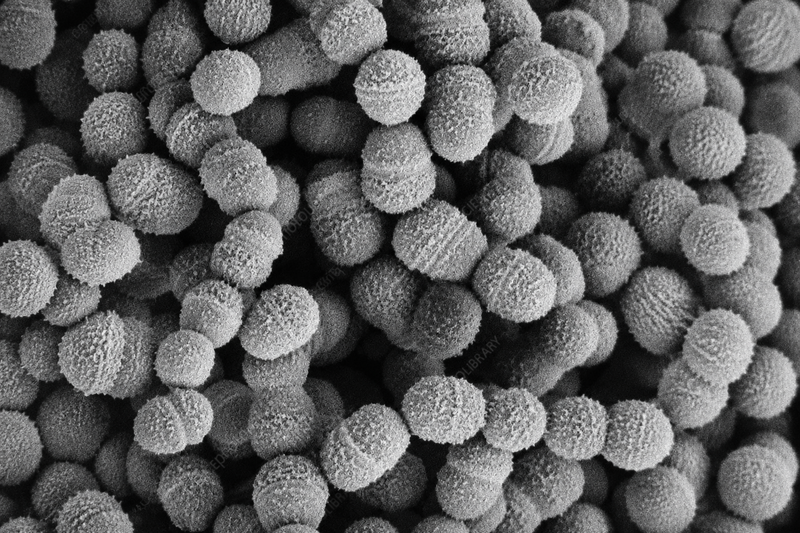
First identified in 1906, Streptococcus salivarius is a versatile Gram-positive bacterium capable of supporting a wide array of human health functions. Driven by an advanced arsenal of antimicrobial compounds and adhesion factors, it effortlessly balances mucosal immunity, spreading rapidly through early pioneer oral colonization. Benefits range from minor dental issues like plaque accumulation to severe localized complications, including middle ear and streptococcal throat infections. Accurate identification leverages classic laboratory cultures and modern tools like strain-specific genomic profiling. While optimization typically requires targeted probiotic therapy for strains like K-12 and M18, robust safety relies heavily on microbiome management and vulnerability screening.
History and naming
The genus Streptococcus was first characterized in 1874 by Theodor Billroth, an Austrian surgeon, who found them occurring singly, in pairs, or in chains- “Streptos” and “kokkos” are the Greek words for ‘chain’ and ‘berries’ respectively. The species S. salivarius was described in 1906 by Andrewes and Horder as follows: “There is a form of streptococcus so characteristic of saliva, though it is also common in the intestine, that the term streptococcus salivarius may justly be applied to it.” More than a hundred years later, this statement remains true, as it has not been renamed since.
Habitat
Streptococcus salivarius is a primarily human-associated microbe. It is an early resident of the oral cavity and is also found in the airways. It is also a prominent member of the gut microbiome, and it has been isolated from various parts of the gastrointestinal tract.
Health Benefits
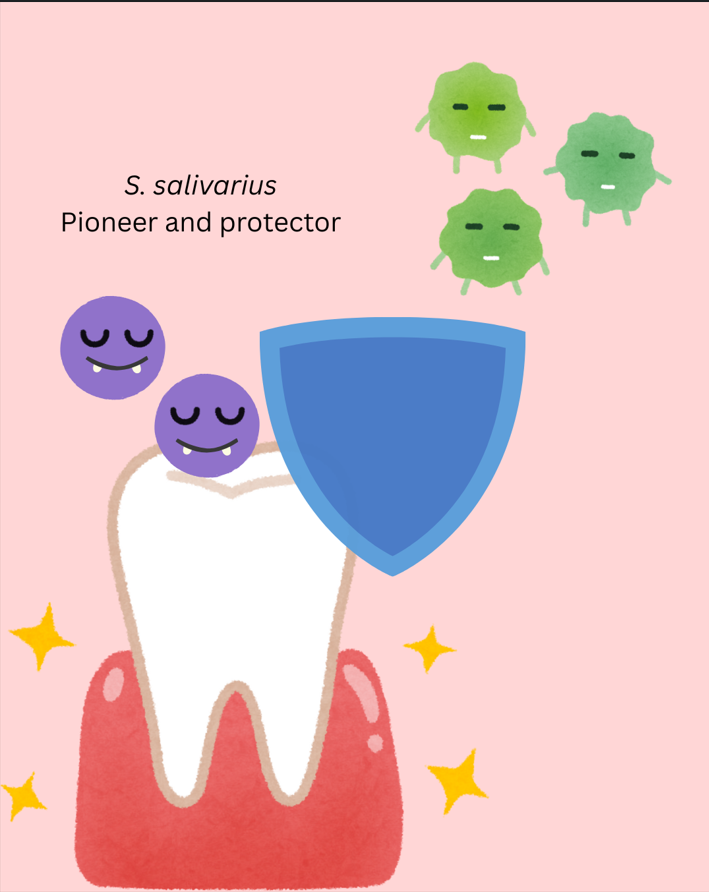
S. salivarius plays an important role as a ‘pioneer’ species in the oral cavity, establishing itself on the first day of life. While it remains in the oral cavity even in adulthood, the dominance of this species from day 1 declines steadily even before the milk teeth erupt. In the oral cavity, too, S. salivarius has specific zones where it is found, being the dorsal surface of the tongue, due to its ability to adhere to epithelial surfaces, and the saliva. Here, it mounts a defence against incoming harmful oral bacteria like S. mutans and S. sobrinus in tooth sites, and has even been shown to block Aggregatibacter actinomycetemcomitans, a periodontal pathogen, from colonising epithelial cells. Strains of S. salivarius recovered from fecal samples have also been found to produce antimicrobial compounds, adding to the evidence of the role this microbe plays in maintaining multiple bodily ecosystems.
Applications
Streptococcus salivarius has a wide range of applications as a probiotic, the K-12 and M18 strains being the most popular, are safe, orally derived, and have their own unique antimicrobial profiles. Foremost is S. salivarius’s use in relation to oral health, as it is a key member of the oral microflora. S. salivarius has been shown to improve various aspects of oral and dental health in children, such as reduction of black spot formation, caries prevention, inhibition of caries-causing S. mutans, and lessening of plaque scores. There is also evidence to show this microbe’s effectiveness in improving and preventing the occurrence of middle ear infection, a common infection in children.
Interestingly, it has been shown that supplementation with S. salivarius may even improve throat infections caused by Group A beta-hemolytic Streptococcus (GABHS). While ‘gold-standard’ trials for this are not indicative of this protective effect, other studies have shown significant improvements in the rate of illness in both adults and children. Further research is needed to establish S. salivarius’s utility in this aspect.
Risks
Despite S. salivarius’ prominence in multiple human microbiomes and its probiotic potential, it exhibits mild virulence and has been implicated in multiple cases of localised or system-wide infections. In patients with compromised immune systems, it has been known to infect the bloodstream and cause complications in brain and spinal cord surgeries due to contamination. But these complications are situation-specific and rare. For healthy humans, this strain has a good safety profile for oral consumption.
Fun fact
The widely used probiotic strain S. salivarius K12 was isolated first from a healthy schoolchild, who had no S. pyogenes infections for over a year. It was later confirmed to produce molecules that inhibit S. pyogenes, a common cause of bacterial throat infections. It also binds to human epithelial cells, providing colonisation competition to S. pyogenes. In fact, in further studies, it was shown that participants with greater S. salivarius levels experienced fewer streptococcal throat infections. So your oral microbiome may be protecting you against sore throats!
Microbe profile
Shape: Spherical-ovoid, chains or pairs
Gram nature: +ve
Spore formation: No
Biofilm formation: Yes
Oxygen requirement: facultative anaerobe
Optimal temperature: 37°C
Optimal pH: 6.7
Nutrient usage: Maltose, Glucose, Sucrose, Lactose
Taxonomic Classification
Kingdom: Bacteria
Phylum: Bacillota
Class: Bacilli
Order:Lactobacillales
Family: Streptococcaceae
Genus: Streptococcus
Species: Streptococcus salivarius
-Antara Arvind
Reference
Andrewes, F., & Horder, T. (1906). A STUDY OF THE STREPTOCOCCI PATHOGENIC FOR MAN. The Lancet, 168(4333), 708–713. https://doi.org/10.1016/s0140-6736(01)31538-6
Burton, J. P., Wescombe, P. A., Moore, C. J., Chilcott, C. N., & Tagg, J. R. (2006). Safety Assessment of the Oral Cavity Probiotic Streptococcus salivarius K12. Applied and Environmental Microbiology, 72(4), 3050–3053. https://doi.org/10.1128/aem.72.4.3050-3053.2006
Carlsson, J., Grahnén, H., & Jonsson, G. (1975). Lactobacilli and streptococci in the mouth of children. Caries Research, 9(5), 333–339. https://doi.org/10.1159/000260166
Couvigny, B., Kulakauskas, S., Pons, N., Quinquis, B., Abraham, A., Meylheuc, T., Delorme, C., Renault, P., Briandet, R., Lapaque, N., & Guédon, E. (2018). Identification of New Factors Modulating Adhesion Abilities of the Pioneer Commensal Bacterium Streptococcus salivarius. Frontiers in Microbiology, 9. https://doi.org/10.3389/fmicb.2018.00273
Etymologia: Streptococcus. (2016). Emerging Infectious Diseases, 22(11), 1977. https://doi.org/10.3201/eid2211.et2211
Gobbetti, M., & Calasso, M. (2014a). STREPTOCOCCUS | Introduction. In Elsevier eBooks (pp. 535–553). https://doi.org/10.1016/b978-0-12-384730-0.00324-4
Hossain, Z. (2014). Bacteria: streptococcus. In Elsevier eBooks (pp. 535–545). https://doi.org/10.1016/b978-0-12-378612-8.00116-5
Mallikarjun, S. B., Salim, H. P., Raju, S., & Surendranath, A. R. (2023). Randomized Clinical Trial of Oral Probiotic Streptococcus salivarius M18 on Salivary Streptococcus mutans in Preprimary Children. International Journal of Clinical Pediatric Dentistry, 16(2), 259–263. https://doi.org/10.5005/jp-journals-10005-2527
Patterson, M. J. (1996). Streptococcus. Medical Microbiology - NCBI Bookshelf. https://www.ncbi.nlm.nih.gov/books/NBK7611/
Roger, P., Delettre, J., Bouix, M., & Béal, C. (2011). Characterization of Streptococcus salivarius growth and maintenance in artificial saliva. Journal of Applied Microbiology, 111(3), 631–641. https://doi.org/10.1111/j.1365-2672.2011.05077.x
Safford, C. E., Sherman, J. M., & Hodge, H. M. (1937). Streptococcus salivarius. Journal of Bacteriology, 33(3), 263–274. https://doi.org/10.1128/jb.33.3.263-274.1937
Sanketh, D., & Amrutha, N. (2013). Oral microbial flora in health. World Journal of Dentistry, 4(4), 262–266. https://doi.org/10.5005/jp-journals-10015-1242
Sun, M., Li, Q., Zhang, F., Yao, D., Huang, W., Lv, Q., Jiang, H., Kong, D., Ren, Y., Chen, S., Jiang, Y., & Liu, P. (2025). The Genomic Characteristics of Potential Probiotics: Two Streptococcus salivarius Isolates from a Healthy Individual in China. Microorganisms, 13(3), 694. https://doi.org/10.3390/microorganisms13030694
Wescombe, P. A., Hale, J. D., Heng, N. C., & Tagg, J. R. (2016, November 21). Developing Oral Probiotics From Streptococcus salivarius. Medscape. https://www.medscape.com/viewarticle/777316_4
Wilcox, C., Stuart, B., Leaver, H., Lown, M., Willcox, M., Moore, M., & Little, P. (2019). Effectiveness of the probiotic Streptococcus salivarius K12 for the treatment and/or prevention of sore throat: a systematic review. Clinical Microbiology and Infection, 25(6), 673–680. https://doi.org/10.1016/j.cmi.2018.12.031
Zupancic, K., Kriksic, V., Kovacevic, I., & Kovacevic, D. (2017). Influence of Oral Probiotic Streptococcus salivarius K12 on Ear and Oral Cavity Health in Humans: Systematic Review. Probiotics and Antimicrobial Proteins, 9(2), 102–110. https://doi.org/10.1007/s12602-017-9261-2
Al-Akel, F. C., Chiperi, L. E., Eszter, V. K., & Bacârea, A. (2024). Streptococcus salivarius Role as a Probiotic in Children’s Health and Disease Prophylaxis—A Systematic Review. Life, 14(12), 1613. https://doi.org/10.3390/life14121613