The MicroByte Series-Saccharomyces boulardii: The First Yeast Probiotic
First identified in 1920, Saccharomyces boulardii is a versatile probiotic yeast capable of supporting a wide array of human health functions. Driven by an advanced arsenal of antimicrobial compounds and serine proteases, it effortlessly modulates host immunity, spreading rapidly through oral supplementation and active food substrates. Clinical benefits range from minor digestive conditions like lactose intolerance to severe systemic complications, including giardiasis and life-threatening sepsis. Accurate identification leverages classic laboratory cultures and modern tools like strain-specific genomic sequencing. While optimization typically requires targeted probiotic therapy for strains like CNCM I-745, robust industrial application relies heavily on starter culture validation and dairy processing stability.
History
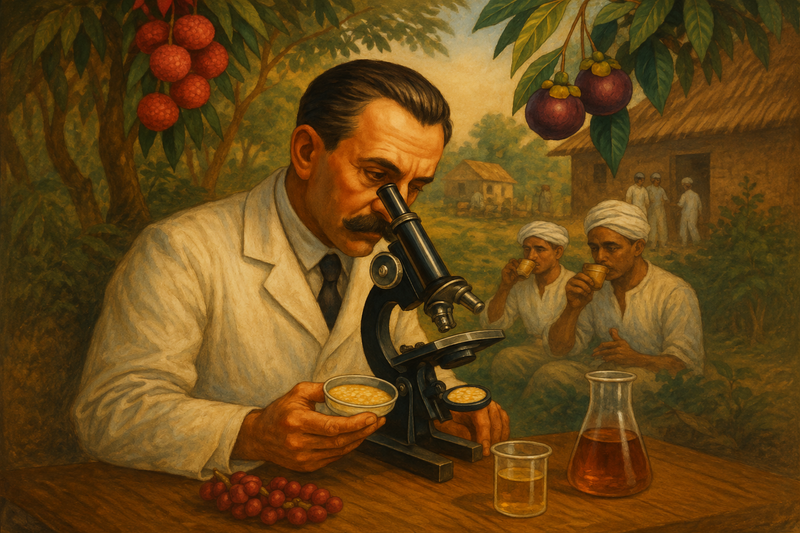
Saccharomyces boulardii is a unique, non-pathogenic yeast that has been widely used in Europe for the treatment of diarrhoea. It was discovered in 1920 by French microbiologist Henri Boulard during his visit to Indochina amid a cholera outbreak. Boulard observed that some individuals who remained unaffected by cholera were drinking tea made from the boiled skins of tropical fruits such as lychee and mangosteen. Intrigued by this, he successfully isolated the active agent from the tea, which turned out to be a distinct strain of yeast. He named it Saccharomyces boulardii. Originally isolated from lychee fruit, this probiotic yeast is now widely available across various continents, including South America, Europe, and Africa.
Health Benefits
S. boulardii is used in the treatment of various conditions and diseases, including acute pediatric diarrhoea, antibiotic-associated diarrhoea, Helicobacter pylori infections, inflammatory bowel disease (IBD), irritable bowel syndrome (IBS), traveller’s diarrhoea, acute adult diarrhoea, enteral nutrition-related diarrhoea, Clostridium difficile infections, necrotizing enterocolitis, HIV-related diarrhoea, giardiasis, sepsis, acne, and liver (hepatic) dysfunction.
Antimicrobial Activity
Saccharomyces boulardii competes with harmful bacteria for nutrients and space, thereby reducing their ability to grow. It also lowers the pH of the gut by producing acids such as acetic acid, creating an inhospitable environment for pathogens. Additionally, it releases specific proteins and enzymes that block or break down toxins produced by harmful microbes like Clostridium difficile, Escherichia coli, and even Bacillus anthracis. These proteins can prevent toxins from binding to gut cells, reduce inflammation, and support the integrity of the gut barrier. Some strains also produce antimicrobial compounds that directly attack harmful bacteria and diminish their toxic effects.
Immune Response
Saccharomyces boulardii supports the immune system by helping to maintain its balance. It can regulate immune responses during infections and assist the body in fighting off harmful microbes. It modulates the immune system by inhibiting excessive pro-inflammatory responses, thereby reducing inflammation. Additionally, it helps regulate the production of anti-inflammatory signals, promoting a balanced immune reaction.
Trophic Effects
Saccharomyces boulardii helps maintain gut health by enhancing the activity of enzymes involved in food digestion and nutrient absorption. It supports the repair and regeneration of gut cells, particularly after damage, and aids in the breakdown of sugars such as lactose, helping to alleviate symptoms of lactose intolerance. This probiotic also increases the production of natural compounds known as short-chain fatty acids, which strengthen the gut lining, reduce inflammation, and inhibit the growth of harmful bacteria. Additionally, it releases beneficial substances that protect gut cells, improve digestion, and support a robust immune response.
Anti-toxin effect
S. boulardii can neutralize toxins produced by pathogens either by blocking their receptor sites or by directly degrading the toxins themselves. One of its most fascinating properties is the production of serine protease, an enzyme responsible for breaking down Clostridium difficile toxins. Various studies have also shown that S. boulardii can reduce the effects of cholera toxin through a specific protein that it naturally produces.

Industrial Application
Saccharomyces boulardii has various industrial applications. It is used as a starter culture in the dairy industry and is incorporated into products such as yogurt, kefir, milk, cheese, and certain types of beer. In one interesting study involving goat yogurt processing, S. boulardii was supplemented after the addition of the starter culture. The presence of this yeast improved the survival rate of lactic acid bacteria and enhanced product stability without affecting the taste.
Did you know?
Yeasts like Saccharomyces cerevisiaestrains are popularly known for their baking and brewing properties. These were mostly associated with applications in the food industry rather than health benefits. However, the discovery of Saccharomyces boulardii, a close relative of Saccharomyces cerevisiae, by Henri Boulard, unravelled its potential health benefits in 1920. From then on, there has been profound interest in Saccharomyces boulardii as a probiotic agent. S. boulardiiCNCM I-745 was the first yeast probiotic that was studied for clinical disorders in humans.
Microbial Profile
Taxonomic Classification
-Varsha V
Reference
McCullough, M. J., Clemons, K. V., McCusker, J. H., & Stevens, D. A. (1998). Species identification and virulence attributes of Saccharomyces boulardii (nom. inval.). Journal of clinical microbiology, 36(9), 2613–2617. https://doi.org/10.1128/JCM.36.9.2613-2617.1998
Pais, P., Almeida, V., Yılmaz, M., & Teixeira, M. C. (2020). Saccharomyces boulardii: What Makes It Tick as Successful Probiotic?. Journal of fungi (Basel, Switzerland), 6(2), 78. https://doi.org/10.3390/jof6020078
Ansari, F., Alian Samakkhah, S., Bahadori, A., Jafari, S. M., Ziaee, M., Khodayari, M. T., & Pourjafar, H. (2021). Health-promoting properties of Saccharomyces cerevisiae var. boulardii as a probiotic; characteristics, isolation, and applications in dairy products. Critical Reviews in Food Science and Nutrition, 63(4), 457–485. https://doi.org/10.1080/10408398.2021.1949577
Tomičić, Z., Šarić, L., & Tomičić, R. (2024). Novel Insights in the Application of Probiotic Yeast Saccharomyces boulardii in Dairy Products and Health Promotion. Foods, 13(18), 2866. https://doi.org/10.3390/foods13182866
Mcfarland, L. V. (2017). The Microbiota in Gastrointestinal Pathophysiology Common Organisms and Probiotics: Saccharomyces boulardii. In The Microbiota in Gastrointestinal Pathophysiology. https://doi.org/10.1016/B978-0-12-804024-9/00018-5
Gopalan, S., Ganapathy, S., Mitra, M., Neha, Kumar Joshi, D., Veligandla, K. C., Rathod, R., & Kotak, B. P. (2023). Unique Properties of Yeast Probiotic Saccharomyces boulardii CNCM I-745: A Narrative Review. Cureus, 15(10), e46314. https://doi.org/10.7759/cureus.46314