# The Microbyte Series- Limosilactobacillus reuteri: A Probiotic Powerhouse
Author: BugSpeaks
Author URL: https://www.bugspeaks.com/blog/author/bugspeaks
Published: 2025-06-04
Category: MicroByte Series
Category URL: https://www.bugspeaks.com/blog/category/microbyte-series
Meta Title: Limosilactobacillus reuteri: Benefits & Uses | BugSpeaks
Meta Description: Discover Limosilactobacillus reuteri, a probiotic for gut health, immunity, oral health, and digestion. Explore its benefits and uses today.
Tags: Probiotics, Limosilactobacillus reuteri
Tag URLs: Probiotics (https://www.bugspeaks.com/blog/tag/probiotics), Limosilactobacillus reuteri (https://www.bugspeaks.com/blog/tag/limosilactobacillus-reuteri)
URL: https://www.bugspeaks.com/blog/microbyte-series-limosilactobacillus-reuteri
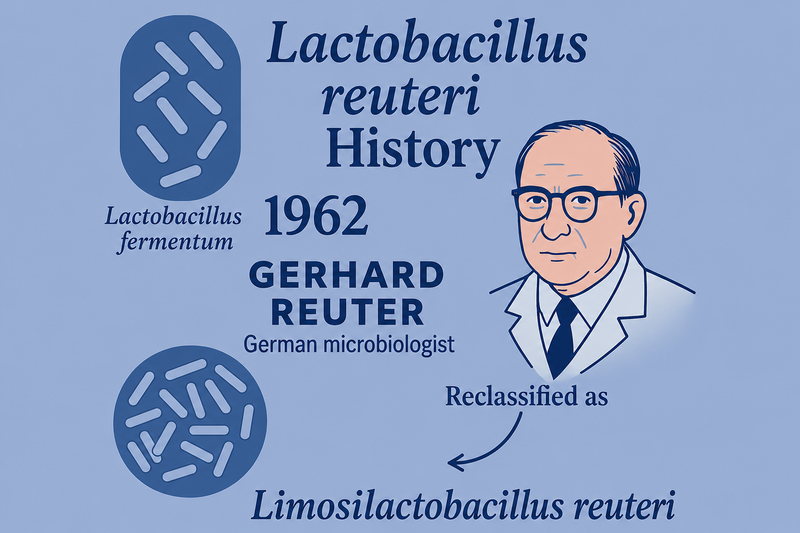
First identified in 1962, _Limosilactobacillus reuteri_ is a versatile Gram-positive bacterium capable of supporting a wide array of human health functions. Driven by an advanced arsenal of adhesive pili and antimicrobial compounds, it effortlessly colonizes multiple body cavities, spreading rapidly through vertebrate gastrointestinal tracts and commercial dairy products. Benefits range from minor digestive conditions like infantile colic to long-term systemic improvements, including gut inflammation reduction and postmenopausal osteoporosis prevention. Accurate classification leverages classic laboratory cultures and modern tools like comparative genetic similarities. While application typically requires targeted probiotic therapy for clinical strains, robust manufacturing relies heavily on rigorous safety testing and antibiotic resistance screening protocols.
## History
_Lactobacillus reuteri_ has a fascinating history that dates back to the early 20th century. Initially, it was classified as part of the lactic acid bacteria group but was mistakenly identified as a type of _Lactobacillus fermentum_ due to their genetic similarities. In 1962, German microbiologist Gerhard Reuter successfully isolated _L. reuteri_ from human fecal samples, leading to the discovery of the probiotic _Lactobacillus reuteri_,named in his honor. Recently, this bacterium was reclassified as _Limosilactobacillus reuteri_.
**Genetic similarities-** Shared DNA features or matching genetic blueprints between different organisms, which show how closely they are related to one another.
**Probiotic-** Live, beneficial microorganisms (often called "good bacteria") that provide documented health advantages when consumed or applied in proper amounts.
## Natural Habitat
L. reuteri primarily resides in the [gastrointestinal tract](https://www.bugspeaks.com/blog/the-microbyte-series-4-limosilacobacillus-fermentum) of various vertebrates, including humans, mice, pigs, and chickens. It has also been isolated from diverse sources such as meat, dairy products, and sourdough.
**Gastrointestinal tract-** The continuous human digestive system (or GI tract), stretching from the mouth down to the rectum, is responsible for breaking down food and housing a massive microbial ecosystem.
## Health Benefits
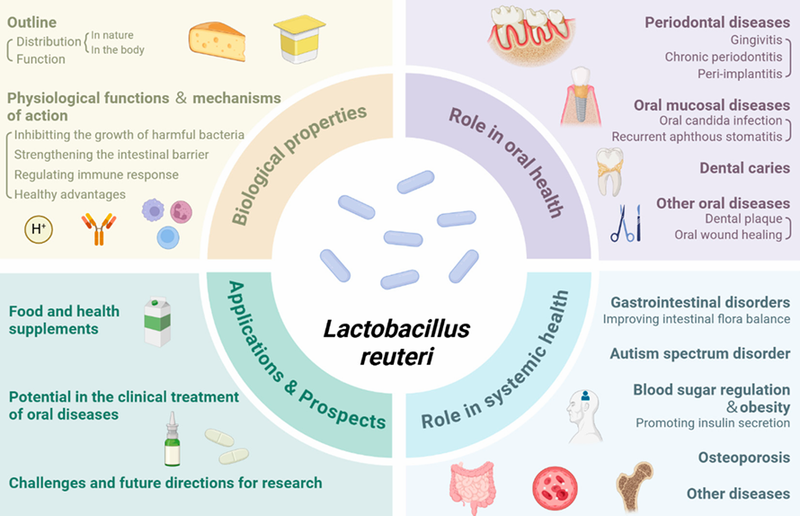
_L. reuteri_ is present in breast milk since it can colonise the mammary duct. It is one of the early colonisers in the infant's gut, thus playing an important role in establishing a healthy gut microbiome and conferring numerous health benefits. It is capable of colonising various body parts like the gastrointestinal tract, urinary tract, and oral cavity because of the presence of adhesive structures called pili.
As a probiotic, _L. reuteri_ has been widely studied for its potential in treating various health conditions, including infantile colic, colorectal cancer, inflammatory bowel diseases and _Helicobacter pylori_ infections. In addition, it decreases inflammation in the intestine by promoting the production of anti-inflammatory mediators.
_Lactobacillus reuteri_ has also shown great potential in improving oral health by helping restore balance in the oral microbiome. Studies have found that it has the ability to reduce harmful microbes and promote the growth of beneficial microbes, making it beneficial in managing periodontal diseases and dental caries. It also helps in controlling oral mucosal conditions like mouth ulcers and candidiasis. It has gained attention as a natural therapy for a wide variety of oral diseases and to reduce the usage of antibiotics.
The benefits of _Lactobacillus reuteri_ are not limited to gut and oral health, but it also controls various other metabolic parameters like cholesterol, blood sugar levels, obesity, and blood pressure. Research has shown that L.reuteri can be used to maintain the bone health of the elderly population and serves as a potential treatment for postmenopausal women with osteoporosis.
Different strains of _Lactobacillus reuteri_ have been shown to synthesize essential vitamins such as Vitamin B9 (folate) and Vitamin B12. Studies suggest that _Lactobacillus reuteri_ supplementation can help address Vitamin B12 deficiency, which can be used as therapeutics.
**Pili-** Tiny, hair-like structures on the outer surface of some bacteria that act like microscopic grappling hooks, helping them stick firmly to the gut wall or other tissues.
**Infantile colic-** Extended episodes of intense, inconsolable crying and fussiness in otherwise healthy infants, usually driven by temporary digestive discomfort or gas.
**Helicobacter pylori infections-** Bacterial infections in the stomach caused by _Helicobacter pylori_ that can weaken the protective lining, often leading to painful ulcers or chronic indigestion.
**Inflammation-** The body's natural defense reaction to injury or infection, causing redness, swelling, warmth, and pain as it tries to heal itself.
**Anti-inflammatory mediators-** Specialized chemical messengers or proteins released by cells that act as internal peacemakers, working to calm down swelling and irritation in the body.
**Periodontal diseases-** Inflammatory infections that specifically target, damage, and weaken the gums and bone structures supporting the teeth.
**Dental caries-** The technical medical and dental term for tooth decay and cavity formation caused by bacterial acids eroding the protective tooth enamel.
**Osteoporosis-** A skeletal condition where bones become increasingly weak, brittle, and porous, drastically raising the risk of unexpected fractures.
## Industrial Applications
A key feature of _Lactobacillus reuteri_ is its ability to produce _reuterin-_ a naturally produced antimicrobial compound with [broad-spectrum activity](https://www.bugspeaks.com/blog/microbyte-series-lactococcus-lactis) against harmful bacteria, yeasts, and molds, making it an invaluable asset in the food industry. Its ability to inhibit the growth of spoilage-causing microbes is utilized in manufacturing and preserving dairy products such as milk, yogurt, and cheese. By acting as a natural preservative, _Lactobacillus reuteri_ helps extend shelf life and enhances food safety. Apart from Reuterin, it also produces compounds like Reutericin 6 and Rotenocycline that have also shown promising antimicrobial properties.
**Antimicrobial compound-** A protective substance manufactured by cells or friendly microbes that directly weakens, stops the growth of, or destroys competing, harmful germs.
## Risk **s**
The advantages of L.reuteri on human health are impeccable. However, during the manufacturing of _Lactobacillus reuteri_ as [probiotics](https://www.bugspeaks.com/blog/microbyte-series-6-lacticaseibacillus-paracasei), it is necessary to check for antibiotic-resistant strains, since L.reuteri has the ability to acquire antibiotic resistance genes.
**Antibiotic-resistant strains-** Specific variants or families of bacteria that have adapted to survive exposure to the targeted medications designed to kill them.
**Antibiotic resistance genes-** Small, specific segments of a bacterium's DNA that contain the exact genetic instructions or blueprints required to defend itself against antibiotic drugs.
## Taxonomic Classification
**Domain:** Bacteria
**Phylum:** Bacillota
**Class:** Bacilli
**Order:** _Lactobacillales_
**Family:** _Lactobacillaceae_
**Genus:** _Limosilactobacillus_
**Species:** _Limosilactobacillus reuteri_
## Microbe Profile
**Shape:** Rod-shaped
**Gram nature:** Gram-positive
**Spore Formation:** Yes
**Biofilm formation:** Yes
**Oxygen requirement:** Anaerobic -Grows in the absence of oxygen.
**Optimal Temperature:** 37°C
**Optimal pH:** 5.7
**Food usage:** Lactose, Sucrose, and Maltose
-Varsha V
### Reference
Hou, C., Zeng, X., Yang, F., Liu, H., & Qiao, S. (2015). Study and use of the probiotic Lactobacillus reuteri in pigs: A review. In _Journal of Animal Science and Biotechnology_(Vol.6,Issue1).BioMedCentralLtd. [https://doi.org/10.1186/s40104-015-0014-3](https://doi.org/10.1186/s40104-015-0014-3)
Kandler, O., Stetter, K.-O., & Köhl, R. (1980). Lactobacillus reuteri sp. nov., A New Species of Heterofermentative Lactobacilli. _Zentralblatt für Bakteriologie: I. Abt. Originale C: Allgemeine, Angewandte Und Ökologische Mikrobiologie_, _1_(3), 264–269. https://doi.org/10.1016/s0172-5564(80)80007-8
Mu, Q., Tavella, V. J., & Luo, X. M. (2018). Role of Lactobacillus reuteri in human health and diseases. In _Frontiers in Microbiology_ (Vol. 9, Issue APR). Frontiers Media S.A. https://doi.org/10.3389/fmicb.2018.00757
Sinkiewicz, G., & Ljunggren, L. (2008). Occurrence of Lactobacillus reuteri in human breast milk. _Microbial Ecology in Health and Disease_, _20_(3), 122–126. https://doi.org/10.1080/08910600802341007
Liu, Z., Cao, Q., Wang, W., Wang, B., Yang, Y., Xian, C. J., Li, T., & Zhai, Y. (2025). The Impact of _Lactobacillus reuteri_ on Oral and Systemic Health: A Comprehensive Review of Recent Research. _Microorganisms_, _13_(1), 45. [https://doi.org/10.3390/microorganisms13010045](https://doi.org/10.3390/microorganisms13010045)
Mok, K., Honwichit, O., Funnuam, T., Charoensiddhi, S., Nitisinprasert, S., Nielsen, D. S., & Nakphaichit, M. (2024). Synergistic activity of Limosilactobacillus reuteri KUB-AC5 and water-based plants against Salmonella challenge in a human in vitro gut model. Scientific reports, 14(1), 4730. [https://doi.org/10.1038/s41598-024-53912-5](https://doi.org/10.1038/s41598-024-53912-5)
Lima, E. M. F., Soutelino, M. E. M., Silva, A. C. d. O., Pinto, U. M., Todorov, S. D., & Rocha, R. d. S. (2025). Current Updates on Limosilactobacillus reuteri: Brief History, Health Benefits, Antimicrobial Properties, and Challenging Applications in Dairy Products. Dairy, 6(2), 11. [https://doi.org/10.3390/dairy6020011](https://doi.org/10.3390/dairy6020011)
## FAQs
Q: Who first successfully isolated this bacterium and from what source?
A: German microbiologist Gerhard Reuter successfully isolated the bacterium in 1962 from human fecal samples. It was initially misclassified as Lactobacillus fermentum due to genetic similarities before eventually being renamed in his honor.
Q: How does Limosilactobacillus reuteri attach to different parts of the human body?
A: The bacterium utilizes tiny, hair-like adhesive structures called pili that act like microscopic grappling hooks. These specialized structures allow it to firmly attach to and colonize the gastrointestinal tract, urinary tract, and oral cavity.
Q: What specific oral health benefits does this probiotic powerhouse provide?
A: It successfully restores balance to the oral microbiome to help manage periodontal diseases, dental caries, and painful mouth ulcers. It achieves this by naturally promoting beneficial microbes while actively suppressing harmful bacteria and candidiasis infections.
Q: What unique compound allows this bacterium to act as a natural food preservative?
A: It produces a broad-spectrum antimicrobial compound called reuterin, which effectively stops the growth of spoilage-causing bacteria, yeasts, and molds. This natural defense mechanism is widely utilized to extend the shelf life of milk, yogurt, and cheese.
Q: What potential safety risk must be screened for during probiotic manufacturing?
A: Manufacturers must strictly check for antibiotic-resistant strains because this bacterium has the capacity to acquire antibiotic resistance genes. This screening ensures the final probiotic supplement maintains an impeccable safety profile for consumer use.
---
This blog is powered by Superblog. Visit https://superblog.ai to know more.
---