# The Microbyte series: Lactobacillus johnsonii-The Friendly Gut Bacterium with a Unique History
Author: Neha Rao
Author URL: https://www.bugspeaks.com/blog/author/neha-rao
Published: 2025-08-27
Category: MicroByte Series
Category URL: https://www.bugspeaks.com/blog/category/microbyte-series
Meta Title: Lactobacillus johnsonii: Benefits & Uses | BugSpeaks
Meta Description: Discover Lactobacillus johnsonii, a probiotic that supports gut health, immunity, and digestion. Learn its benefits, uses, and science behind it today.
Tags: Probiotics, Lactobacillus johnsonii
Tag URLs: Probiotics (https://www.bugspeaks.com/blog/tag/probiotics), Lactobacillus johnsonii (https://www.bugspeaks.com/blog/tag/lactobacillus-johnsonii)
URL: https://www.bugspeaks.com/blog/microbyte-series-lactobacillus-johnsonii
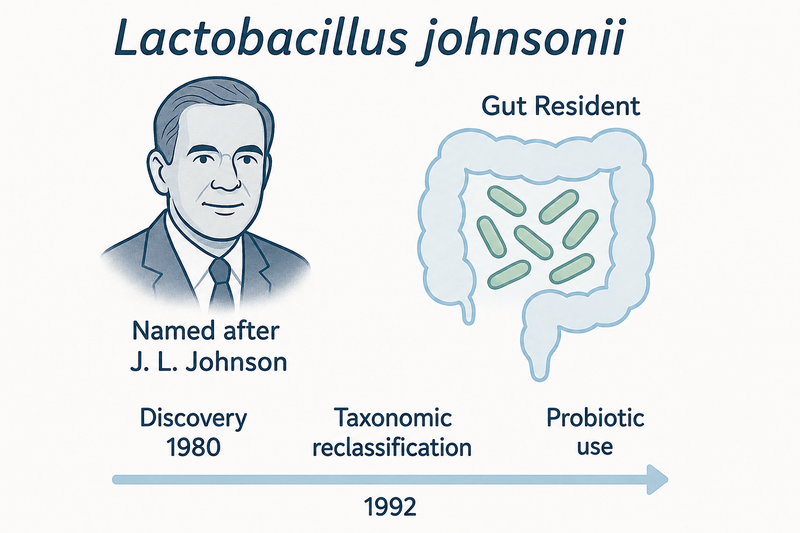
First described in 1992, _Lactobacillus johnsonii_ is a versatile Gram-positive bacterium capable of supporting a wide array of host health functions. Driven by an advanced arsenal of natural antimicrobials and bacteriocins, it effortlessly modulates host immunity, spreading rapidly through host-adapted commensal niches and functional food substrates. Benefits range from localized digestive issues like colitis and _H. pylori_ infections to systemic enhancements, including metabolic regulation and psychobiotic stress relief. Accurate identification leverages classic laboratory cultures and modern tools like comparative genomic mapping. While optimization typically requires targeted probiotic therapy for strains like NCC533 and BS15, robust utilization relies heavily on global safety validations and antibiotic-alternative husbandry protocols.
## History and Naming
_Lactobacillus johnsonii_ has an interesting backstory. First described in 1992, it was often mistaken for _L. acidophilus_ until scientists realized it deserved its own name, honoring microbiologist J.L. Johnson. The first strain was surprisingly isolated from human blood in Belgium, showing that while it’s usually a friendly gut resident, it can sometimes appear in unusual places.
In 2020, when the massive _Lactobacillus_ genus was split into 25 new groups, many species were renamed. But _L. johnsonii_ held on to its original name, keeping its identity as part of the “acidophilus group.” Today, it’s known as a gut-adapted species that quietly plays a role in human health, with a history as unique as its name.
**Strain-** A specific genetic sub-type or unique variant within a single bacterial species, with each strain often displaying its own distinct health perks or industrial traits.
**Species-** A specific group of closely related living organisms that share distinct common features and a high degree of genetic similarity.
## Habitat and Ecological Niche
Beyond its quirky taxonomic history, _Lactobacillus johnsonii_ is best known as a friendly commensal that lives alongside its hosts. It has been found in the guts of humans, pigs, dogs, poultry, rodents, and even honeybees, each time adapting to the specific conditions of that host. In people, it’s part of the normal gut community and can also appear in the female urogenital tract.
This wide presence shows that _L. johnsonii_ isn’t a wanderer in the wild but a microbe that prefers the nutrient-rich comfort of host environments. Over time, it has co-evolved with its animal partners, with certain strains uniquely tuned to thrive in particular species. It also finds its way into human life through fermented foods and probiotics, where it’s used to enhance gut health or improve fermentation in animal feed. In short, _L. johnsonii_ has carved out a lifestyle that’s tightly linked to both animals and humans, a versatile microbe with a knack for building long-term relationships.
**Taxonomic history-** The chronological record of how a living organism has been scientifically named, classified, and rearranged within the biological family tree over time.
**Commensal-** A type of microbe that naturally lives on or inside a host organism, benefiting from the environment without causing any harm.
**Female urogenital tract-** The internal and external anatomical structures of the female body involved in reproduction and urinary excretion.
**Probiotics-** Live, beneficial microorganisms (often called "good bacteria") that provide documented health advantages when consumed or applied in proper amounts.
**Fermentation-** A natural biochemical process where friendly microbes break down sugars and carbohydrates into beneficial acids, gases, or alcohol in the absence of oxygen.
## Health Benefits
What makes _Lactobacillus johnsonii_ truly stand out is the wide range of health benefits. Many of its strains are recognized as [probiotics](https://www.bugspeaks.com/blog/microbyte-series-lactobacillus-gasseri), the “good bacteria” that help restore balance in the gut and beyond.
One of its best-known talents is fighting off harmful microbes. Certain strains release natural antimicrobials and acids that block troublemakers like _E. coli_, _Salmonella_, and _Clostridium perfringens_. _L. johnsonii_ has also shown promise against _Helicobacter pylori_, a stomach bacterium linked to ulcers in both children and adults, showing reduced colonization when taken in probiotic form.
Its impact goes deeper than just fighting pathogens. _L. johnsonii_ helps calm inflammation by “teaching” the immune system to respond more gently. Instead of triggering constant alarms, it encourages the production of soothing immune signals, which may explain why it shows benefits in conditions like colitis, allergies, and even general gut irritation. It also strengthens the gut lining, reducing “leaky gut” and protecting the body from toxins sneaking into the bloodstream.
Beyond the gut, researchers are finding that _L. johnsonii_ might play roles in metabolism and even mental health. Some strains improve blood sugar control and cholesterol levels, while others seem to support brain health through the gut–brain connection. Early animal studies even suggest it could reduce stress-related behaviors and boost memory, hinting at potential future use as a psychobiotic.
Taken together, _L. johnsonii_ is more than just a harmless gut resident. It’s a versatile ally that protects against infections, nurtures the immune system, and may even support overall health. Importantly, though, not all strains are the same; each has its own strengths, which is why scientists carefully study specific strains like NCC533, N6.2, or BS15 when testing for benefits.
**Antimicrobials-** A broad category of substances, including medicines and natural compounds, that can actively destroy or stop the growth of various harmful microorganisms.
**Pathogens-** Any disease-causing microscopic organisms, such as dangerous bacteria, viruses, fungi, or parasites.
**Inflammation-** The body's natural defense reaction to injury or infection, causing redness, swelling, warmth, and pain as it tries to heal itself.
**Immune signals-** Chemical messengers released by cells to coordinate the body's defense forces, telling them when to attack threats or when to calm down.
**Colitis-** An inflammatory condition that causes irritation, swelling, and sometimes painful sores in the lining of the large intestine (colon).
**Gut lining-** The continuous, delicate inner layer of tissue that coats your stomach and intestines, acting as a protective shield and absorbing nutrients.
**Leaky gut-** A condition where the intestinal wall becomes unusually porous, allowing undigested food, toxins, and bacteria to accidentally seep into the bloodstream.
**Toxins-** Poisonous substances produced by certain living cells or microorganisms that can cause damage, irritation, or illness in the body.
**Psychobiotic-** Live microorganisms that, when consumed in adequate amounts, support mental well-being by positively interacting with the gut-brain communication axis.
## Applications
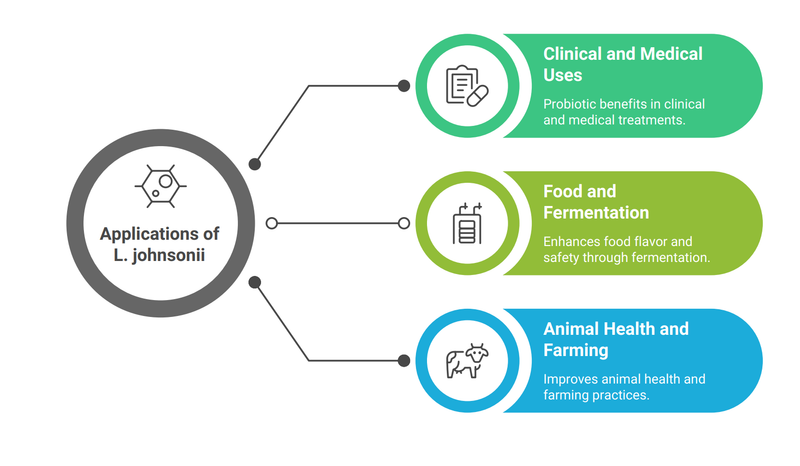
_Lactobacillus johnsonii_ has a versatile role across the healthcare and food industries. In animal models, strains of _L.johnsonii_ have shown promising therapeutic effects in treating _H.pylori_ infections and in reducing the blood glucose levels.
Its strong safety record, with recognition as [GRAS](https://www.bugspeaks.com/blog/microbyte-series-lactobacillus-amylovorus) in the US and QPS in the EU, makes it an attractive candidate for therapeutic and dietary applications, including gastritis, diarrhea, allergies, and metabolic disorders.
In the food industry, _L. johnsonii_ enhances fermentation by converting sugars into lactic acid, contributing both flavor and microbial safety. Though not a mainstay in traditional yogurt starter cultures, it adds probiotic value when included and is increasingly studied for producing bacteriocins, natural antimicrobials that could extend shelf life and reduce food spoilage.
Beyond its applications in human health and the food industry, _Lactobacillus johnsonii_ also plays a valuable role in animal health, with direct and indirect benefits for humans. Specific strains, such as BS15, have been shown to improve gut health, enhance immunity, and promote growth in poultry. In pigs, they help reduce weaning-associated diarrhea and support weight gain. Beekeepers have observed that it strengthens colonies against stress and pathogens, while in aquaculture, it has demonstrated protective effects in shrimp against White Spot Syndrome Virus, highlighting its potential for sustainable marine farming. Additionally, it is used in silage fermentation, improving feed quality and suppressing harmful microbes.
The use of probiotics in animal health represents an emerging and promising alternative, especially considering the global threat of antimicrobial resistance. Probiotics can strengthen the immune system, promote the production of antimicrobial peptides, and help prevent severe infections. By doing so, they may significantly reduce the reliance on antibiotics in animal husbandry, thereby lowering the risk of multidrug-resistant microbes transferring to humans.
**H. pylori infections-** Bacterial infections in the stomach caused by _Helicobacter pylori_ that can weaken its protective lining, often leading to ulcers or chronic indigestion.
**GRAS-**"Generally Recognized as Safe," an official U.S. regulatory designation indicating that a food ingredient or microbe is universally accepted as safe for human consumption based on extensive testing and history.
**QPS-**"Qualified Presumption of Safety," a European regulatory standard used to fast-track safety evaluations for specific microbes based on a proven, long-standing history of safe usage.
**Starter cultures-** Living microbes (like specific bacteria or yeasts) deliberately added to raw ingredients to reliably kickstart the fermentation process for making foods or beverages.
**Bacteriocins-** Natural, toxin-like protein shields manufactured by friendly bacteria to specifically target and destroy competing, harmful germs in their environment.
**White Spot Syndrome Virus-** A highly contagious and destructive viral disease affecting shrimp and other crustaceans, often causing massive economic losses in aquaculture.
**Antimicrobial resistance-** An evolutionary defense mechanism where bacteria or other microbes mutate to survive exposure to the specific drugs designed to kill them.
**Antimicrobial peptides-** Small, natural protein molecules produced by friendly microbes or immune cells that act like targeted defense shields to weaken or destroy harmful germs.
## Taxonomic classification
**Domain:** Bacteria
**Phylum:** Bacillota
**Class:** _Bacilli_
**Order:** _Lactobacillales_
**Family:** _Lactobacillaceae_
**Genus:** _Lactobacillus_
**Species:** _L. johnsonii_
## Microbe Profile
**Shape:** Rod-shaped
**Gram nature:** Gram-positive
**Spore formation:** No
**Biofilm formation:** Yes
**Oxygen requirement:** Partially Anaerobic
**Optimal temperature:** 37°C
**Optimal pH:** 5.5 to 5.8
**Nutrient usage:** Glucose
### Reference
Zhang, Z., Zhao, L., Wu, J., Pan, Y., Zhao, G., Li, Z., & Zhang, L. (2023). The Effects of _Lactobacillus johnsonii_ on Diseases and Its Potential Applications. _Microorganisms_, _11_(10), 2580. [https://doi.org/10.3390/microorganisms11102580](https://doi.org/10.3390/microorganisms11102580)
Arzola-Martínez, L., Ravi, K., Huffnagle, G. B., Lukacs, N. W., & Fonseca, W. (2024). Lactobacillus johnsonii and host communication: insight into modulatory mechanisms during health and disease. _Frontiers in Microbiomes_, _2_, 1345330.
Dekham, K., Jones, S.M., Jitrakorn, S. _et al._ Functional and genomic characterization of a novel probiotic _Lactobacillus johnsonii_ KD1 against shrimp WSSV infection. _Sci Rep_ 13, 21610 (2023). https://doi.org/10.1038/s41598-023-47897-w
## FAQs
Q: From what unusual source was the first strain of Lactobacillus johnsonii isolated?
A: Scientists surprisingly isolated the very first strain of this bacterium from human blood in Belgium rather than the digestive tract. This clinical origin stands out because the microbe is typically known as a harmless, gut-adapted commensal resident.
Q: How does Lactobacillus johnsonii help manage stomach ulcers caused by H. pylori?
A: Taking this microbe in probiotic form has been shown to significantly reduce the colonization of Helicobacter pylori in the stomach. It protects the stomach lining by releasing natural antimicrobials and organic acids that directly block these harmful pathogens.
Q: Why are scientists studying Lactobacillus johnsonii as a potential psychobiotic?
A: Early animal trials suggest that specific strains can interact with the gut-brain axis to reduce stress-related behaviors and boost memory. This connection opens up future possibilities for using the bacterium to support overall mental well-being and cognitive performance.
Q: What protective role does Lactobacillus johnsonii play in sustainable aquaculture?
A: Supplementing with this versatile bacterium protects farmed shrimp against the highly destructive White Spot Syndrome Virus. This biological shield provides a sustainable defense mechanism that successfully minimizes massive economic losses in marine farming.
Q: How can using this probiotic in livestock farming lower the risk of antibiotic resistance?
A: It boosts the animal's immune system and promotes the production of natural antimicrobial peptides to prevent severe infections. By doing so, it significantly reduces reliance on traditional antibiotics and lowers the risk of multidrug-resistant germs transferring to humans.
---
This blog is powered by Superblog. Visit https://superblog.ai to know more.
---