The Microbyte Series - Lactobacillus casei: The Nomadic Probiotic
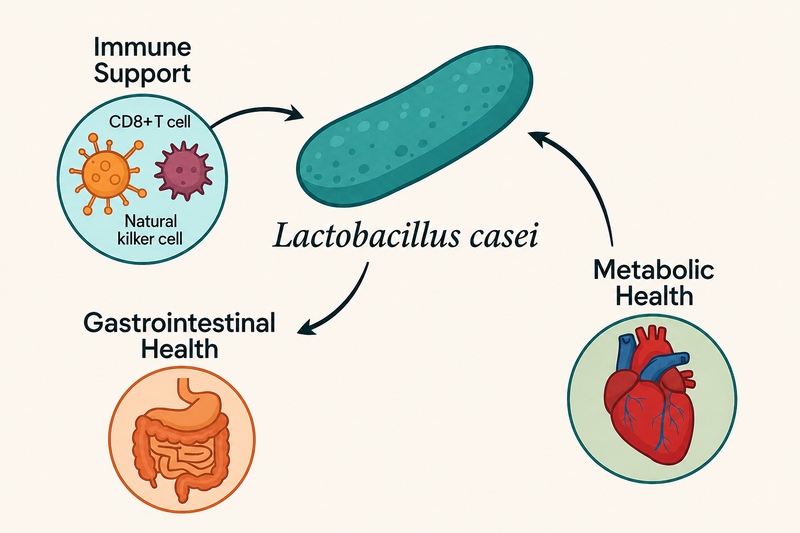
Lactobacillus casei is a versatile Gram-positive bacterium capable of supporting a wide array of human health functions. Driven by an advanced flexible genome and nomadic adaptability, it effortlessly colonizes diverse niches, spreading rapidly through traditional dairy products and plant surfaces. Benefits range from localized digestive improvements like diarrhea recovery to complex systemic enhancements, including immune modulation and cholesterol reduction. Accurate identification leverages classic laboratory cultures and modern tools like 16S rRNA sequencing and whole-genome analysis. While optimization typically requires targeted probiotic therapy for strains like Shirota and CAAS36, robust utilization relies heavily on strict strain screening and quality control protocols.
Historical Development and Taxonomic Classification
Lactobacillus casei has a story that begins in the world of traditional dairy. Scientists first discovered it in cheese in the early 1900s, and in 1971, Hansen and Lessel officially recognized it as a species. Its name comes from the Latin word casei, meaning “of cheese,” a nod to its frequent appearance in fermented milk products.
Over time, researchers realized that L. casei wasn’t alone. It belongs to a small family of look‑alike bacteria that includes L. paracasei and L. rhamnosus, collectively called the Lactobacillus casei group. All of them are part of the Lactobacillaceae family within the Firmicutes phylum.
Even with this knowledge, classifying L. casei was tricky. By the 1990s and 2000s, powerful genetic tools like 16S rRNA sequencing and whole‑genome analysis revealed that many strains labeled as L. casei were actually quite different from each other. The debate soon centered on which strain should officially define the species. Some scientists argued for ATCC 393, while others supported ATCC 334.
The confusion was finally resolved in 2008. ATCC 393 was chosen as the official type strain because it closely matched the original cheese isolates and clearly represented the species’ genetic profile. ATCC 334, though widely studied, turned out to be closer to L. paracasei and was therefore set aside. This decision by the International Committee on Systematics of Prokaryotes brought clarity to decades of debate and finally gave researchers and probiotic producers a consistent reference point.
Natural Habitat and Ecological Distribution
Lactobacillus casei is a highly adaptable bacterium often described as “nomadic” because it can thrive in many different environments. It has been found in dairy products such as milk and cheese, on plant surfaces, and within the human mouth and gut.
Genetic studies of various strains show that this species has a flexible genome, with a stable core of shared genes and an additional pool of genes that help it adjust to different surroundings. Strains from plants tend to carry genes that allow them to survive and use plant sugars, while strains from dairy often lose some unnecessary genes because milk offers a rich and stable environment.
These genetic changes, which include gaining new genes and losing old ones, allow L. casei to transition easily between food, environmental, and human habitats. Its ability to adapt makes it a useful model for studying how bacteria shift between different lifestyles.
Health Benefits and Therapeutic Applications
Lactobacillus casei is a probiotic known for its ability to support the immune system in a balanced and intelligent way. Rather than overstimulating immunity, strains like L. casei Shirota activate essential immune cells such as CD8⁺ T cells and natural killer cells, while also encouraging the release of both pro-inflammatory and anti-inflammatory cytokines. This ensures the immune system is alert but not overreactive. In animal models, L. casei has shown protective effects against respiratory infections like influenza and has also helped reduce allergic skin reactions by promoting regulatory T cells and calming inflammation without suppressing the immune response.
In the digestive system, L. casei has been linked to faster recovery from diarrhea, reduced bloating, and improved bowel regularity in both children and adults. Its ability to survive harsh stomach conditions and adhere to the intestinal lining makes it particularly effective in strengthening the gut barrier. This helps reduce gut inflammation and supports a more resilient and balanced digestive tract. By reinforcing the intestinal lining and encouraging the growth of beneficial microbes, L. casei helps promote a healthier gut environment.
L. casei also shows promise in metabolic health. In studies using high-cholesterol models, the strain L. casei CAAS36 significantly lowered levels of total cholesterol, LDL, and triglycerides, while boosting HDL, the “good” cholesterol. It also helped reshape the gut microbiota and increased the production of beneficial short-chain fatty acids like propionate and succinate. These compounds play a key role in metabolic regulation and liver protection, suggesting that L. casei may be a valuable ally in supporting cardiovascular and metabolic well-being from within.
Industrial and Biotechnological Applications
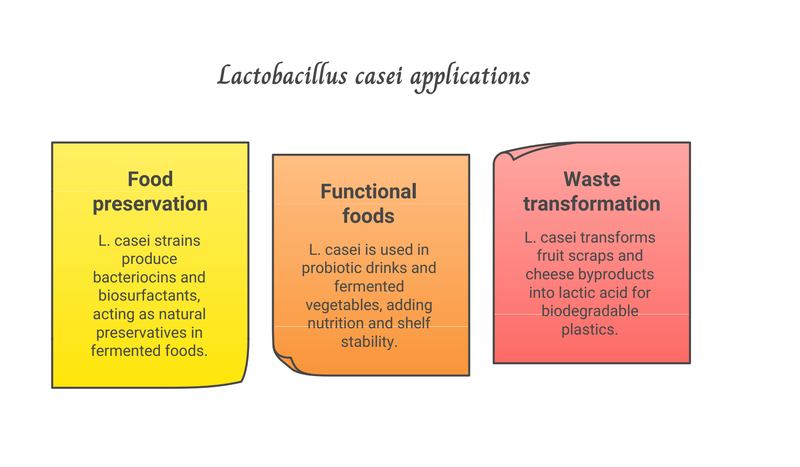
Lactobacillus casei isn’t just helpful for digestion; it's also making waves in the world of food innovation and sustainability. In fermented foods, certain strains of L. casei act as natural preservatives by producing protective compounds like bacteriocins and biosurfactants. These natural substances help stop harmful bacteria and mold from growing while keeping the food’s texture and flavor intact. In products like yogurt, L. casei has shown the ability to prevent spoilage without the need for artificial additives. Its versatility also makes it a favorite in crafting functional foods, such as probiotic drinks and fermented vegetables, where it adds both nutrition and shelf stability.
But the benefits of L. casei go beyond food. In the field of biotechnology, this microbe is helping turn waste into something valuable. Scientists have used L. casei to transform fruit scraps and cheese byproducts into lactic acid, which is used in biodegradable plastics and medicines. This process is both affordable and environmentally friendly, requiring fewer resources and avoiding harsh chemicals. By giving a second life to food industry leftovers, L. casei is proving to be not only a probiotic hero but also a powerful tool in building a more sustainable future.
Potential Drawbacks and Safety Considerations
While Lactobacillus casei is widely regarded as a beneficial probiotic, it's important to remember that even good bacteria may not be suitable for everyone. In very rare cases, particularly among people with weakened immune systems, such as those undergoing chemotherapy or recovering from major surgery, L. casei has been linked to infections like bacteremia or heart valve inflammation. Though these cases are extremely uncommon, they highlight the need for caution in high-risk groups. If you fall into this category, it’s a good idea to consult a healthcare provider before adding any probiotic supplement to your routine.
Another point worth considering is antibiotic resistance. Studies show that while most L. casei strains are safe and do not carry transferable resistance genes, a few have shown mild resistance to certain antibiotics. This is why proper strain screening and quality control are essential in probiotic manufacturing. In some people, especially when first starting supplementation, L. casei may also cause temporary digestive symptoms like gas, bloating, or soft stools. These effects usually fade as the gut adjusts. To ensure both safety and effectiveness, look for products that clearly state the specific strain, viable cell count (CFU), and scientific backing. Like all health tools, probiotics work best when chosen wisely.
Microbial Profile
Shape: Rod Shape
Gram nature: Gram-positive
Spore formation: No
Biofilm formation: Yes
Oxygen requirement: Facultative anaerobe
Optimal temperature: 30-40°C
Optimal pH: 5.5-6.8
Nutrient usage: Homofermentation-glucose, maltose, and lactose
Taxonomic Classification
Domain: Bacteria
Kingdom: Bacillota
Phylum: Bacillota
Class: Bacilli
Order: Lactobacillales
Family: Lactobacillaceae
Genus: Lacticaseibacillus
Species: Lacticaseibacillus casei
Reference
Hill, D., Sugrue, I., Tobin, C., Hill, C., Stanton, C., & Ross, R. P. (2018). The Lactobacillus casei Group: History and Health Related Applications. Frontiers in microbiology, 9, 2107. https://doi.org/10.3389/fmicb.2018.02107
Huang, C. H., Li, S. W., Huang, L., & Watanabe, K. (2018). Identification and Classification for the Lactobacillus casei Group. Frontiers in microbiology, 9, 1974. https://doi.org/10.3389/fmicb.2018.01974
Broadbent, J. R., Neeno-Eckwall, E. C., Stahl, B., Tandee, K., Cai, H., Morovic, W., Horvath, P., Heidenreich, J., Perna, N. T., Barrangou, R., & Steele, J. L. (2012). Analysis of the Lactobacillus casei supragenome and its influence in species evolution and lifestyle adaptation. BMC genomics, 13, 533. https://doi.org/10.1186/1471-2164-13-533
Dong, H., Rowland, I., Tuohy, K. M., Thomas, L. V., & Yaqoob, P. (2010). Selective effects of Lactobacillus casei Shirota on T cell activation, natural killer cell activity and cytokine production. Clinical and experimental immunology, 161(2), 378–388. https://doi.org/10.1111/j.1365-2249.2010.04173.x
Yasui, H., Kiyoshima, J., & Hori, T. (2004). Reduction of influenza virus titer and protection against influenza virus infection in infant mice fed Lactobacillus casei Shirota. Clinical and diagnostic laboratory immunology, 11(4), 675–679. https://doi.org/10.1128/CDLI.11.4.675-679.2004
Hacini-Rachinel, F., Gheit, H., Le Luduec, J. B., Dif, F., Nancey, S., & Kaiserlian, D. (2009). Oral probiotic control skin inflammation by acting on both effector and regulatory T cells. PloS one, 4(3), e4903. https://doi.org/10.1371/journal.pone.0004903
Lai, H. H., Chiu, C. H., Kong, M. S., Chang, C. J., & Chen, C. C. (2019). Probiotic Lactobacillus casei: Effective for Managing Childhood Diarrhea by Altering Gut Microbiota and Attenuating Fecal Inflammatory Markers. Nutrients, 11(5), 1150. https://doi.org/10.3390/nu11051150
Ma, C., Xu, C., Zheng, M., Zhang, S., Liu, Q., Lyu, J., Pang, X., & Wang, Y. (2024). Utilizing Lactic Acid Bacteria to Improve Hyperlipidemia: A Comprehensive Analysis from Gut Microbiota to Metabolic Pathways. Foods, 13(24), 4058. https://doi.org/10.3390/foods13244058
Anumudu, C. K., Miri, T., & Onyeaka, H. (2024). Multifunctional Applications of Lactic Acid Bacteria: Enhancing Safety, Quality, and Nutritional Value in Foods and Fermented Beverages. Foods, 13(23), 3714. https://doi.org/10.3390/foods13233714
Guzek, A., Filipowski, P., Rybicki, Z., Grabski, P., Gryszko, L., Sopolińska, E., & Tomaszewski, D. (2023). Bacteraemia caused by Lactobacillus casei in a patient after cardiac surgery. A case report. Journal of cardiothoracic surgery, 18(1), 226. https://doi.org/10.1186/s13019-023-02334-x
Liu, X., Zhao, H., & Wong, A. (2024). Accounting for the health risk of probiotics. Heliyon, 10(6), e27908. https://doi.org/10.1016/j.heliyon.2024.e27908
Doron, S., & Snydman, D. R. (2015). Risk and safety of probiotics. Clinical infectious diseases : an official publication of the Infectious Diseases Society of America, 60 Suppl 2(Suppl 2), S129–S134. https://doi.org/10.1093/cid/civ085