# The MicroByte Series - Lacticaseibacillus rhamnosus: The Gut’s Best Friend
Author: BugSpeaks
Author URL: https://www.bugspeaks.com/blog/author/bugspeaks
Published: 2025-05-28
Category: MicroByte Series
Category URL: https://www.bugspeaks.com/blog/category/microbyte-series
Meta Title: Lacticaseibacillus rhamnosus Benefits | BugSpeaks
Meta Description: Discover how Lacticaseibacillus rhamnosus (LGG probiotic) supports gut health, immunity, and digestion. Learn its benefits and explore more today.
Tags: Probiotics, Lacticaseibacillus rhamnosus
Tag URLs: Probiotics (https://www.bugspeaks.com/blog/tag/probiotics), Lacticaseibacillus rhamnosus (https://www.bugspeaks.com/blog/tag/lacticaseibacillus-rhamnosus)
URL: https://www.bugspeaks.com/blog/microbyte-series-lacticaseibacillus-rhamnosus
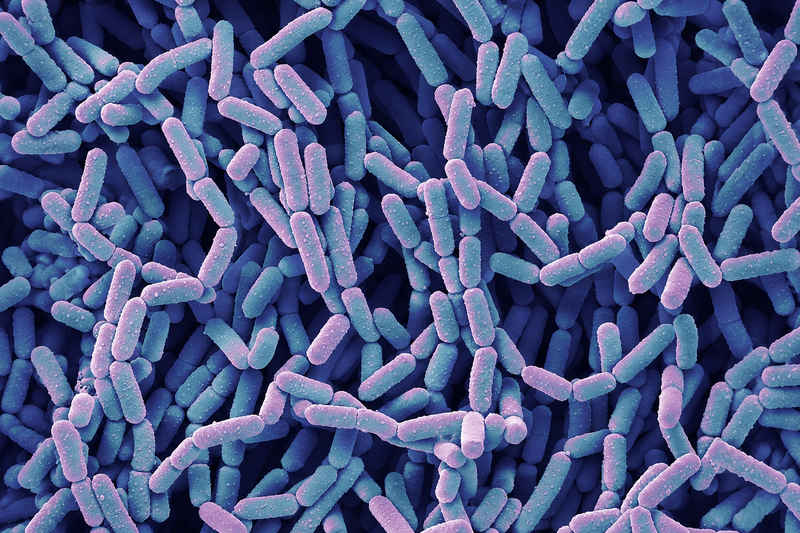
First identified in 1987, _Lacticaseibacillus rhamnosus_ is a versatile Gram-positive bacterium capable of supporting a wide array of human health functions. Driven by an advanced arsenal of bile survival traits and mucosal adherence, it effortlessly colonizes internal linings, spreading rapidly through diverse human microbiomes and fermented food substrates. Benefits range from localized digestive issues like childhood diarrhea to broad systemic enhancements, including respiratory infection recovery and neurotransmitter regulation. Accurate identification leverages classic laboratory cultures and modern tools like genomic taxonomic reclassification. While optimization typically requires targeted probiotic therapy for strains like LGG, robust safety relies heavily on strain characterization and patient immune status protocols.
## History and naming
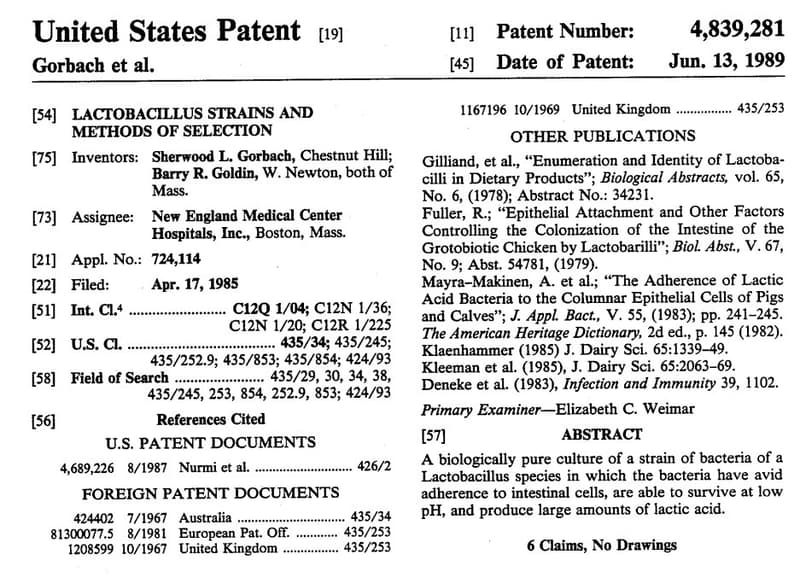
What would later be named _Lacticaseibacillus rhamnosus_ was originally isolated from human feces by Sherwood Gorbach and Barry Goldin in 1987, who found it to have strong probiotic potential. This special bacterium outdid several other fecal _Lactobacillus_ isolates in terms of useful properties like stomach acid and bile survival, strong adherence to the cells that make up the walls of the intestine, and the production of antimicrobial substances. These traits, especially its ability to attach to intestinal walls, continue to set this bacterium apart for being an effective coloniser of the gut, as compared to other probiotic species.

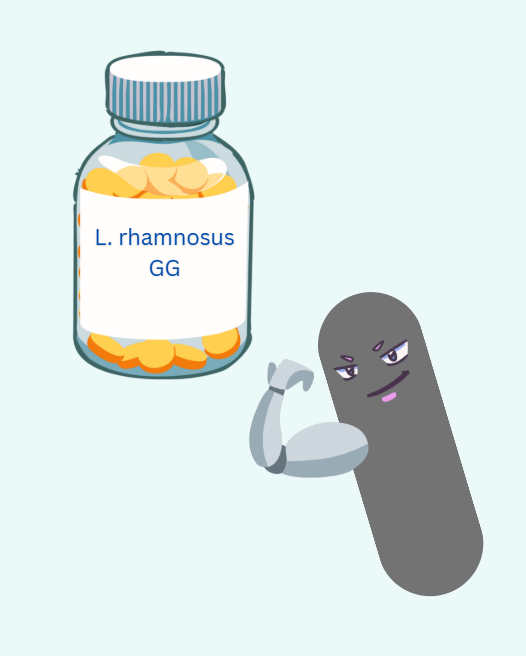
It was subsequently patented as _Lactobacillus rhamnosus_ GG (LGG), from the initials of its original discoverers and patenters, making it the first _Lactobacillus_ strain to be. In 2020, it was reclassified as _Lacticaseibacillus rhamnosus_, but it is still commonly referred to by its former name due to its frequency of use and familiarity among manufacturers and consumers. The new genus name, [_Lacticaseibacillus,_](https://www.bugspeaks.com/blog/microbyte-series-6-lacticaseibacillus-paracasei) refers to the fact that all the species in this group were part of an earlier _L. casei_ group. The species name, “ _rhamnosus_”, refers to the ability of this species to ferment the sugar rhamnose.
**Bile survival-** The critical ability of a microbe to successfully withstand the harsh, alkaline digestive fluids (bile) in the small intestine without being broken down or destroyed.
**Antimicrobial substances–** Protective compounds manufactured by cells or friendly microbes that directly weaken, stop the growth of, or destroy competing, harmful germs.
**Intestinal walls-** The multi-layered cellular boundaries lining the digestive tract that are responsible for absorbing vital nutrients while keeping waste and toxins securely locked inside.
**Probiotic-** Live, beneficial microorganisms (often called "good bacteria") that provide documented health advantages when consumed or applied in proper amounts.
**Species-** A specific group of closely related living organisms that share distinct common features and a high degree of genetic similarity.
**Rhamnose-** A naturally occurring, specialized type of plant sugar that this specific bacterium is uniquely adapted to ferment and use for energy.
## Habitat
This species thrives in diverse environments from multiple human microbiomes- including the gut, vaginal, oral, as well as the external environment, fermented food, dairy products, and clinical niches.
**Fermented food-** Foods and beverages that have been safely transformed by controlled microbial growth, which breaks down sugars into beneficial organic acids, gases, or alcohol.
## Health Benefits
_L. rhamnosus_ is widely found in the human gut, where it plays a variety of roles through multiple mechanisms. Foremost is its ability to effectively colonise the gut and the mucus lining. Through the formation of biofilms, it is also able to protect this mucosal lining as well as maintain the integrity and proper functioning of the intestinal wall. It also produces antimicrobial molecules and recruits immune cells that ward off certain gut pathogens. It is also able to regulate immune responses and neurotransmitter levels in the body.
**Mucus lining-** The slippery, protective layer of fluid coating internal body surfaces like the gut that serves as a physical barrier against invaders and a nesting ground for friendly microbes.
**Biofilms-** Dense, sticky protective shields built by cooperative communities of microbes to anchor themselves firmly to surfaces and defend against outside threats.
**Immune responses-** The body's targeted defensive actions, utilizing cells and chemical signals, to recognize, neutralize, and clear out foreign invaders or tissue damage.
**Neurotransmitter levels-** The precise amounts of chemical messengers (such as serotonin or dopamine) circulating in the body that carry vital signals between nerve cells and regulate everything from mood to gut movement.
## Applications
_L. rhamnosus_ is perhaps the most studied [probiotic species](https://www.bugspeaks.com/blog/microbyte-series-lactobacillus-gasseri) for its ability to positively impact human health in a variety of ways, with the most popular strain being LGG. Originally, it was used to treat _C. difficile_ infections, which wreak havoc on the GI tract and the microbiome. _L. rhamnosus_ is now known to show benefit in multiple conditions associated with imbalances in the gut microbiome. One of its more popular uses is to combat diarrhea, and LGG has been shown to decrease the duration of illness and reduce the frequency of its occurrence, especially in children. It is also known to improve symptoms of disorders like IBS in children as well. While it has also been used for the improvement of inflammatory disorders like IBS/ IBD, there are conflicting results; regardless, it is clear that LGG has a positive impact on the GI tract and is a powerful tool for helping in the handling of dysbiosis.
Besides gut disorders, _L. rhamnosus_ also helps in treating and preventing diseases in other systems. There is some evidence that it helps in faster recovery and reduced rates of occurrences of respiratory infections, and can fight other pathogens by producing antimicrobial molecules. This species has also been used in trials across various conditions, including allergies, liver disease, and chronic inflammatory conditions.
**C. difficile infections-** Severe, potentially dangerous bacterial infections in the large intestine caused by _Clostridium difficile_ overgrowth, typically following a heavy course of antibiotics.
**Dysbiosis-** A disruptive imbalance within a microbial community, most commonly occurring in the gut when harmful germs crowd out or outnumber beneficial bacteria.
**Chronic inflammatory conditions-** Long-lasting health disorders characterized by persistent, low-grade swelling and irritation that the body's defense forces fail to properly shut down.
## Risks
While LGG is largely safe and has been used widely for decades, there are occasional cases of adverse effects, such as worsening of a disease state, through the use of this [probiotic](https://www.bugspeaks.com/blog/microbyte-series-lactobacillus-johnsonii). There may also be variation in the properties of differentstrains of _L. rhamnosus_, patient immune status or other interacting factors, and these must be well characterised, understood, and subject to appropriate regulation to ensure best outcomes and maximum safety.
While LGG is largely safe and its use has been widespread over decades, there are occasional cases of adverse effects, such as worsening of a disease state through the use of this probiotic. There may be multiple reasons for such unfavourable outcomes, such as the type of _L. rhamnosus_ strain used and the patient’s immune status. Such variabilities must be well-characterised and should be subjected to appropriate regulation to ensure the best outcomes and maximum safety.
**Immune status-** The overall strength, readiness, and current functional health condition of a person's immune defense system.
## Fun fact
The original patent document for strain GG! They initially referred to it as a strain of _Lactobacillus acidophilus_, which was then later reclassified to its current “rhamnosus” designation based on its respective properties.
_L. rhamnosus,_ when cultured, has a buttery smell! Ironically, the LGG strain survives poorly in milk due to its poor ability to use the major milk protein casein or its main sugar lactose, but it is still sometimes used to make dairy products.
## Microbe Profile
**Gram nature:** Positive
**Shape:** Bacilli, single or chains
**Spore formation:** No
**Biofilm formation:** Yes
**Oxygen requirement:** Aerotolerant
**Temperature range:** 15 to 45 degrees Celsius
**Optimal pH:** 4.5 to 6.4
**Food Source:** Rhamnose, Arabinose, and Sucrose
## Taxonomic Classification
**Domain:** Bacteria
**Phylum:** Bacillota
**Class:** Bacilli
**Order:** Lactobacillales
**Family:** Lactobacillaceae
**Genus:** _Lacticaseibacillus_
**Species:** _Lacticaseibacillus rhamnosus_
-Antara Arvind
### Reference
Capurso, L. (2019). Thirty Years of Lactobacillus rhamnosus GG. _Journal of Clinical Gastroenterology_, _53_(Supplement 1), S1–S41. [https://doi.org/10.1097/mcg.0000000000001170](https://doi.org/10.1097/mcg.0000000000001170)
Stage, M., Wichmann, A., Jørgensen, M., Vera-Jimenéz, N. I., Wielje, M., Nielsen, D. S., Sandelin, A., Chen, Y., & Baker, A. (2020). Lactobacillus rhamnosus GG Genomic and Phenotypic Stability in an Industrial Production Process. _Applied and environmental microbiology_, _86_(6), e02780-19. [https://doi.org/10.1128/AEM.02780-19](https://doi.org/10.1128/AEM.02780-19)
Doron, S., Snydman, D. R., & Gorbach, S. L. (2005). Lactobacillus GG: Bacteriology and clinical applications. _Gastroenterology Clinics of North America_, _34_(3), 483–498. https://doi.org/10.1016/j.gtc.2005.05.011
Zheng, J., Wittouck, S., Salvetti, E., Franz, C. M., Harris, H. M., Mattarelli, P., O’Toole, P. W., Pot, B., Vandamme, P., Walter, J., Watanabe, K., Wuyts, S., Felis, G. E., Gänzle, M. G., & Lebeer, S. (2020). A taxonomic note on the genus Lactobacillus: Description of 23 novel genera, emended description of the genus Lactobacillus Beijerinck 1901, and union of Lactobacillaceae and Leuconostocaceae. _INTERNATIONAL JOURNAL OF SYSTEMATIC AND EVOLUTIONARY MICROBIOLOGY_, _70_(4), 2782–2858. [https://doi.org/10.1099/ijsem.0.004107](https://doi.org/10.1099/ijsem.0.004107)
Sakai, T., Oishi, K., Asahara, T., Takada, T., Yuki, N., Matsumoto, K., Nomoto, K., & Kushiro, A. (2010). M-RTLV agar, a novel selective medium to distinguish Lactobacillus casei and Lactobacillus paracasei from Lactobacillus rhamnosus. _International Journal of Food Microbiology_, _139_(3), 154–160. [https://doi.org/10.1016/j.ijfoodmicro.2010.03.019](https://doi.org/10.1016/j.ijfoodmicro.2010.03.019)
Valík, Ľubomír & Medveďová, Alžbeta & Liptakova, Denisa. (2008). Characterization of the growth of Lactobacillus rhamnosus GG in milk at suboptimal temperatures. Journal of food and nutrition research. 47. 60-67.
Śliżewska, K., & Chlebicz-Wójcik, A. (2020). Growth Kinetics of Probiotic _Lactobacillus_ Strains in the Alternative, Cost-Efficient Semi-Solid Fermentation Medium. _Biology_, _9_(12), 423. [https://doi.org/10.3390/biology9120423](https://doi.org/10.3390/biology9120423)
Işık, M., Köse, F., Özbayer, C., Budak, Ö., Kaya, R. K., Erdoğan, D. G., Demirci, M. A., Doğanay, S., & Bağcı, C. (2025). Promising Antidepressant Potential: The Role of Lactobacillus rhamnosus GG in Mental Health and Stress Response. _Probiotics and Antimicrobial Proteins_. [https://doi.org/10.1007/s12602-025-10470-0](https://doi.org/10.1007/s12602-025-10470-0)
Tette, F. M., Kwofie, S. K., & Wilson, M. D. (2022). Therapeutic Anti-Depressant Potential of Microbial GABA Produced by _Lactobacillus rhamnosus_ Strains for GABAergic Signaling Restoration and Inhibition of Addiction-Induced HPA Axis Hyperactivity. _Current issues in molecular biology_, _44_(4), 1434–1451. [https://doi.org/10.3390/cimb44040096](https://doi.org/10.3390/cimb44040096)
Kant, R., Rintahaka, J., Yu, X., Sigvart-Mattila, P., Paulin, L., Mecklin, J. P., Saarela, M., Palva, A., & von Ossowski, I. (2014). A comparative pan-genome perspective of niche-adaptable cell-surface protein phenotypes in Lactobacillus rhamnosus. _PloS one_, _9_(7), e102762. [https://doi.org/10.1371/journal.pone.0102762](https://doi.org/10.1371/journal.pone.0102762)
Guo, H., Yu, L., Tian, F., Chen, W., & Zhai, Q. (2023). The Potential Therapeutic Role of _Lactobacillaceae rhamnosus_ for Treatment of Inflammatory Bowel Disease. _Foods (Basel, Switzerland)_, _12_(4), 692. [https://doi.org/10.3390/foods12040692](https://doi.org/10.3390/foods12040692)
Hussain, N., Li, R., Takala, T. M., Tariq, M., Zaidi, A. H., & Saris, P. E. J. (2021). Generation of Lactose- and Protease-Positive Probiotic _Lacticaseibacillus rhamnosus_ GG by Conjugation with _Lactococcus lactis_ NCDO 712. _Applied and environmental microbiology_, _87_(6), e02957-20. https://doi.org/10.1128/AEM.02957-20
## FAQs
Q: What does the species name "rhamnosus" reveal about this bacterium?
A: The species name directly refers to the bacterium's unique biological ability to ferment rhamnose, a specialized type of plant sugar. This distinct metabolic adaptation allows the microbe to efficiently break down and utilize this specific substrate for cellular energy.
Q: What unique traits make this bacterium a highly successful gut colonizer?
A: It stands out from other probiotic species due to its exceptional acid and bile survival combined with strong adherence to the intestinal walls. It securely anchors itself inside the digestive tract by creating sticky protective biofilms over the delicate mucus lining.
Q: For what major therapeutic purposes is this probiotic strain clinically applied?
A: It was originally used to treat severe C. difficile infections and is now famously utilized to manage gut dysbiosis and shorten diarrhea duration in children. It also helps alleviate symptoms of functional disorders like irritable bowel syndrome to improve overall gastrointestinal wellness.
Q: What specific safety risks must be considered when administering this probiotic?
A: Although it has a safe track record spanning decades, this probiotic can occasionally cause adverse reactions or worsen a pre-existing disease state. These rare unfavorable outcomes are typically influenced by the specific bacterial strain used and the patient's current immune status.
Q: Why does the famous LGG strain exhibit surprisingly poor survival inside milk?
A: Although it produces a distinct buttery aroma when cultured, the LGG strain struggles to digest milk's primary protein, casein, and its main sugar, lactose. Because of these unique nutritional limitations, the specialized strain actually exhibits surprisingly poor survival rates inside plain dairy fluids.
---
This blog is powered by Superblog. Visit https://superblog.ai to know more.
---