# The MicroByte Series: Lacticaseibacillus paracasei- All Purpose Probiotic
Author: BugSpeaks
Author URL: https://www.bugspeaks.com/blog/author/bugspeaks
Published: 2025-10-15
Category: MicroByte Series
Category URL: https://www.bugspeaks.com/blog/category/microbyte-series
Meta Title: Lacticaseibacillus paracasei & Gut Health | BugSpeaks
Meta Description: Discover how Lacticaseibacillus paracasei supports gut health, immunity, and skin wellness. Explore its probiotic benefits and learn more today.
Tags: Probiotics, Lacticaseibacillus paracasei
Tag URLs: Probiotics (https://www.bugspeaks.com/blog/tag/probiotics), Lacticaseibacillus paracasei (https://www.bugspeaks.com/blog/tag/lacticaseibacillus-paracasei)
URL: https://www.bugspeaks.com/blog/microbyte-series-lacticaseibacillus-paracasei
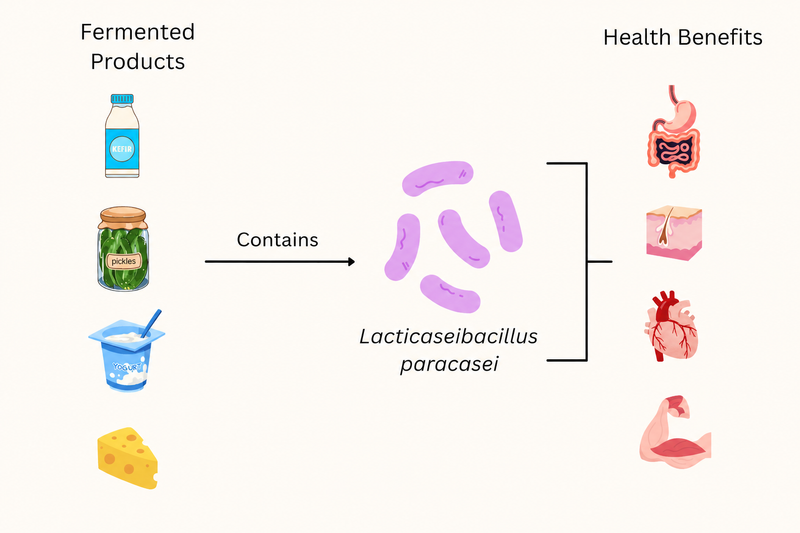
_Lacticaseibacillus paracasei_ is a versatile Gram-positive bacterium capable of supporting a wide array of human health functions. Driven by an advanced arsenal of anti-inflammatory properties and metabolic regulations, it effortlessly optimizes the gastrointestinal environment, spreading rapidly through host tissues and diverse fermented matrices. Benefits range from localized digestive infections like acute gastroenteritis to chronic epithelial conditions, including atopic dermatitis and exercise-induced muscle damage. Accurate classification leverages classic laboratory morphology and modern tools like DNA–DNA hybridization techniques. While optimization typically requires targeted probiotic therapy for strains like PS23 and ZFM54, robust industrial utilization relies heavily on functional food fortification and novel beer co-fermentation protocols.
## **History and Naming**
In 1989, under the species _Lacticaseibacillus casei_, five different [subspecies](https://www.bugspeaks.com/blog/microbyte-series-lactobacillus-bulgaricans) were recognized: _L. casei subsp. casei_, _L. casei subsp. alactosus_, _L. casei subsp. pseudoplantarum_, _L. casei subsp. tolerans_, and _L. casei subsp. rhamnosus_.
With advancements in molecular biology and the advent of DNA–DNA hybridization techniques, these subspecies were later reclassified as separate species:
(i) [_L. casei_](https://www.bugspeaks.com/blog/microbyte-series-lactobacillus-casei)( former _L. casei subsp. casei_);
(ii) _L. paracasei_, comprising two subspecies
- _L. paracasei subsp. paracasei_(former _L. casei subsp. alactosus_ and _L. casei subsp. pseudoplantarum_)
- _L. paracasei subsp. tolerans_(former _L. casei subsp. tolerans_)
(iii) _L. rhamnosus_ ( former _L. casei subsp. rhamnosus_).
Although _Lacticaseibacillus casei_, _Lacticaseibacillus paracasei_, and _Lacticaseibacillus rhamnosus_ share a close genetic relationship, functional similarities, and a common ancestry, they are now classified as distinct species. Because of their shared traits and the collective term “ _Lacticaseibacillus casei_ group,” these bacteria are often confused, and the names _L. casei_ and _L. paracasei_ are sometimes used interchangeably - a bit of a “potato, potahto” situation! However, despite their similarities, _Lacticaseibacillus paracasei_ possesses unique properties and is now recognized as a separate species **.**
**DNA–DNA hybridization-** A classic laboratory technique that measures how closely two different organisms' DNA strands bind together to determine their genetic similarity and scientific classification.
**Species-** A specific group of closely related living organisms that share distinct common features and a high degree of genetic similarity.
**Subspecies-** A distinct biological sub-category within a species, grouping organisms that share unique genetic variations but are still closely related.
**Traits-** The distinguishing physical or functional characteristics of an organism, such as a bacterium's ability to withstand stomach acid or produce vitamins.
## **Health Benefits**
_Lacticaseibacillus paracasei_ is a common inhabitant of the oral cavity and gastrointestinal tract. However, they are transient in nature and are not the dominant bacterial species in the gut. Having said that, their presence contributes to a better gut environment and fosters the growth of beneficial bacteria. Hence, _Lacteicaseibacillus paracasei_ alone or with other [probiotics](https://www.bugspeaks.com/blog/microbyte-series-lactiplantibacillus-plantarum) is supplemented to relieve the symptoms of various health concerns. Several strains of _Lacticaseibacillus paracasei_ have been shown to improve the symptoms of severe infections of the gastrointestinal tract, like acute gastroenteritis, symptomatic diverticulitis, and diarrhoea in _C. difficile_. Apart from digestive issues, _L .paracasei_ supplementation along with the conventional treatment has been shown to relieve the symptoms associated with atopic dermatitis. Interestingly, it has also been shown to restore the scalp microbiome and reduce dandruff while improving skin barrier integrity and skin hydration. Topical application of _Lacticaseibacillus paracasei-derived_ probiotic lotion has been shown to reduce acne vulgaris due to its anti-inflammatory properties. A study observed that _L. paracasei_ supplementation improved endothelial function by reducing cholesterol levels, thereby mitigating the risk of cardiovascular diseases. Another study showed that it reduces fat storage by regulating the expression of genes involved in metabolism. Administration of _L. paracasei_ in animal models has been shown to prevent type 2 diabetes through the regulation of glucose metabolism. It is also observed that supplementation of _L. paracasei_ along with _L. plantarum_ reduced the episodes of recurring common cold, suggesting that it might play a role in boosting immunity. The latest interest in microbiome sciences is to understand the effect of the microbial composition and its functions in athletes. Scientists are exploring ways and developing formulations/supplementation that can increase athletes' performance and fasten the exercise-induced recovery process. In this quest, studies are focusing on the positive effects of probiotics on the post-exercise recovery process. A recent clinical trial has shown that supplementation of live and heat-killed _L. paracasei_ PS23 reduced the blood markers associated with muscle damage and inflammation, in addition to speedy recovery and less exhaustion after exercise.
**Gastrointestinal tract-** The continuous human digestive system (or GI tract), stretching from the mouth down to the rectum, is responsible for breaking down food and housing a massive microbial ecosystem.
**Acute gastroenteritis-** A sudden, short-term inflammation of the stomach and intestines, typically caused by a viral or bacterial infection, leading to temporary diarrhea and vomiting.
**Diverticulitis-** An uncomfortable inflammatory condition where small, bulging pouches that form in the walls of the large intestine become infected or severely inflamed.
**Atopic dermatitis-** A chronic, inflammatory skin condition commonly known as eczema- causes dry, intensely itchy, red, and cracked patches on the skin.
**Skin barrier integrity-** The overall strength, wholeness, and functional health of the skin’s outermost layer, which acts as a shield to keep hydration in and harmful elements out.
**Endothelial function-** The daily operational health of the thin layer of cells lining all blood vessels, which controls how well the vessels expand, contract, and regulate blood flow.
**Blood markers-** Measurable chemicals, proteins, or cell counts found in a blood sample that medical professionals use to track overall health, evaluate organ function, or check for disease.
## **Applications**
Several studies have provided evidence that supplementation with strains of _Lacticaseibacillus paracasei_ offers numerous health benefits. These bacteria are also naturally found in many fermented products such as kefir, various types of cheese, koumiss, and pickles. The food industry has recognized the positive impact of this probiotic and is actively experimenting with developing foods and beverages fortified with _L. paracasei_.
It has been observed that yogurt co-fermented with _Lacticaseibacillus paracasei_ ZFM54 not only improves the flavor and texture of the yogurt but also enhances gut ecology when consumed. There have also been attempts to incorporate probiotics into ice cream bars, chocolate mousse, and fruit juices.
Although the beneficial effects of _L. paracasei_ are well established, incorporating them into functional foods remains a challenge, as their chances of surviving the manufacturing process, transportation, and storage are low.
**Strains-** Specific genetic sub-types or unique variants within a single bacterial species, with each strain often displaying its own distinct behavior or health perks.
**Koumiss-** A historic, slightly sparkling fermented dairy beverage traditionally crafted from raw mare's milk, deeply rooted in the food culture of Central Asian communities.
**Probiotic-** Live, beneficial microorganisms (often called "good bacteria") that provide documented health advantages when consumed or applied in proper amounts.
**Co-fermented-** A process where two or more different types of microbes (such as distinct bacteria and yeast strains) work together simultaneously to ferment a single food or beverage.
## **Fun Fact**
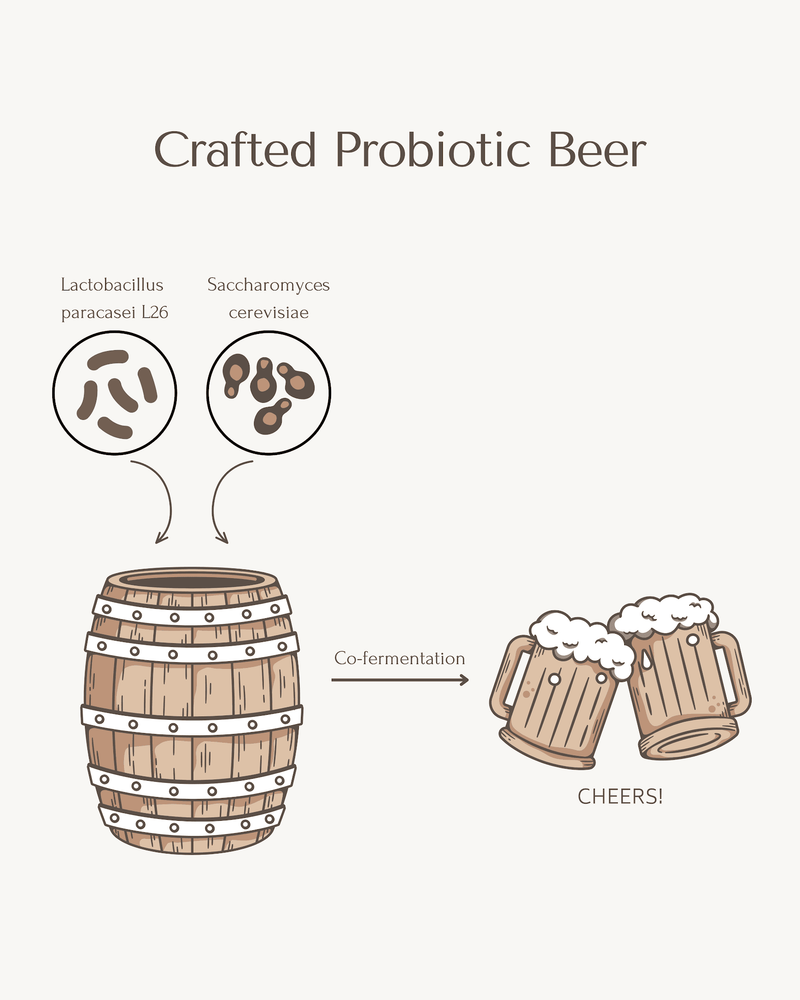
Heard of beer made with the same bacteria responsible for producing cheese and yogurt? It turns out we’ve underestimated the versatility of certain Lactobacillus species, such as _Lacticaseibacillus_ paracasei, traditionally used in fermented dairy products.
The major drawback of using _Lactobacilli_ as a starter culture in beer brewing is that they are usually killed by the acids and alcohol produced during fermentation. However, [Mei Zhi Alcine Chan et al](https://www.sciencedirect.com/science/article/abs/pii/S074000201930111X) _._ took a creative deviation from the conventional brewing process by co-fermenting _Saccharomyces cerevisiae_ (brewer’s yeast) and _Lacticaseibacillus paracasei_ for the first time; they were able to produce beer with high numbers of viable probiotics! The _Lactobacilli_ add a tart, sour flavor to the beer while also offering potential health benefits.
## **Taxonomic Classification**
**Domain:** Bacteria
**Phylum:** Bacillota
**Class:** Bacilli
**Order:** _Lactobacillales_
**Family:** _Lactobacillaceae_
**Genus:** _Lacticaseibacillus_
**Species:** _Lacticaseibacillus paracasei_
## **Microbe Profile**
**Shape:** Rod
**Gram nature:** Positive
**Spore formation:** No
**Biofilm formation:** Yes
**Oxygen requirement:** Facultative anaerobe
**Optimal temperature:** 30 - 37 °C
**Optimal pH:** 5.5-6.2
**Nutrient usage:** Fructooligosaccharides, Galactooligosaccharides
-Khushi. C
### Reference
Ou, S. J. L., Yusri, H., Yang, D., Khoo, C. M., & Liu, M. H. (2024). Effects of Moderate Consumption of a Probiotic-Fermented Sour Beer on the Inflammatory, Immunity, Lipid Profile, and Gut Microbiome of Healthy Men in a Participant-Blinded, Randomized-Controlled Within-Subject Crossover Study. Food science & nutrition, 12(12), 10867–10880. [https://doi.org/10.1002/fsn3.4627](https://doi.org/10.1002/fsn3.4627)
Sathikulpakdee, S., Kanokrungsee, S., Vitheejongjaroen, P., Kamanamool, N., Udompataikul, M., & Taweechotipatr, M. (2022). Efficacy of probiotic-derived lotion from Lactobacillus paracasei MSMC 39-1 in mild to moderate acne vulgaris, randomized controlled trial. Journal of cosmetic dermatology, 21(10), 5092–5097. [https://doi.org/10.1111/jocd.14971](https://doi.org/10.1111/jocd.14971)
Dang, F., , Jiang, Y., , Pan, R., , Zhou, Y., , Wu, S., , Wang, R., , Zhuang, K., , Zhang, W., , Li, T., , & Man, C., (2018). Administration of Lactobacillus paracasei ameliorates type 2 diabetes in mice. Food & function, 9(7), 3630–3639. [https://doi.org/10.1039/c8fo00081f](https://doi.org/10.1039/c8fo00081f)
Chen, X., Zhu, Z., Zhang, X., Chen, L., Gu, Q., & Li, P. (2024). Lactobacillus paracasei ZFM54 alters the metabolomic profiles of yogurt and the co-fermented yogurt improves the gut microecology of human adults. Journal of dairy science, 107(8), 5280–5300. [https://doi.org/10.3168/jds.2023-24332](https://doi.org/10.3168/jds.2023-24332)
## FAQs
Q: Why are the names L. casei and L. paracasei sometimes used interchangeably?
A: These bacteria share a close genetic relationship, functional similarities, and a common ancestry under the collective "Lacticaseibacillus casei group." Although DNA–DNA hybridization techniques eventually separated them into distinct species, their shared traits continue to cause frequent confusion.
Q: How does L. paracasei supplementation benefit skin and scalp health?
A: It helps restore the scalp microbiome to reduce dandruff while improving overall skin barrier integrity and hydration. Additionally, topical application of this bacterium's probiotic lotion helps reduce acne vulgaris due to its natural anti-inflammatory properties.
Q: What role does L. paracasei play in athletic performance and recovery?
A: Clinical trials show that supplementing with live or heat-killed strain PS23 significantly reduces blood markers associated with muscle damage and inflammation. This specialized process actively secures a speedier recovery and minimizes overall physical exhaustion after strenuous exercise.
Q: What is the primary industrial challenge of incorporating this probiotic into food?
A: While its health benefits are well established, ensuring the bacterium stays alive throughout the commercial supply chain remains a difficult hurdle. The living microbes exhibit exceptionally low survival rates during the harsh manufacturing process, product transportation, and long-term storage.
Q: How did researchers successfully brew a functional probiotic beer using this microbe?
A: Scientists co-fermented brewer’s yeast alongside L. paracasei to maintain high numbers of viable probiotics that typically die in traditional brewing setups. This innovative method allows the bacteria to survive the processing acids and alcohol while introducing a pleasant, tart flavor profile.
---
This blog is powered by Superblog. Visit https://superblog.ai to know more.
---