The MicroByte Series: Lacticaseibacillus paracasei- All Purpose Probiotic
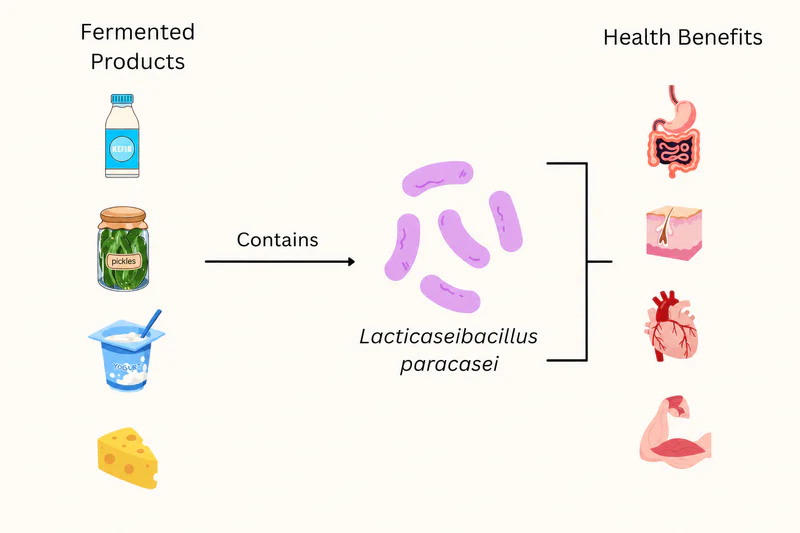
Lacticaseibacillus paracasei is a versatile Gram-positive bacterium capable of supporting a wide array of human health functions. Driven by an advanced arsenal of anti-inflammatory properties and metabolic regulations, it effortlessly optimizes the gastrointestinal environment, spreading rapidly through host tissues and diverse fermented matrices. Benefits range from localized digestive infections like acute gastroenteritis to chronic epithelial conditions, including atopic dermatitis and exercise-induced muscle damage. Accurate classification leverages classic laboratory morphology and modern tools like DNA–DNA hybridization techniques. While optimization typically requires targeted probiotic therapy for strains like PS23 and ZFM54, robust industrial utilization relies heavily on functional food fortification and novel beer co-fermentation protocols.
History and Naming
In 1989, under the species Lacticaseibacillus casei, five different subspecies were recognized: L. casei subsp. casei, L. casei subsp. alactosus, L. casei subsp. pseudoplantarum, L. casei subsp. tolerans, and L. casei subsp. rhamnosus.
With advancements in molecular biology and the advent of DNA–DNA hybridization techniques, these subspecies were later reclassified as separate species:
(i) L. casei( former L. casei subsp. casei);
(ii) L. paracasei, comprising two subspecies
L. paracasei subsp. paracasei (former L. casei subsp. alactosus and L. casei subsp. pseudoplantarum)
L. paracasei subsp. tolerans (former L. casei subsp. tolerans)
(iii) L. rhamnosus ( former L. casei subsp. rhamnosus).
Although Lacticaseibacillus casei, Lacticaseibacillus paracasei, and Lacticaseibacillus rhamnosus share a close genetic relationship, functional similarities, and a common ancestry, they are now classified as distinct species. Because of their shared traits and the collective term “Lacticaseibacillus casei group,” these bacteria are often confused, and the names L. casei and L. paracasei are sometimes used interchangeably - a bit of a “potato, potahto” situation! However, despite their similarities, Lacticaseibacillus paracasei possesses unique properties and is now recognized as a separate species.
Health Benefits
Lacticaseibacillus paracasei is a common inhabitant of the oral cavity and gastrointestinal tract. However, they are transient in nature and are not the dominant bacterial species in the gut. Having said that, their presence contributes to a better gut environment and fosters the growth of beneficial bacteria. Hence, Lacteicaseibacillus paracasei alone or with other probiotics is supplemented to relieve the symptoms of various health concerns. Several strains of Lacticaseibacillus paracasei have been shown to improve the symptoms of severe infections of the gastrointestinal tract, like acute gastroenteritis, symptomatic diverticulitis, and diarrhoea in C. difficile. Apart from digestive issues, L .paracasei supplementation along with the conventional treatment has been shown to relieve the symptoms associated with atopic dermatitis. Interestingly, it has also been shown to restore the scalp microbiome and reduce dandruff while improving skin barrier integrity and skin hydration. Topical application of Lacticaseibacillus paracasei-derived probiotic lotion has been shown to reduce acne vulgaris due to its anti-inflammatory properties. A study observed that L. paracasei supplementation improved endothelial function by reducing cholesterol levels, thereby mitigating the risk of cardiovascular diseases. Another study showed that it reduces fat storage by regulating the expression of genes involved in metabolism. Administration of L. paracasei in animal models has been shown to prevent type 2 diabetes through the regulation of glucose metabolism. It is also observed that supplementation of L. paracasei along with L. plantarum reduced the episodes of recurring common cold, suggesting that it might play a role in boosting immunity. The latest interest in microbiome sciences is to understand the effect of the microbial composition and its functions in athletes. Scientists are exploring ways and developing formulations/supplementation that can increase athletes' performance and fasten the exercise-induced recovery process. In this quest, studies are focusing on the positive effects of probiotics on the post-exercise recovery process. A recent clinical trial has shown that supplementation of live and heat-killed L. paracasei PS23 reduced the blood markers associated with muscle damage and inflammation, in addition to speedy recovery and less exhaustion after exercise.
Applications
Several studies have provided evidence that supplementation with strains of Lacticaseibacillus paracasei offers numerous health benefits. These bacteria are also naturally found in many fermented products such as kefir, various types of cheese, koumiss, and pickles. The food industry has recognized the positive impact of this probiotic and is actively experimenting with developing foods and beverages fortified with L. paracasei.
It has been observed that yogurt co-fermented with Lacticaseibacillus paracasei ZFM54 not only improves the flavor and texture of the yogurt but also enhances gut ecology when consumed. There have also been attempts to incorporate probiotics into ice cream bars, chocolate mousse, and fruit juices.
Although the beneficial effects of L. paracasei are well established, incorporating them into functional foods remains a challenge, as their chances of surviving the manufacturing process, transportation, and storage are low.
Fun Fact
Heard of beer made with the same bacteria responsible for producing cheese and yogurt? It turns out we’ve underestimated the versatility of certain Lactobacillus species, such as Lacticaseibacillus paracasei, traditionally used in fermented dairy products.
The major drawback of using Lactobacilli as a starter culture in beer brewing is that they are usually killed by the acids and alcohol produced during fermentation. However,Mei Zhi Alcine Chan et al. took a creative deviation from the conventional brewing process by co-fermenting Saccharomyces cerevisiae (brewer’s yeast) and Lacticaseibacillus paracasei for the first time; they were able to produce beer with high numbers of viable probiotics! The Lactobacilli add a tart, sour flavor to the beer while also offering potential health benefits. 
Taxonomic Classification
Domain: Bacteria
Phylum: Bacillota
Class: Bacilli
Order:Lactobacillales
Family:Lactobacillaceae
Genus:Lacticaseibacillus
Species: Lacticaseibacillus paracasei
Microbe Profile
Shape: Rod
Gram nature: Positive
Spore formation: No
Biofilm formation: Yes
Oxygen requirement: Facultative anaerobe
Optimal temperature: 30 - 37 °C
Optimal pH: 5.5-6.2
Nutrient usage: Fructooligosaccharides, Galactooligosaccharides
-Khushi. C
Reference
Ou, S. J. L., Yusri, H., Yang, D., Khoo, C. M., & Liu, M. H. (2024). Effects of Moderate Consumption of a Probiotic-Fermented Sour Beer on the Inflammatory, Immunity, Lipid Profile, and Gut Microbiome of Healthy Men in a Participant-Blinded, Randomized-Controlled Within-Subject Crossover Study. Food science & nutrition, 12(12), 10867–10880.https://doi.org/10.1002/fsn3.4627
Sathikulpakdee, S., Kanokrungsee, S., Vitheejongjaroen, P., Kamanamool, N., Udompataikul, M., & Taweechotipatr, M. (2022). Efficacy of probiotic-derived lotion from Lactobacillus paracasei MSMC 39-1 in mild to moderate acne vulgaris, randomized controlled trial. Journal of cosmetic dermatology, 21(10), 5092–5097.https://doi.org/10.1111/jocd.14971
Dang, F., , Jiang, Y., , Pan, R., , Zhou, Y., , Wu, S., , Wang, R., , Zhuang, K., , Zhang, W., , Li, T., , & Man, C., (2018). Administration of Lactobacillus paracasei ameliorates type 2 diabetes in mice. Food & function, 9(7), 3630–3639.https://doi.org/10.1039/c8fo00081f
Chen, X., Zhu, Z., Zhang, X., Chen, L., Gu, Q., & Li, P. (2024). Lactobacillus paracasei ZFM54 alters the metabolomic profiles of yogurt and the co-fermented yogurt improves the gut microecology of human adults. Journal of dairy science, 107(8), 5280–5300.https://doi.org/10.3168/jds.2023-24332