The MicroByte Series: Bifidobacterium longum: A Lifelong Friend
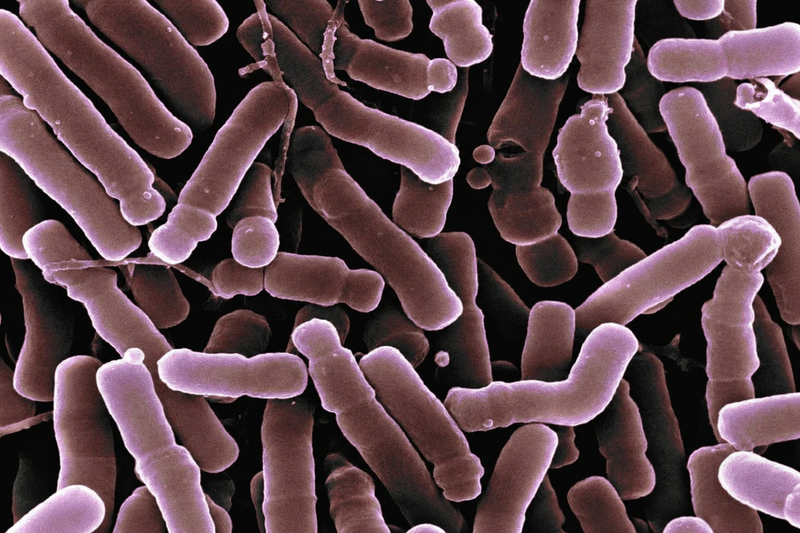
Bifidobacterium longum is a versatile Gram-positive bacterium capable of supporting a wide array of human health functions. Driven by an advanced arsenal of carbohydrate metabolism pathways and protective polysaccharides, it effortlessly optimizes the gut environment, spreading rapidly through lifelong host microbiomes and multi-strain probiotic mixtures. Benefits range from localized inflammatory bowel disorders like ulcerative colitis to broad systemic improvements, including respiratory illness reduction and pollen allergy relief. Accurate classification leverages classic laboratory biochemistry and modern tools like advanced DNA sequencing. While optimization typically requires targeted probiotic therapy for subspecies like infantis and longum, robust safety relies heavily on screening immunocompromised individuals and tracking intestinal perforation risks.
History and naming
Bifidobacteria are important (and beneficial!) colonisers of the human gut, of which Bifidobacterium longum stands out as one of the most prolific, both in terms of beneficial potential and persistence in the body. Initially isolated by Reuter in 1963, it has since undergone an expansion of its taxonomic bounds. Also described by Reuter was ‘Bifidobacterium infantis’, similarly isolated from the infant gut. Later, Matteuzzi et al. isolated Bifidobacterium suis from pig faeces. These three species were unified into a single species in 2002 by Sakata and group, falling under B. longum, with longum, infantis, and suis serving as biotypes, meaning that they were too similar to be reliably characterised from each other at the time. In 2008, Mattarelli and group showed that despite their genotypic closeness, advances in both sequencing and biochemistry now allowed for these three musketeers to assume their role as distinguishable subspecies, still falling under the same B. longum moniker. In 2015, B. longum subsp. suillum was proposed as the fourth subspecies, being isolated again from pig faeces, but has since reportedly also been isolated from the human infant gut. The last subspecies to be added was Bifidobacterium longum subsp. iuvenis (meaning ‘of child’), isolated and characterised by Modesto et. al in 2023.
Role in the Body
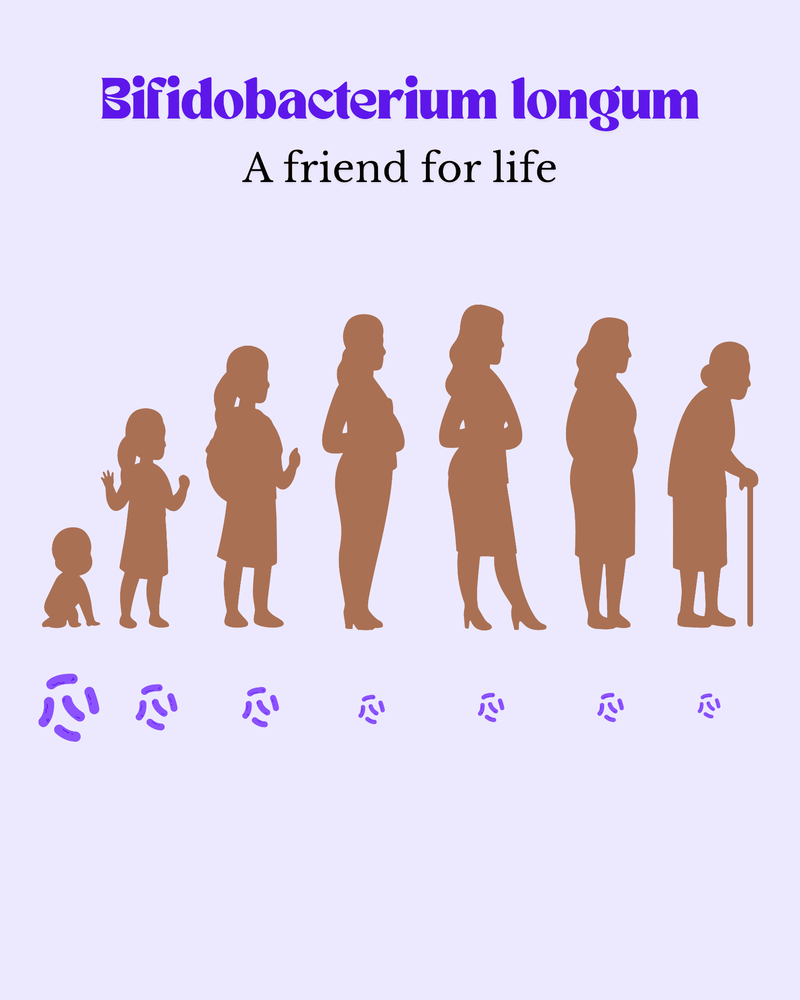
Bifidobacterium longum is famously the most predominant species in the gut of infants, but is retained even in adulthood, though its levels reduce. In fact, research now suggests that B. longum is a lifetime companion, having been isolated from the guts of the elderly and even centenarians. In the gut, it plays an important role in carbohydrate metabolism, with a genome packed with pathways that allow it to digest both animal- and plant-derived carbohydrates. It is capable of producing vital metabolites like SCFAs, which have diverse roles in overall health, and some strains produce molecules that have anti-inflammatory properties. They also help maintain the gut bacterial lining through the production of polysaccharides that protect bacteria from stressors in the gut and also facilitate communication between the bacteria themselves.
Applications
B. longum subsp. infantis is known to have multiple benefits when administered to neonates or infants. This strain has shown promise in the handling of gastroschisis, a congenital defect of the GI tract, through restoration of the gut microbiota, and may help in the prevention of infant diarrhea. However, more rigorous trials are required to confirm these effects. B. longum subspecies mixtures, along with other Bifidobacteria, have also shown promising impact in reducing childhood IBS symptoms and improving quality of life measures. Similarly, multi-strain mixtures of which longum and infantis strains were part also helped reduce ulcerative colitis relapse. It is unclear as to the individual contributions of B. longum strains, as the beneficial impacts could be due to high amounts of bacteria delivered and multiple mechanisms through which each component strain acts beneficially. B. longum BB536 also showed gut and immune health benefits when administered to healthy infants. This same strain also showed promise in reducing the duration of infection and symptoms of respiratory illnesses in toddlers. In concert with other Bifidobacteria and Lactobacilli, strains of B. longum have also been shown to positively impact skin health, reducing dermatitis scores and improving eczema rates in children.
Similarly, B. longum has several benefits when supplemented to adults, over a variety of conditions. In the GI tract, standalone or multi-strain probiotics containing B. longum strains have been shown to improve symptoms of and reduce inflammation and dysbiosis related to common bowel inflammatory disorders like ulcerative colitis and Crohn’s disease, as well as improve quality of life and gastrointestinal symptoms of irritable bowel syndrome (IBS). B. longum BB536 has also been shown to reduce pollen allergy symptoms in Japanese adults. In combination with other Bifidobacteria and Lactobacillus strains, strains of B. longum were also shown to reduce the duration of the common cold and even improve mood and cognition. B. longum lysate applied topically was also shown to improve skin hydration and reduce sensitivity.
Bifidobacterium longum may also have health benefits for the elderly, such as regulating bowel movements and improving gut microbiota and immune parameters. As with children and adults, combinations with other probiotic strains also came with benefits, such as improved cognitive function and mood.
Risks
While several clinical trials now exist showing the potential benefits of Bifidobacterium longum supplementation for various aspects of human health, larger and longer trials would help further establish the efficacy of different B. longum strains. Many trials also involve combinations of probiotics, which render the individual impacts and mechanisms of individual B. longum strains unclear. Thus, single-strain interventions also require further study. Strain-level uses must also be understood, as different subspecies and strains of this bacterium have different functionalities. Analyses of safety show that this microbe is generally safe, but long-term studies are also required to monitor outcomes. Complications of human infection caused by Bifidobacteria are rare, but the existence of isolated cases necessitates precaution by practitioners in the case of patients with underlying conditions or those immunocompromised or at risk of having intestinal perforation.
Taxonomic Classification
Domain: Bacteria
Phylum: Actinomycetota (or Actinobacteria)
Class:Actinomycetia
Order:Bifidobacteriales
Family:Bifidobacteriaceae
Genus:Bifidobacterium
Species: Bifidobacterium longum
Subspecies:Bifidobacterium longum subsp. infantis, Bifidobacterium longum subsp. iuvenis, Bifidobacterium longum subsp. longum, Bifidobacterium longum subsp. suillum, Bifidobacterium longum subsp. Suis
Microbe Profile
Gram Stain: +ve
Shape: Rod
Spore formation: No
Biofilm formation: Yes
Oxygen requirement: Anaerobic
Optimal temperature: 37°C to 42°C
Optimal pH: 6.5- 7.0
Nutrient usage: Heterofermentative
-Antara Arvind
Reference
Guo, H., Fan, M., Hou, T., Li, Y., Wang, S., Wang, X., Peng, H., Wang, M., Wu, T., & Zhang, Y. (2023). Efficacy and Safety of Bifidobacterium longum Supplementation in Infants: A Meta-Analysis of Randomized Controlled Trials. Foods, 12(24), 4451. https://doi.org/10.3390/foods12244451
Mattarelli, P., Bonaparte, C., Pot, B., & Biavati, B. (2008). Proposal to reclassify the three biotypes of Bifidobacterium longum as three subspecies: Bifidobacterium longum subsp. longum subsp. nov., Bifidobacterium longum subsp. infantis comb. nov. and Bifidobacterium longum subsp. suis comb. nov. INTERNATIONAL JOURNAL OF SYSTEMATIC AND EVOLUTIONARY MICROBIOLOGY, 58(4), 767–772. https://doi.org/10.1099/ijs.0.65319-0
Mills, S., Yang, B., Smith, G. J., Stanton, C., & Ross, R. P. (2023). Efficacy of Bifidobacterium longum alone or in multi-strain probiotic formulations during early life and beyond. Gut Microbes, 15(1). https://doi.org/10.1080/19490976.2023.2186098
Modesto, M., Ngom-Bru, C., Scarafile, D., Bruttin, A., Pruvost, S., Sarker, S. A., Ahmed, T., Sakwinska, O., Mattarelli, P., & Duboux, S. (2023). Bifidobacterium longum subsp. iuvenis subsp. nov., a novel subspecies isolated from the faeces of weaning infants. INTERNATIONAL JOURNAL OF SYSTEMATIC AND EVOLUTIONARY MICROBIOLOGY, 73(10). https://doi.org/10.1099/ijsem.0.006013
Odamaki, T., Bottacini, F., Kato, K., Mitsuyama, E., Yoshida, K., Horigome, A., Xiao, J., & Van Sinderen, D. (2018). Genomic diversity and distribution of Bifidobacterium longum subsp. longum across the human lifespan. Scientific Reports, 8(1). https://doi.org/10.1038/s41598-017-18391-x
Tena, D., Losa, C., Medina, M. J., & Sáez-Nieto, J. A. (2014). Peritonitis caused by Bifidobacterium longum: Case report and literature review. Anaerobe, 27, 27–30. https://doi.org/10.1016/j.anaerobe.2014.03.005
Zhang, Z., Hou, Q., Wang, Y., Xiang, F., & Guo, Z. (2022). Evaluation of Bacterial Diversity and Evolutionary Dynamics of Gut Bifidobacterium longum Isolates Obtained from Older Individuals in Hubei Province, China. Microbiology Spectrum, 10(1). https://doi.org/10.1128/spectrum.01442-21
Cheng, H., Liu, J., Mei, L., Liu, W., Yang, F., Ma, X., Zhang, Y., Xie, Y., Zhang, Y., & Xiong, Y. (2025). Optimization of Medium Composition for High Cell Density Culture of Bifidobacterium longum HSBL001 Using Response Surface Methodology. MicrobiologyOpen, 14(4). https://doi.org/10.1002/mbo3.70027
Chen, J., Chen, X., & Ho, C. L. (2021). Recent development of probiotic bifidobacteria for treating human diseases. Frontiers in Bioengineering and Biotechnology, 9. https://doi.org/10.3389/fbioe.2021.770248