Crafting Your Gut’s Winning Food Team: The FODMAP Approach
What is Irritable Bowel Syndrome and Why Do Certain Foods Cause Troublesome Symptoms?
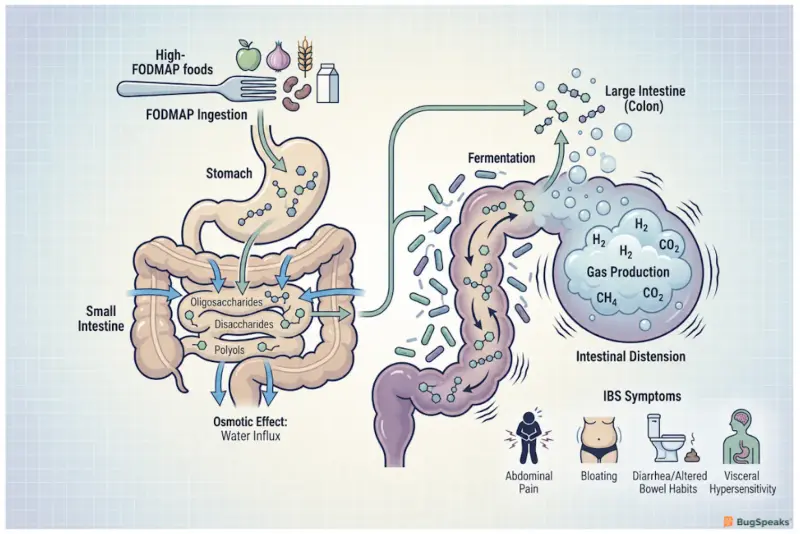
Irritable Bowel Syndrome, commonly abbreviated as IBS, is a common digestive issue where a sensitive gut overreacts to certain foods, leading to abdominal pain, bloating, and irregular bowel habitsMagge (2012). To understand why this happens, imagine your gut as an arena hosting a grand Digestive Elimination Tournament. In some people, the gut wall is highly sensitive, noticing even the smallest movements. When certain hard-to-digest food candidates, known as FODMAPs (Fermentable Oligosaccharides, Disaccharides, Monosaccharides, and Polyols), enter this space, they draw water. These foods are rapidly fermented by resident bacteria, creating excess gas that stretches your sensitive gut wallsZhang (2025).
These hard-to-digest food candidates act as competing teams inside your digestive tract, each bringing different strategies. Some players are very small molecules that easily pull water into your bowel, while others are larger chains that the body cannot break down because it lacks the necessary digestive enzymesMagge (2012). Because your small intestine cannot absorb these team members, they travel further down into the colon. Once they arrive, they meet your resident gut bacteria, who quickly feast on them, creating gas and causing uncomfortable stretching. This reaction is the core performance measure we track to see how each candidate performs in your bodyZhang (2025).
Instead of permanently banning these foods, we can use a tournament bracket to find which specific candidates your gut can handle. Many people think that certain foods are permanently good or bad, but the reality is that everyone has a unique gut team that tolerates different things. By gradually testing each carbohydrate group, we can identify the true troublemakers and keep the friendly players in your daily diet. This systematic test helps you build a personalized eating plan that keeps your stomach happy while maintaining healthy gut bacterial diversity over the long term, ensuring you do not restrict food groups unnecessarilyZhang (2025).
How Does the First Round of the Digestive Tournament Help Quiet Down a Noisy Stomach?
The first round of the tournament, which is the elimination phase, quiets down a noisy stomach by temporarily restricting all high-FODMAP food candidates from your daily dietZhang (2025). During this initial stage, you take all the troublesome, high-gas players off the field for two to six weeks. By doing this, you drastically reduce the gas production and fluid build-up in your intestines, which allows your gut lining to settle down and relax. This quiet period is essential because it stops the constant stretching of your intestinal walls and gives your digestive tract a much-needed break to recoverMagge (2012).
By keeping these highly fermentable foods restricted, we can effectively calm colonic fermentation, which is the process where bacteria break down undigested sugarsFu (2022). In a healthy gut, nearly all bacteria live in the colon, not the stomach. However, when you eat too many FODMAPs, they undergo rapid fermentation, leading to a major build-up of hydrogen and methane gases. Removing these fermentable food items starves these gas-producing bacteria, which reduces flatulence and abdominal pressure. This simple resting stage helps reset your gut, making it much easier for you to track which foods actually trigger your uncomfortable symptoms Zhang (2025).
This cooling-off phase also helps manage visceral hypersensitivity, which is a condition where gut nerves feel normal digestive processes as intense painMagge (2012). When your gut is constantly bloated and stretched by gas, its sensitive nerves become irritated and over-stimulated. By removing the food triggers that cause this bloating, your gut nerves gradually calm down and stop sending frantic distress signals to your brain. This crucial resting period lasts about four weeks, ensuring your body is completely calm before we begin the next qualification rounds where we test individual food candidates to see if they can rejoin your menuZhang (2025).
How Do the Qualification Rounds Help Identify Your Specific Gut Triggers?
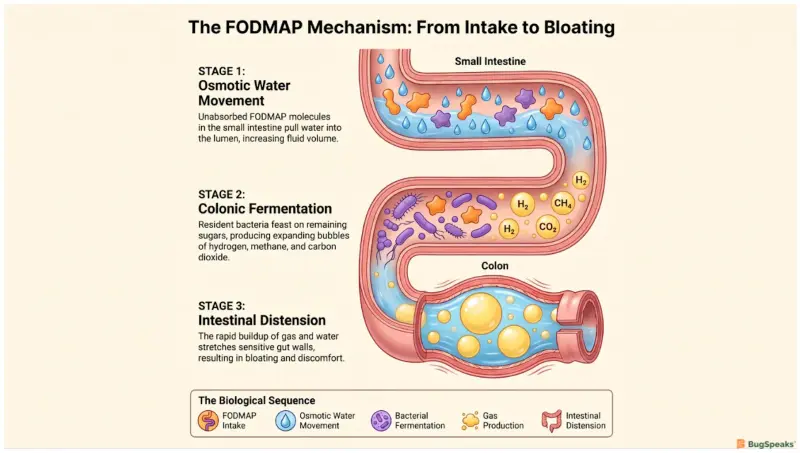
The qualification rounds, which are the reintroduction phase, help identify your specific gut triggers by testing restricted foods one by one to see how your stomach reacts to themZhang (2025). During these matches, you bring back one specific food group at a time, such as honey or milk, while keeping the rest of the candidates restricted. You consume gradually larger portions over three days to see if any digestive symptoms return. This testing process measures your body's tolerance limits, helping you discover exactly which players are friendly teammates and which ones act as troublemakers that must be benchedWhelan (2018).
Some food candidates fail their qualification match because they cause an osmotic water draw in your bowel, pulling too much fluid into the intestinesMagge (2012). This water-pulling action is typical of small sugar molecules like lactose or polyols. When these sugars cannot be absorbed, their small molecular size creates an osmotic effect that draws liquid into the large intestine, leading to watery stools or diarrheaBarrett (2010). By testing these foods in small, controlled amounts, you can find the exact point where the water draw becomes a problem, helping you set safe limits instead of banning themZhang (2025).
Other candidates might trigger problems because of fructose malabsorption, where your body lacks enough active transport proteins to absorb excess fruit sugarsMagge (2012). Fructose relies on specific carrier proteins to cross the intestinal wall, and if there are more sugars than carriers, the unabsorbed fructose travels straight to your colon. There, the colonic bacteria quickly ferment the sugar, producing gases that lead to painful flatulence and stomach cramps. Understanding this biological mechanism allows you to navigate the tournament safely, choosing suitable food alternatives that contain balanced sugar ratios to keep your gut completely symptom-free over timeZhang (2025).
How Does Hydrothermal Processing Make Tough Food Candidates Safer for Your Gut?
Hydrothermal processing, which simply means cooking foods in boiling water, makes tough food candidates safer for your gut by softening their physical structure and washing away gaseous antinutrientsKhrisanapant (2021). When you boil hard foods like beans, chickpeas, or grains, the heat breaks down their rigid cell walls. This structural softening allows your body's digestive enzymes to easily reach the nutrients inside. In addition, cooking causes many of the water-soluble gas-producing sugars, such as oligosaccharides, to leak out into the cooking water. By discarding this water, you reduce the total gas-producing power of these foods before they ever reach your stomachKhrisanapant (2021).
Boiling these plant foods also triggers starch gelatinisation, which is when starch granules absorb hot water, swell up, and soften completelyOvando-Martínez (2013). Uncooked starch is like a tightly locked box that your digestive enzymes cannot open. However, when subjected to hydrothermal heating, these starch chains unpack and relax, making them highly susceptible to amylase enzyme attack in your small intestine. This means the starch gets broken down and absorbed quickly, preventing it from traveling into the colon where it would otherwise feed gas-producing bacteria. Properly cooked starches are therefore much less likely to cause flatulence and bloatingOvando-Martínez (2013).
This simple cooking method is also highly effective at inactivating antinutrients, which are natural defense chemicals that plants use to protect themselves Khrisanapant (2021). These compounds, including lectins and enzyme inhibitors, block your digestive system from working properly and can cause severe stomach upset. Fortunately, boiling beans or oats for at least forty-five minutes deactivates these troublemakers, making the food much friendlier for your gut teamKosová (2020). Understanding how to cook these foods properly means you can enjoy a wider variety of nutritious candidates without triggering symptoms, helping you successfully pass your qualification rounds and return to a diverse dietKhrisanapant (2021).
How Does Personalization Help Build a Strong and Healthy Gut over the Long Term?
Personalization helps build a strong and healthy gut over the long term by combining all your tournament-winning foods into a diverse eating plan that supports your friendly microbesZhang (2025). Once this systematic tournament finally wraps up, you will have a complete, verified list of winners and runners-up. Rather than staying on a strict, limited diet forever, your goal is to bring back as many food candidates as possible. Eating a wide variety of plants and fibers is like training your body's defensive line, making your digestive tract much more resilient against daily stressors and preventing annoying gut flare-ups from occurringWhelan (2018).
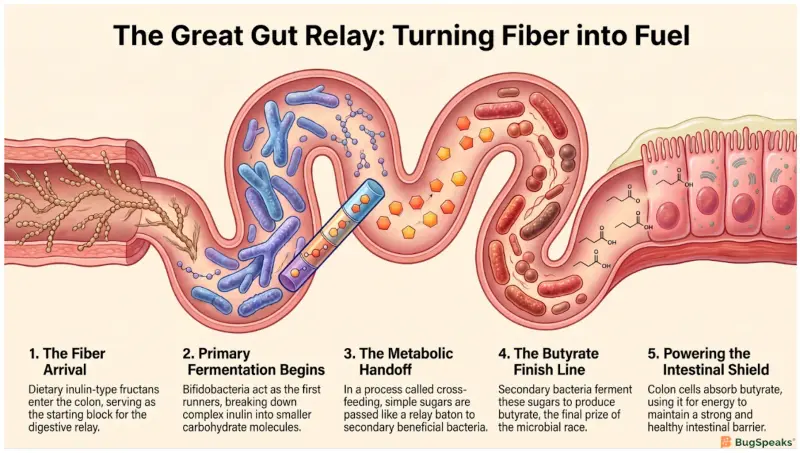
This personalized variety is crucial for nourishing your gut microbiome, which is the vast community of helpful microbes living in your large intestineFu (2022). If you stay on a restrictive elimination diet for too many weeks, you starve these friendly bacteria, causing their numbers to shrink over time. Starving your microbial team can weaken your natural gut barrier and make you more sensitive to everyday foods. By eating a wide variety of tolerated plant fibers, you provide the necessary prebiotic fuel that helps these microbes produce beneficial molecules, ensuring a balanced, thriving intestinal ecosystem that keeps your gut strongZhang (2025).
As you finalize your personalized list, you must navigate unique proteins like avenins, which are gluten-like proteins found naturally in oatsKosová (2020). While oats are generally a safe, gut-friendly carbohydrate candidate, some genetic varieties contain protein sequences that can trigger reactions in highly sensitive celiac patients. Testing oats individually during your tournament qualification rounds helps you determine if your personal gut team tolerates them. By tailoring your diet to include only the grains and fibers that your body accepts, you can maintain long-term gut health, support your microbiome, and enjoy eating without any fear Zhang (2025).
Visualize the process- https://youtu.be/njPOBqymfLo
Reference
Magge S, Lembo A. Low-FODMAP Diet for Treatment of Irritable Bowel Syndrome. Gastroenterol Hepatol (N Y). 2012 Nov;8(11):739-45. PMID: 24672410; PMCID: PMC3966170.
Zhang H, Su Q. Low-FODMAP Diet for Irritable Bowel Syndrome: Insights from Microbiome. Nutrients. 2025 Jan 31;17(3):544. doi: 10.3390/nu17030544. PMID: 39940404; PMCID: PMC11819959.
Kosová K, Leišová-Svobodová L, Dvořáček V. Oats as a Safe Alternative to Triticeae Cereals for People Suffering from Celiac Disease? A Review. Plant Foods Hum Nutr. 2020 Jun;75(2):131-141. doi: 10.1007/s11130-020-00800-8. PMID: 32133597.
Fu J, Zheng Y, Gao Y, Xu W. Dietary Fiber Intake and Gut Microbiota in Human Health. Microorganisms. 2022 Dec 18;10(12):2507. doi: 10.3390/microorganisms10122507. PMID: 36557760; PMCID: PMC9787832.
Khrisanapant P, Leong SY, Kebede B, Oey I. Effects of Hydrothermal Processing Duration on the Texture, Starch and Protein In Vitro Digestibility of Cowpeas, Chickpeas and Kidney Beans. Foods. 2021 Jun 18;10(6):1415. doi: 10.3390/foods10061415. PMID: 34207291; PMCID: PMC8234845