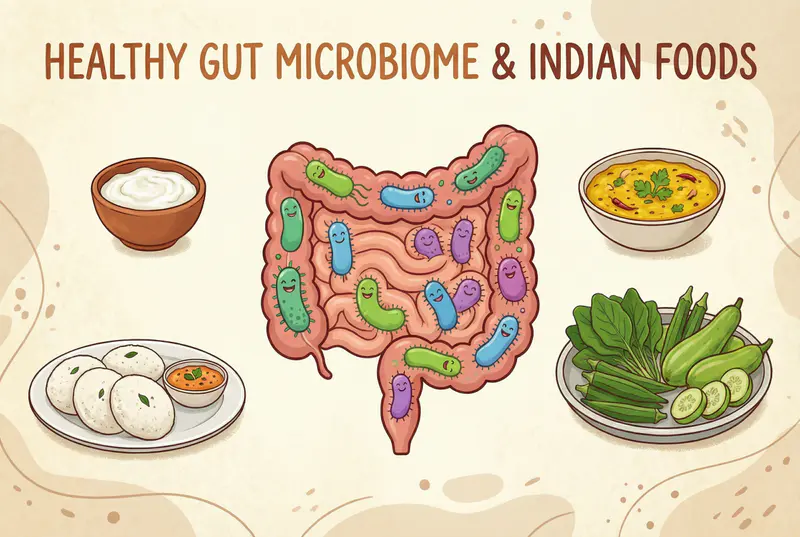
1. What is the Gut-Food Connection ?
Your diet can influence your gut microbes significantly. Traditional fermented Indian dishes are excellent healthy gut foods that act as the perfect fertilizer for your good bacteria. Enjoying a daily glass of chaas helps maintain balance and keeps your inner garden blooming and happy.
2. You Ate Lunch — But Who Got Fed First?
Picture this: you just finished a hearty plate of kidney beans and rice. You feel satisfied, but did you know you actually fed your microbes first?. Humans carry about 38 trillion bacteria inside them, which is roughly equal to our human cells. These tiny residents determine your overall digestive health. Whatever you eat changes your gut bacteria incredibly fast, sometimes within just one day. Recent research confirms that your choice of healthy gut foods decides which microbes survive and thriveTandon et al. 2022.
3. How Healthy Gut Foods Actually Work?
Think of your gut as a beautiful, thriving garden. The gut itself is the soil, your friendly bacteria are the plants, and fiber is the high-quality fertilizer. When fiber reaches your large intestine undigested, your bacteria break it down. They turn this fiber into helpful protective chemicals called short-chain fatty acids. Your good bacteria work like roots soaking up this fertilizer to produce beautiful blooms. Specifically, a compound called butyrate provides up to 70% of the energy your colon cells need to stay strongHou et al. 2022. It strengthens the gut barrier, keeping weeds and toxins out of your bloodstream. Eating fiber-rich meals like lentils and rice daily keeps your microbial garden producing these essential nutrients.
4. How Was the Traditional Meal a Gut Health Prescription?
While the world is just discovering fermented foods, Indian kitchens have utilized these techniques for centuries. The Indian gut is actually biologically unique, often dominated by a type of bacteria called Prevotella that thrives on the complex carbohydrates and plant fibers found in our local meals. A trial looking at high-fermented diets found they increase gut microbial diversity and reduce inflammatory markersWastyk et al. 2021.
Here are classic healthy gut foods and their helpful bacteria:
Curd (Dahi): Contains beneficial cultures that support digestion.
Idli and Dosa: Packed with natural microbes from fermented rice and lentil batter, these are incredibly light on the gut and improve digestive health.
Chaas (Buttermilk): Offers natural bacterial support for the gut lining and has a wonderful calming effect.
Ragi and Millets: Prebiotic fiber from these ancient grains acts as raw food to feed your internal beneficial bugs like Prevotella.
Long-term traditional eating habits strongly impact your gut's bacterial health and keep your unique garden flourishing.
5. WhatHappens When Packaged Food Replaces the Traditional Plate?
Replacing homemade meals with instant noodles or ultra-processed snacks harms this delicate bacterial balance. Modern diets high in sugar and fat alter good bacteria and reduce our gut bacterial diversity incredibly fast. This loss of healthy bugs can contribute to serious chronic conditions like obesity. Processed savory snacks simply lack the fiber our garden needs to thrive.
6.What Are Five Healthy Gut Foods to Add Today?
Add one fermented food: Include fresh curd or a glass of chaas with every meal.
Diverse Plants: Mix leafy greens and various lentils to aim for 30 different plants weekly.
Whole Grains: Choose grains like ragi, pearl millet, or sorghum, which provide resistant starches for your microbes.
Limit Packaged Snacks: Follow the 80/20 rule for treats to keep your garden running smoothly.
Stay Hydrated: Drink plenty of water to support the delicate gut lining.
7. Why Does Your Unique Gut Need a Unique Diet?
These are general guidelines, but every gut is different. Because the Indian gut is uniquely adapted to its own geography, we shouldn't just copy Western health advice. A microbiome test like BugSpeaks analyzes your specific gut bacteria and provides personalized dietary and supplement recommendations based on Indian microbiome data. Curious what your unique gut bacteria need? Start with a BugSpeaks test at bugspeaks.com.
Visualize the process- https://youtu.be/oEcPOLcPH3Q