Is the internal world turning into a gray wasteland?
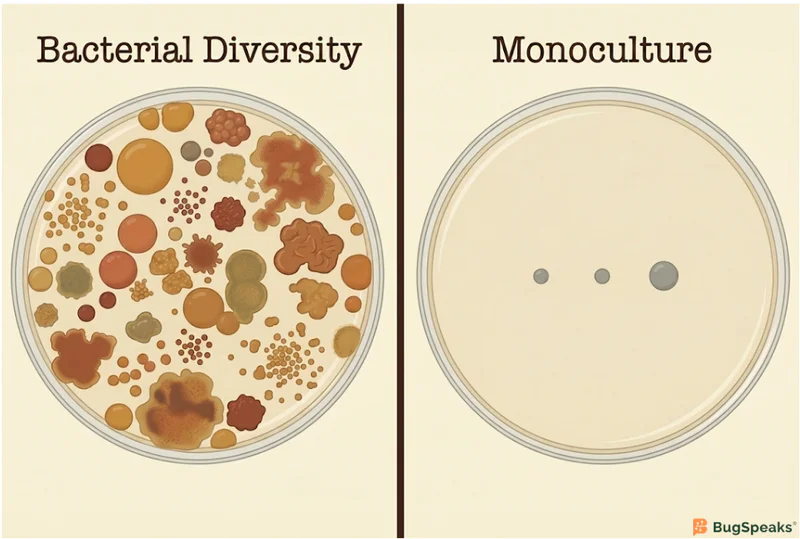
The internal world of the body is designed to be a vibrant, technicolor Biodiversity Reserve, but for many people today, it is slowly turning into a boring, gray wasteland. This "wasteland" effect is the result of modern dietary habits that prioritize convenience over biological variety. To understand your health, you must first understand that your Intestines are home to trillions of tiny, living creatures. When this reserve is healthy and happy, it looks like a beautiful garden filled with thousands of different species of "Worker Bees" that keep everything clean, strong, and full of life.
However, modern life has brought a destructive force into the park known as an Invasive Monoculture. This is the scientific equivalent of the "Western Diet," which is packed with gray, processed sugars and heavy, artificial fats. These foods act like buckets of thick, gray paint being dumped over a lush forest. Vásquez and a team of researchers (2026) published a massive report showing that this gray food doesn't just make the plate look dull; it actually breaks the physical walls of the gut.
When the Intestines turn gray, the native "flowers"—our beneficial bacteria—start to starve and disappear. This leads to a dangerous state called Dysbiosis. Vásquez et al. (2026) discovered that this "graying" of the body sends the whole system into a state of "High Alert." It is as if a fire alarm is constantly ringing inside the building, causing tiny Internal Firesthat can lead to chronic illness later in life. To fix this, we must think like a "Park Ranger"—an expert who carefully protects the borders of the reserve and makes sure the rainbow of life stays vibrant and safe.
Why do the Worker Bees need a rainbow to do their jobs?
The "Worker Bees" inside the Intestines cannot stay strong if they only have gray food; they absolutely crave the "chemical pollen" found inside bright, colorful plants. These Worker Bees are mostly a friendly group of bacteria called Bifidobacterium. Just like real bees in a park, these tiny friends must gather special fuel to survive and reproduce. Their favorite fuel is found in Dietary Polyphenols.
Toderescu and a team of scientists (2026) looked at twenty-two different clinical tests to see how these colorful "wildflowers" helped the bees. They found that when people eat a wide variety of colors, the population of Bifidobacterium grows very large and very strong. These bees take the plant "pollen" and transform it into Short-Chain Fatty Acids. These fatty acids act like biological "bricks" that the bees use to build an unbreakable fence around the reserve, keeping the "gray" invaders from leaking into your blood and causing exhaustion.

The Elite Wall-Tending Crew:
Working alongside the bees is an Elite Wall-Tending Crew called Akkermansia. While the bees gather pollen, these specialized rangers live directly on the borders of the reserve, using the fuel from dark berries to keep the "City Wall" thick, slippery, and impossible for gray invaders to climb. Akkermansia muciniphila is often called a Keystone Species. It is unique because it lives in the mucus layer of the gut. By "grazing" on the mucus, it actually signals your body to produce more fresh, healthy mucus, which thickens the barrier. Research (including the 2026 trends) shows that pigments from red and purple fruits are its favorite "specialized fuel," making it a perfect fit for your Rainbow Reserve!
This relationship is a simple trade: we provide the colorful "flowers" on the plate, and in return, the Worker Bees and Wall-Tenders provide the "honey"—the protection and energy the body needs to stay healthy. Toderescu et al. (2026)measured this using a special score and found a very high biological result of 0.81. This proves that adding a variety of colors to every meal is one of the most effective ways to support your internal workforce. When these bees are thriving, they also help with Bioavailability, ensuring every nutrient reaches the parts of the body that need it most.
Table 1: The Reserve Audit - Gray vs. Rainbow
What is the Red Shield and how does it protect the walls?
The "Red Shield" is a biochemical firewall made from the brightest red and purple pigments in nature that acts like a suit of armor for the intestines. When gray junk food attacks the body, it creates Internal Fires. These fires can burn through the protective skin of the gut. To stop this, the reserve needs a constant supply of Anthocyanins.
Vásquez et al. (2026) discovered that these red pigments act like elite security guards that form a "Red Shield." This shield tells the body's fire alarms to stop ringing, which helps put out the internal heat. Even more amazing, this shield can find cells that have become "broken" or "corrupted" by bad food. Instead of letting them stay and cause trouble, the shield helps them use a Safety Exit. By eating deep red raspberries, purple grapes, or red cabbage, you are essentially "hiring" a specialized security team to walk the borders of the Intestines and neutralize threats before they can spread.
The Alchemist’s Workshop (Biotransformation)
Remember, the Red Shield isn't just sitting inside a raspberry; your Worker Bees have to "forge" it. Most plant colors are locked away in a form your human body cannot absorb on its own. Your microbes take these raw pigments into their Alchemist’s Workshop and perform a magical process called Biotransformation. They "eat" the colors and transform them into brand-new, powerful medicines known as Secondary Metabolitesthat your body can finally use to repair its cells and put out internal fires.
How does the Purple Forest send "Happy Mail" to the brain?
The "Purple Forest" is a zone of dark-colored fruits in the gut that uses a "communication vine" to send happy and clear signals directly to the brain. This connection is officially called the Gut-Brain Axis. When the "Purple Forest" is full of healthy berries, the "mail" sent to the brain is full of good news. However, if the forest is cut down and replaced with gray food, the telephone line gets filled with "Static Noise" that makes the mind feel foggy or confused.
do Rosario and a team of researchers (2026) tested this connection by giving people deep purple blackcurrant extracts for twenty-four weeks. They proved that these purple pigments are Neuroprotective. Keeping a "Purple Forest" in your intestines is like having an insurance policy for your mind. These pigments jump into the blood and act as antioxidants, ensuring the "telephone line" stays clear of interference.
Why is Black Rice the best battery for the whole system?
Black Rice acts like a "long-life battery" that provides steady power to the brain while also putting out "internal fires" in the intestines. Most people are used to white rice, but white rice is like a quick-burning piece of paper—it gives a fast flash of energy but then burns out and leaves gray ash behind. Black Rice is different; it is like a high-quality log that burns steadily for a long time. The dark color of the rice comes from a massive amount of the same "armor" pigments found in the Red Shield.
Mekhora and a team of scientists (2026) tested this on a group of adults. After only eight days of eating black rice, the people showed a big boost in Verbal Memory.This happened because the black rice lowered a specific fire alarm in the blood by a significant amount. By turning off this fire alarm, the brain was able to work much faster and more clearly. By choosing Black Rice instead of gray, processed starches, you are giving your Worker Bees a better type of fuel that lasts all day and keeps the reserve running smoothly.
Table 2: The Rainbow Science Log (2026 Findings)
The Ranger's Field Guide: Advanced Secrets of the Microbiome Reserve

Maintaining a world-class Biodiversity Reserve isn't just about avoiding "gray" foods; it's about mastering the art of Biological Synergy. A top-tier Park Ranger knows that a resilient gut isn't built by a single species, but by an integrated team. This starts with the Elite Wall-Tending Crew (Akkermansia), specialized rangers who use dark pigments to weather-proof the intestinal barrier.
However, the real magic happens in the Alchemist’s Workshop. Your Worker Bees must perform Biotransformation, "eating" the colors to forge Secondary Metabolites like Urolithin A, which act as the actual medicine for your cells. To make this workshop successful, you need The Soil and the Seed. The fiber in your lentils acts as the rich, steady "soil" that holds the colorful "pollen" in place. Without this fiber scaffold, the colors would zip through the park too fast for the bees to catch them. Together, they create a synergy: the fiber provides the home (the soil), and the polyphenols provide the life (the seed).
The final secret to a thriving ecosystem is Rotational Planting. Don't just plant the same red rose every day. To have a world-class reserve, you need to aim for 30 different types of plants every week. By practicing Rotational Planting—including various spices, seeds, and different colored grains—you ensure that every specialized unit of your Worker Bee army has the exact, specific fuel it needs to thrive. This diversity is the only way to reach true Homeostasis [A steady state of internal physical and chemical balance], ensuring your internal world remains a technicolor masterpiece that protects your health for a lifetime.
Visualize the process - https://youtu.be/TNaqAbD_oro