Gluten Sensitivity and Gut Health: What You Need to Know
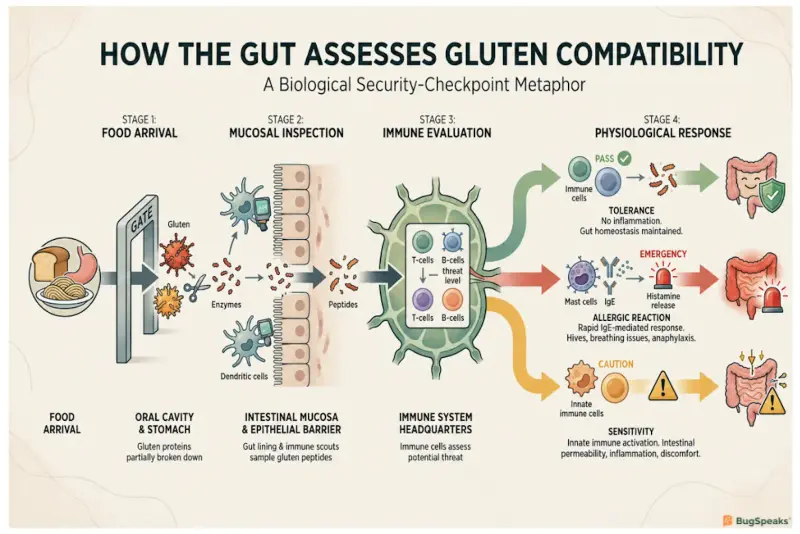
How does the gut assess the compatibility of gluten?
The gut checks if gluten is safe by using its protective lining to scan food and talk to the immune system [Cardoso-Silva et al. (2019)]. You can think of the gut as a busy security gate at a fun amusement park. It has a thin, protective lining called the mucosa that acts as our body's compatibility assessment interface [Cardoso-Silva et al. (2019)]. When different foods arrive as biological inputs, this interface decides what can safely enter our body. The gluten in wheat is a very tough protein that is hard to break down. Guard cells sample these inputs and show them to our immune system, which is our response-monitoring network [Cardoso-Silva et al. (2019)].
In most people, the response-monitoring network identifies these inputs as safe, letting them pass without any trouble. But sometimes, the assessment gate has a massive false alarm. In wheat allergy, the response-monitoring network incorrectly flags the wheat as an immediate and dangerous threat [Cardoso-Silva et al. (2019)]. The system deploys an Immunoglobulin E (IgE)-mediated alert, which is like a loud fire drill [Cardoso-Silva et al. (2019)]. This makes specialized cells release itchy chemicals, causing rapid compatibility indicators or symptoms such as red skin rashes, breathing trouble, or sudden tummy aches. This is a rapid-onset, hyper-reactive network mistake, rather than a slow, physical breaking of the gate itself. This quick flare-up can be very scary but usually goes away.
Another distinct type of gate confusion is non-celiac wheat sensitivity (NCWS), which is like a slow traffic jam. In this scenario, the classical adaptive immune responses are not triggered, so there are no specific antibodies making mistakes [Cardoso-Silva et al. (2019)]. Instead, the innate arm of our response-monitoring network becomes highly agitated. Research suggests that an imbalance in our microbiome, the local bacterial adaptation ecosystem, weakens the assessment interface [Cardoso-Silva et al. (2019)]. This lets pieces leak through and trigger low-grade inflammation, generating compatibility indicators like severe bloating, head pain, and profound fatigue that vanish completely and quickly when this specific wheat input is removed from our daily meals.
Why do some response-monitoring networks severely reject this dietary component?
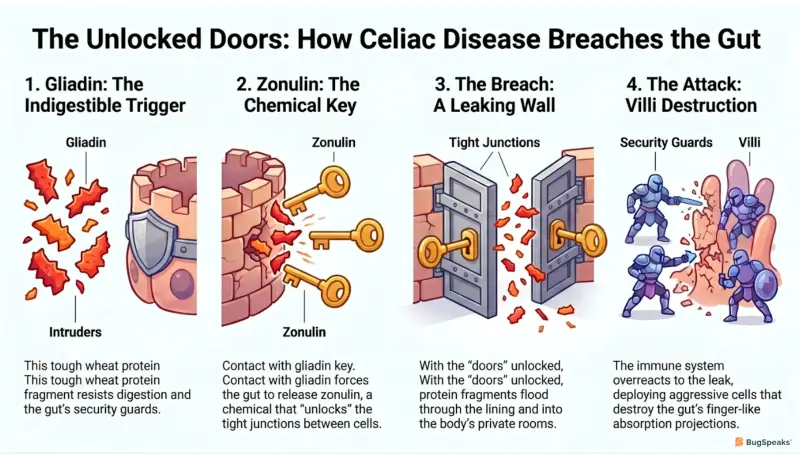
Some immune response-monitoring networks severely reject this dietary component because a genetic mistake causes the system to attack its own cells. This severe system failure is diagnosed as celiac disease, a chronic autoimmune disorder [Cardoso-Silva et al. (2019)]. It only activates in individuals carrying specific genetic keys called the Human Leukocyte Antigen (HLA)-DQ2 or HLA-DQ8 haplotypes [Cardoso-Silva et al. (2019)]. When wheat arrives at our gate, a protein fraction called gliadin resists being chopped up by digestive enzymes because its molecular structure is incredibly tough and dense [Cardoso-Silva et al. (2019)]. These undigested protein pieces hang around, blocking the path, and deeply irritate the local security guards.
As these undigested pieces touch the lining, they force the gate to release a chemical called zonulin. Zonulin acts as a localized unlock command, opening the tight doors that keep the cells of our wall sealed together [Cardoso-Silva et al. (2019)]. These doors are known as the tight junctions, and they normally act as secure biochemical seals [Cardoso-Silva et al. (2019)]. With these seals loosened, the compatibility assessment interface leaks, letting the protein fragments flood deeply inside the body. Once inside, an enzyme called Tissue Transglutaminase 2 (TG2) chemically changes the protein pieces, making them super visible and highly attractive to the genetic HLA receptors.
This chemical change is what permanently trips the severe alarms of our response-monitoring network. The network deploys aggressive cells called intraepithelial lymphocytes (IELs), which flood the area with a toxic danger signal called Interleukin-15 (IL-15) [Cardoso-Silva et al. (2019)]. This signal commands our own cells to destroy the finger-like projections of our lining, crippling our ability to absorb food. The only way to stop this is a strict gluten-free diet [Poslt Königová et al. (2023)]. By removing this gluten trigger completely, the network slowly powers down its alarm system, allowing the gut to rebuild its damaged doors and restore its tight junctions [Cardoso-Silva et al. (2019)].
Can removing this dietary component disrupt the adaptation ecosystem?
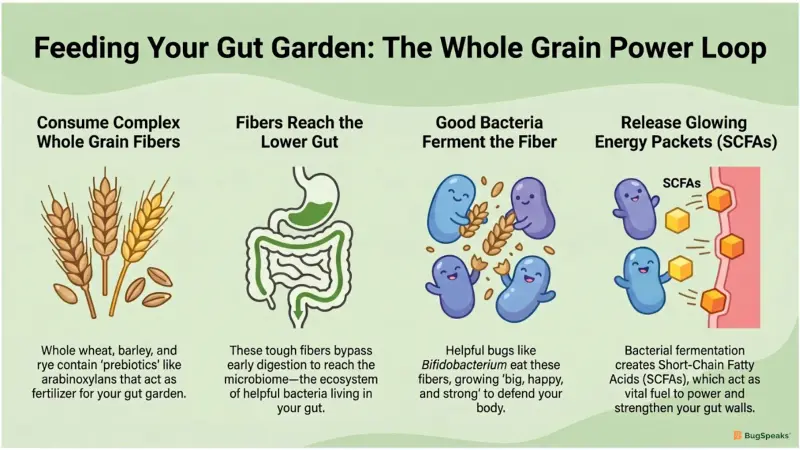
Removing this specific dietary component can disrupt the adaptation ecosystem because gluten-containing grains provide critical prebiotic fuel that sustains diverse and beneficial microbial populations. The microbiome functions as a highly dynamic adaptation ecosystem living right beside our compatibility assessment interface. To stay healthy and strong, this bacterial ecosystem must eat complex, indigestible foods called dietary fiber. Whole grains like wheat, barley, and rye are incredibly rich in these essential fibers, including resistant starch and complex non-starch sugars called arabinoxylans (AX) [Seal et al. (2021)]. These fibers bypass early digestion in our stomach to safely reach and feed this busy bacterial ecosystem down below.
When people without any celiac disease unnecessarily go on a gluten-free diet, they accidentally starve their bacterial ecosystem. Clinical studies show that eating whole wheat acts as a powerful prebiotic, which is like healthy fertilizer that feeds our inner garden [Costabile et al. (2007)]. This prebiotic fuel helps bacteria like Bifidobacterium and Lactobacillus grow big, happy, and strong. These friendly bacteria work together to defend our body from bad bugs. Cutting off their regular food supply makes the helpful bacterial population drop quickly, which weakens the natural defenses of our body over time. This makes us more vulnerable to tummy bugs.
When our good bacteria eat these whole grains, they create fantastic health gifts called Short-Chain Fatty Acids (SCFAs) Seal et al. (2021)]. These SCFAs act as vital energy fuel, feeding the cells of our gut wall and keeping them healthy and strong. Whole grains also deliver a powerful protective shield called ferulic acid, which the bacteria slowly release into our blood over many hours. Commercial gluten-free substitute foods are highly processed and lack these complex fiber networks, meaning they fail to feed our helpful bacteria or provide these healthy antioxidant shields [Defeudis et al. (2023)].
Does avoiding this input automatically improve metabolic processing?
Avoiding this dietary input does not automatically improve metabolic processing and can sometimes make healthy people gain weight or lose energy. Many people believe that a gluten-free diet is a magic shortcut to perfect health and fitness [Defeudis et al. (2023)]. However, unnecessarily cutting out whole grains means replacing them with highly processed foods that have a very low Carbohydrate Quality Index (CQI) [Seal et al. (2021)]. These manufactured foods are stripped of natural fiber, digest way too fast, and fail to provide stable, long-lasting energy [Seal et al. (2021)]. How fast our food is digested determines our metabolic health and overall energy levels.
Natural, intact whole grains have a very low Glycemic Index (GI) because their dense fiber networks slow down digestion, releasing glucose into the blood slowly and steadily [Seal et al. (2021)]. But highly processed gluten-free alternatives completely shatter this natural balance, flooding the body with fast, simple sugars. This causes violent spikes in our blood sugar and forces our bodies to pump out massive amounts of insulin to clean it up. Over time, this chronic metabolic stress can lead to unhealthy weight gain, high blood pressure, and a severe processing failure called Type 2 Diabetes (T2D) [Defeudis et al. (2023); Seal et al. (2021)].
For people with diagnosed celiac disease, avoiding gluten heals their gut and helps improve healthy cholesterol indicators like High-Density Lipoprotein (HDL) [Defeudis et al. (2023)]. But for healthy people, eating refined gluten-free products can actually increase waist size and raise dangerous blood fats called triglycerides [Defeudis et al. (2023)]. This can trigger a dangerous cluster of health problems called Metabolic Syndrome (MS) [Defeudis et al. (2023)]. Large scientific studies show that eating natural whole grains is highly protective and beneficial for our heart and metabolism [Seal et al. (2021)]. Unnecessarily using a highly restrictive diet can damage these natural, healthy processing pathways, doing more harm than good.
How can the assessment interface be protected during necessary dietary restrictions?
The compatibility assessment interface can be protected during necessary dietary restrictions by eating a wide variety of safe, high-quality whole grains and actively taking missing vitamins. For people with celiac disease, avoiding even a microscopic speck of gluten is a strict, lifelong necessity. Even a tiny bit of cross-contamination can trigger a hidden, destructive immune attack that damages their protective mucosa and keeps the interface from healing properly [Poslt Königová et al. (2023)]. Because this strict diet removes vast categories of standard foods, our gut is at constant risk of malnutrition if secondary nutritional inputs are not managed with extreme care and precision.
One vital structural protector that frequently goes missing on this restricted diet is Vitamin D. This essential hormone plays a big double role: it helps build strong, healthy bones and directly keeps our gut wall strong by supporting the tight junctions [Defeudis et al. (2023)]. Celiac patients strictly avoiding standard wheat grains often develop low levels of Vitamin D because celiac bowel damage makes normal nutrient absorption very difficult, and gluten-free processed foods rarely contain it at all [Defeudis et al. (2023)]. Actively monitoring and supplementing this hormone is essential to keep the physical wall and the response-monitoring network balanced and healthy [Defeudis et al. (2023)].
To support their bacterial ecosystem, celiac patients should eat naturally safe, high-fiber grains such as quinoa, amaranth, and buckwheat [Seal et al. (2021)]. These safe alternative grains deliver healthy complex fibers without triggering any dangerous immune alarms. Staying on this strict diet also takes a big emotional toll, often causing intense lifestyle stress and feelings of social isolation [Poslt Königová et al. (2023)]. Research shows that counseling support, such as Cognitive Behavioral Therapy (CBT), helps patients manage this stress, stay happy, and stick to their diet [Poslt Königová et al. (2023)]. When physical gut healing is paired with emotional support, the compatibility assessment interface can fully stabilize and heal.
-Varsha V
Visualize the process- https://youtu.be/hBJkXPesY_s
Reference
Seal CJ, Courtin CM, Venema K, deVries J. Health benefits of whole grain: Effects on dietary carbohydrate quality, the gut microbiome and consequences of processing. Compr Rev Food Sci Food Saf. 2021;20:2742–2768. https://doi.org/10.1111/1541-4337.12728
Cardoso-Silva, D., Delbue, D., Itzlinger, A., Moerkens, R., Withoff, S., Branchi, F., & Schumann, M. (2019). Intestinal Barrier Function in Gluten-Related Disorders. Nutrients, 11(10), 2325. https://doi.org/10.3390/nu11102325
Poslt Königová M, Sebalo Vňuková M, Řehořková P, Anders M and Ptáček R (2023) The effectiveness of gluten-free dietary interventions: A systematic review. Front. Psychol. 14:1107022. doi: 10.3389/fpsyg.2023.1107022
Costabile A, Klinder A, Fava F, et al. Whole-grain wheat breakfast cereal has a prebiotic effect on the human gut microbiota: a double-blind, placebo-controlled, crossover study. British Journal of Nutrition. 2008;99(1):110-120. doi:10.1017/S0007114507793923
Defeudis, G., Massari, M. C., Terrana, G., Coppola, L., Napoli, N., & Migliaccio, S. (2023). Gluten-Free Diet and Metabolic Syndrome: Could Be a Not Benevolent Encounter? Nutrients, 15(3), 627. https://doi.org/10.3390/nu15030627