# Glutamine for Gut Health: The Science Behind Gut Repair
Author: Varsha V
Author URL: https://www.bugspeaks.com/blog/author/varsha-v
Published: 2026-08-25
Category: Diet and Supplements
Category URL: https://www.bugspeaks.com/blog/category/diet-and-supplements
Meta Title: Glutamine for Gut Health: Science of Gut Repair | BugSpeaks
Meta Description: Explore glutamine for gut health and gut repair, from cellular fuel to barrier support. Learn the science behind glutamine and discover its potential benefits.
Tags: Glutamine, Gut Repair
Tag URLs: Glutamine (https://www.bugspeaks.com/blog/tag/glutamine), Gut Repair (https://www.bugspeaks.com/blog/tag/gut-repair)
URL: https://www.bugspeaks.com/blog/glutamine-gut-health-gut-repair
## Why Is Glutamine Described as the Primary Fuel for Your Gut Lining?
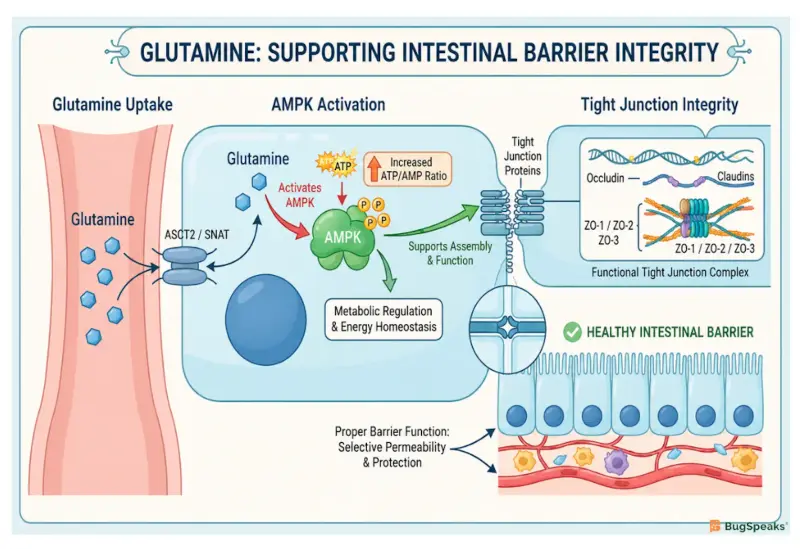
Glutamine is the favorite food and primary fuel for your [gut](https://www.bugspeaks.com/blog/vitamin-d-gut-health-probiotics) lining cells because it provides the instant cellular fuel they need to rebuild themselves and keep your gut strong. In our cellular energy economy, the microscopic cells that line your stomach and intestines are called enterocytes. These tiny workers are very busy because they form the main wall that protects your body from bad germs and digests your food. Because your gut wall is a busy, high-turnover tissue, these cells are replaced every 4-5 days. This means your gut lining needs a steady stream of fresh resources to power its growth [(Kim and Kim,](https://www.ncbi.nlm.nih.gov/pmc/articles/PMC5454963/) [2017)](https://www.ncbi.nlm.nih.gov/pmc/articles/PMC5454963/).
Most of the cells in your body like to eat sugar for energy, but your gut lining cells have a special [biological](https://www.bugspeaks.com/blog/probiotics-antibiotics-gut-health) preference for glutamine fuel. To turn this fuel into power, your cells use a special pathway called glutaminolysis, which happens inside their tiny energy factories [Cruzat et al. (2018)](https://www.ncbi.nlm.nih.gov/pmc/articles/PMC6266414/). Through this process, glutamine is broken down to enter a metabolic loop called the tricarboxylic acid cycle, or TCA cycle. This cycle burns the fuel and produces adenosine triphosphate, or ATP, which is the tiny energy coin cells spend to do their daily jobs [Cruzat et al. (2018)](https://www.ncbi.nlm.nih.gov/pmc/articles/PMC6266414/).
Besides making energy coins, burning this fuel provides your cells with the building blocks they need to make new genetic instructions. These instructions are called Deoxyribonucleic Acid, which we call DNA, and Ribonucleic Acid, which we call RNA. When your cells divide to make new gut lining, they need lots of DNA and RNA, which they cannot build without the nitrogen and carbon from glutamine [Cruzat et al. (2018)](https://www.ncbi.nlm.nih.gov/pmc/articles/PMC6266414/). Since your gut lining cannot make this fuel on its own, it relies on your blood to deliver it [Rao and Samak (2012)](https://www.ncbi.nlm.nih.gov/pmc/articles/PMC4369670/). This makes your gut lining very sensitive to your body's overall fuel supplies.
**Enterocytes**\- Specialized cells that make up the single-cell layer of the intestinal lining, responsible for absorption and barrier defense.
**Glutaminolysis**\- The multi-step metabolic pathway that breaks down glutamine into glutamate and energy intermediates.
**Tricarboxylic Acid Cycle**\- A foundational series of chemical reactions used by cells to oxidize fuels and generate metabolic precursors.
**Adenosine Triphosphate**\- The primary molecular energy currency used to power cellular operations and maintain active biochemical processes.
**Deoxyribonucleic Acid**\- The molecular blueprint (DNA) containing the genetic instructions required for cell growth, division, and function, synthesized using carbon and nitrogen atoms derived from glutamine.
**Ribonucleic Acid**\- The molecular messenger (RNA) that translates genetic instructions to build proteins within cells, requiring nucleotide precursors made from glutamine's carbon and nitrogen during cell division.
## How Does the Gut Lining Manage Its Energy Budget Under Stress?
During times of severe stress or sickness, your body's energy budget changes completely because competing consumers like immune cells and the liver use up your glutamine fuel. Normally, your muscles act as a main storage tank, keeping a steady supply of this fuel in your blood [Cruzat et al. (2018)](https://www.ncbi.nlm.nih.gov/pmc/articles/PMC6266414/). But when you get very sick or hurt, your body enters a stressful hypercatabolic state. Your body's demand for fuel is so high that your muscles must quickly break down their own proteins to release glutamine, which can make you feel weak if it goes on for too long [Kim and Kim (2017)](https://www.ncbi.nlm.nih.gov/pmc/articles/PMC5454963/).
While your muscles are trying to supply more fuel, your immune system becomes an aggressive competing consumer that grabs the resource first. Your immune system has active defender cells like lymphocytes, neutrophils, and macrophages, which use glutamine even faster than glucose to power their fight against germs [Cruzat et al. (2018)](https://www.ncbi.nlm.nih.gov/pmc/articles/PMC6266414/). As these busy defenders use up your body's circulating supplies, blood glutamine levels drop very low, causing a deficit called hypoglutaminemia [Cruzat et al. (2018)](https://www.ncbi.nlm.nih.gov/pmc/articles/PMC6266414/). This leaves your body with a severe fuel shortage, meaning there is less energy available to support other tissues like your gut wall.
To make matters worse, your liver also switches roles during stress, moving from a helper that produces fuel to a massive consumer. The liver begins grabbing circulating glutamine from your blood to make glucose through a process called gluconeogenesis, which helps keep your brain fueled during an emergency [Cruzat et al. (2018)](https://www.ncbi.nlm.nih.gov/pmc/articles/PMC6266414/). This double drain by immune cells and the liver means the energy supply lines to your gut lining are cut off. Without its favorite fuel, your gut wall cannot get the daily resources it needs to stay [healthy](https://www.bugspeaks.com/blog/kombucha-probiotics-gut-health) and strong under high demand [Kim and Kim (2017)](https://www.ncbi.nlm.nih.gov/pmc/articles/PMC5454963/).
**Economy Parameter**
**Biological Concept**
**Health State (Balanced Economy)**
**Stress/Illness State (Hypercatabolic Crisis)**
Primary Fuel Source
Glutamine
Maintained in stable reserves in skeletal muscle (~50–60% of amino acid pool) [Cruzat et al. (2018)](https://www.ncbi.nlm.nih.gov/pmc/articles/PMC6266414/)
Mobilized in massive quantities; muscle reserves drop up to 80% to fuel consumers [Cruzat et al. (2018)](https://www.ncbi.nlm.nih.gov/pmc/articles/PMC6266414/)
Core Consumers
Intestinal Epithelial Cells
Consume ~30% of total fuel to power a 4–5 day cell turnover cycle [Kim and Kim (2017)](https://www.ncbi.nlm.nih.gov/pmc/articles/PMC5454963/)
Face fuel shortages; structure collapses (villous atrophy) if demand is unmet [Rao and Samak (2012)](https://www.ncbi.nlm.nih.gov/pmc/articles/PMC4369670/)
Competing Consumers
Immune Cells (Leukocytes)
Consume fuel at standard baseline rates for immune surveillance [Cruzat et al. (2018)](https://www.ncbi.nlm.nih.gov/pmc/articles/PMC6266414/)
Demand rises exponentially, consuming fuel at rates equal to or greater than glucose [Cruzat et al. (2018)](https://www.ncbi.nlm.nih.gov/pmc/articles/PMC6266414/)
Resource Supply Line
Supplementation
Not required; standard diet provides daily reserves [Cruzat et al. (2018)](https://www.ncbi.nlm.nih.gov/pmc/articles/PMC6266414/)
Essential additional resource to prevent deficit-induced tissue breakdown [Kim and Kim (2017)](https://www.ncbi.nlm.nih.gov/pmc/articles/PMC5454963/)
**Hypercatabolic State**\- A metabolic crisis triggered by stress or injury where the body rapidly breaks down its own muscle proteins to release energy resources.
**Hypoglutaminemia**\- A clinical condition of severe glutamine depletion in the bloodstream, falling below the safe threshold required for immune and gut health.
**Lymphocytes**\- A class of white blood cells that act as key immune system defenders, which utilize glutamine at exceptionally high rates to support their multiplication and cytokine production during infections or stress.
**Neutrophils**\- Highly active white blood cells that are the first responders to infections, consuming glutamine at the highest rates among leukocytes to power pathogen destruction and generate protective superoxide molecules.
**Macrophages**\- Large immune cells responsible for engulfing pathogens, which rely on glutamine to produce protective nitric oxide and maintain their defensive and secretory capabilities.
**Villous Atrophy**\- The microscopic shrinking, flattening, or wasting away of the nutrient-absorbing finger-like structures in the gut wall, typically caused by a severe deficit of cellular energy fuel like glutamine.
## How Does Cellular Fuel Protect the Structural Integrity of the Gut Barrier?
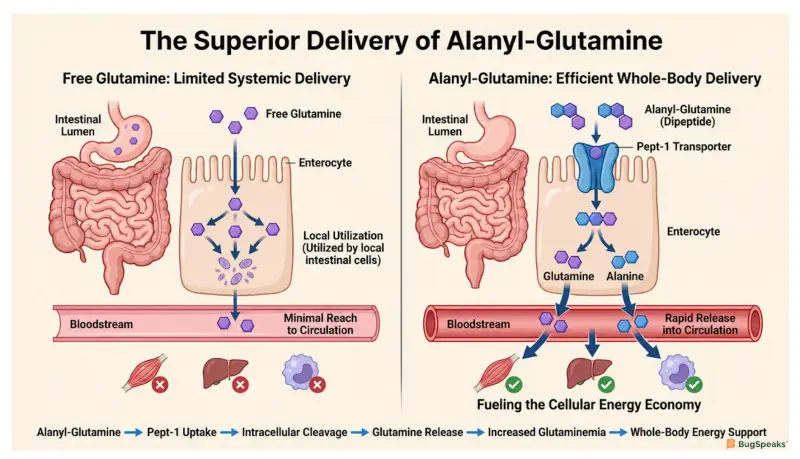
Glutamine provides the essential cellular fuel required to assemble and maintain tight junctions, the protein-based structural seals that hold your intestinal cells together to prevent leaks. Your gut wall is made of a single layer of cells that must stay tightly bound [Kim and Kim (2017)](https://www.ncbi.nlm.nih.gov/pmc/articles/PMC5454963/). The primary structures that lock these cells together are tight junctions [Wang et al. (2016)](https://doi.org/10.3945/jn.115.224857). These microscopic locks are built from transmembrane proteins like claudin-4, occludin, and junctional adhesion molecules, which connect to internal anchors like zonula occludens [Wang et al. (2016)](https://doi.org/10.3945/jn.115.224857). Proper function of these locks is required to prevent toxins and pathogens from leaking into your blood.
This defense wall is controlled by energy sensors inside each cell. When glutamine fuel is abundant, it activates a biological switch pathway called calcium/calmodulin-dependent kinase kinase 2 (CaMKK2), which then turns on an energy sensor called AMP-activated protein kinase (AMPK) [Wang et al. (2016)](https://doi.org/10.3945/jn.115.224857). AMPK acts as a manager that directs cells to build and maintain their physical barriers [Wang et al. (2016)](https://doi.org/10.3945/jn.115.224857). Under this pathway's direction, the cell moves its structural proteins out to the membrane, anchoring them in place to create a highly effective physical seal that keeps the barrier closed to dangerous waste [Wang et al. (2016)](https://doi.org/10.3945/jn.115.224857).
Additionally, this fuel helps cells defend their wall from outside toxins by activating the epidermal growth factor receptor (EGFR). Harmful compounds, such as acetaldehyde from alcohol, can attack and break these cell seals, causing a leaky gut [Rao and Samak (2012)](https://www.ncbi.nlm.nih.gov/pmc/articles/PMC4369670/). However, if the cells have enough glutamine, it triggers the transactivation of EGFR, which sends an immediate protective signal to keep the barrier stable [Rao and Samak (2012)](https://www.ncbi.nlm.nih.gov/pmc/articles/PMC4369670/). To measure this wall tightness, scientists use a test called Transepithelial Electrical Resistance (TEER) [Wang et al. (2016)](https://doi.org/10.3945/jn.115.224857). High TEER values show a strong barrier, proving that fuel is key to keeping the gut wall closed.
**Tight Junctions**\- Specialized protein-based structural seals that weld adjacent epithelial cells together, creating a highly regulated, selective physical wall.
**Calcium/Calmodulin-dependent Kinase Kinase 2 (CaMKK2)**\- A critical cellular enzyme that initiates a phosphorylation cascade in response to shifts in calcium levels.
**AMP-Activated Protein Kinase (AMPK)**\- A master energy-sensing protein inside cells that controls structural cell remodeling and energy homeostasis.
**Epidermal Growth Factor Receptor (EGFR)**\- A cell-surface protein that, when activated by chemical messengers, coordinates tissue growth, recovery, and barrier protection.
**Transepithelial Electrical Resistance (TEER)**\- A scientific testing method that measures the electrical resistance across a cell layer to evaluate the tightness of cell-to-cell barriers.
**Claudin-4**\- A transmembrane tight junction protein that sits in the cell membrane to seal the gaps between cells and control the selective movement of water and ions across the gut barrier.
**Occludin**\- A key structural protein that spans cell membranes to lock neighboring epithelial cells together and preserve the tightness and physical strength of the intestinal barrier.
**Zonula Occludens**\- A family of internal scaffolding proteins (such as ZO-1, ZO-2, and ZO-3) that anchor transmembrane tight junction proteins directly to the cell's structural skeleton, reinforcing the physical seal.
## What Happens to the Energy Economy When Glutamine Supplies Run Low?
A severe shortage of glutamine leads to a breakdown of the gut's physical defense system, allowing bacteria, toxins, and waste products to leak directly into your bloodstream. When your body's energy economy experiences a long fuel shortage, your enterocytes run out of the energy they need to survive and rebuild [Kim and Kim (2017)](https://www.ncbi.nlm.nih.gov/pmc/articles/PMC5454963/). Without fuel, the tight junctions lock systems disassemble, opening up large gaps between your gut cells [Rao and Samak (2012)](https://www.ncbi.nlm.nih.gov/pmc/articles/PMC4369670/). This allows waste, food particles, and bad toxins to cross into your blood in a dangerous process called bacterial translocation [Perna et al. (2019)](https://www.ncbi.nlm.nih.gov/pmc/articles/PMC6834172/). This can trigger body-wide inflammation and serious health problems.
At the microscopic level, a severe deficit of glutamine causes an emergency inside the cell's protein-building factories, known as endoplasmic reticulum stress, or ER stress [Kim and Kim (2017)](https://www.ncbi.nlm.nih.gov/pmc/articles/PMC5454963/). This stress prevents proteins from folding correctly, which triggers a biological self-destruct signal called apoptosis, or programmed cell death [Kim and Kim (2017)](https://www.ncbi.nlm.nih.gov/pmc/articles/PMC5454963/). Normally, your body balances cell division and cell death; however, without fuel, your gut cells die much faster than they can grow [Kim and Kim (2017)](https://www.ncbi.nlm.nih.gov/pmc/articles/PMC5454963/). This causes physical holes in your gut lining, such as ulcers and small, shrunken villi, leaving the gut lining weak and damaged [Rao and Samak (2012)](https://www.ncbi.nlm.nih.gov/pmc/articles/PMC4369670/).
As your gut's energy levels drop, the balance of your friendly gut bacteria is also disrupted, which can harm your overall health. In a healthy gut, resident microbes live in harmony with your body, but an under-fueled, damaged wall cannot secrete enough protective molecules [Perna et al. (2019)](https://www.ncbi.nlm.nih.gov/pmc/articles/PMC6834172/). This allows bad bacteria to multiply, throwing off the healthy balance of your microbiome [Perna et al. (2019)](https://www.ncbi.nlm.nih.gov/pmc/articles/PMC6834172/). To check for this damage, doctors measure sugar markers (lactulose and mannitol) in urine or look for leaked enzymes like diamine oxidase in your blood, which confirm if your barrier has become leaky [Shu et al. (2016)](https://www.ncbi.nlm.nih.gov/pmc/articles/PMC5228558/).
**Bacterial Translocation**\- The hazardous physical migration of intact bacteria or toxic cell-wall fragments across a compromised gut wall into the bloodstream.
**Endoplasmic Reticulum Stress (ER stress)**\- A cellular crisis that occurs when protein-building organelles are overwhelmed, preventing proper folding of essential structures.
**Apoptosis**\- A tightly regulated genetic sequence of programmed cell death used to cleanly eliminate damaged, exhausted, or under-fueled cells.
**Enterocytes**\- Specialized epithelial cells that form the single-cell thick lining of the intestines, responsible for absorbing nutrients and acting as the primary physical barrier against pathogens.
**Cell Division**\- The biological process by which a cell duplicates its genetic material and splits into two new cells, which, in the gut lining, requires a constant supply of energy and nucleotide precursors.
**Cell Death**\- The regulated elimination of worn-out or damaged cells, which can be accelerated during energy deficits and lead to holes in the gut lining when it exceeds the rate of new cell growth.
**Villi**\- The tiny, finger-like folds lining the wall of the small intestine that dramatically expand its surface area to maximize the absorption of digested nutrients.
**Diamine Oxidase**\- An enzyme found in high amounts inside healthy gut cells that is spilled into the bloodstream when these cells are damaged, serving as a reliable clinical marker for gut barrier leakage.
## Does Supplementing Your Cellular Energy Economy Actually Help?
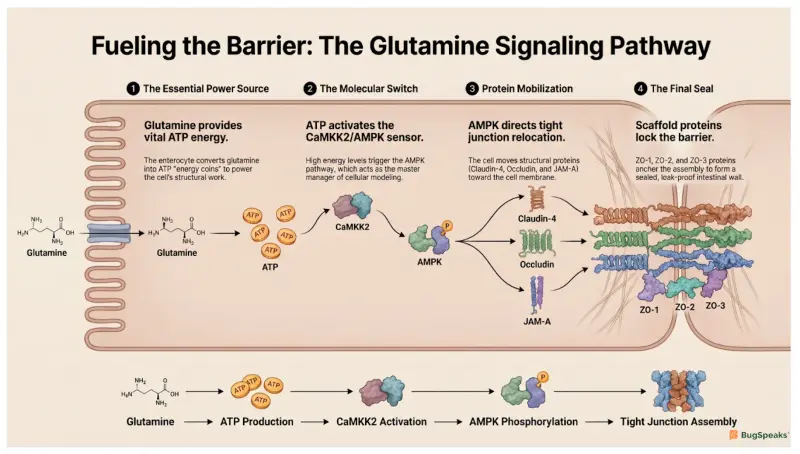
Providing supplemental glutamine acts as an additional resource that can help restore your body's energy balance and accelerate gut barrier repair during periods of high demand. However, the chemical form of your supplement matters a lot because free glutamine is easily eaten up by your digestive tract [Cruzat et al. (2018)](https://www.ncbi.nlm.nih.gov/pmc/articles/PMC6266414/). Free glutamine is easily eaten up because it is the absolute favorite food of the gut cells themselves! Since the cells lining your stomach and intestines get "first dibs" on everything you eat, they absorb and digest about 75% (three-quarters) of this free glutamine right away to power their own heavy daily workload [Cruzat et al. (2018)](https://www.ncbi.nlm.nih.gov/pmc/articles/PMC6266414/). To solve this, scientists use a special double amino acid called alanyl-glutamine [Cruzat et al. (2018)](https://www.ncbi.nlm.nih.gov/pmc/articles/PMC6266414/). This stable dipeptide escapes early digestion and is quickly absorbed by your gut using a specialized door called Oligopeptide Transporter 1 or Pept-1, which successfully delivers this vital fuel directly to your tissues [Cruzat et al. (2018)](https://www.ncbi.nlm.nih.gov/pmc/articles/PMC6266414/).
Clinical trials show that this extra fuel helps post-surgery patients recover much faster by reducing body-wide inflammatory markers and healing their gut barriers. Patients who receive glutamine dipeptides show much lower levels of inflammatory markers like C-reactive protein, tumor necrosis factor-alpha, and interleukin-6 in their blood [Shu et al. (2016)](https://www.ncbi.nlm.nih.gov/pmc/articles/PMC5228558/). This shows that the body is finally calm and its alarm systems are turning off [Shu et al. (2016)](https://www.ncbi.nlm.nih.gov/pmc/articles/PMC5228558/). Supplementation also lowers urine sugar leakage and completely prevents endotoxins from entering the bloodstream, which is clear visual proof that the physical gut wall has been successfully repaired and sealed [Shu et al. (2016)](https://www.ncbi.nlm.nih.gov/pmc/articles/PMC5228558/).
This targeted energy support is also incredibly helpful for children recovering from stomach bugs and cancer patients undergoing chemotherapy. In children with severe diarrhea, adding this dipeptide to rehydration drinks helps rebuild their damaged gut walls, which shortens their illness [Rao and Samak (2012)](https://www.ncbi.nlm.nih.gov/pmc/articles/PMC4369670/). For cancer patients, chemotherapy can damage rapidly dividing gut cells, but glutamine provides the fuel these cells need to recover, preventing painful mouth sores and diarrhea [Cruzat et al. (2018)](https://www.ncbi.nlm.nih.gov/pmc/articles/PMC6266414/). It shows that while healthy eaters do not need extra supplements, feeding your cellular energy economy during crisis is a proven way to protect your health [Cruzat et al. (2018)](https://www.ncbi.nlm.nih.gov/pmc/articles/PMC6266414/).
**Energy Balance Metric**
**Under-Fueled System (Control Group / No Glutamine)**
**Fully Restored System (Glutamine Supplemental Resource)**
**Clinical Meaning**
Transepithelial Electrical Resistance (TEER)
Decreased; thin/weak cell-to-cell barriers [Wang et al. (2016)](https://doi.org/10.3945/jn.115.224857)
Increased; fully tightened cell junctions [Wang et al. (2016)](https://doi.org/10.3945/jn.115.224857)
Measures cell wall tightness and overall structural stability.
Lactulose/Mannitol Ratio
Elevated; massive leaks across the barrier [Shu et al. (2016)](https://www.ncbi.nlm.nih.gov/pmc/articles/PMC5228558/)
Significantly lowered; restricted leakage [Shu et4 al. (2016)](https://www.ncbi.nlm.nih.gov/pmc/articles/PMC5228558/)
Directly evaluates gut permeability to large molecules.
Diamine Oxidase in Blood
High levels; enzyme spilled from damaged cells [Shu et al. (2016)](https://www.ncbi.nlm.nih.gov/pmc/articles/PMC5228558/)
Significantly reduced levels; intact cell structure [Shu et al. (2016)](https://www.ncbi.nlm.nih.gov/pmc/articles/PMC5228558/)
Indirectly assesses the integrity of the mucosal layer.
Endotoxin Translocation
High concentrations leaking into circulation [Shu et al. (2016)](https://www.ncbi.nlm.nih.gov/pmc/articles/PMC5228558/)
Dramatically decreased; leakage blocked [Shu et al. (2016)](https://www.ncbi.nlm.nih.gov/pmc/articles/PMC5228558/)
Measures migration of harmful bacterial products into the blood.
Inflammatory Mediators
High; body-wide inflammatory alarm active [Shu et al. (2016)](https://www.ncbi.nlm.nih.gov/pmc/articles/PMC5228558/)
Markedly lower systemic inflammation markers [Shu et al. (2016)](https://www.ncbi.nlm.nih.gov/pmc/articles/PMC5228558/)
Indicates how active the systemic inflammatory response is.
**Alanyl-glutamine**\- A stable and highly soluble dipeptide composed of L-glutamine chemically bonded to L-alanine, designed to bypass gut-level consumption.
**Oligopeptide Transporter 1 (Pept-1)**\- A high-capacity transport protein located in the gut membrane that rapidly absorbs intact dipeptides and tripeptides.
**C-Reactive Protein**\- A clinical blood marker that rises in response to systemic inflammation, which is significantly reduced when the body's energy economy is supplemented with glutamine during stress.
**Tumor Necrosis Factor-Alpha**\- A key pro-inflammatory chemical messenger released by immune cells during stress or trauma that can damage tissues but is kept in check when cells have sufficient glutamine.
**Interleukin-6**\- A major inflammatory signaling protein whose levels rise in response to cellular stress and injury, serving as a marker of systemic alarm that is lowered by successful glutamine therapy.
Visualize the process- [https://youtu.be/KD0jcP\_ajv0](https://youtu.be/KD0jcP_ajv0)
### Reference
Rao, R., & Samak, G. (2012). Role of Glutamine in Protection of Intestinal Epithelial Tight Junctions. _Journal of epithelial biology & pharmacology_, _5_(Suppl 1-M7), 47–54. [https://doi.org/10.2174/1875044301205010047](https://doi.org/10.2174/1875044301205010047)
Kim, M. H., & Kim, H. (2017). The Roles of Glutamine in the Intestine and Its Implication in Intestinal Diseases. _International journal of molecular sciences_, _18_(5), 1051. [https://doi.org/10.3390/ijms18051051](https://doi.org/10.3390/ijms18051051)
Wang, B., Wu, Z., Ji, Y., Sun, K., Dai, Z., & Wu, G. (2016). L-Glutamine enhances tight junction integrity by activating CaMK kinase 2–AMP-activated protein kinase signaling in intestinal porcine epithelial cells. _The Journal of nutrition_, _146_(3), 501-508.
Cruzat, V., Macedo Rogero, M., Noel Keane, K., Curi, R., & Newsholme, P. (2018). Glutamine: Metabolism and Immune Function, Supplementation and Clinical Translation. _Nutrients_, _10_(11), 1564. [https://doi.org/10.3390/nu10111564](https://doi.org/10.3390/nu10111564)
Perna, S., Alalwan, T. A., Alaali, Z., Alnashaba, T., Gasparri, C., Infantino, V., Hammad, L., Riva, A., Petrangolini, G., Allegrini, P., & Rondanelli, M. (2019). The Role of Glutamine in the Complex Interaction between Gut Microbiota and Health: A Narrative Review. _International journal of molecular sciences_, _20_(20), 5232. [https://doi.org/10.3390/ijms20205232](https://doi.org/10.3390/ijms20205232)
Shu, X. L., Yu, T. T., Kang, K., & Zhao, J. (2016). Effects of glutamine on markers of intestinal inflammatory response and mucosal permeability in abdominal surgery patients: A meta-analysis. _Experimental and therapeutic medicine_, _12_(6), 3499–3506. [https://doi.org/10.3892/etm.2016.3799](https://doi.org/10.3892/etm.2016.3799)
Kumar, M. A., Baba, S. K., Khan, I. R., Khan, M. S., Husain, F. M., Ahmad, S., Haris, M., Singh, M., Akil, A. S. A., Macha, M. A., & Bhat, A. A. (2025). Glutamine Metabolism: Molecular Regulation, Biological Functions, and Diseases. _MedComm_, _6_(7), e70120. https://doi.org/10.1002/mco2.70120
## FAQs
Q: Is glutamine primarily a "repair supplement" for the gut?
A: No. In our cellular energy economy, glutamine is not simply a repair patch; it is the primary cellular fuel that powers intestinal epithelial cells to run their normal high-turnover division cycle Kim and Kim (2017). When fuel supplies are abundant, these cells have the energy to maintain their normal barrier structure; when supplies run low, the economy suffers a deficit, leading to barrier breakdown Rao and Samak (2012).
Q: What is the difference between free glutamine and alanyl-glutamine?
A: Free L-glutamine is a single amino acid that is mostly consumed and metabolized by the cells of the gut wall during digestion, leaving very little to reach the bloodstream Cruzat et al. (2018). In contrast, alanyl-glutamine is a stable dipeptide that escapes this initial metabolism by being absorbed through a specialized transport protein called Pept-1, allowing it to enter the blood intact and distribute fuel to tissues throughout the body Cruzat et al. (2018).
Q: Why can't the gut just use glucose for all its energy needs?
A: While glucose is a universal resource in the body's economy, the rapidly dividing cells of the gut lining have a strong biological preference for glutamine Cruzat et al. (2018). This specific cellular fuel enters glutaminolysis, which directly enters the TCA cycle to generate ATP faster and more efficiently for these high-turnover cells, making glutamine their preferred currency Kim and Kim (2017).
Q: Should everyone take a glutamine supplement for gut health?
A: For healthy individuals with a balanced diet, food intake provides sufficient glutamine to maintain a healthy cellular energy economy Cruzat et al. (2018). Supplementation acts as an additional resource that is highly beneficial during states of severe stress, illness, or trauma, when the body's internal production cannot meet the massive demands of the gut lining and competing immune cells Kim and Kim (2017).
Q: How does stress cause a fuel shortage in the gut lining?
A: Under stress, competing consumers like the immune cells and the liver rapidly increase their fuel demands Cruzat et al. (2018). This forces the skeletal muscle to break down its own protein to supply glutamine to the bloodstream. If the stress is severe or prolonged, the demand outstrips the supply, leaving the gut lining with an energy deficit that leads to structural collapse Kim and Kim (2017).
---
This blog is powered by Superblog. Visit https://superblog.ai to know more.
---