Why does your gut microbiome need a diverse range of plant compounds instead of a single concentrated green powder?
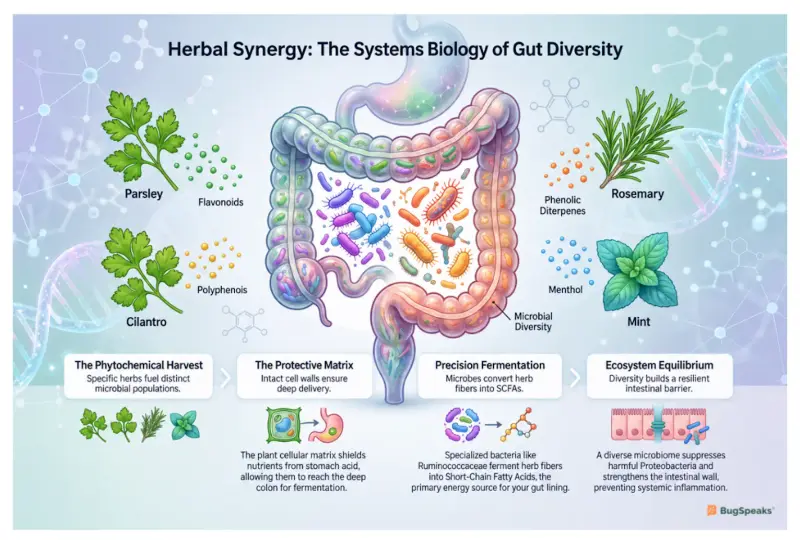
Your gut contains trillions of tiny living microbes that form a community called the microbiome, which helps your body stay strong and healthy. These microscopic organisms act like a massive group of tiny workers, and each worker has a highly specific job that requires unique types of food to perform. While expensive commercial green powders might seem like a quick way to get your daily nutrients, they are highly processed and often lack the variety of molecules your gut needs. By focusing on a culinary phytochemical diversity plate filled with fresh herbs, you provide your gut workers with a wide variety of healthy foodsKumar et al. (2023).
Commercial green powders undergo heavy industrial processing where plants are spray-dried, heated, and crushed into a very fine dust, which destroys their natural variety and protective qualities. When you eat this uniform powder, your body absorbs it too quickly in the upper stomach, meaning very little food actually reaches the deeper sections of your digestive tract. Fresh culinary herbs are excellent prebiotics because they contain complex molecules that survive digestion and safely travel all the way to your lower gut. This slow-release system ensures that your beneficial microbes receive a steady, continuous supply of nutrients to survive and multiplyBamigbade et al. (2022).
A healthy digestive tract depends on having many different types of microbes rather than just a few dominant groups of bacteria. Eating a single type of green powder every day feeds only a small, narrow group of gut workers, which can lead to an unhealthy imbalance over time. Fresh parsley, cilantro, rosemary, and mint deliver a wide range of different chemical molecules that support many different bacterial species. Using the phytochemical diversity plate to guide your meals helps you build a highly diverse microbial ecosystem, making your body more resilient against common digestive discomfort and systemic health issuesPradhan et al. (2024). This makes healthy eating both simple and fun.
How do the different chemical compounds in parsley and cilantro feed specific beneficial bacteria in your gut?
Fresh parsley contains a high amount of active plant molecules called flavonoids, which act as highly effective food sources for your beneficial gut bacteria. These specific molecules are shaped in a unique way that allows only certain helpful microbes, such as Ruminococcaceae, Faecalibacterium, Bifidobacterium, Lactobacillus, Coprococcus, Butyricimonas, and Agathobacter, specialized fiber-digesting species, to break them down and grow. When these beneficial bacteria consume the plant compounds from parsley, they begin to multiply and create a healthier environment inside your large intestine. This targeted feeding process helps support the good bacteria while naturally keeping the harmful bacteria from taking over your digestive system and keeping you feeling strongKumar et al. (2023). Fresh cilantro is packed with natural plant compounds known as polyphenols, which are too complex for your human stomach enzymes to break down on their own without help. These large, complex molecules travel completely intact through your digestive tract until they reach the large intestine, where your specialized gut microbes are always waiting to process them carefully. Your gut bacteria use their own tools to chop these plant compounds into smaller, highly beneficial pieces. This natural interaction shows that fresh culinary herbs are much more than simple flavorings; they are essential substrates that help regulate your healthy microbial community structureVita et al. (2022).
As your gut bacteria ferment the unique fibers and plant compounds in parsley and cilantro, they produce healthy molecules called short-chain fatty acids as a natural byproduct. These special acids serve as the primary source of energy for the cells lining your gut wall, keeping your entire digestive tract strong and functioning. They also travel through your blood to help regulate your immune system, lower inflammation, and support healthy cardiovascular function. Eating fresh herbs regularly is a simple way to help your gut bacteria produce these vital acids every single day. This shows why eating fresh herbs is so important for wellnessPérez-Burillo et al. (2020).
What special role do rosemary and mint play in protecting your intestinal barrier and controlling bad microbes?
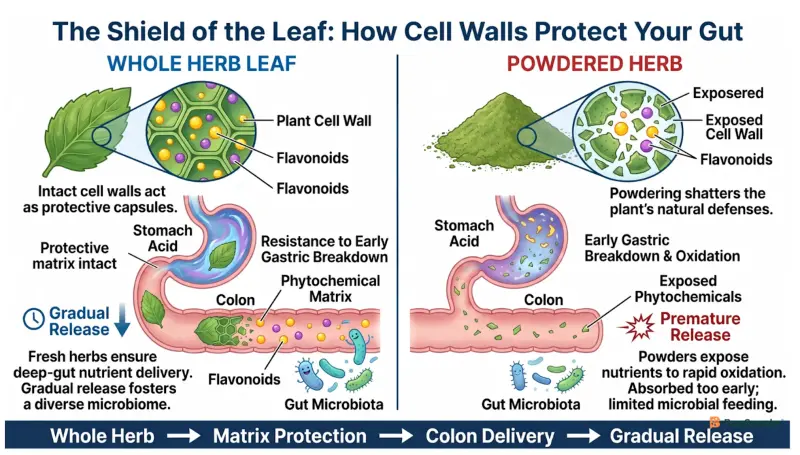
Fresh rosemary leaves contain highly protective oil-based compounds called diterpenes that act as powerful shields for both the plant and your digestive system. These natural molecules are extremely durable, allowing them to resist stomach acids and safely reach your large intestine where your gut microbes reside. Once in the colon, these compounds help reduce harmful chemical stress and lower inflammation throughout your digestive tissue. This protective action helps keep the environment inside your lower gut calm and stable, which allows your beneficial, health-promoting microbes to live, grow, and function properly. By adding fresh rosemary to your meals, you support these protective functions naturallyZhang et al. (2024).
Your gut wall is lined with a highly specialized protective layer called the intestinal barrier, which keeps important nutrients inside your body while keeping waste out. This critical wall can become weak or leaky due to poor diet, stress, or eating too many highly processed foods like commercial green powders. The active compounds such as Mint and Rosemary found in fresh rosemary and mint help strengthen this barrier by prompting your cells to secrete healthy protective mucus. A strong gut wall prevents unwanted materials from escaping into your bloodstream, which protects your body from inflammation and keeps your immune system balancedZhang et al. (2024).
Many fresh herbs contain natural oils that can selectively inhibit the growth of dangerous microbes commonly known as pathogens without harming your beneficial gut bacteria. For example, mint contains natural menthol, which acts like a targeted shield, stopping harmful germs from multiplying and causing painful gas, bloating, or infections. While processed green powders often lose these delicate volatile oils during manufacturing, fresh herbs keep them completely intact and highly active. Regularly adding fresh mint and rosemary to your food helps your gut microbes maintain a healthy balance by keeping these dangerous germs under control and working to protect your entire bodyPérez-Burillo et al. (2020).
How does the physical structure of a fresh leaf protect prebiotic nutrients until they reach the deep parts of your colon?
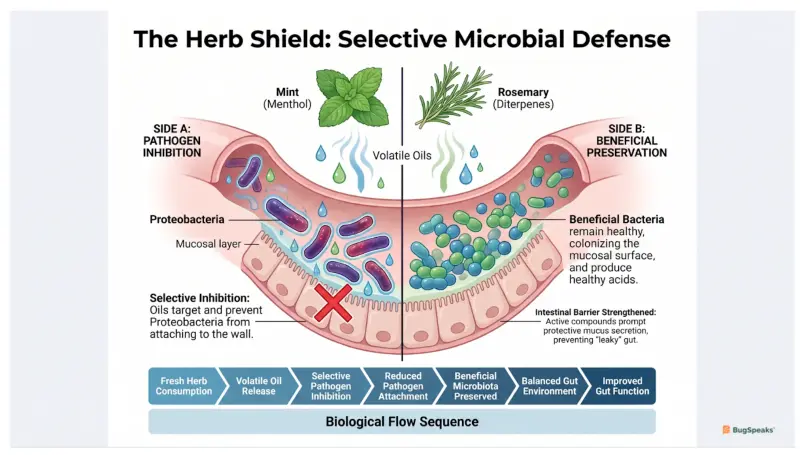
Every single fresh herb leaf possesses a highly complex physical structure called a plant cellular matrix, which acts like a natural protective capsule for its nutrients. This sturdy, thick cellular wall is made of tough plant fibers that your human digestive system cannot dissolve or break apart. Because this wall remains completely intact, it safely shields the delicate vitamins, minerals, and prebiotic compounds hidden inside the leaf. This natural protection prevents your stomach acids and mouth enzymes from destroying these active nutrients long before they can ever reach the deep sections of your large intestineChandorkar et al. (2021). This is why raw, fresh plants are so unique.
Commercial green powders are made by pulverizing plants into a very fine dust, which completely shatters this protective cell wall and causes rapid oxidation of the nutrients. When this natural shield is destroyed, the delicate plant molecules are exposed to air, light, and heat, causing them to break down and lose their health benefits. Without the physical leaf structure, the free nutrients are either absorbed too early in your gut or fermented too quickly in the upper colon. This rapid action can cause uncomfortable gas and fails to nourish the specialized microbes living deeper in your gutBamigbade et al. (2022).
Once the intact leaves of fresh herbs safely reach your large intestine, your beneficial microbes begin a slow, highly organized process called fermentation to break them down. Since these tough plant fibers are difficult to dissolve, the gut microbes must work together in stages to digest the physical leaf structures. This slow and steady breakdown provides a continuous, long-lasting supply of nutrients throughout the entire length of your colon. This sustained feeding process helps cultivate a highly stable and diverse microbial community, which is essential for long-term digestive wellness. By choosing fresh herbs, you give your microbes the perfect tools to build a healthy digestive systemPérez-Burillo et al. (2020).
What do clinical studies show about how adding fresh herbs to your daily meals shifts your overall gut health?
Scientific feeding trials show that eating culinary doses of mixed herbs regularly helps selectively grow a beneficial family of gut bacteria called Ruminococcaceae within just four weeks. This helpful group of microbes is strongly connected to healthy weight maintenance, lower blood pressure, and a reduced risk of long-term heart issues. When you choose fresh, unrefined herbs over highly processed supplements, you actively feed these beneficial microbes with the specific compounds they need to flourish. This dietary choice shows how typical culinary ingredients can serve as powerful tools for improving your metabolic wellness. This shows how simple daily food choices can improve your long-term healthPetersen et al. (2022).
A lack of plant variety in the modern diet is a major driver of gut dysbiosis, which is an unhealthy state of microbial imbalance. When your gut has too few helpful bacteria, harmful microbes can easily take over, leading to chronic inflammation, stomach discomfort, and other long-term health problems. Regularly adding fresh parsley, cilantro, rosemary, and mint to your meals is a simple way to prevent this imbalance from occurring. By introducing a wider variety of plant molecules into your gut, you help maintain a healthy, balanced, and resilient microbial community. Making fresh herbs a regular part of your meals keeps your body running smoothlyDordević et al. (2020).
People who eat mixed culinary herbs on a regular basis show a significantly lower amount of a harmful group of bacteria called Proteobacteria in their digestive tracts. This phylum includes many dangerous microbes that cause severe inflammation, intestinal irritation, and other painful digestive issues when their populations grow too high. Fresh herbs contain a natural combination of polyphenols and fibers that prevent these harmful bacteria from multiplying, while supporting your beneficial microbes. This simple dietary habit protects your gut ecosystem, helping keep your digestive health strong, balanced, and resilient. This simple dietary habit is both highly effective and completely naturalVita et al. (2022)
Visualize the process- https://youtu.be/CK1HBQQFDNA
Reference
Pérez-Burillo, S., Hinojosa-Nogueira, D., Pastoriza, S., & Rufián-Henares, J. A. (2020). Plant extracts as natural modulators of gut microbiota community structure and functionality. Heliyon, 6(11), e05474.https://doi.org/10.1016/j.heliyon.2020.e05474
Pradhan, S., Blanton, C., Ochoa-Reparaz, J., Bhattarai, N., & Sharma, K. (2024). Herbs and Spices: Modulation of Gut Microbiota for Healthy Aging. Gastroenterology Insights, 15(2), 447-458.https://doi.org/10.3390/gastroent15020032
Petersen, K. S., Anderson, S., Chen See, J. R., Leister, J., Kris-Etherton, P. M., & Lamendella, R. (2022). Herbs and Spices Modulate Gut Bacterial Composition in Adults at Risk for CVD: Results of a Prespecified Exploratory Analysis from a Randomized, Crossover, Controlled-Feeding Study. The Journal of nutrition, 152(11), 2461–2470.https://doi.org/10.1093/jn/nxac201
Swaroopa, C., Kashmira, L., Vikas, G., & Rajan, W. (2022). Assessment of the prebiotic potential of seed coats from green gram (Vigna radiata) and black gram (Vigna mungo). Journal of food science and technology, 59(2), 583–588.https://doi.org/10.1007/s13197-021-05043-2
Bamigbade, G. B., Subhash, A. J., Kamal-Eldin, A., Nyström, L., & Ayyash, M. (2022). An Updated Review on Prebiotics: Insights on Potentials of Food Seeds Waste as Source of Potential Prebiotics. Molecules (Basel, Switzerland), 27(18), 5947.https://doi.org/10.3390/molecules27185947
Zhang, L., & Lu, J. (2024). Rosemary (Rosmarinus officinalis L.) polyphenols and inflammatory bowel diseases: Major phytochemicals, functional properties, and health effects. Fitoterapia, 177, 106074.https://doi.org/10.1016/j.fitote.2024.106074
Zhang W, Qi S, Xue X, Al Naggar Y, Wu L and Wang K (2021) Understanding the Gastrointestinal Protective Effects of Polyphenols using Foodomics-Based Approaches. Front. Immunol. 12:671150. doi: 10.3389/fimmu.2021.671150
Kumar, A., P, N., Kumar, M., Jose, A., Tomer, V., Oz, E., Proestos, C., Zeng, M., Elobeid, T., K, S., & Oz, F. (2023). Major Phytochemicals: Recent Advances in Health Benefits and Extraction Method. Molecules (Basel, Switzerland), 28(2), 887.https://doi.org/10.3390/molecules28020887
Grigore-Gurgu, L., Dumitrașcu, L., & Aprodu, I. (2025). Aromatic Herbs as a Source of Bioactive Compounds: An Overview of Their Antioxidant Capacity, Antimicrobial Activity, and Major Applications. Molecules, 30(6), 1304.https://doi.org/10.3390/molecules30061304
Vita, A. A., McClure, R., Farris, Y., Danczak, R., Gundersen, A., Zwickey, H., & Bradley, R. (2022). Associations between Frequency of Culinary Herb Use and Gut Microbiota. Nutrients, 14(9), 1981.https://doi.org/10.3390/nu14091981
Dordević, D., Jančíková, S., Vítězová, M., & Kushkevych, I. (2020). Hydrogen sulfide toxicity in the gut environment: Meta-analysis of sulfate-reducing and lactic acid bacteria in inflammatory processes. Journal of advanced research, 27, 55–69.https://doi.org/10.1016/j.jare.2020.03.003
Yao, C. K., Rotbart, A., Ou, J. Z., Kalantar-Zadeh, K., Muir, J. G., & Gibson, P. R. (2018). Modulation of colonic hydrogen sulfide production by diet and mesalazine utilizing a novel gas-profiling technology. Gut microbes, 9(6), 510–522. https://doi.org/10.1080/19490976.2018.1451280