Is Too Much Fiber Bad for You? Exploring the Risks
Can you consume too much fiber too quickly?
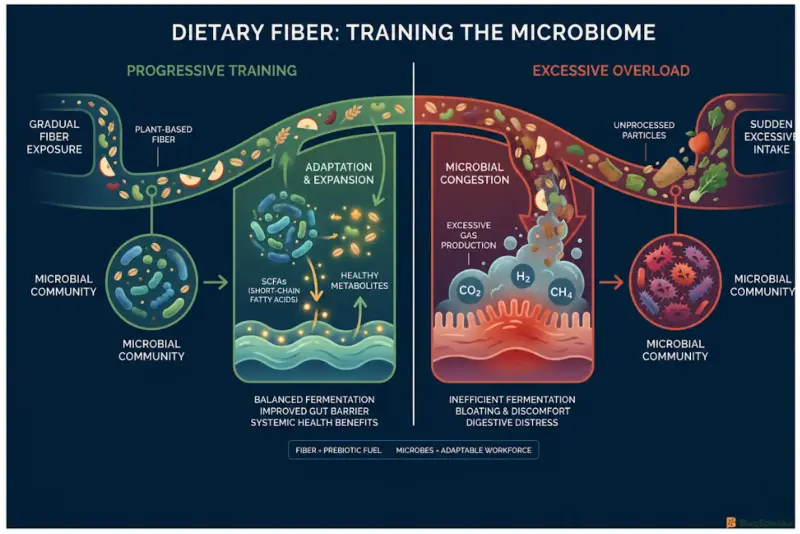
Your body can experience significant digestive discomfort if you rapidly increase your intake of dietary fiber before your resident gut microorganisms have trained to process the load. In biological terms, dietary fiber, which consists of non-digestible forms of carbohydrates, typically complex plant polysaccharides and lignin that resist enzymatic breakdown, acts as a heavy training stimulus for your inner ecosystem (Barber et al., 2020). Much like lifting a weight that is far too heavy on your first day at the gym, introducing a sudden, massive increase in fiber volume creates an excessive training load that overwhelms your current microbial workforce. Most individuals do not suffer from a baseline fiber-deficiency problem; instead, they face a fiber-speed problem, attempting to transition from a highly processed, fiber-impoverished diet to a high-fiber regimen overnight without any conditioning.
The vast community of microorganisms living in your large intestine, known as the gut microbiota, requires adequate time to adapt to changes in your dietary patternsBarber et al. (2020). In our modern world, diets have changed radically from those of our ancient ancestors, relying heavily on ultra-processed foods that are highly impoverished of natural fibersBarber et al. (2020). Consequently, our daily intake of fiber has plummeted well below recommended standards. While esteemed health guidelines suggest a daily fiber intake of twenty-five to thirty-two grams for women and thirty to thirty-five grams for men, actual consumption averages a mere sixteen to twenty grams for women and eighteen to twenty-four grams for menBarber et al. (2020). When your baseline diet is persistently low in fiber, the specialized bacterial populations that break down these complex plant structures naturally shrink due to a lack of chronic nourishment.
If you suddenly consume large quantities of fiber in an unconditioned state, these specialized populations are too small and lack the immediate capacity to process the incoming material. The unadapted gut is forced to handle the sudden wave of carbohydrate polymers, leading to a highly disorganized processing phase in the colon that causes physical symptoms such as flatulence, bloating, and abdominal distensionSalvatore et al. (2023). This transient distress does not mean that fiber is inherently bad for you, but rather that your internal ecosystem is in an active, unconditioned adaptation phase. During this transition, your gut microbes produce various chemical metabolites as they struggle to metabolize the sudden abundance of substratesInoue et al. (2025). Rather than abandoning your fiber goals, you must recognize that your gut is simply out of shape and requires a structured, progressive program to build up its processing capacity. Understanding that your gut requires time to adapt allows you to approach dietary changes with the same patience, consistency, and structural progression that you would apply to physical exercise trainingWang et al. (2026).
What happens inside your gut during a fiber overtraining load?
When you consume an excessive amount of fermentable fiber too quickly, your unconditioned gut bacteria engage in rapid and disorganized fermentation, which produces a sudden surplus of gases and pulls excess water into your bowel. In a balanced gut, fermentation is a slow, highly controlled process where bacteria break down complex plant fibers into beneficial compoundsSalvatore et al. (2023). However, when a massive wave of highly fermentable carbohydrates, such as inulin or Fructooligosaccharides (FOS), enters a gut that lacks the specialized machinery to handle it, the resident microbes must work overtimeInoue et al. (2025). This rapid microbial activity generates a massive, sudden release of gases like carbon dioxide and methane, stretching the intestinal walls and triggering the nervous system to signal severe bloating, flatulence, and abdominal discomfortSalvatore et al. (2023).
At the same time, certain small, highly soluble fiber molecules exert a powerful osmotic draw within the intestinal tract, pulling large amounts of water from your body's tissues directly into the bowel lumen. This sudden shift in fluid balance alters stool consistency and can cause sudden, watery stools or diarrheaSalvatore et al. (2023). When the volume of water and gas in the bowel increases dramatically, the colon is forced to contract rapidly to expel the mixture, accelerating your gastrointestinal transit time, the total time it takes for food to travel through your digestive system, which prevents the proper absorption of liquids and nutrients, turning a potentially healthy meal into a source of digestive distressInoue et al. (2025).
Furthermore, this rapid transit can impair the absorption of essential micronutrients, as the body does not have enough contact time to extract them. This physical congestion and rapid movement can also cause mild, temporary inflammation in the gut lining if the barrier is unaccustomed to such high mechanical and chemical activity. The body experiences this as temporary intestinal fatigue, which is a direct consequence of exceeding your current metabolic processing limits. To avoid this localized distress, the key is to prevent these sudden fiber spikes, allowing the digestive tract to maintain a stable environment where liquid absorption, muscular contractions, and microbial activity remain perfectly synchronized. By maintaining a slow and steady progression, you prevent the gut from entering this overtrained state, keeping the delicate bowel lining safe from structural irritation and functional distress.
How does your microbiome train to handle higher fiber loads?
Your microbiome trains to handle higher fiber loads by expanding the populations of specialized, fiber-degrading bacteria that work in cooperative networks to break down complex plant molecules. When you introduce fiber in a gradual, controlled manner, it acts as a selective prebiotics, defined as a non-digestible substrate that is selectively utilized by host microorganisms to confer a health benefitSalvatore et al. (2023). This steady supply of nourishment encourages the growth of specialized bacteria, such as Bifidobacterium, which contain the specific enzymes needed to initiate the breakdown of complex plant sugarsInoue et al. (2025). As these specialized bacterial populations expand, they form highly coordinated, multi-step processing lines in your colon, transforming what was once an overwhelming task into a smooth, highly efficient routine.
A crucial part of this training program is a process known as cross-feeding, where primary fiber-degrading bacteria break down large plant polymers into smaller pieces, sharing these pre-digested nutrients with neighboring bacterial species. For example, Bifidobacterium species initiate the process by degrading complex fibers like inulin, releasing simple sugars, lactate, and acetate into the surrounding environmentInoue et al. (2025). Other specialized genera, such as Anaerostipes and Fusicatenibacter, then consume these secondary nutrients, performing their own metabolic roles to complete the conversionInoue et al. (2025). This ecological cooperation ensures that fiber is not fermented chaotically or rapidly, but is instead processed through a stable, highly organized assembly line that prevents gas from building up too quickly.
The ultimate goal of this cooperative network is the abundant production of short-chain fatty acids (SCFAs), primarily acetate, propionate, and butyrate, which serve as crucial signaling molecules for your entire bodyBarber et al. (2020). These metabolic compounds help lower the pH of your colon, which discourages the growth of harmful, disease-causing pathogens and optimizes the absorption of essential mineralsSalvatore et al. (2023). While butyrate plays a primary role as the main energy source for your colonic cells, acetate and propionate enter your bloodstream to help regulate liver glucose production, cholesterol levels, and fat cell developmentSalvatore et al. (2023). Through progressive training, your gut microbiota shifts from an unconditioned population into a highly trained team of specialists, capable of transforming a high-fiber intake into a powerful source of daily cellular energy and immune support.
What are the long-term biological rewards of a fully trained gut?
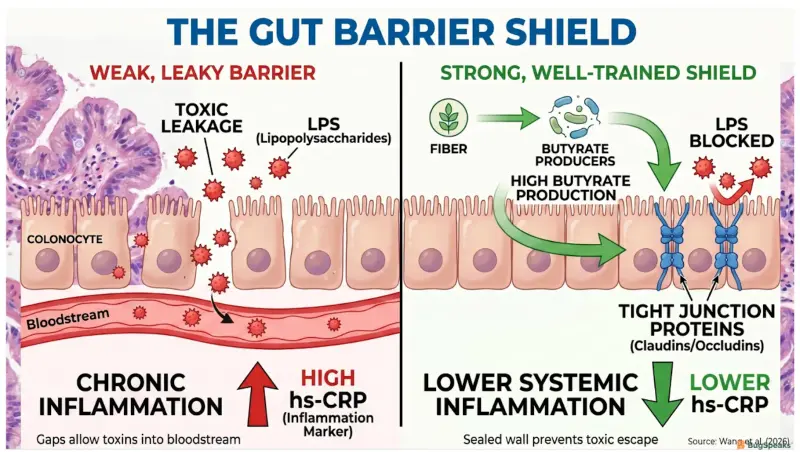
A fully trained gut achieves a highly diverse microbial ecosystem and stable metabolite production, which strengthen your intestinal lining and significantly reduce low-grade systemic inflammation throughout your body. Clinical studies demonstrate that progressive lifestyle training combining dietary fiber and moderate physical exercise leads to a significant increase in the diversity of the gut microbiota, which is a hallmark of a resilient and healthy internal ecosystemWang et al. (2026). When your gut contains a highly diverse population of bacteria, it becomes exceptionally stable, resistant to infections, and capable of performing a wide array of metabolic functions. This robust ecosystem is highly efficient at maintaining the intestinal barrier, the critical cellular wall that prevents harmful bacterial toxins, such as lipopolysaccharides (LPS), from leaking out of your gut and entering your bloodstreamWang et al. (2026).
When the gut barrier is weak, the leakage of bacterial components triggers immune receptors like Toll-like Receptor 4 (TLR4), initiating chronic, low-grade inflammation that increases cardiovascular and metabolic risksWang et al. (2026). However, a fully trained gut prevents this leakage by producing high amounts of butyrate, an incredibly potent anti-inflammatory compound that acts as the primary fuel source for your colonic cellsWang et al. (2026). Butyrate strengthens the physical connections between your gut cells, essentially sealing the intestinal wall and suppressing pro-inflammatory pathways throughout the bodyBarber et al. (2020).
Ultimately, these cellular improvements translate into substantial daily benefits that enhance your overall quality of life. Clinical trials show that individuals who successfully adapt to a fiber-rich diet experience marked improvements in their bowel-related quality of life, alongside secondary benefits such as reduced daily fatigue, improved sleep quality, and better skin healthInoue et al. (2025). These systemic improvements may be mediated through the gut-brain axis and gut-skin axis, where microbial metabolites travel through the bloodstream to regulate mood, sleep patterns, and skin cell repairInoue et al. (2025). By training your microbiome to its peak metabolic fitness, you establish a self-perpetuating cycle of health where a resilient gut barrier continually dampens systemic inflammation, protecting your long-term cardiovascular and metabolic wellness.
How do you design a safe and effective Gut Adaptation Training Program?
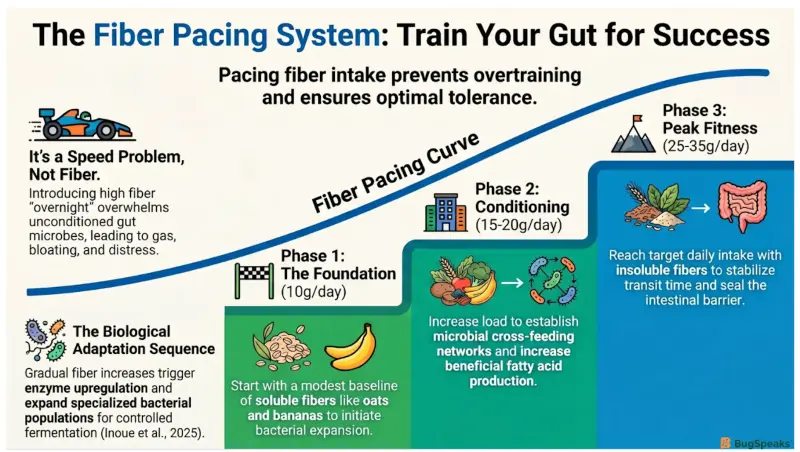
To design a highly effective gut adaptation program, you must implement a progressive, step-by-step increase in both soluble and insoluble plant carbohydrates while maintaining consistent fluid intake and moderate physical activity. Your training program should begin with a modest baseline stimulus, typically adding no more than five to eight grams of fiber per day, allowing your microbiome to slowly adapt over a multi-week periodInoue et al. (2025). To ensure maximum digestive tolerance, it is highly beneficial to select foods rich in soluble fiber, which dissolves in water to form a gel-like substance that slows digestion, helps regulate blood glucose levels, and provides highly fermentable fuel for beneficial BifidobacteriumSalvatore et al. (2023). Excellent sources of this gentle stimulus include oats, barley, and various fruitsSalvatore et al. (2023).
As your gut specialists multiply and stabilize, you should gradually introduce foods high in insoluble fiber, which does not dissolve in water and remains largely unfermented in the colon. This type of fiber acts as a natural bulking agent, physically sweeping through the intestinal tract to stimulate bowel transit, prevent constipation, and increase overall fecal bulkSalvatore et al. (2023). Whole grains, wheat bran, and leafy vegetables are excellent sources of this structural training loadBarber et al. (2020). However, you must be careful to avoid consuming excessive amounts of raw, unfermented seeds and grains that are highly concentrated in phytates, which are antioxidant compounds naturally present in plant seeds that can bind to essential minerals and reduce their bioavailability in your bodySalvatore et al. (2023).
To maximize the benefits of this dietary training, you should combine your progressive fiber intake with a moderate physical exercise routine, such as light resistance exercises or walkingWang et al. (2026). Studies demonstrate that moderate physical activity works in perfect synergy with dietary fiber by naturally stimulating gut motility and enhancing blood flow to your digestive organs, which accelerates the adaptation process and further reduces systemic inflammationWang et al. (2026). In contrast, excessive high-intensity workouts can paradoxically damage the gut barrier, highlighting the importance of keeping exercise at a moderate, sustainable paceWang et al. (2026). By treating your gut health as an athletic training program combining gradual progressive loads, diverse structural fibers, and consistent physical movement, you will safely build a highly resilient microbiome that supports your lifelong metabolic health.
Visualize the process- https://youtu.be/RrgjadF3Pmc
Reference
Inoue, R., Suzuki, K., Takaoka, M., Narumi, M., & Naito, Y. (2025). Effects of Dietary Fiber Supplementation on Gut Microbiota and Bowel Function in Healthy Adults: A Randomized Controlled Trial. Microorganisms, 13(9), 2068.https://doi.org/10.3390/microorganisms13092068
Wang, W., Tao, Y., & Zhu, M. (2026). Effects of functional dietary fiber supplementation combined with home-based exercise on gut microbiota diversity and low-grade inflammation in urban sedentary adults. Frontiers in nutrition, 13, 1769785.https://doi.org/10.3389/fnut.2026.1769785
Salvatore, S., Battigaglia, M. S., Murone, E., Dozio, E., Pensabene, L., & Agosti, M. (2023). Dietary Fibers in Healthy Children and in Pediatric Gastrointestinal Disorders: A Practical Guide. Nutrients, 15(9), 2208.https://doi.org/10.3390/nu15092208
Barber, T. M., Kabisch, S., Pfeiffer, A. F. H., & Weickert, M. O. (2020). The Health Benefits of Dietary Fibre. Nutrients, 12(10), 3209.https://doi.org/10.3390/nu12103209