The Hidden Secret to Flawless Skin: Fermented Skincare
How Does the Stained-Glass Restoration Metaphor Represent the Skin?
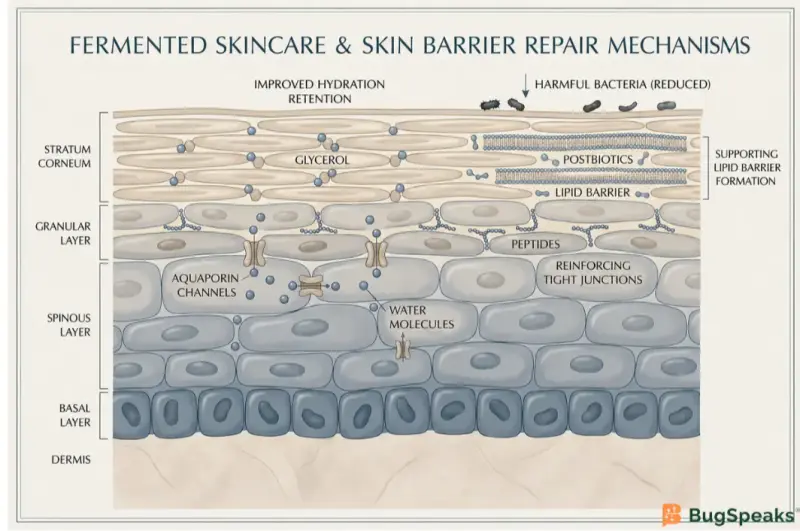
The stained-glass restoration metaphor represents the skin by illustrating how a healthy surface depends on the perfect alignment of microbial "panes" and the biological framework of the skin barrier. In this high-definition framework, the Skin Microbiome functions as thousands of multifaceted glass panes that filter the harsh light of the outside world, while the Stratum Corneum acts as the rigid lead lattice that holds every piece in place. When these panes are properly seated and the lead framework is strong, the internal cathedral of your body remains protected from the "weather" of pathogens and pollutantsNowicka et al. (2025). If the panes become unbalanced, the system enters a state of Cutaneous Dysbiosis, where the glass is essentially fractured, and the cathedral becomes vulnerable to leaks.
Maintaining the foundational stability of this stained-glass window depends on the metabolic byproducts forged by microbial artisans to reinforce the physical lead framework. Just as a master-crafted window requires resilient materials to withstand a storm, your skin’s lattice must be fortified by Bioactive Compounds that regulate your skin's protective "glaze" and defenses. These artisans, your good bacteria metabolize natural reagents to produce secondary metabolites that seal the "solder points" between skin cells, ensuring that the internal cathedral is shielded from toxic debrisWojciechowska & Dos Santos Szewczyk (2025). This biological workstation is a dynamic and living masterpiece that requires constant care to prevent the lead from warping.
The "weathering" of life is a constant pressure on this architectural project. Ultraviolet light, wind, and pollution all act as external forces that try to pit the glass and rust the lead supports. To counter this, your microbial artisans act as full-time restoration specialists, moving across the surface to polish the glass and fill in any micro-cracks. When you feed these artisans the right nutrients, they work faster and more precisely, ensuring the window remains airtight. By treating the skin as a delicate stained-glass window, we can finally understand that beauty is not just about the paint on the outside, but the structural integrity of every tiny pane and lead cam working together to manage the light.
How Do Probiotic Artisans Restore Chronic Skin Fractures?
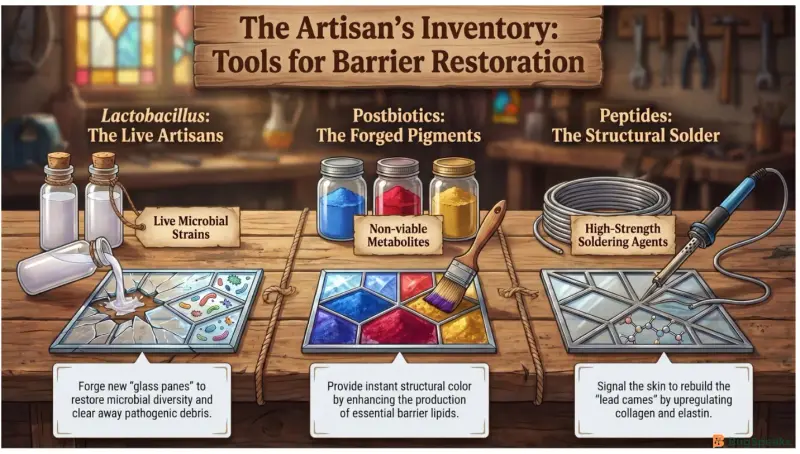
Probiotic artisans restore chronic skin fractures by re-establishing a balanced microbial demographic that suppresses the structural damage caused by harmful "rogue panes." In the world of skin health, Chronic Dermatoses like acne or rosacea represent a stained-glass window that has been chronically shattered or improperly repaired. Clinical evidence suggests that introducing live microbial artisans can restore the structural integrity of the window by outcompeting harmful strains and producing anti-inflammatory signalsNowicka et al. (2025). By strategically reseating the glass panes, these artisans prevent the "oxidative weather" from breaching the interior and causing further damage to the cathedral's foundation.
Microbial restoration is specifically essential for preventing the rust and corrosion seen in Atopic Dermatitis, a condition where the window is severely fractured and the lead joints have begun to warp. Atopic Dermatitis is often characterized by the overgrowth of Staphylococcus aureus, a "rogue pane" that displaces the loyal artisans and triggers chronic inflammation. By reintroducing beneficial microbial artisans, we can shift the Immunological Tolerance of the cathedral’s guards back toward a state of peaceZhong et al. (2026). This restorative process polishes away the "rust" and re-solders the broken joints, allowing the skin to function as a resilient and beautiful barrier once again.
When the artisan team is strong, they create a protective chemical "glaze" known as the acid mantle, which keeps the window surface acidic and inhospitable to bad bugs. This glaze acts like a high-tech coating that makes the glass panes slippery so that dirt and pathogens cannot stick to them. If the artisans are wiped out by harsh soaps or "over-cleaning," the glaze disappears, leaving the lead cams exposed to the air. This exposure is what leads to the brittleness and "crazing" that makes the skin feel dry and tight. True restoration requires more than just a temporary patch; it requires a complete recruitment of the right microbial crew to move in and live on the framework permanently.
Table 1: Artisan Restoration Studio: Ingredients and Outcomes
What Specific Pigments and Plumbing Keep the Glass Flexible?
Postbiotics and peptides add specific pigments and structural reinforcements that provide the skin window with functional brilliance and high-tensile strength. These components act as "forged pigments" that influence the skin's appearance and resilience immediately, even if the artisans aren't currently active. Peptides specifically act as high-strength soldering agents that send signals to the skin cells to rebuild the lead lattice from the inside outChoi et al. (2024). Meanwhile, the bioavailability of these pigments or how well the window can "absorb" them determines how quickly you will see the restoration results in the cathedral's light.
The Aquaporin-3 (AQP3) plumbing system consists of specialized protein channels that act as "biological water pipes" to transport moisture and nutrients to the lead cams to prevent them from becoming brittle. To prevent the glass panes from "crazing" which is the fine-line fracturing caused by dryness, these pipes must be constantly maintained by artisan metabolites like Glycerol. Glycerol acts as a "lead lubricant" that keeps the framework supple and hydrated so it can withstand mechanical pressure without shattering. If the plumbing system fails, the lead becomes dry and cracks, which is exactly how wrinkles and deep structural gaps begin to form in the skin’s stained-glass masterpiece.
When the hydration infrastructure is working at peak performance, the window remains clear and luminosity is restored. This "liquid soldering kit" approach ensures that even during a "dry season," the window remains airtight against water loss. Scientists use a measurement called Transepithelial Electrical Resistance (TEER) to check how airtight these lead cams truly are; a high score means the window is perfectly sealed. By providing the right pigments and plumbing supplies, we ensure the "wind resistance" of the window is maximized. This internal maintenance is what allows the stained glass to remain vibrant and clear for a lifetime, regardless of the weather outside.
Table 2: Cathedral Maintenance Logs: Hydration and Security
How Does the Photo-Restorative Glaze Shield the Masterpiece?
The Photo-Restorative Glaze is a specialized biochemical layer of trans-Urocanic Acid (trans-UCA) that acts as an invisible, UV-absorbing filter to protect the structural integrity of the skin’s lead framework. This bioactive compound functions as the cathedral’s primary defense against solar radiation, effectively catching and neutralizing volatile light particles before they can "bleach" the pigments of the microbial artisans. When your microbial inhabitants are well-nourished, they optimize the concentration of this trans-Urocanic Acid (trans-UCA) glaze on the surface, ensuring the light filtering into the cathedral remains soft and non-destructive. A deficiency in this glaze leaves the underlying Deoxyribonucleic Acid (DNA) blueprints vulnerable to permanent structural failure.
The DNA Scribes are specialized microbial artisans, such as Micrococcus luteus, that utilize a specialized enzyme called Photolyase to identify and repair "thermal cracks" in the skin’s lattice. These scribes act as biological glass-blowers, moving across the lead framework to perform a real-time Photorepair on Pyrimidine Dimers, the actual molecular cracks caused by the sun. By capturing energy from visible light, these artisans are able to snap broken molecular bonds back into place, ensuring the cathedral’s architectural blueprints remain intact. This microbial intervention is crucial for preventing "solar fatigue," where the window becomes so riddled with fractures that it can no longer maintain its brilliance.
Without the constant vigilance of these DNA Scribes, the skin’s stained-glass window would succumb to "fading of the blueprints," where solar radiation damages the core instructions of the cathedral's cells. The master restorer’s goal is to foster a microbiome that actively maintains this photo-restorative film and repair team. When the "Photorepair" generator is running at 100%, the cathedral stays bright and healthy even in high-intensity solar environments. This high-tech workshop approach to skin care means we are no longer just putting "blankets" (sunscreen) over the window; we are training the window to protect and repair itself automatically.
How Do Sensors and Botanical Toolkits Complete the Restoration?

Receptor signaling networks act as structural adhesives by serving as the sensors that tell the artisans how to adjust the fit of the glass panes within the lead lattice. These sensors, specifically the Toll-like Receptors (TLRs), monitor the "vibrations" on the window surface and signal the internal cathedral to either remain calm or sound an alarm. Targeted microbial restoration successfully alleviates inflammation by recalibrating these sensors, ensuring the adhesives holding the panes in place remain strong and do not become brittle from overactivityWojciechowska & Dos Santos Szewczyk (2025). This intercom system connects the glass panes directly to the cathedral’s Innate Immunity, which acts as the "Internal Guard."
The precision of Botanical Extracts is essential because these reagents provide the specialized "raw silica" and pigments that microbial artisans require to forge high-quality glass. Botanical Extracts contain antioxidant Polyphenols that act as protective glazes, preventing the "pitting" of the glass caused by aging and pollution. When combined with microbial ferments, these extracts provide a multi-layered defense system that ensures the colors of the window remain vibrant and the lead lattice stays flexible. This synergy allows the artisans to create a "glass-blowing serum" that can significantly improve the clarity and structural integrity of the entire masterpieceFew et al. (2023).
The future of microbial restoration will achieve unified skin homeostasis by moving away from "emergency repairs" and toward proactive, molecular biomanufacturing. By understanding the meticulous craftsmanship required to maintain the Master-Crafted Stained-Glass Restoration, we can ensure that the light of our health remains brilliant. We are the patrons of this great architectural project, responsible for providing our microbial artisans with the silica and heat they need to keep the window from ever shattering again. When the restoration is complete, the cathedral’s light is restorative and peaceful, protecting the internal sanctuary from the storms of life.
Table 3: Clinical Restoration Audit (Topical Serum Results)
-Varsha V
Visualize the process- https://youtu.be/-JhD7_xJaoo
Reference
Nowicka, D., Kucharczyk, E., Pawłuszkiewicz, K., Korgiel, M., Busłowicz, T., & Ponikowska, M. (2025). Topical Probiotics as a Novel Approach in the Treatment of Chronic Dermatoses Associated with Skin Dysbiosis: A Narrative Review. International Journal of Molecular Sciences, 26(20), 10195. https://doi.org/10.3390/ijms262010195
Zhong L, Zhou X, Su J, Zhang Y, Zhang D and Wan H (2026) Microbiome dysbiosis and therapeutic restoration in atopic dermatitis. Front. Cell. Infect. Microbiol. 16:1693905. doi: 10.3389/fcimb.2026.1693905
Choi, H. Y., Lee, Y. J., Kim, C. M., & Lee, Y.-M. (2024). Revolutionizing Cosmetic Ingredients: Harnessing the Power of Antioxidants, Probiotics, Plant Extracts, and Peptides in Personal and Skin Care Products. Cosmetics, 11(5), 157. https://doi.org/10.3390/cosmetics11050157
Wojciechowska, K., & Dos Santos Szewczyk, K. (2025). The Skin Microbiome and Bioactive Compounds: Mechanisms of Modulation, Dysbiosis, and Dermatological Implications. Molecules, 30(22), 4363. https://doi.org/10.3390/molecules30224363
Julius Few, Michael Lee, Alec Semersky, Emily Mariscal, Sydney Pryor, Akshay Talati, A Single-Center Study Evaluating the Effects of a Topical Serum Combining Postbiotics, Peptides, and Botanical Extracts on Skin, Aesthetic Surgery Journal Open Forum, Volume 5, 2023, ojad055, https://doi.org/10.1093/asjof/ojad055