# Understanding Estrobolome: A Guide to Hormone Balance and Acne
Author: BugSpeaks
Author URL: https://www.bugspeaks.com/blog/author/bugspeaks
Published: 2026-07-22
Category: Microbiome and Disease
Category URL: https://www.bugspeaks.com/blog/category/microbiome-and-disease
Meta Title: Estrobolome: Hormone Balance & Acne | BugSpeaks
Meta Description: Learn how the estrobolome regulates hormone balance, the gut-skin axis, and acne. Discover diet and gut health strategies for clearer, healthier skin.
Tags: acne, Estrobolome, Hormone Balance
Tag URLs: acne (https://www.bugspeaks.com/blog/tag/acne), Estrobolome (https://www.bugspeaks.com/blog/tag/estrobolome), Hormone Balance (https://www.bugspeaks.com/blog/tag/hormone-balance)
URL: https://www.bugspeaks.com/blog/estrobolome-hormonal-balance-acne
## What is the estrobolome and how does it manage your body's hormone levels?
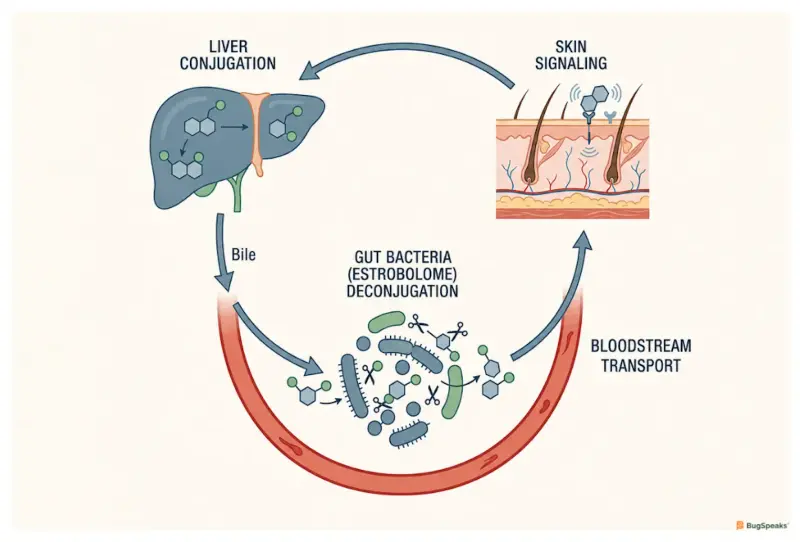
Inside your gut, a helpful bacterial crew called the [estrobolome](https://www.bugspeaks.com/blog/autoimmunity-guthealth-gutmicrobiome) acts like a traffic controller, choosing exactly how much estrogen is allowed to re-enter your body and how much is safely cleared out as waste [Lephart and Naftolin (2022)](https://www.ncbi.nlm.nih.gov/pmc/articles/PMC9276867/). To understand this, imagine your body as a Hormone Exit & Re-Entry System that manages these hormone passengers [Larnder et al. (2025)](https://www.ncbi.nlm.nih.gov/pmc/articles/PMC12178105/). Active hormones like estrogen are departing molecules scheduled to leave once their work is finished [Larnder et al. (2025)](https://www.ncbi.nlm.nih.gov/pmc/articles/PMC12178105/). Before these departing molecules can exit, they must pass a checkpoint that determines if they leave or receive a ticket to return [Lephart and Naftolin (2022)](https://www.ncbi.nlm.nih.gov/pmc/articles/PMC9276867/).
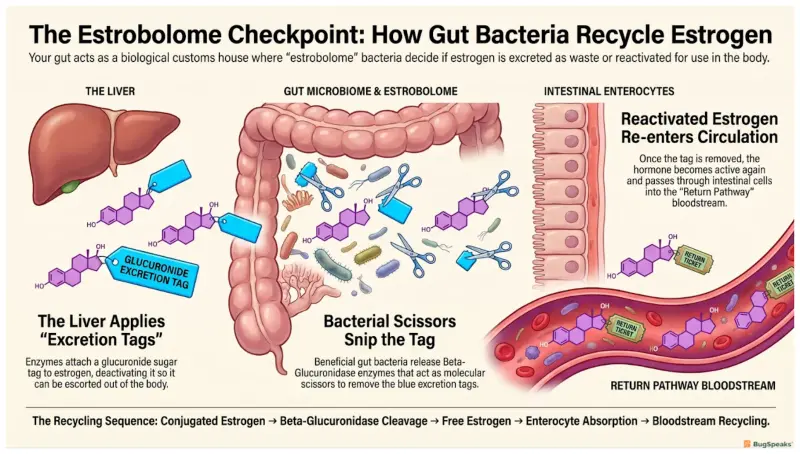
The journey of these departing molecules begins in your liver, which serves as the exit preparation site for hormones [Lephart and Naftolin (2022)](https://www.ncbi.nlm.nih.gov/pmc/articles/PMC9276867/). At this site, the liver modifies highly active estrogen to make it safe and water-soluble through a process called conjugation [Lephart and Naftolin (2022)](https://www.ncbi.nlm.nih.gov/pmc/articles/PMC9276867/). This task is done by enzymes known as uridine diphosphate-glucuronosyltransferase (UGT) enzymes, which attach a chemical sugar tag to each hormone [Lephart and Naftolin (2022)](https://www.ncbi.nlm.nih.gov/pmc/articles/PMC9276867/). Once tagged, these inactive hormones travel into the intestine, which acts as the departure checkpoint, where they wait to either be excreted or prepared for re-entry [Lephart and Naftolin (2022)](https://www.ncbi.nlm.nih.gov/pmc/articles/PMC9276867/).
Normally, this tagged package travels through the gut and exits the body via the waste, but the estrobolome can change this plan [Larnder et al. (2025)](https://www.ncbi.nlm.nih.gov/pmc/articles/PMC12178105/). If the bacterial crew determines that the body needs more active hormones, they use an enzyme called beta-glucuronidase to perform deconjugation [Lephart and Naftolin (2022)](https://www.ncbi.nlm.nih.gov/pmc/articles/PMC9276867/). This enzyme acts as a re-entry mechanism that snips the sugar tag right off the departing molecule [Larnder et al. (2025)](https://www.ncbi.nlm.nih.gov/pmc/articles/PMC12178105/). Once the tag is removed, the hormone becomes active again, gets a return ticket, is reabsorbed, and enters the bloodstream return pathway [Lephart and Naftolin (2022)](https://www.ncbi.nlm.nih.gov/pmc/articles/PMC9276867/). This continuous loop is known as enterohepatic recirculation [Lephart and Naftolin (2022)](https://www.ncbi.nlm.nih.gov/pmc/articles/PMC9276867/).
**Biological Component**
**System Equivalent**
**Core Educational & Biological Purpose**
Liver
Exit Preparation Site
Preparing reactive hormones for safe excretion through conjugation by UGT enzymes.
Estrogen
Departing Molecule
Active signaling molecules traveling through the body to regulate cell hydration and elasticity.
Intestine (Gut)
Departure Checkpoint
The staging area where tagged hormones wait for either permanent excretion or re-entry.
Estrobolome
Re-Entry Facilitator
The specialized bacterial crew managing the checkpoint and deciding which hormones get recycled.
Beta-glucuronidase
Re-Entry Mechanism
The bacterial enzyme that deconjugates hormones, giving them a passenger ticket to return.
Bloodstream
Return Pathway
The vascular highway that routes recycled active hormones back into systemic circulation and the skin.
**Estrobolome**\- The collection of gut bacteria and their genes that can metabolize and recycle estrogen hormones simply and efficiently.
**Estrogen**\- A group of primary sex hormones that regulate many functions in the body, including skin thickness, hydration, and oil production.
**Conjugation**\- The chemical process in the liver where a sugar tag is attached to a hormone to deactivate it for excretion.
**Deconjugation**\- The chemical process where gut bacteria remove the sugar tag, turning a deactivated hormone back into an active one.
**Beta-glucuronidase**\- A specialized bacterial enzyme that deconjugates estrogens, allowing them to be reabsorbed.
**Uridine diphosphate-glucuronosyltransferase** or **UDP-glucuronosyltransferase** ( **UGT**)\- The liver enzyme family responsible for attaching a sugar tag to estrogens during phase II metabolism to prepare them for excretion.
## How do hormones travel through the Hormone Exit & Re-Entry System to influence your skin?
Hormones travel from your liver, pass through your gut checkpoint, and return via the bloodstream to interact directly with receptor proteins on your skin cells, which control skin cell growth, moisture, and inflammation [Lephart and Naftolin (2022)](https://www.ncbi.nlm.nih.gov/pmc/articles/PMC9276867/). In this system, the bloodstream acts as the return pathway, transporting reactivated departing molecules from the gut checkpoint back to active duty throughout the body [Lephart and Naftolin (2022)](https://www.ncbi.nlm.nih.gov/pmc/articles/PMC9276867/). When hormones are given return tickets at the gut checkpoint, they travel along this return pathway and arrive at the skin [Lephart and Naftolin (2022)](https://www.ncbi.nlm.nih.gov/pmc/articles/PMC9276867/). This direct communication network linking our gut to our skin is called the gut-skin axis [Zhao et al. (2025)](https://www.ncbi.nlm.nih.gov/pmc/articles/PMC12494302/).
To understand how these returning molecules affect your skin, we must look at the receptors waiting at the destination [Lephart and Naftolin (2022)](https://www.ncbi.nlm.nih.gov/pmc/articles/PMC9276867/). Your skin cells have specialized landing pads called estrogen receptors, which bind these hormones [Lephart and Naftolin (2022)](https://www.ncbi.nlm.nih.gov/pmc/articles/PMC9276867/). The most prominent landing pad is estrogen receptor beta, which binds estrogen to regulate key dermal processes [Lephart and Naftolin (2022)](https://www.ncbi.nlm.nih.gov/pmc/articles/PMC9276867/). When the departing molecules are recycled via the enterohepatic recirculation loop and bind to these receptors, they stimulate collagen, promote cellular turnover, and maintain the skin barrier [Lephart and Naftolin (2022)](https://www.ncbi.nlm.nih.gov/pmc/articles/PMC9276867/). This signaling keeps your skin thick and hydrated [Lephart and Naftolin (2022)](https://www.ncbi.nlm.nih.gov/pmc/articles/PMC9276867/).
This hormonal path is further regulated by other enzymes at our gut checkpoint that manage different steroid pathways [Larnder et al. (2025)](https://www.ncbi.nlm.nih.gov/pmc/articles/PMC12178105/). For instance, enzymes called hydroxysteroid dehydrogenases (HSDs), including 3β-hydroxysteroid dehydrogenase and 17β-hydroxysteroid dehydrogenase, help interconvert different hormone precursors in gut bacteria [Larnder et al. (2025)](https://www.ncbi.nlm.nih.gov/pmc/articles/PMC12178105/). These microbial workers can transform inactive precursors into active hormones right at the checkpoint, adding another layer of complexity to the volume of molecules entering the return pathway [Larnder et al. (2025)](https://www.ncbi.nlm.nih.gov/pmc/articles/PMC12178105/). When these pathways cooperate smoothly, the systemic hormone pool remains stable, and the skin receives exactly what it needs [Lephart and Naftolin (2022)](https://www.ncbi.nlm.nih.gov/pmc/articles/PMC9276867/).
**Gut-skin axis**\- The bidirectional communication network linking our gut health and microbiome directly to our skin health.
**Enterohepatic recirculation**\- The continuous recycling loop where compounds are metabolized in the liver, excreted into the bile, passed into the gut, and then reabsorbed back into the blood.
**Hydroxysteroid Dehydrogenases** ( **HSDs**)\- A class of bacterial enzymes involved in the processing and interconversion of steroid hormones and precursors, including 3β-hydroxysteroid dehydrogenase and 17β-hydroxysteroid dehydrogenase.
## Why does an imbalance in your gut checkpoint trigger stubborn acne?
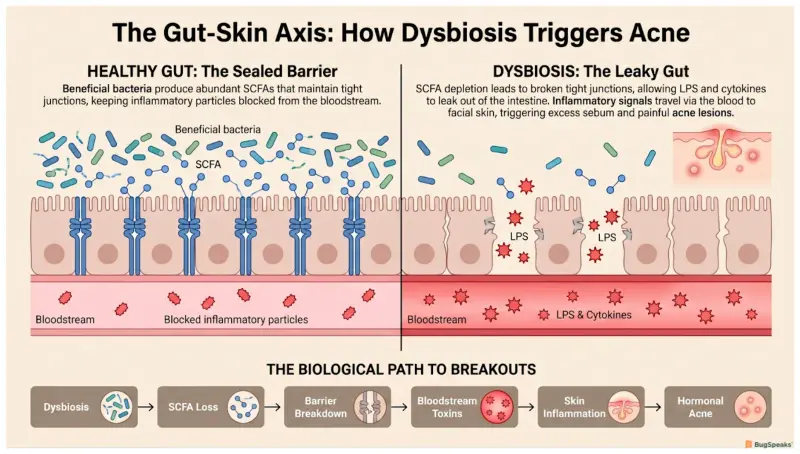
An imbalance in your gut checkpoint, known as dysbiosis, triggers skin inflammation and acne because it alters the amount of recycled hormones returning to your blood while disrupting the protective molecules that keep your skin barrier strong [Zhao et al. (2025)](https://www.ncbi.nlm.nih.gov/pmc/articles/PMC12494302/). When your gut checkpoint experiences dysbiosis, the specialized bacterial crew becomes disorganized, allowing opportunistic pathogens to outcompete beneficial, protective microbes [Zhao et al. (2025)](https://www.ncbi.nlm.nih.gov/pmc/articles/PMC12494302/). This chaos alters the production of beta-glucuronidase enzymes, leading to erratic deconjugation and causing wild swings in the volume of hormones entering the return pathway [Larnder et al. (2025)](https://www.ncbi.nlm.nih.gov/pmc/articles/PMC12178105/). These fluctuations destabilize skin oil glands [Zhao et al. (2025)](https://www.ncbi.nlm.nih.gov/pmc/articles/PMC12494302/).
The breakdown of the checkpoint also directly damages the gut barrier itself, which relies on beneficial microbes to stay intact [Zhao et al. (2025)](https://www.ncbi.nlm.nih.gov/pmc/articles/PMC12494302/). Healthy checkpoint bacteria ferment dietary fiber to produce beneficial molecules called short-chain fatty acids (SCFAs), such as butyrate, which keep the checkpoint walls tightly sealed [Zhao et al. (2025)](https://www.ncbi.nlm.nih.gov/pmc/articles/PMC12494302/). In a state of dysbiosis, the production of these protective short-chain fatty acids drops significantly, causing the intestinal lining to become leaky and permeable [Zhao et al. (2025)](https://www.ncbi.nlm.nih.gov/pmc/articles/PMC12494302/). This leakiness allows inflammatory bacterial fragments and toxic metabolites to escape the checkpoint and slip into the return pathway [Zhao et al. (2025)](https://www.ncbi.nlm.nih.gov/pmc/articles/PMC12494302/).
Once in the bloodstream, these inflammatory signals travel straight to the skin, where they trigger systemic immune activation and cause severe, red, and painful breakouts [Zhao et al. (2025)](https://www.ncbi.nlm.nih.gov/pmc/articles/PMC12494302/). This systemic inflammation works hand-in-hand with the hormonal disruptions caused by the malfunctioning estrobolome [Lephart and Naftolin (2022)](https://www.ncbi.nlm.nih.gov/pmc/articles/PMC9276867/). Under this dual stress, the sebaceous glands are stimulated to produce thick, excess sebum, which clogs pores and creates a perfect environment where acne-causing bacteria thrive [Zhao et al. (2025)](https://www.ncbi.nlm.nih.gov/pmc/articles/PMC12494302/). The result is acne vulgaris (AV), a chronic inflammatory skin disease that is extremely difficult to treat with simple topical creams [Zhao et al. (2025)](https://www.ncbi.nlm.nih.gov/pmc/articles/PMC12494302/).
**Dysbiosis**\- An imbalance or disruption in the normal community of gut microbes, characterized by a loss of beneficial bacteria and an overgrowth of harmful ones.
**Short-chain fatty acids** ( **SCFAs**)\- Beneficial molecules produced by gut bacteria when they ferment dietary fiber, which nourish the gut lining and reduce systemic inflammation.
**Acne vulgaris** ( **AV**)\- A chronic inflammatory skin disease affecting sebaceous units, characterized by comedones, papules, pustules, and deep breakouts.
## What is the connection between testosterone, the gut microbiota, and skin health?
Elevated levels of testosterone and other male hormones, a condition known as hyperandrogenism, are closely linked to a less diverse gut microbiome and increased sebum production, which directly promotes severe, inflammatory acne [Li et al. (2024)](https://www.ncbi.nlm.nih.gov/pmc/articles/PMC11169812/). In women, this hormonal excess is a defining feature of polycystic ovary syndrome (PCOS), a highly prevalent metabolic and reproductive disorder that affects millions of women worldwide [Li et al. (2024)](https://www.ncbi.nlm.nih.gov/pmc/articles/PMC11169812/). When active androgens like testosterone flood your entire body, they act as powerful signals that fundamentally alter the composition, diversity, and efficiency of your intestinal checkpoint crew [Li et al. (2024)](https://www.ncbi.nlm.nih.gov/pmc/articles/PMC11169812/). This disruption can lead to chronic skin inflammation [Zhao et al. (2025)](https://www.ncbi.nlm.nih.gov/pmc/articles/PMC12494302/).
A landmark study by [Li et al. (2024)](https://www.ncbi.nlm.nih.gov/pmc/articles/PMC11169812/) revealed that women with hyperandrogenic [polycystic ovary syndrome (PCOS)](https://www.bugspeaks.com/blog/pcos-guthealth-insulinresistance) exhibit a dramatic decrease in the richness and diversity of their gut microbiota compared to healthy controls. At their intestinal checkpoint, beneficial, fiber-fermenting bacterial families like Bacteroidaceae and Oscillospiraceae are severely depleted, which reduces the production of protective anti-inflammatory metabolites [Li et al. (2024)](https://www.ncbi.nlm.nih.gov/pmc/articles/PMC11169812/). Instead, their gut checkpoint is heavily dominated by pro-inflammatory bacterial families such as Enterobacteriaceae and Streptococcaceae, which promote local and systemic inflammation, weakening the checkpoint walls and triggering systemic flares and inflammatory acne [Li et al. (2024)](https://www.ncbi.nlm.nih.gov/pmc/articles/PMC11169812/). This makes their skin highly vulnerable to breakouts [Zhao et al. (2025)](https://www.ncbi.nlm.nih.gov/pmc/articles/PMC12494302/).
The study also identified key steroid hormones such as corticosterone, 5β-androsterone, and deoxycorticosterone that are significantly upregulated in the blood of patients, serving as potential biomarkers of this disrupted state [Li et al. (2024)](https://www.ncbi.nlm.nih.gov/pmc/articles/PMC11169812/). These elevated cortical and androgenic hormones drive metabolic complications, weight gain, and systemic stress responses [Li et al. (2024)](https://www.ncbi.nlm.nih.gov/pmc/articles/PMC11169812/). Interestingly, the researchers found that levels of testosterone negatively correlate with vitamin D3, suggesting that a deficiency in this nutrient acts as a major susceptibility factor that further destabilizes the gut-skin axis, letting inflammatory signals pass unchecked to create stubborn breakouts [Li et al. (2024)](https://www.ncbi.nlm.nih.gov/pmc/articles/PMC11169812/). Supplementing vitamin D3 may restore this balance [Li et al. (2024)](https://www.ncbi.nlm.nih.gov/pmc/articles/PMC11169812/).
**Bacterial Family / Genus**
**Status in HA-PCOS**
**Primary Checkpoint Function**
**Direct Impact on Dermal Health & Clear Skin**
Bacteroidaceae & Oscillospiraceae
Severely Depleted
Ferment fiber to produce short-chain fatty acids (SCFAs).
Nourishes gut lining, keeps checkpoint sealed, and reduces systemic inflammation.
Enterobacteriaceae & Streptococcaceae
Heavily Dominated
Promote local pro-inflammatory cascades.
Weakens checkpoint walls, triggering systemic flares and inflammatory acne.
Bifidobacterium
Significantly Elevated
Implicated in complex steroid hormone biosynthesis.
Correlates with disruptions in corticosterone and stress pathways.
**Hyperandrogenism**\- A medical condition characterized by excessive levels of androgens, such as testosterone, in the female body.
**Polycystic ovary syndrome** ( **PCOS**)\- A common hormonal disorder in women of reproductive age, characterized by irregular periods, excess androgen levels, and polycystic ovaries.
**Testosterone**\- A primary male sex hormone (androgen) that is also present in smaller amounts in females and stimulates sebum production in the skin.
**Corticosterone**\- A stress-responsive steroid hormone that influences metabolism and immune function.
**Deoxycorticosterone**\- A steroid hormone that serves as an intermediate in hormone synthesis and regulates electrolyte balance.
**5β-androsterone**\- A testosterone metabolite that contributes to androgenic activity.
## How can we support our hormone exit and re-entry checkpoint through diet and lifestyle?
We can support our hormone exit and re-entry checkpoint by consuming a fiber-rich diet that feeds beneficial bacteria, using plant-based compounds to balance hormone receptors, and managing daily stress and sleep to stabilize gut-skin communication [Lephart and Naftolin (2022)](https://www.ncbi.nlm.nih.gov/pmc/articles/PMC9276867/). Shifting our diet is one of the most immediate and powerful ways to alter the composition and performance of our gut checkpoint crew [Lephart and Naftolin (2022)](https://www.ncbi.nlm.nih.gov/pmc/articles/PMC9276867/). Diets rich in animal proteins and saturated fats are associated with higher fecal beta-glucuronidase activity, which leads to excessive hormone re-entry and potential hormonal imbalances [Lephart and Naftolin (2022)](https://www.ncbi.nlm.nih.gov/pmc/articles/PMC9276867/). Fiber significantly decreases its activity [Lephart and Naftolin (2022)](https://www.ncbi.nlm.nih.gov/pmc/articles/PMC9276867/).
In addition to fiber, we can introduce protective plant-based compounds known as phytoestrogens, which are found in abundance in foods like soybeans, flaxseeds, and berries [Larnder et al. (2025)](https://www.ncbi.nlm.nih.gov/pmc/articles/PMC12178105/). When these plant molecules reach the gut checkpoint, specialized microbial enzymes called beta-glucosidases perform a critical transformation, converting inactive plant glycosides into highly active, free-floating molecules [Larnder et al. (2025)](https://www.ncbi.nlm.nih.gov/pmc/articles/PMC12178105/). These active compounds act as selective estrogen receptor modulators (SERMs), which can bind to estrogen receptors on skin cells and act as natural helpers [Lephart and Naftolin (2022)](https://www.ncbi.nlm.nih.gov/pmc/articles/PMC9276867/). They help stabilize estrogen signaling, reduce skin inflammation, and boost hydration [Lephart and Naftolin (2022)](https://www.ncbi.nlm.nih.gov/pmc/articles/PMC9276867/).
Beyond diet, our daily habits and behaviors play a massive role in regulating the gut-skin communication network, helping to stabilize our biological systems [Lephart and Naftolin (2022)](https://www.ncbi.nlm.nih.gov/pmc/articles/PMC9276867/). Sleep deprivation, physical inactivity, and chronic stress directly trigger the release of stress hormones like cortisol, which damages the physical integrity of the gut barrier and causes a rapid shift toward dysbiosis [Lephart and Naftolin (2022)](https://www.ncbi.nlm.nih.gov/pmc/articles/PMC9276867/). Practicing stress-reduction techniques and getting quality sleep help keep the gut lining intact, reduce the spillover of inflammatory markers, and ensure that the entire system can operate with maximum precision, efficiency, and long-term stability [Zhao et al. (2025)](https://www.ncbi.nlm.nih.gov/pmc/articles/PMC12494302/).
**Phytoestrogens**\- Plant-derived compounds that are structurally similar to estrogen and can mimic or block estrogen's action in the body.
**Beta-glucosidases**\- Microbial enzymes that break down plant-based phytoestrogen glycosides into their active, beneficial forms.
**Selective estrogen receptor modulators** ( **SERMs**)\- Compounds that selectively bind to estrogen receptors in different tissues, acting as estrogen helpers or blockers depending on the tissue.
-Varsha V
Visualize the process- [https://youtu.be/9NIHe9u8KHU](https://youtu.be/9NIHe9u8KHU)
### Reference
Larnder, A. H., Manges, A. R., & Murphy, R. A. (2025). The estrobolome: Estrogen-metabolizing pathways of the gut microbiome and their relation to breast cancer. _International journal of cancer_, _157_(4), 599–613. [https://doi.org/10.1002/ijc.35427](https://doi.org/10.1002/ijc.35427)
Zhao, Y., Yu, C., Zhang, J., Yao, Q., Zhu, X., & Zhou, X. (2025). The gut‑skin axis: Emerging insights in understanding and treating skin diseases through gut microbiome modulation (Review). _International journal of molecular medicine_, _56_(6), 210. [https://doi.org/10.3892/ijmm.2025.5651](https://doi.org/10.3892/ijmm.2025.5651)
Li, M., Chang, Q., Luo, Y., Pan, J., Hu, Y., Liu, B., Ma, M., Wang, Q., Guo, Y., & Wang, Q. (2024). The gut microbial composition in polycystic ovary syndrome with hyperandrogenemia and its association with steroid hormones. _Frontiers in cell and developmental biology_, _12_, 1384233\. [https://doi.org/10.3389/fcell.2024.1384233](https://doi.org/10.3389/fcell.2024.1384233)
Lephart, E. D., & Naftolin, F. (2022). Estrogen Action and Gut Microbiome Metabolism in Dermal Health. _Dermatology and therapy_, _12_(7), 1535–1550. [https://doi.org/10.1007/s13555-022-00759-1](https://doi.org/10.1007/s13555-022-00759-1)
## FAQs
Q: What is the difference between the gut-skin axis and the estrobolome?
A: The gut-skin axis is the overall bidirectional communication network that connects your digestive health, immune responses, and metabolic pathways directly to your skin cells Zhao et al. (2025). The estrobolome is a specific subset of this axis—a dedicated crew of gut bacteria and genes that focus exclusively on metabolizing and recycling estrogen hormones Lephart and Naftolin (2022). While the gut-skin axis regulates many different pathways (like immunity and stress), the estrobolome specifically manages the hormone exit and re-entry pathways Larnder et al. (2025).
Q: How does a high-sugar or high-fat diet affect my hormone re-entry system?
A: Diets rich in simple sugars, animal proteins, and saturated fats are associated with significantly higher fecal beta-glucuronidase activity Lephart and Naftolin (2022). This over-activation means that too many departing molecules are granted return tickets, resulting in an excess of active hormones entering your bloodstream return pathway Lephart and Naftolin (2022). In contrast, dietary fiber from plant foods feeds beneficial bacteria, reducing beta-glucuronidase activity and helping hormones exit smoothly Lephart and Naftolin (2022).
Q: Why does hormonal acne usually appear as deep, painful cysts along the jawline?
A: Hormonal acne is primarily driven by surges in androgens like testosterone, which bind to specialized receptors on the skin's sebaceous glands, concentrated heavily on the lower face and jawline Zhao et al. (2025). High testosterone signals these glands to produce thick, excessive oil Zhao et al. (2025). When combined with pro-inflammatory cytokines leaking from a compromised gut checkpoint due to dysbiosis, this oil creates deep, oxygen-deprived blocks where bacteria flourish, causing painful cysts rather than simple surface blemishes Zhao et al. (2025).
Q: Can taking vitamin D3 help reduce severe hormonal acne?
A: Yes, clinical evidence suggests that vitamin D3 plays a critical role in supporting the gut-skin axis and managing hormonal disorders Li et al. (2024). A deficiency in vitamin D3 acts as a major susceptibility factor, correlating directly with elevated testosterone levels and increased gut barrier leakiness Li et al. (2024). Supplementing with vitamin D3 helps strengthen the intestinal checkpoint, reduces the translocation of pro-inflammatory markers, and helps stabilize sebum production Li et al. (2024).
Q: How do plant-based phytoestrogens act as SERMs to support skin moisture without hormonal risks?
A: Plant-based phytoestrogens (like soy isoflavones) are conjugated molecules that are converted by gut beta-glucosidases into active, gentle compounds Larnder et al. (2025). Once converted, they enter the return pathway and act as selective estrogen receptor modulators (SERMs) Lephart and Naftolin (2022). This means they bind selectively to estrogen receptor beta landing pads on skin cells, promoting collagen and moisture, while avoiding the hyper-reactive risks and side effects associated with synthetic estrogen therapy Lephart and Naftolin (2022).
---
This blog is powered by Superblog. Visit https://superblog.ai to know more.
---