What happens inside our digestive tract when coffee enters as a biological stimulus?
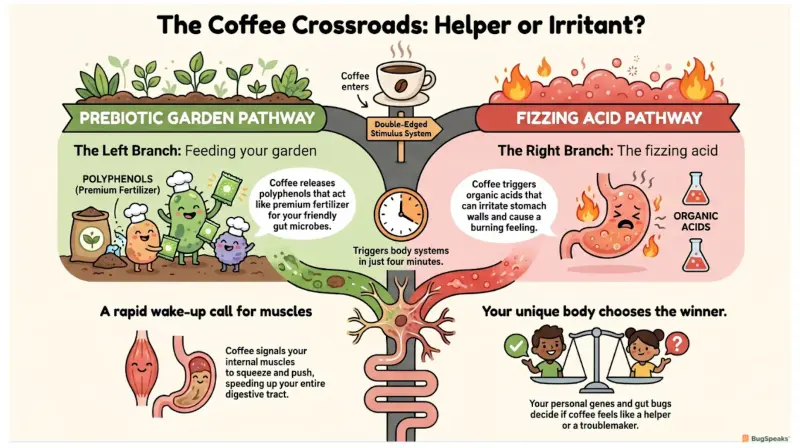
Coffee acts as a rapid biological stimulus that triggers immediate physical reactions throughout your entire digestive systemSaygili (2024). When you take a sip, this morning beverage acts like a special key that turns on different biological pathways inside your body. It instantly tells your stomach to start moving and signals your brain to wake up, creating a series of fast actions. This dual physical reaction is best understood as the Double-Edged Stimulus System. This system shows how the very same cup of coffee can send beneficial signals to one part of your body while causing potential irritation in your stomach lining. These reactions happen simultaneously inside you.
As this warm liquid travels down your esophagus, it begins a fascinating physical journey through your gastrointestinal tractSaygili (2024). Your gastrointestinal tract, which we can call the GI tract, is the long muscular tube that digests all your food. The moment coffee enters this tube, it acts like an energetic wake-up call for your internal muscles. It causes rapid neuromuscular contractions in your digestive organs, which gently squeeze and push things alongSaygili (2024). These muscle movements happen extremely quickly, often within just four minutes after you finish drinking your cup, whether you choose regular or decaffeinated coffee. This rapid physical movement keeps your digestive tract perfectly active.
In addition to moving your muscles, this biological stimulus triggers the release of special chemical messengers called hormones (Saygili, 2024). One major hormone released by coffee is gastrin, which signals your stomach to release digestive juices to break down food (Saygili, 2024). Both caffeinated and decaffeinated coffee are highly effective at raising gastrin levels, meaning this reaction happens even without any caffeine. This initial phase of the Double-Edged Stimulus System prepares your body for digestion. However, because it activates your systems so quickly, it can sometimes feel a bit too intense for sensitive stomachs. This is why some people feel a sudden rush of warmth.
How does the gut microbiome act as the primary beneficiary of coffee's prebiotic-like components?
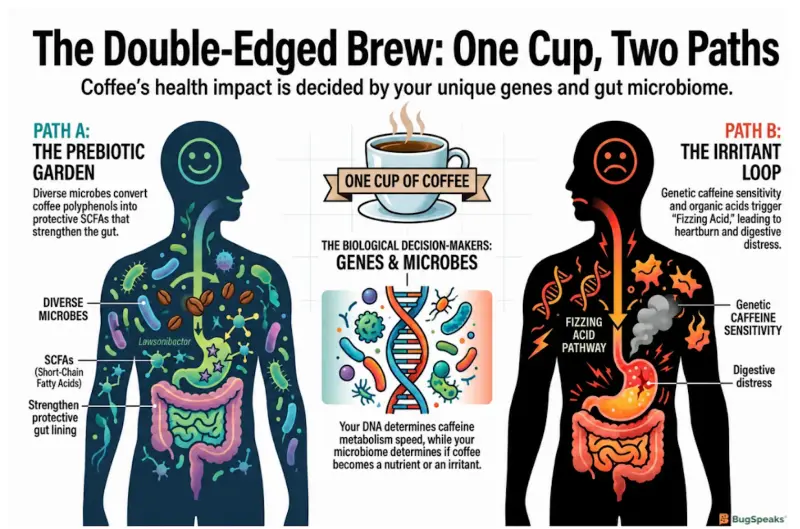
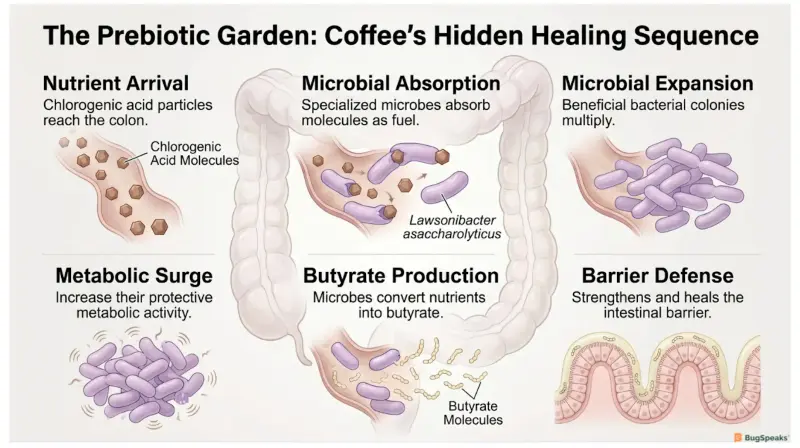
Coffee serves as a healthy source of prebiotic compounds that selectively feed and grow beneficial gut bacteriaSaygili (2024). Within our system, we refer to these microscopic, friendly organisms as your body's essential gut microbiomeSaygili (2024). The most prominent microbial resident that loves coffee is a helpful bacterium named Lawsonibacter asaccharolyticus, which grows rapidly when coffee is aroundManghi (2024). This special microbe acts as a prebiotic helper by consuming the rich nutrients found in your morning drink. When you drink coffee, you are actually supplying premium fuel to these friendly microbes so they can multiply, thrive, and keep your body healthy. These friendly microbes are extremely important for your safety.
These helpful prebiotic helpers are incredibly abundant in healthy people who drink coffee worldwide. Science shows that coffee contains large amounts of healthy molecules called polyphenols, which are natural plant chemicals with protective benefitsBoscaini (2026). The most common type of these plant chemicals in coffee is chlorogenic acid, which works like premium fertilizer for your friendly microbesManghi (2024). Your gut microbes digest this chlorogenic acid and turn it into other useful chemicals that help protect your body from inflammation. This beautiful partnership clearly shows how your morning beverage directly supports the microscopic life forms living inside your tummy. It acts as a healthy fertilizer for your gut.
When these friendly bacteria consume coffee nutrients, they also produce beneficial substances called short-chain fatty acidsSaygili (2024). These short-chain fatty acids, or SCFAs, act like protective building blocks that strengthen the delicate lining of your colon. A strong gut lining is important because it keeps harmful toxins from leaking out into the rest of your body. By feeding these helpful bacteria, your morning brew indirectly boosts your immune system and lowers inflammationBoscaini (2026). This pathway represents the bright, beneficial side of our Double-Edged Stimulus System, where coffee behaves as a highly supportive partner for your daily health and happy well-being. This is how you nourish your microscopic garden.
What role do the activating effects of caffeine play in this dual-pathway system?
Caffeine acts as a powerful physical activator that speeds up bowel movements and stimulates your central nervous systemSaygili (2024). In our system, we call caffeine the Speed Booster because of how it accelerates various bodily functions. It works by blocking special receptors in your brain that normally make you feel tired and sleepyBoscaini (2026). This blockage gives you energy, increases focus, and makes you feel alert. However, this Speed Booster also travels down to your intestines, where it signals your digestive muscles to contract much faster than they normally do. This rapid physical speed boost is why caffeine is famous.
This rapid increase in muscle movement explains why many people feel a sudden urge to visit the bathroom after drinking coffeeSaygili (2024). The caffeine activator is so effective that it can speed up your colon's movement just as much as a large meal. This quick reaction is helpful for individuals who suffer from constipation because it keeps their system moving regularly. But for others, this sudden burst of speed can feel like a stressful rush inside their digestive tract. It shows how the Speed Booster can be both a helpful mover and a potential source of physical urgency. This means your morning drink acts as a natural helper.
Additionally, caffeine triggers your adrenal glands to release hormones that prepare your body for active physical or mental workBoscaini (2026). While this gives you a wonderful feeling of productivity, it also temporarily raises your blood pressure and increases your heart rate. This activating pathway is highly sensitive to the amount of coffee you drink throughout the day. If you drink too much, the Speed Booster can easily overwhelm your system, leading to feelings of jitteriness or mild anxiety. Managing this active force is a key part of keeping your internal systems perfectly balanced, happy, and relaxed. This helps you feel great every single day.
How does coffee activate possible irritant pathways like stomach acid production and digestive discomfort?
Coffee can irritate your digestive tract by boosting stomach acid levels and causing overly rapid muscle contractionsSaygili (2024). Within our system, this is known as the Fizzing Acid Pathway, which represents the potential irritant side. Coffee contains organic acids that signal special cells in your stomach lining to produce much more gastric acidSaygili (2024). This extra acid is highly useful for breaking down heavy foods, but when your stomach is empty, it can cause trouble. The strong acid can irritate the delicate walls of your stomach, causing a warm burning sensation commonly known as heartburn. This acid is like a fizzing soda bottle inside.
This irritant pathway is further activated because coffee relaxes the lower esophageal sphincter, which is the muscular ring protecting your throatSaygili (2024). The lower esophageal sphincter, which we can call the LES, acts like a one-way safety valve between your esophagus and your stomach. When this muscular valve relaxes, the acidic stomach juices splash upward into your throat. This backward splash of acid is what creates the uncomfortable burning feeling associated with heartburnSaygili (2024). This clearly shows how coffee's natural chemicals can accidentally open doors that should always remain closed for your safety and comfort. This causes a warm and burning throat sensation.
For people who have sensitive digestive systems or active gut inflammation, this acid buildup can cause significant daily discomfortSaygili (2024). The extra acid and rapid squeezing can irritate the sensitive lining of both your stomach and your small intestine. This irritation is why some people experience mild stomach aches, bloating, or cramping after enjoying their morning beverage. Understanding this pathway helps us see why coffee is not a simple drink but a complex stimulus. It can easily trigger irritation if your body's natural defenses are not fully prepared for its acidic arrival. We must always learn to manage this powerful force.
Why are coffee's ultimate health effects an individualized outcome for every person?
The final health effect of coffee is a highly personal outcome shaped by your unique genes and gut microbesBoscaini (2026). In our system, we call this the individualized outcome because every individual body reacts differently to coffee. Your genetic blueprint determines how quickly your liver can break down caffeine and clear it from your bloodstream. Some people are fast metabolizers who can drink multiple cups and sleep peacefully, while slow metabolizers get jittery from just a few sips. This means your response to coffee is pre-programmed by your parents' DNA, which determines your chemical traits. This genetic code is your body's private instruction book.
Similarly, the friendly microbes living in your digestive tract play a massive role in deciding your personal coffee outcomeManghi (2024). If your gut is rich in Lawsonibacter asaccharolyticus, you can easily unlock the healthy polyphenols in coffee and turn them into protective nutrients. But if your microbes are out of balance, your body might not receive those wonderful prebiotic benefits at all. This means your microbiome acts like a personalized filter that determines whether coffee behaves as a friendly helper or an inactive visitor. Your gut flora is unique, just like your fingerprint. It actively protects your overall health every single day.
Ultimately, finding your perfect coffee balance requires listening closely to the daily signals sent by your own bodyBoscaini (2026). For an individual with a highly diverse microbiome and low caffeine sensitivity, coffee acts as an exceptional prebiotic helper. However, for someone with a sensitive stomach or high anxiety, the very same cup can act as an irritant. By understanding the Double-Edged Stimulus System, you can adjust your coffee habits to support your personal biology. This personalized approach ensures you can enjoy the prebiotic benefits of your favorite brew while keeping irritants far away. It is your ultimate path to perfect digestive happiness.
-Varsha V
Visualize the process- https://youtu.be/R05WiHC-aUc
Reference
Boscaini, S., Bastiaanssen, T. F. S., Moloney, G. M., Bergamo, F., Zeraik, L., O'Leary, C., Ferri, A., Irfan, M., van der Rhee, M., Lindemann, T. I. F., Schneider, E., Meyyappan, A. C., Harold, K. B., Long-Smith, C. M., Carbia, C., O'Riordan, K. J., de Alvarenga, J. F. R., Tosi, N., Del Rio, D., Rosi, A., … Cryan, J. F. (2026). Habitual coffee intake shapes the gut microbiome and modifies host physiology and cognition. Nature communications, 17(1), 3439. https://doi.org/10.1038/s41467-026-71264-8
Manghi, P., Bhosle, A., Wang, K., Marconi, R., Selma-Royo, M., Ricci, L., ... & Song, M. (2024). Coffee consumption is associated with intestinal Lawsonibacter asaccharolyticus abundance and prevalence across multiple cohorts. Nature microbiology, 9(12), 3120-3134.
Saygili, S., Hegde, S., & Shi, X. Z. (2024). Effects of Coffee on Gut Microbiota and Bowel Functions in Health and Diseases: A Literature Review. Nutrients, 16(18), 3155. https://doi.org/10.3390/nu16183155