Why does the fresh banana leaf serve as a natural protective shield for our food?
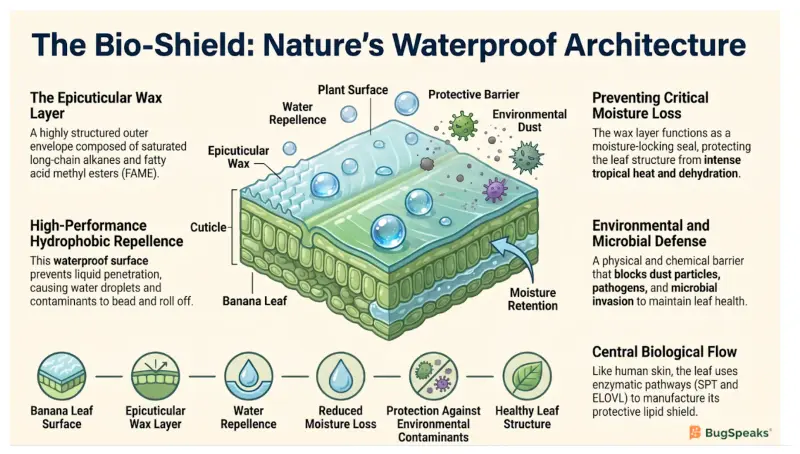
The fresh banana leaf serves as a natural protective shield for our food because its outer surface is covered by a waterproof layer of epicuticular wax and a network of antioxidant polyphenols. Thongphichai et al. (2023). Just as human skin relies on protective lipids to maintain barrier function, the banana leaf cuticle serves as a hydrophobic barrier that keeps the leaf waterproof, fresh, and resistant to environmental hazardsGundupalli et al. (2021);Singh et al. (2024). This outer defense consists of a highly structured envelope designed by nature to resist water lossGundupalli et al. (2021).
In the wild, the leaf cuticle must withstand intense tropical heat and sudden heavy downpours, meaning its hydrophobic properties are vital for plant survivalSingh et al. (2024). When used as a plate, this hydrophobic nature prevents wet curries, gravies, and hot rice from dissolving the leaf or leaking through, providing a structurally sound surfaceThongphichai et al. (2023). The leaf does not merely hold the food; its waxy barrier prevents the paper-like fibers of the leaf from breaking down when in contact with liquids, keeping your meal clean and well-contained on this organic plate. This natural barrier prevents any outside contamination.
Furthermore, this biological barrier is deeply linked to the plant's lipid synthesis pathways. The formation of these protective surface lipids resembles how human cells manufacture essential skin barrier lipids like ceramides. Just as human skin cells rely on the rate-limiting enzyme serine palmitoyltransferase (SPT) and the lipid-extending enzyme elongation of very-long-chain fatty acids (ELOVL) to construct our skin's moisture-locking shield, the banana plant coordinates its own enzymatic pathways to synthesize epicuticular waxBlady et al. (2026);Gundupalli et al. (2021). When we eat off this leaf, we are dining on a surface prepared by these highly organized, lipid-producing molecular networks.
How does the heat of fresh food trigger a beneficial biological transfer from the leaf?
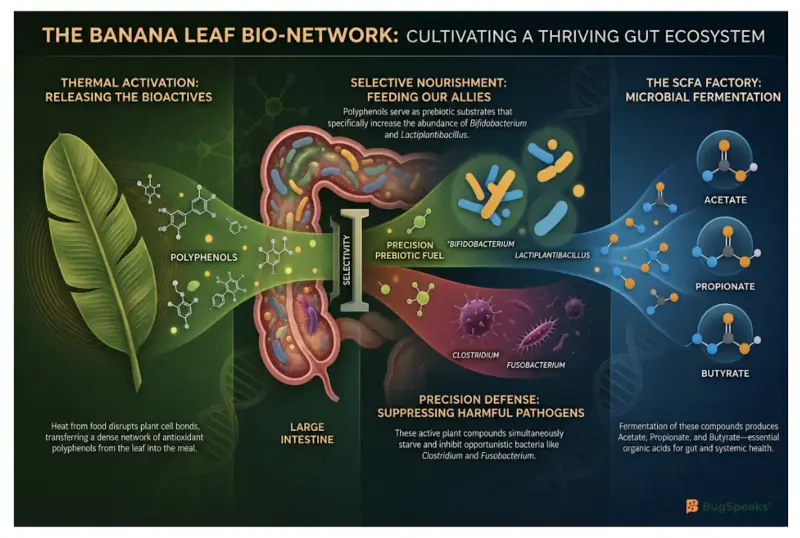
The high temperature of freshly prepared meals triggers a physical-chemical interaction that softens the leaf's waxy cuticle and mobilizes beneficial antioxidants like caffeic acid and gallic acid, which mix with your food, turning your meal into a natural shield for your own body; polyphenols and long-chain lipids are directly transferred into the food. Heat serves as the primary activation agent that bridges the gap between plant biology and human nutrition. The epicuticular wax on the banana leaf surface has a high melting point of approximately 78 to 82 degrees Celsius, which is structurally comparable to the hard carnauba wax of palm treesSingh et al. (2024). When hot food, such as freshly steamed rice, is placed onto the leaf, this thermal energy is transferred directly to the cuticle.
As the cuticle softens under the influence of heat, the leaf begins to release its diverse blend of healthy plant lipids and volatile aromatic molecules. Compositional profiling shows that this natural wax is heavily dominated by valuable fatty acid methyl esters (FAME), primary fatty alcohols, and long-chain alkanesGundupalli et al. (2021). Specifically, these plant waxes contain beneficial compounds like phytol, a specialized terpene alcohol used as a precursor for the synthesis of vitamins E and K1, and long-chain alkanes like tetratriacontane, which exhibit high stability and protective, water-repelling propertiesGundupalli et al. (2021). This heat blends these stable lipids with the meal.
Simultaneously, this thermal interaction liberates a dense network of polyphenols and flavonoids locked within the leaf's outer tissues. Unripe banana tissues are highly concentrated sources of these secondary metabolites, which the plant produces to defend itself against environmental pathogens and solar radiationBashmil et al. (2025). When the heat of hot food disrupts the weak hydrogen bonds that bind these antioxidants to the plant's cell walls, they are released from their matrix and transferred directly into the adjacent foodBashmil et al. (2025). This thermal transfer fortifies your meal with fresh, bioactive compounds. These molecules are easily absorbed by our digestive system, offering immediate benefits.
What happens to these transferred antioxidants once they enter our digestive system?
Once ingested, the transferred plant compounds undergo simulated digestive breakdown in the gastrointestinal tract, where enzymes and acidic environments dramatically increase their bioaccessibility. The digestive tract represents an intricate recovery network where the nutrients are liberated from the food matrix. As the food mixed with leaf-derived antioxidants enters the stomach, the highly acidic environment (low pH) and the presence of digestive enzymes like pepsin begin to break apart the complex bonds between carbohydrates and polyphenolsBashmil et al. (2025). This acidic breakdown leads to a massive release of bound antioxidants during this initial gastric phaseBashmil et al. (2025). This represents the first stage.
This gastric liberation is crucial for transforming dietary antioxidants into free, absorbable molecules. Our physical digestion models show that this intense acidic environment results in a significantly elevated total phenolic content (TPC) and total tannin content (TTC) within the stomach digestateBashmil et al. (2025). Without this acidic breakdown, these polyphenols would remain tightly bound to the plant fibers, meaning your body could not easily absorb or use them. The stomach essentially acts as an extraction chamber that frees these valuable compounds from their fibrous matrix, allowing them to enter the small intestine in a highly bio-accessible state and fully prepared for human absorption.
Following this, the digested mixture passes into the small intestine, where pancreatic enzymes and bile salts further modify the chemical structures of the released compoundsBashmil et al. (2025). This alkaline shift of 1.5 to 2.0 reduces the hydrophobic interactions between carbohydrates and polyphenols, enhancing their solubility and facilitating transport across the intestinal barrierBashmil et al. (2025). Thus, eating off a banana leaf ensures that a highly bio-accessible pool of free antioxidants is made available for absorption in your upper digestive tract, fortifying your body's natural defense systems against oxidative stress and promoting overall cellular well-being, which paves a clear way for long-term metabolic health.
How do these liberated compounds interact with our gut microbiota?
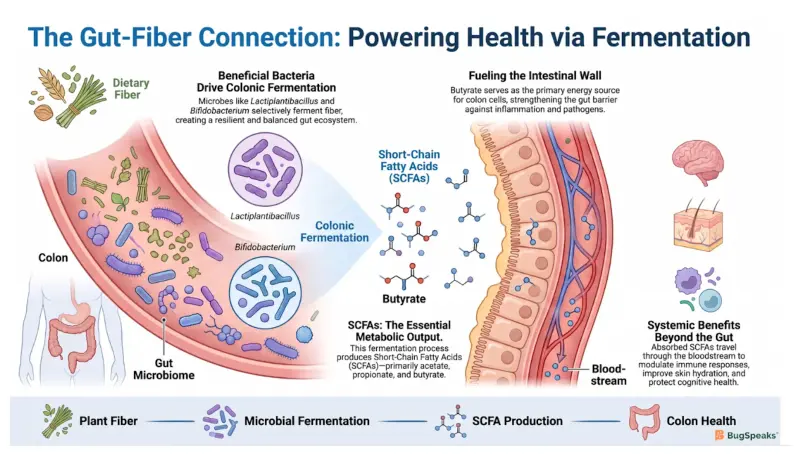
The non-absorbed polyphenols and resistant starch that pass through the small intestine enter the large intestine, where they are metabolized by the gut microbiota through colonic fermentation. This microbial interaction is key to maintaining a healthy intestinal environment. When polyphenols reach the colon, they act as prebiotic substrates that selectively promote the growth of beneficial microbes, Lactiplantibacillus and Bifidobacterium, while inhibiting opportunistic pathogens like Clostridium and Fusobacterium Lippolis et al. (2023);Zhao et al. (2020). This selective prebiotic effect supports the maintenance of eubiosis, a state of healthy microbial balance that prevents local inflammation and protects the host from gastrointestinal diseasesLippolis et al. (2023);Zhao et al. (2020).
Specifically, the presence of these banana leaf-derived compounds selectively increases the abundance of beneficial bacteria (Lippolis et al. (2023);Zhao et al. (2020). These friendly microbes ferment the indigestible plant fibers and polyphenols, yielding essential metabolites. At the same time, these active plant compounds suppress the development of harmful bacteria which are negatively associated with human well-beingLippolis et al. (2023);Zhao et al. (2020). This dual action feeds our microscopic allies while starving potential pathogens, actively shaping a highly resilient and protective gut ecosystem that benefits the whole body. This makes our digestive system much stronger.
Furthermore, the gut microbiota can extensively metabolize complex polyphenols, converting them into highly active simpler molecules like urolithins, equol, and hesperetin (Lippolis et al. (2023);Zhao et al. (2020). These simpler metabolites possess superior anti-inflammatory, antioxidant, and anti-cancer properties compared to their parent plant compounds, such as complex ellagitannins before they were digested. For example, gut microbes convert these large parent compounds into a much smaller, highly active molecule called urolithin A, which is far easier for our bodies to absorb and use to protect our cells
Zhao et al. (2020). Thus, the mutual interaction between our gut bacteria and the transferred leaf compounds creates a powerful defense system that attenuates colitis and protects the colon from cellular damage, showing how traditional wisdom is grounded in elegant microbial biochemistryLippolis et al. (2023);Zhao et al. (2020). These metabolites are highly stable.
What are the long-term health benefits of the metabolites produced during this process?
The primary metabolic products of this microbial fermentation are short-chain fatty acids (SCFAs), such as acetate, propionate, and butyrate, which provide extensive health benefits throughout the body. These organic acids serve as the primary energy source for the cells lining your colon, helping to maintain a strong and secure gut barrierBashmil et al. (2025). Beyond the gut, these metabolites enter the bloodstream and travel to distant tissues, where they modulate systemic immune responses, reduce overall inflammation, and support metabolic health, showing that eating off a leaf can have profound benefitsGonzález Olmo et al. (2021).
Furthermore, these circulating metabolites play an essential role in skin health by strengthening the epidermal barrier. In the skin, these compounds promote the expression of crucial structural proteins, including filaggrin, involucrin, and loricrin, which are essential for maintaining skin hydration and barrier functionBlady et al. (2026). By increasing the synthesis of these structural proteins, these metabolites significantly reduce transepidermal water loss and protect the skin from environmental irritants, helping to alleviate the symptoms of inflammatory skin conditions like atopic dermatitisBlady et al. (2026). This gut-skin connection illustrates how our daily diet shapes our outer appearance in daily life.
In addition, these organic acids support the gut-brain axis, communicating with the central nervous system to protect cognitive health and reduce neuroinflammationGonzález Olmo et al. (2021). In the brain, these metabolites help regulate the activation of microglia, our resident immune cells, preventing exaggerated inflammatory responses that are linked to memory impairment and cognitive declineGonzález Olmo et al. (2021). Thus, the simple act of dining on a fresh banana leaf initiates a biological cascade that protects your gut, strengthens your skin, and safeguards your brain, proving that ancient customs are deeply aligned with modern systems biology and clinical research.
Visualize the process- https://youtu.be/fQ0cLloz_EE
Reference
Gundupalli, M. P., Chuetor, S., Cheenkachorn, K., Rattanaporn, K., Show, P. L., Cheng, Y. S., & Sriariyanun, M. (2021). Interferences of Waxes on Enzymatic Saccharification and Ethanol Production from Lignocellulose Biomass. Bioengineering (Basel, Switzerland), 8(11), 171.https://doi.org/10.3390/bioengineering8110171
Singh, D., Sengar, M., Gupta, T., Singh, S., Singh, D., Mishra, V., Dev, R., & Giri, B. S. (2024). Natural wax recovery from Musa acuminata biomass using organic solvents. Chemosphere, 363, 142919.https://doi.org/10.1016/j.chemosphere.2024.142919
Bashmil, Y. M., Dunshea, F. R., Appels, R., & Suleria, H. A. R. (2025). Bio-Accessibility of Phenolic Compounds from Green Banana-Fortified Bread During Simulated Digestion and Colonic Fermentation. Molecules (Basel, Switzerland), 30(18), 3743.https://doi.org/10.3390/molecules30183743
Lippolis, T., Cofano, M., Caponio, G. R., De Nunzio, V., & Notarnicola, M. (2023). Bioaccessibility and Bioavailability of Diet Polyphenols and Their Modulation of Gut Microbiota. International Journal of Molecular Sciences, 24(4), 3813.https://doi.org/10.3390/ijms24043813
Zhao, Y., & Jiang, Q. (2021). Roles of the Polyphenol-Gut Microbiota Interaction in Alleviating Colitis and Preventing Colitis-Associated Colorectal Cancer. Advances in nutrition (Bethesda, Md.), 12(2), 546–565.https://doi.org/10.1093/advances/nmaa104
Blady, K., Pomianowski, B., Smółka, L., Strugała, M., Kursa, K., & Stanek, A. (2026). The Therapeutic Potential of Polyphenols in Modulating Barrier Lipids, Microbiome Interactions, and Inflammatory Pathways in Atopic Dermatitis. Nutrients, 18(9), 1365.https://doi.org/10.3390/nu18091365
Thongphichai, W., Pongkittiphan, V., Laorpaksa, A., Wiwatcharakornkul, W., & Sukrong, S. (2023). Antimicrobial Activity against Foodborne Pathogens and Antioxidant Activity of Plant Leaves Traditionally Used as Food Packaging. Foods (Basel, Switzerland), 12(12), 2409.https://doi.org/10.3390/foods12122409
Pinto, L., Tapia-Rodríguez, M. R., Baruzzi, F., & Ayala-Zavala, J. F. (2023). Plant Antimicrobials for Food Quality and Safety: Recent Views and Future Challenges. Foods (Basel, Switzerland), 12(12), 2315.https://doi.org/10.3390/foods12122315
González Olmo, B. M., Butler, M. J., & Barrientos, R. M. (2021). Evolution of the Human Diet and Its Impact on Gut Microbiota, Immune Responses, and Brain Health. Nutrients, 13(1), 196.https://doi.org/10.3390/nu13010196
Dapa, T., & Xavier, K. B. (2024). Effect of diet on the evolution of gut commensal bacteria. Gut microbes, 16(1), 2369337.https://doi.org/10.1080/19490976.2024.2369337